Posted on — Leave a comment

Worst Oil Change

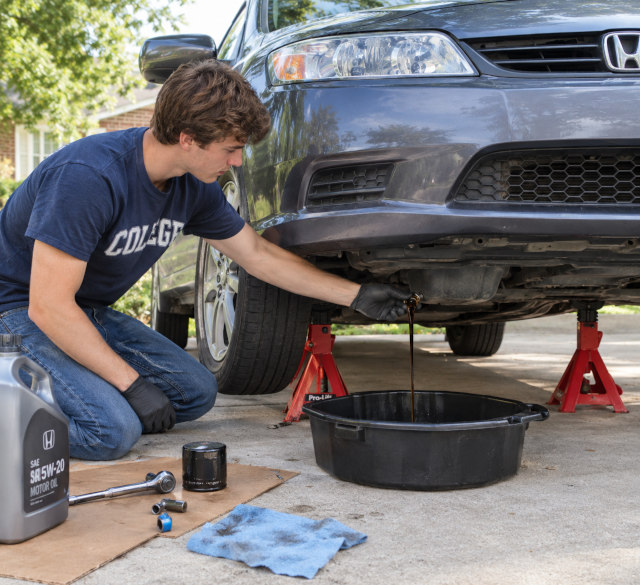
A student at the University of Santa Cruz, California, was given a new front wheel drive car by her parents. After 1,200 miles, it was due for its first oil change at the dealer, but a fellow student offered to change her oil for free. He figured this would be a good way to get her attention. She reluctantly allowed him to change the oil because it seemed so important to him to do so.

He crawled under the front of the car and removed the transmission drain plug. She commented that the oil seemed awfully thick. He confidently told her that was the way it is supposed to be in new cars. After reinserting the transmission plug, he put four quarts of oil in the engine. Now there was no oil in the transmission and twice as much as there should have been in the engine. She drove a few blocks and the car quit working properly. The dealer towed it away, and after preparing a careful estimate, reported that the damage was not covered by the warranty, being abuse, and repairs would cost almost as much as a whole new car. Her friend got her attention all right!

Posted on — Leave a comment

Worst Lost Airplane Mistake

A B-25 bomber crashed into the 79th floor of the Empire State Building in 1945.

On a foggy Saturday morning in July 1945, a U.S. Army Air Forces B-25 Mitchell bomber lost visibility and crashed directly into the north side of the building between the 78th and 80th floors. Despite structural damage and fires that killed 14 people, the building’s steel frame remained intact, and parts of the building reopened for business two days later.

It holds a Guinness World Record for an elevator survival story. During the 1945 plane crash, elevator operator Betty Lou Oliver survived a catastrophic 75-story drop inside an elevator car after the plane’s engine severed the cables. Cables coiled at the bottom of the shaft and air trapped beneath the car cushioned the fall, making it the highest survived elevator fall in history.

The top of the Empire State Building flexes back and forth a few feet (a meter) in heavy winds.

It was built in just 13 months and completed ahead of schedule. Construction moved at a breakneck pace, progressing at an average rate of four and a half stories per week. Between March 1930 and April 1931, roughly 3,400 workers completed the 102-story structure in just 410 days—finishing under budget and well ahead of schedule.

The original spire was designed as a docking station for dirigibles. The top 200 feet of the building were originally constructed to serve as a mooring mast for commercial airships (Zeppelins). The idea was for airships to tie up to the spire, allowing passengers to disembark via an open-air gangplank on the 102nd floor, but high winds and safety hazards forced the idea to be abandoned after only a couple of brief tests.

It was involved in a fierce “Race to the Sky.” During the late 1920s, developers in Manhattan competed aggressively for the title of the world’s tallest building. The Empire State Building’s designers modified their plans mid-construction—specifically adding the mooring mast—to surpass both 40 Wall Street and the Chrysler Building, securing the crown of world’s tallest building for 41 years until 1972.

It generates more revenue from its observatories than from office rents. While hundreds of businesses lease office space across its lower floors, the 86th and 102nd-floor observation decks consistently bring in more money than commercial real estate leases, generating over $100 million annually from millions of global tourists.

It serves as its own zip code. Due to its massive scale, thousands of daily workers, and high volume of mail, the United States Postal Service assigned the Empire State Building its own unique zip code: 10118.

Its famous tower lights require a dedicated team and change color daily. The building introduced light displays in 1932 to announce Franklin D. Roosevelt’s presidential victory. Today, a state-of-the-art computer-controlled LED system displays over 16 million colors to recognize holidays, sports teams, global organizations, and cultural events.

It is an iconic lightning rod, struck around 25 times per year. Standing tall over Midtown Manhattan, the building’s top spire acts as a massive lightning rod for the city. It features a heavy grounding system that channels millions of volts safely into the earth, preventing structural damage and keeping visitors inside completely safe during storms.

Athletes race up its 1,576 steps in an annual footrace. Every year since 1978, the building hosts the Empire State Building Run-Up. Runners from around the world sprint up the 86 flights of stairs from the ground lobby to the main observatory, with top competitors finishing the vertical climb in under ten minutes.

Posted on — Leave a comment

Worst Things to Eat

In 1985, a valve in a dairy leaked a little bit of raw milk into a large tank of pasteurized milk. Two hundred thousand people got food poisoning.

Fifty percent of all turkeys and 37 percent of all chickens that you can buy in grocery stores are contaminated with Campylobacter (food poisoning) according to the US Food and Drug Administration.

Last year 81 million Americans got sick from food poisoning and 9,000 of them died. The average American will get food poisoning 100 times in a lifetime. The symptoms are headache, sick feeling, diarrhea. Most people think this is the flu. To prevent food poisoning, clean all kitchen items with heat, never leave food at room temperature for more than a few minutes, and never handle prepared food after handling raw meat or poultry.

Posted on — Leave a comment

Worst Computer Bug

Always double-check your work.

The programmer in charge of a computer with the job of issuing traffic citations goofed in September, 1989. The computer sent notices to 41,000 residents of Paris, France informing them that they were charged with murder, prostitution and illegal sale of drugs.

Here’s more about that mistake

What Happened

The Paris judicial system had recently automated its automated notice and collection system. Instead of generating routine notices for minor parking violations and traffic infractions, a bug in the code cross-indexed or misaligned the offense code database.

Rather than pulling the text strings for minor driving infractions (like illegal parking, speeding, or running a red light), the system pulled charges from the severe criminal code database.

The Aftermath

Over 41,000 residents opened official, sternly worded legal summonses from the Ministry of Justice informing them that they were under investigation or charged with major crimes—including:

Murder and manslaughter

Organized prostitution

Extortion and blackmail

Illicit drug trafficking

As you can imagine, the mistake caused widespread panic, outrage, and chaos at local police stations and court houses as thousands of bewildered drivers showed up trying to clear their names of hitman-level charges when they had simply overstayed a parking meter.

French officials quickly issued public apologies, clarified that it was a technical glich, and assured residents that no felony charges were actually being pursued. It remains a legendary classic example in computer science and IT history of what can go wrong with early automated database management.

Posted on — Leave a comment

Worst Name for a Common Affliction

As many as one out of every 50 people have mild prosopagnosia, in which they have more trouble recognizing faces than everyone else. You may have it if you fail to recognize someone you know in a new hat, or having shaved off a beard.

A more severe form of the disease, typically brought on by a minor stroke, can happen in which the victim can no longer recognize faces. These patients can tell they are seeing someone’s face, but they cannot tell whose it is, even if the person is a close friend or relative.

If you have a new friend who fails to recognize you, don’t get mad, get even. Wait, that’s not right. Just realize that the person may have prosopagnosia.

More About Prosopagnosia

You can fail to recognize yourself in the mirror. In severe cases, people with prosopagnosia (face blindness) don’t recognize their own reflection. They might see a person looking back at them, try to fix their hair or adjust a collar, and only realize it’s their own face because the image moves at the exact same millisecond.

Oliver Sacks famously mistook his own reflection for a stranger. The renowned neurologist—who wrote extensively about brain anomalies in books like The Man Who Mistook His Wife for a Hat—suffered from prosopagnosia himself. He once apologized to a man in a restaurant for nearly bumping into him, only to realize he was speaking to a large mirror.

It isn’t a problem with vision. Prosopagnosics usually have normal visual acuity and can see the individual parts of a face—eyes, nose, mouth—just fine. The brain simply fails to “stitch” those features together into a cohesive, recognizable identity (a process called holistic face processing).

People rely on “stealth tracking” techniques. To navigate social life without offending people, individuals with prosopagnosia rely heavily on non-facial identifiers: unique voice cadence, distinct hairstyles, walk/gait, specific shoes, tattoos, or distinctive jewelry. If a close friend drastically cuts their hair or changes their style, they may suddenly become a total stranger.

Watching movies can be an absolute nightmare. Following complex film plots is uniquely difficult when multiple characters share similar physical builds, skin tones, or hair colors. Fans with face blindness often rely on sub-titles, distinct costuming, or audio descriptions to keep track of who is talking to whom.

There’s a subtype where you can’t even tell faces apart from non-faces. While visual prosopagnosia specifically impacts recognizing individual faces, extreme apperceptive prosopagnosia makes it hard to even distinguish a face from an arbitrary object, like seeing facial patterns in a building front or cloud formation.

It can be built-in or acquired. Congenital (developmental) prosopagnosia is present from birth without any obvious brain damage, often running in families. Acquired prosopagnosia happens suddenly after stroke, traumatic brain injury, or encephalitis damaging the fusiform gyrus (the brain’s face-processing hub).

You can suffer from “developmental prosopagnosia” for decades without knowing it. Because people born with it have never experienced face recognition, many assume everyone relies on context, hair, or voice to identify people. It’s common for individuals to reach middle age before discovering that typical brains recognize faces instantly and automatically.

It can affect how you see animals. For some people with prosopagnosia, the impairment extends to other categories where fine-grained visual distinction within a group is required. Dog show judges or sheep farmers with the condition, for instance, may struggle to tell individual animals in a herd or breed apart.

The direct opposite condition exists (“Super-Recognizers”). On the exact opposite end of the spectrum are super-recognizers—people who can see a face once in a crowd, brief background footage, or a grainy security video, and reliably recognize that same face decades later. Many police forces around the world actively recruit them for security and surveillance roles.

Your author has mild prosopagnosia.
Posted on — Leave a comment

Worst Rainstorm

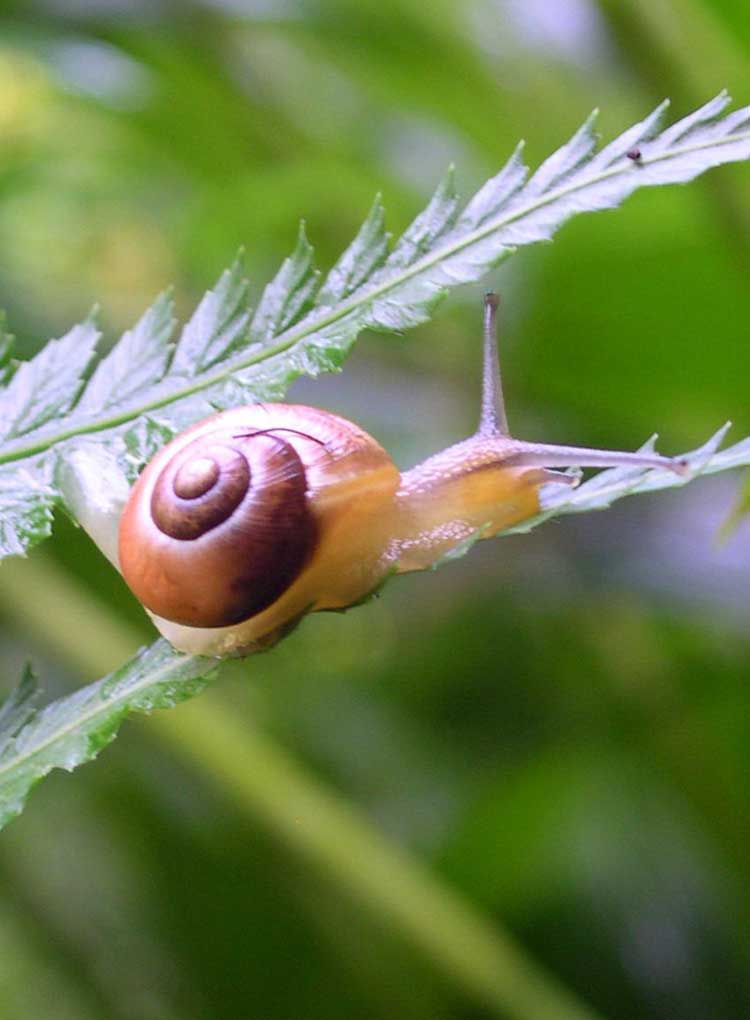
One day in August 1892, in Panderborn, Germany, it started to rain. This rainstorm was unusual because somehow there were thousands of snails caught up in the clouds and they all came crashing down with their shells breaking to bits as they hit the ground. This weird event was formally recorded and analyzed by meteorologists at the time.

While it sounds like something straight out of a folklore tale, there are multiple documented historical accounts of “snail showers”.

A couple other notable historical occurrences include:

Redruth, Cornwall, England (1886): A violent thunderstorm darkened the sky over the town and showered thousands of live snails over the countryside.

Chester, Pennsylvania, USA (1870): A storm dropped so many snails over the city that local accounts described it as a dense “storm within a storm”.

How Does It Actually Happen?

It isn’t a biblical miracle, but rather a rare meteorological phenomenon known as “animal rain”.

Waterspouts and Tornadoes: When a strong storm or tornado passes over a shallow body of water, land, or marshy area, the powerful updraft inside the vortex acts like a giant vacuum cleaner.

Suction & Elevation: Small, lightweight creatures like snails, frogs, or small fish are sucked off the ground or out of the water and carried high into the atmosphere.

The Drop: As the storm system loses energy or moves over a new location, the wind speed drops, and the heavy updraft can no longer support the weight. The objects are dropped all at once, resulting in a localized “rain” of creatures. Because snails are relatively uniform in weight, the updrafts often sort and deposit them all in the same concentrated spot, making it look like a rain cloud specifically targeted gastropods.

Posted on — Leave a comment

Worst Small Business Decision

What the Ski Mechanic Did Wrong

Consider one rule which is the most often violated by the people who fail: You must bring in more money than you spend!

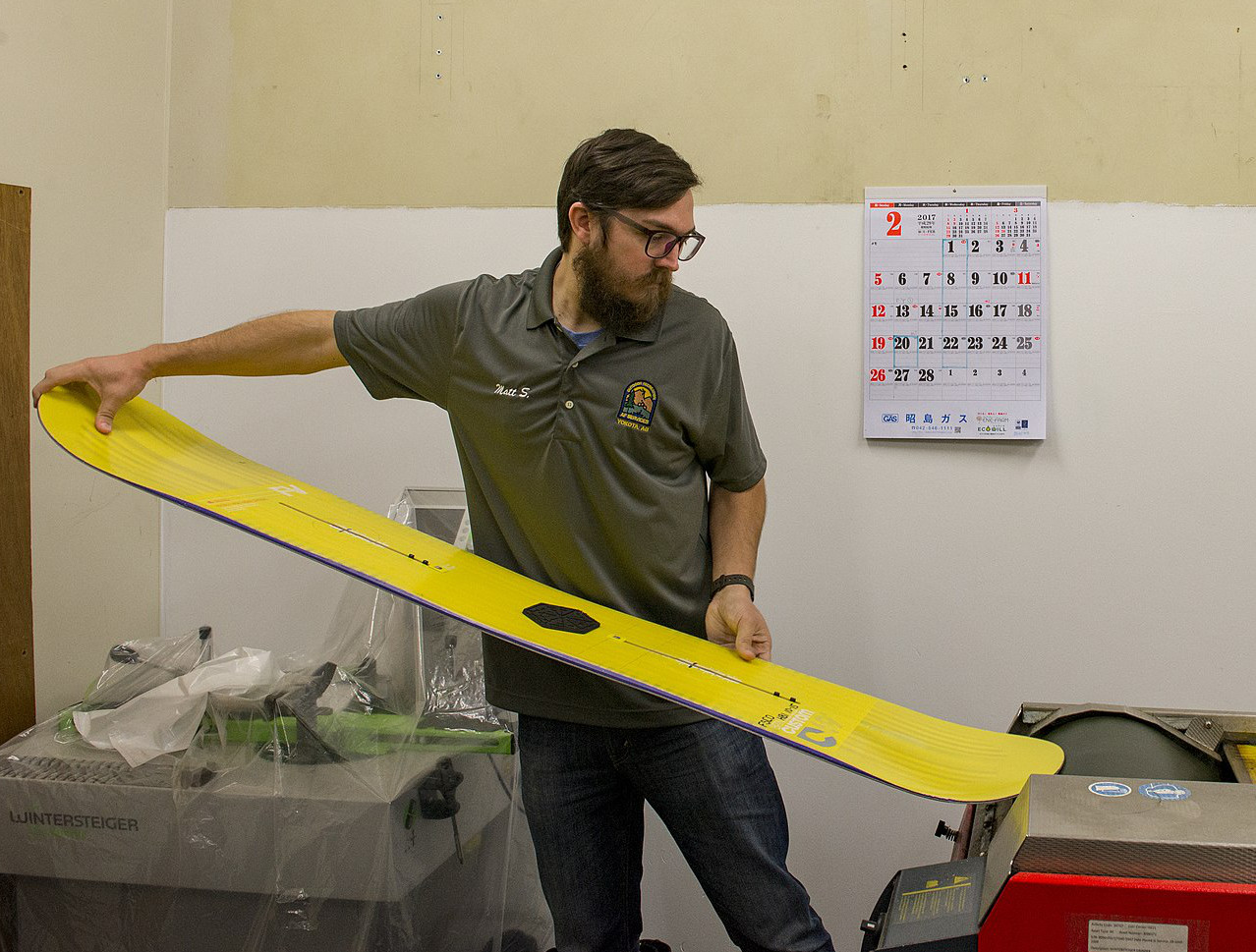
I knew a guy who was an expert ski mechanic. He bought some waxes, some plastic, an iron, some files, all the things he would need. He rented bench space in a store and put up a sign in the store window. Sure enough, skis started coming in. At the end of the first day, he earned $160. Did he spend it on advertising? Or maybe on more materials, or tools to expand his available services? No, he bought himself a pair of fancy cowboy boots and went to a party. His business lasted about a week. When it was time to pay the second week’s bench rent, he didn’t have it! Now that’s just plain bad business! You laugh, but it’s a true story, and variations of it are surprisingly common.

You might enjoy knowing the crazy story of the shop where this happened. It was a bike shop in an eastern city, looking for some kind of business that would bring in people during the winter. The amazing and unexpected true story of that bike shop is here: 5 Years In The Bike Shop.

Posted on — Leave a comment

Worst Warning to Ignore

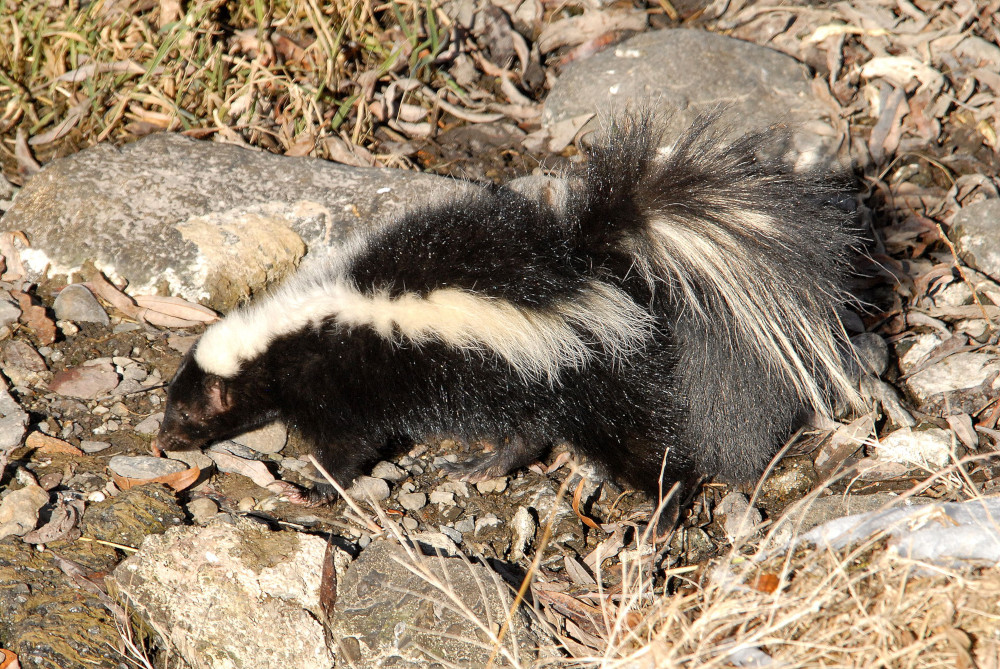
If there is time, a skunk will warn you before spraying. The warning has two phases. First the skunk pats his front feet on the ground several times. Then he shakes his head from side to side. He may even raise his tail and hiss. If you aren’t gone by then, too bad!

Skunk Facts

Their Spray Can Reach Up to 10 Feet Away

Skunks release their foul-smelling liquid from two glands under their tail with impressive precision. They can accurately target an intruder’s face from 10 feet away, and the scent can be detected by humans up to a mile downwind.

They Use Their Spray as a Last Resort

Skunks only carry about 5 to 6 tablespoons of spray (thiols) at a time, and it takes up to a week to replenish a depleted supply. Because leaving themselves defenseless is risky, they will give fair warnings first.

They Are Immune to Snake Venom

Skunks are natural predators of snakes, including poisonous species like rattlesnakes and copperheads. They possess a natural immunity to snake venom, allowing them to hunt and eat venomous snakes without harm.

Great Horned Owls Are Their Primary Predator

Most mammals quickly learn to give skunks a wide berth, but Great Horned Owls are an exception. Like most birds, owls have an exceptionally weak sense of smell, making skunks one of their favorite primary food sources.

Tomato Juice Doesn’t Neutralize the Odor

The popular urban legend that tomato juice removes skunk scent is false; it merely masks the smell temporarily by overwhelming your nose (olfactory fatigue). To chemically neutralize the sulfur-based thiols, a mixture of hydrogen peroxide, baking soda, and dish soap is required to oxidize the chemical compound.

They Have Terrible Eyesight

A skunk’s vision is extremely poor—they can barely see objects more than 10 feet ahead of them. This poor eyesight, combined with their instinct to stand their ground rather than flee, is the primary reason so many skunks are struck by cars on highways.

They Are Natural Pest Controllers

Skunks are opportunistic omnivores whose diet consists heavily of insects. They spend their nights digging up grubs, beetles, wasps, scorpions, and garden pests, making them highly beneficial for local ecosystems and agriculture.

Spotted Skunks Do Handstands to Threaten Predators

While striped skunks simply arch their backs and stomp, the smaller Western and Eastern spotted skunks perform an elaborate acrobatic handstand on their front paws to look larger and aim their scent glands directly at a predator before spraying.

They Belong to Their Own Unique Family

For a long time, skunks were classified in the weasel family (Mustelidae). However, genetic research in the late 1990s revealed they are distinct enough to warrant their own separate family, Mephitidae, which translates from Latin to “foul stench.”

They Don’t Formally Hibernate

During severe winter cold, skunks enter a state of torpor—lowering their body temperature and sleeping for long stretches—rather than true hibernation. To stay warm, females often huddle together in shared underground dens, while males typically remain solitary.

Posted on — Leave a comment

Worst Way to Start a War

You can be mad at your neighbor, or your neighbor’s pig in this case, but overall it is best to really think about possible repercussions, even remote, before taking any drastic action.

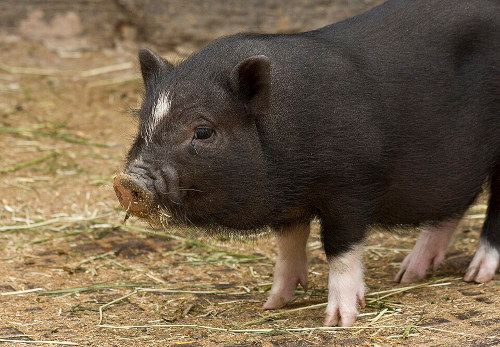
It is possible that a single pig caused the US War of 1812. This pig was always getting into the neighbor’s yard and eating up prized shrubs and flowers. Finally the neighbor got mad and killed the pig with a pitchfork. The pig’s killer was a congressional candidate who lost the election by one vote. This was the vote cast against him by the late pig’s owner presumably because he was upset about the loss of his pig. When the matter of deciding about the war was voted upon, the issue passed by one vote. This was the vote of the candidate who had won the election by one vote.

Posted on — Leave a comment

Worst Teetotaler

After marrying a promising young physician in 1867, Carrie Nation (also known as Carry Nation) was horrified to see her husband destroy his career and his life after only two years. He drank himself to death. Mrs. Nation was so angry and disgusted with alcohol that she smashed up over 30 drinking establishments. This fearsome looking nearly six-foot-tall, 175 pound woman would enter a bar with such frenzy that all the male patrons ran in fright. She busted all the bottles and much of the furniture with rocks, bricks and a hatchet.