Posted on — Leave a comment

Worst Shoes


Interesting Facts About Shoes

  1. High heels were originally created for men. Persian horsemen in the 10th century wore heels to keep their feet secured in stirrups while riding and shooting arrows. European aristocrats later adopted them to signify high status and wealth.
  2. Left and right shoes were not distinct until the 19th century. For centuries, shoes were made “straight”—identical for both feet—and had to be worn in gradually to fit the left or right foot. Philadelphia shoemakers began crafting distinct left and right shoes around 1818.
  3. Sneakers got their name because they were quiet. In the late 1800s, rubber-soled shoes were nicknamed “sneakers” because the soft bottoms allowed the wearer to walk silently without making noise on hard surfaces.
  4. The world’s oldest preserved leather shoe is over 5,500 years old. Discovered in an Armenian cave in 2008, the Areni-1 shoe is made of a single piece of cowhide laced with leather cord, remarkably preserved by dry cave conditions and sheep manure.
  5. The term “sneakerhead” emerged in the late 1980s. The culture of collecting sneakers exploded following the release of Nike’s Air Jordan line in 1985, turning basketball footwear into a major fashion and collector movement.
  6. Medieval shoes were styled so long they had to be tied to the wearer’s knees. Popular in 14th-century Europe, “crakow” or “poulaine” shoes featured long, extended toes up to two feet long, forcing wearers to loop string or chains to their knees to prevent tripping.
  7. Red soles on Christian Louboutin shoes were inspired by nail polish. In 1993, fashion designer Christian Louboutin grabbed a bottle of his assistant’s red Chanel nail polish and painted the underside of a prototype shoe, instantly creating his signature brand look.
  8. Astronaut boots remain on the Moon. Neil Armstrong and the Apollo astronauts left their moon-walking boots behind on the lunar surface to reduce weight on the spacecraft for the journey back to Earth.
  9. Space-age mattress foam revolutionized athletic shoes. Memory foam and TPU cushioning materials, originally developed for aircraft ejection seats and NASA padding, were later adapted by shoe manufacturers to build modern high-impact running soles.
  10. The phrase “pull yourself up by your bootstraps” was originally an absurd joke. In the 19th century, the expression described an impossible physical feat—attempting to lift oneself off the ground by pulling on shoe loops—before its meaning shifted to self-reliance.
Posted on — Leave a comment

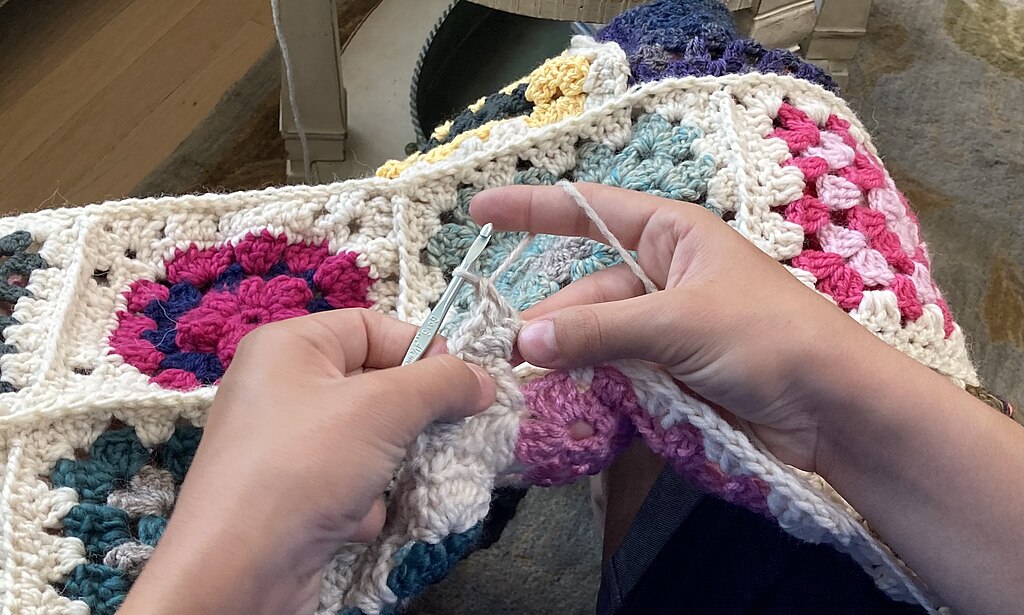
10 Worst Crochet Jokes

I bought “just one skein” of yarn. The cashier said, “Oh, you’re new here.”

I told myself I’d crochet “just one row before bed.” I finished a blanket, three coasters, and a mild emotional crisis.

Crochet math: one skein = not enough, two skeins = still not enough, ten skeins = too much but I’ll buy more.

I brought my crochet project to a party. Someone asked if it was “grandma stuff.” Later they complained about being cold. Guess who didn’t get a blanket?

I tried teaching my cat to crochet. She didn’t learn, but she did steal the yarn and start a modern art installation under the couch.

Crochet patterns say “easy.” That’s a lie. They mean “easy for someone else.”

I crocheted a hat for my cat. He hasn’t forgiven me.

I crocheted in public and someone said, “Oh, you knit?” That was the moment I learned humans can survive being corrected with only one eye twitch.

My friend asked how long a blanket takes to crochet. I said, “Somewhere between one week and six years.”

Crochet hooks are like wands. Except they summon tangles instead of magic.

I crocheted a sweater. It fits… someone, somewhere, in another dimension.

I joined a crochet group. We spent 80% of the time crocheting and 20% judging yarn that didn’t deserve its price tag.

Crochet projects are like relationships. They start with passion and end with “what was I thinking?”

Telling a crocheter “you could just buy that for cheaper” is like telling a chef “you could just go to a restaurant.” Technically true, emotionally devastating.

I crocheted a toy for my dog. He unraveled it in five minutes.

Non-Crocheter: “Wow, that looks so relaxing. Do you just, like, not think while you do that?” Me: (Internal Monologue: Was that a C2C or a Moss stitch? Did I miss a chain space? Which side is the right side? Why is it pulling?) “Oh, yes. Very relaxing.”

I have 30 crochet hooks. I currently only know the location of two of them.

Crocheters are like “I can’t afford groceries” while sitting on a throne of $400 worth of yarn they bought “just in case.”

Crocheters will video-call each other just to hold up yarn and ask “is this blue or green?” Our friends don’t understand this is a legitimate crisis.

Me, at 2 AM: I know I should go to sleep, but I’m only three rows away from being able to start a new color, and I absolutely have to see how the border works.

The most exercise a crocheter gets is running to five different stores looking for one specific shade of yarn that definitely exists and we definitely saw it somewhere.

The four stages of a crochet project: excitement, confidence, denial that you miscounted stitches, and rage-frogging at midnight.

The UFO (unfinished object) pile isn’t clutter, it’s a collection of “alternative timeline projects” where we had better time management. Which timeline? Not this one.

Crochet hooks are tiny weapons against boredom.

I go to the store for three things: milk, eggs, and a specific size G hook. I come home with 14 skeins of mohair, a pattern book, and no groceries.

“I’m just going to crochet until this podcast ends” is a lie. We’re crocheting through three more podcasts and possibly into next Tuesday.

I was crocheting and someone asked if it was “stress-relieving.” Sure — right after I untangle this knot.

Yarn label: “Machine Wash, Tumble Dry Low.” Crocheter: “Don’t you dare put this baby in the washing machine. I will hand-wash it in lukewarm water and lay it flat on a mesh screen for two days.”

I crocheted a scarf for my husband. He said it was “a bit long.” He’s now the proud owner of a 13-foot emotional support noodle.

I once counted stitches out loud in a café. A stranger tried to join in. We are no longer friends.

My crochet bag has yarn, hooks, scissors, stitch markers, and enough crumbs to feed a family of squirrels.

I crocheted in the waiting room and an old man said, “My wife used to do that.” Then he added, “She swore at it a lot.” I felt seen.

I gave someone a handmade crochet gift and they said, “Oh… neat.” I now crochet exclusively for people who visibly gasp.

People say crocheting is slow. They haven’t seen me unravel two hours of work in five seconds.

I crocheted a coaster. Then I crocheted matching coasters. Then I crocheted 14 more because I don’t know how to stop.

Someone asked if crocheting is expensive. I laughed so hard I dropped my $48 skein of imported alpaca.

I crocheted a blanket for the winter. By the time I finished, it was summer. The cycle continues.

I crocheted while watching a movie and didn’t notice the plot twist because I was too busy being betrayed by my stitch count.

Every crocheter has at least one project that’s been “almost done” for three years.

The most unrealistic part of horror movies is when someone hears a noise and investigates immediately. A real crocheter would think “just one more row” six times first.

Non-crocheters think we’re being productive. Really we’re just hoarding yarn while binge-watching TV and occasionally panicking about whether that was a single or double crochet three rows ago.
Every crocheter has confidently started a project without reading the pattern, then spent two hours frogging it. We never learn.

At the craft fair, I saw a guy crocheting with one hand while eating a sandwich with the other. He dropped the sandwich into the yarn bowl and accidentally made a ham-and-cheese potholder.

Someone asked if I could crochet them something “real quick.” I asked if they wanted it real quick or real good. They backed away slowly.

I crocheted a bag to hold all my yarn. The yarn unionized and demanded a bigger one.

Crocheters will spend $200 on yarn they don’t need but complain that a $6 pattern is too expensive. Math isn’t our strong suit—we’re still trying to figure out gauge.

“I’ll just make a small blanket” is the crocheter’s version of “I’ll just have one potato chip.”
Posted on — Leave a comment

Worst Way to Make Other Drummers Look Bad


What’s in a name?

Someone posted this video of the incredibly skilled Steve Moore at the drums under a different title. For two years the video just sat there with very few visitors. Then the video was relabeled, “This Drummer is at the Wrong Gig.” Suddenly the video went viral. As of today, it has been seen 53 million times.

I set this video to start 60 seconds in. That’s where Steve really starts cutting loose. If you were to see it from the beginning, you might not know what’s about to happen and quit before you see Steve’s magic.

Posted on — Leave a comment

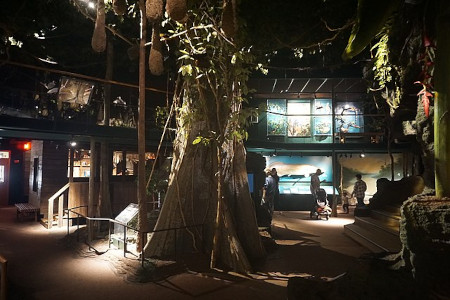
Worst Museums

Enjoy this list of museums. They aren’t all bad, but some are the worst in the world.

Museum of Bad Art – a collection of artwork too bad to be ignored

The Icelandic Phallological Museum – a collection of over 215 penises and penile parts from over 93 species

The Parasite Museum – a museum that focuses on the strange world of parasites

In San Rafael, California, you’ll find the Museum of International Propaganda.

The Sulabh International Museum of Toilets – a museum dedicated to the evolution of toilets around the world

The Museum of Broken Relationships – a collection of objects left over from failed relationships

The International Cryptozoology Museum – a museum that studies creatures that are rumored to exist, but have not been proven to exist

The Mütter Museum – a museum of medical oddities and human specimens

The Museum of Death – a museum that explores the subject of death through exhibits of real human remains and death-related artifacts

Marin Museum of Bicycling – a museum dedicated to bikes and bicycling, specializing in mountain bikes.

The Museum of Questionable Medical Devices – a museum that showcases medical devices that have questionable effectiveness

The Hand Fan Museum – a museum of hand fans, the devices used by women mostly in past eras to cool themselves, and send semi-secret signals to others.

The Museum of Jurassic Technology – a museum that explores the intersection of art, science, and the imagination

The Vent Haven Museum – a museum dedicated to ventriloquism and the history of ventriloquists’ dummies

The Museum of Neon Art – a museum that collects, preserves, and exhibits neon signs and related art forms

The House on the Rock – a museum that features a collection of oddities, including the world’s largest indoor carousel

The Kansas Barbed Wire Museum – a museum dedicated to the history and development of barbed wire

The National Museum of Funeral History – a museum that explores the history and cultural significance of funerals and funeral practices

The International Spy Museum – a museum that explores the history and methods of espionage

The American Banjo Museum – a museum that explores the history and evolution of the banjo

The Museum of Osteology – a museum that showcases the skeletal system of animals from around the world

The Teddy Bear Museum – a museum that showcases the history and evolution of teddy bears

The Museum of the Weird – a museum that showcases bizarre and unusual artifacts from around the world

The Elevator Museum – a museum that explores the history and development of elevators

The Canadian Potato Museum – a museum that explores the history and cultural significance of potatoes in Canada

The Skyscraper Museum – a museum that explores the history and evolution of skyscrapers

The Salt and Pepper Shaker Museum – a museum that features over 20,000 salt and pepper shakers from around the world

The Museum of Miniature Houses – a museum that showcases a collection of miniature houses and other miniatures

The National Museum of Roller Skating – a museum that explores the history and evolution of roller skating

The Museum of Handbags and Purses – a museum that showcases the history and evolution of handbags and purses

The Museum of Chinese in America – a museum that explores the history and experiences of Chinese immigrants in America

The New Orleans Pharmacy Museum – a museum that showcases the history and development of pharmacy and medicine in New Orleans

The Musée Mécanique – a museum that features a collection of antique arcade machines and mechanical instruments.

Posted on — Leave a comment

Most Underappreciated Food

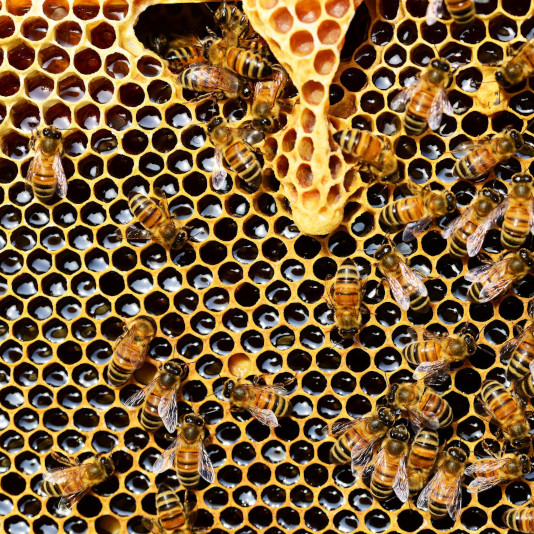
Bees have to fly a total of 50,000 miles (80,000 km) to gather enough honey for one 16-ounce (1/2-liter) jar.

10 Fascinating Honeybee Facts

  • The Waggle Dance: Bees communicate the exact direction, distance, and quality of food sources to their hive mates by performing a figure-eight “waggle dance” inside the dark hive.
  • Hexagonal Efficiency: Honeycombs are built using precise hexagonal geometry, which provides the maximum volume of storage while using the minimum amount of wax structural support.
  • Cold Weather Heating: Honeybees don’t hibernate in winter. Instead, they form a tight cluster around the queen and vibrate their wing muscles to keep the center of the swarm at a steady 93°F (34°C).
  • Superhuman Vision: Bees see colors in the ultraviolet spectrum, allowing them to spot hidden “bullseye” patterns on flower petals that point directly to nectar deposits.
  • Distinct Caste Roles: A worker bee’s job changes with age: she starts as a cleaner, moves on to nursery care and comb building, guards the hive entrance, and finally becomes a field speller/forager.
  • Royal Jelly Transformation: Any female bee larvae can become a queen; potential queens are fed exclusively on a nutrient-rich substance called “royal jelly,” which triggers the development of their reproductive organs.
  • Extreme Speed & Wing Beats: A honeybee flaps its wings roughly 230 times per second, creating their characteristic buzz, and can fly at speeds up to 15 to 20 miles per hour.
  • Short-Lived Males: Male bees (drones) exist solely to mate with a queen from another hive. They have no stingers, do not forage, and are kicked out of the hive to starve before winter to conserve stores.
  • Complex Brain Navigation: Despite having a brain the size of a sesame seed, honeybees can navigate using the sun as a compass, even on overcast days, by detecting polarized light.
  • Endless Shelf Life: Honey is so low in moisture and high in acidity that bacteria and micro-organisms cannot grow in it. Sealed honey found in ancient Egyptian tombs remains completely edible after thousands of years.

The waggle dance has been fully decoded.

Austrian ethologist Karl von Frisch first decoded the meaning of the dance in the 1940s. His breakthrough proved that bees use a symbolic language to communicate precise coordinates, earning him the Nobel Prize in Physiology or Medicine in 1973.

The dance functions as a polar coordinate map that breaks down into three key elements:

  • Direction (The Angle): The angle of the bee’s straight “waggle run” relative to vertical gravity matches the exact angle between the sun’s position and the food source outdoors.
  • Distance (The Duration): The length of time the bee waggles her abdomen during the straight run communicates the distance. Roughly 1 second of waggling equals about 750 meters (nearly half a mile).
  • Quality (The Intensity): The vigor and repetition rate of the dance signal the richness and sugar concentration of the nectar.

Modern Advances in Decoding

In recent years, researchers at institutions like Sussex University and Virginia Tech have refined von Frisch’s work. By using high-speed cameras, AI computer vision, and machine learning models, scientists can now automatically decode thousands of dances in real-time.

Ecologists use decoded dances as biological monitoring tools, mapping where bees forage across different seasons to identify nectar shortages and decide where to plant more flowers to support declining pollinator populations.

Posted on — Leave a comment

Worst Chinese Taboo

If you have ever looked at old Chinese art, you will note that they were very free in painting eroticism. However, you will never ever see a naked woman’s foot. In their culture, that would have been incredibly shocking.

The cultural context behind why this was true centers on the history of foot binding in Imperial China (from the Song dynasty through the early 20th century):

The Ultimate Sexual Taboo:

Bound feet (lotus feet) were considered the most intimate and erotic part of a woman’s body. While nudity of the breasts or genitalia was depicted relatively freely in erotic art—known as Chungongtu or “Spring Palace Paintings” — unveiling the bare, unbound foot was strictly taboo.

Depiction in Art:

In traditional Chinese erotica, women are frequently shown fully naked except for their shoes or the fabric wrappings (zubu) around their feet. A man touching, holding, or seeing a woman’s bare foot was considered a deeply explicit act of intimacy.

The Reality of Bound Feet:

Beyond the eroticization, bound feet were severely deformed and bone-broken, often suffering from tissue damage and infection. Keeping the feet wrapped in embroidered silk shoes maintained the fantasy and aesthetic of the “three-inch golden lotus” while concealing the physical reality underneath.

Posted on — Leave a comment

Worst Fashion Trend

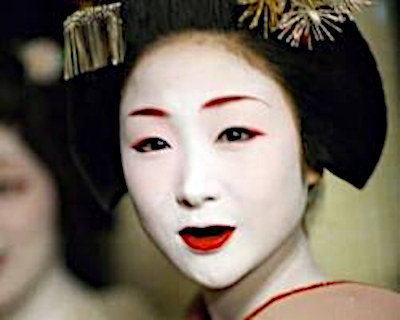
For a long time in Japan, fashionable women painted their teeth black.

Key Details About the Practice

  • Beauty and Social Status: Pitch-black objects were historically viewed as sophisticated and aesthetically pleasing in Japan. Blackened teeth were worn as a mark of beauty, maturity, and refinement.
  • Who Did It? During the Heian period (794–1185), it was practiced primarily by aristocratic men and women as a coming-of-age ritual. By the Edo period (1603–1867), it became a widespread tradition associated specifically with married women, as well as geisha and court nobles.
  • The Recipe: The dye (called kanemizu) was made by dissolving iron filings in vinegar to create an iron acetate solution, which was then mixed with plant tannins (such as tea or gallnut powder).
  • Dental Protection: Surprisingly, the mixture acted as an effective dental sealant. The coating protected teeth against cavities and enamel decay long before modern dental care existed.
  • Why It Ended: When Japan opened its borders and modernized during the Meiji Restoration, the government banned ohaguro in 1870 to adopt Western beauty standards.
Posted on — Leave a comment

Worst Artform

Looking for a new business?

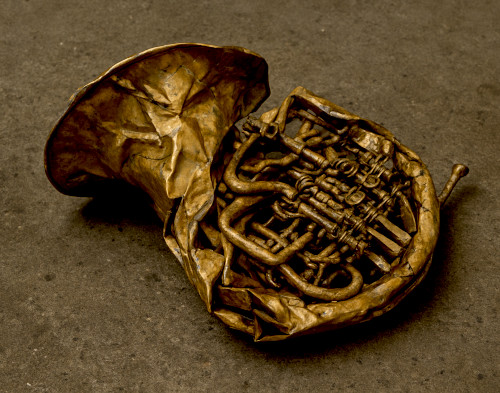
What if you took a trumpet that was too broken to play, put it under a piece of thick plywood, and drove your car over it? It would be crushed, right? Then, if you carefully mounted it on a background of some sort, put that in a frame, you’d have an interesting wall hanging, wouldn’t you?

I believe people would pay good money for crush art.

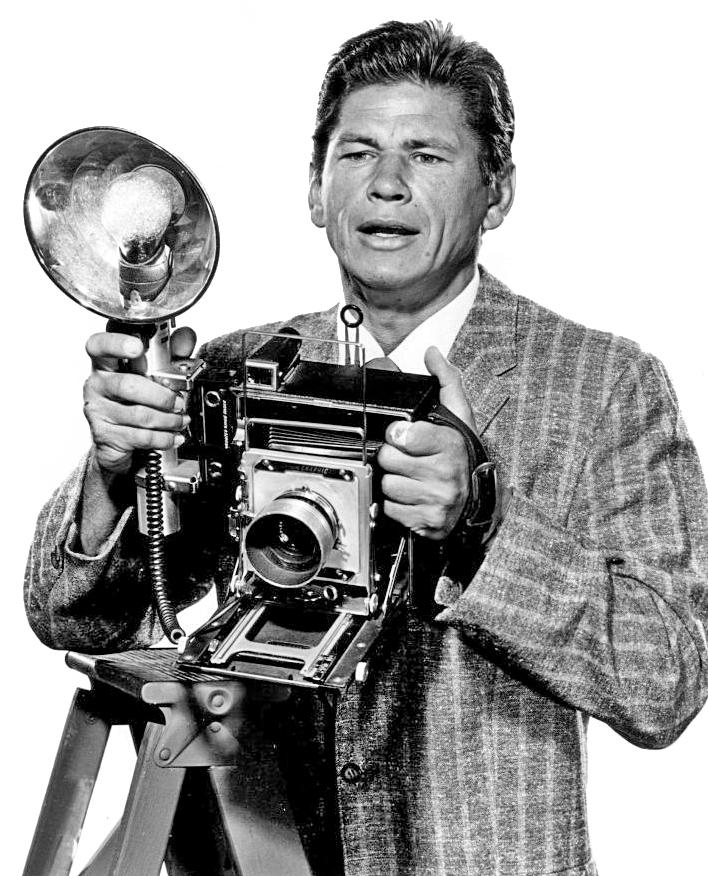
What else could you crush? I’m thinking of a wide assortment of musical instruments, but surely there are other things. Do you remember Jimmy Olson’s camera? He was Clark Kent’s photographer. It was a Speed Graphic press camera with bellows and lots of intricate metal parts. Great crush art, don’t you think?

Speed Graphic

What if you run over your old cell phone? Crush art!

As far as display, you could mount your art on a wall as-is, or you might hot glue the pieces to a black, red, golden, velvet, burlap, veneer, or bronze background in a wooden frame. You might display your crushed art on a painted or collaged background. Use your imagination!

I believe it would be easy to get raw materials – broken things – on eBay. I believe you might be able to sell your crushes on eBay as well. You might find it even more profitable to sell your crushes in art galleries, and even places where art in general, let alone crush art, is not expected. For instance, you might be able to consign some crush art to a restaurant where they’ll sell it to their patrons.