Posted on — Leave a comment

Worst Fruit

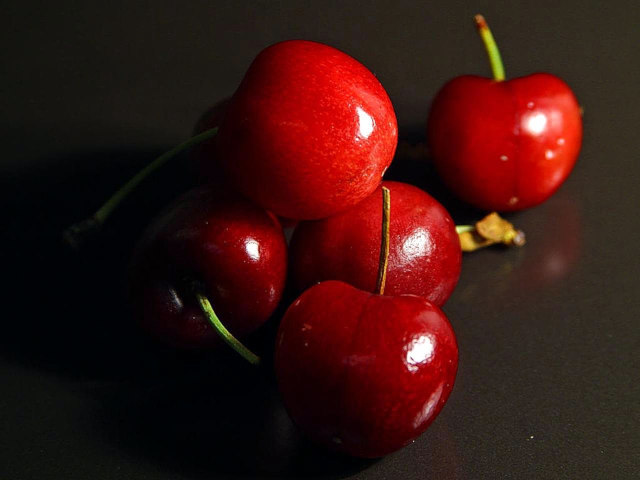
Cherries taste great, but if you eat the leaves or twigs of a cherry tree, you could get sick or even die.

The leaves, twigs, bark, and seeds (pits) of cherry trees—along with related trees like peaches, plums, and apricots contain cyanogenic glycosides, primarily amygdalin and prunasin. When these plant parts are chewed or digested, enzymes break these compounds down into hydrocyanic acid, better known as cyanide.

  • Why it happens: Cyanide prevents the body’s cells from using oxygen, which can cause severe cellular hypoxia, respiratory distress, shock, and potentially death if consumed in sufficient quantities.
  • The biggest risk factor: The leaves are particularly dangerous when they are wilted. As leaves break, crush, or wilt (such as after a storm or pruning), the plant cells rupture and unleash higher concentrations of cyanide gas.
  • Who is most at risk: While humans can get sick from chewing on twigs or swallowing crushed pits, this is a major danger for grazing livestock (horses, cows, and goats), which frequently suffer fatal cyanide poisoning after eating fallen cherry leaves.

The flesh of the cherry itself is completely safe and free of these cyanogenic compounds.

Posted on — Leave a comment

Worst Cookies

In 1973, Velma Anstadt, a 10th-grade student from Turbotville, Pennsylvania, made national news by baking and serving protein-rich “earthworm cookies”.

The Experiment: To demonstrate alternative, highly nutritious, low-cost protein sources to combat food shortages, Anstadt harvested earthworms, thoroughly washed and dried them, ground them into a powder/flour, and incorporated them into chocolate chip cookie dough.

The Result: Her project won top honors at local and regional science fairs, subsequently qualifying her to present her work at the 26th International Science and Engineering Fair. The story gained widespread media attention at the time as a novelty example of entomophagy (and invertebrate consumption) for human nutrition.

10 Surprising Facts About Earthworms

  1. They Have 5 “Hearts”
    Earthworms don’t have a single heart like humans do. Instead, they have five pairs of muscular arches called aortic arches that pump blood through their circulatory system.
  2. They Breathe Through Their Skin
    Earthworms have no lungs. They absorb oxygen and release carbon dioxide directly through their skin. To make this work, their skin must remain moist at all times; if an earthworm dries out, it suffocates.
  3. Every Earthworm Has Both Male and Female Organs
    Earthworms are hermaphrodites. Each worm possesses both male and female reproductive structures. However, they still usually need a partner to mate, exchanging sperm to fertilize each other’s eggs.
  4. They Can Eat Their Own Body Weight Every Day
    In rich soil conditions, an earthworm can consume and process its own weight in soil, decaying leaves, and organic matter every 24 hours.
  5. Their Digestion Creates “Black Gold” for Soil
    When earthworms digest organic material, their excretions—called worm castings—are rich in nitrogen, phosphorus, potassium, and magnesium. Castings serve as a powerful natural fertilizer, while worm tunnels aerate soil and help retain water.
  6. They Can Live for Up to 8 Years
    While most wild earthworms die early due to predators (like birds and moles) or drying out, some species can live for 4 to 8 years under safe, ideal conditions.
  7. Cutting One in Half Doesn’t Make Two
    Contrary to popular belief, if you cut an earthworm in half, it will not become two living worms. Only the head end might survive and regenerate its tail if the cut occurs behind vital organs. The tail portion cannot grow a new head and will die.
  8. Giant Earthworms Can Reach 10 Feet Long
    The Giant Gippsland earthworm (Megascolides australis), native to Australia, averages around 3 feet long but can grow to over 9 to 10 feet in length and can be as thick as a human thumb.
  9. They Are Covered in Microscopic Bristles
    Earthworms aren’t completely smooth; they are covered in tiny, hair-like bristles called setae. They anchor these bristles into the surrounding dirt to push and pull themselves forward through the soil.
  10. They Are Not All Native to North America
    Glaciers wiped out native earthworm populations across northern North America thousands of years ago. Most common species found in gardens today, such as nightcrawlers (Lumbricus terrestris), were accidentally introduced by European settlers in plant soil and ships’ ballast.
Posted on — Leave a comment

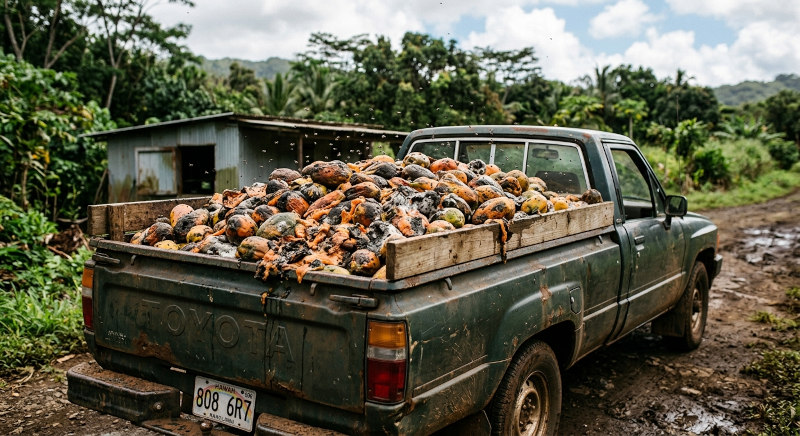
Worst Load of Rotten Fruit

Because Jared lived on the Big Island of Hawaii, he had few options for earning a living.

He found an orchard that would sell him a pickup truck full of too-ripe papayas for $25. He figured most of these were still quite edible, and so he could sell them to tourists near the hotels.

He bought a load, made a sign and parked his truck. The first day, he made $100 or so, and he was delighted with his new business idea.

The second day, all the papayas were becoming too ripe and he only made $50.

The third day, it was obvious he couldn’t sell any more papayas, even though his truck was still almost entirely full.

He tried to bury them in his yard, but after an hour of digging, he had only a small hole. He took them to the dump, but they were not accepting truckloads of produce. They rotted in the back of his truck.

Because of the stench, the truck was no longer drivable. I don’t know how the story ended, but I’m sure Jared’s truck was never completely clean and stink-free again.