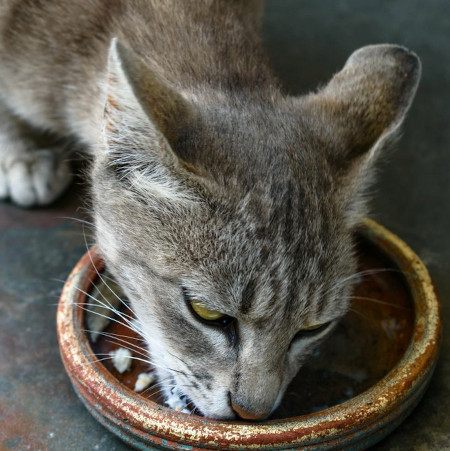
Distinctive “Purr-sonality”: Cats purr at a frequency between 20 and 140 Hertz, a sound range known to promote bone density, tissue repair, and pain relief.
Flexible Anatomy: Cats do not have a rigid collarbone, and their spine is extraordinarily flexible with 53 loosely fitting vertebrae, allowing them to squeeze through any opening larger than their head.
Exceptional Jumpers: An average housecat can leap up to six times its body length in a single bound thanks to powerful hind leg muscles.
Unique Nose Prints: Just like human fingerprints, the pattern of ridges and bumps on a cat’s nose is unique to every individual feline.
Night Vision: Cats only need about one-sixth of the light humans need to see clearly, largely due to a reflective layer behind their retina called the tapetum lucidum.
Communication with Humans: Adult cats rarely meow at other cats; they developed meowing almost exclusively as a way to communicate with and manipulate human caregivers.
Sleep Masters: Cats spend roughly 70% of their lives sleeping, which translates to about 13 to 16 hours a day to conserve energy for hunting.
Scent-Marking Express: Cats have scent glands on their cheeks, lips, paws, and tail base. When they rub against you, they are claiming you as part of their safe territory.
Dominant Paws: Studies show that male cats are more likely to be left-pawed, while female cats tend to be right-pawed.
Ancient Companionship: Archaeological evidence suggests humans and cats have been living together for over 9,500 years, predating the ancient Egyptian cat worship era.
A dog’s nose print is completely unique. Just like human fingerprints, the pattern of ridges and creases on a dog’s nose is distinct to each individual canine and can be used for identification.
Dogs can process smells up to 100,000 times better than humans. A dog’s brain area dedicated to analyzing smells is roughly 40 times larger than a human’s relative to size, with up to 300 million olfactory receptors compared to our 6 million.
Dogs dream during sleep just like humans do. Canines experience REM (Rapid Eye Movement) sleep, the stage where vivid dreams occur, causing them to twitch, move their paws, or make quiet noises while dreaming.
The Three Basenji dogs are famous for not barking. Known as the “barkless dog,” the Basenji produces a unique yodel-like sound called a “barroo” due to the unusual shape of its larynx.
Dogs possess a sense of time and routine. While they don’t count hours, dogs anticipate recurring events based on circadian rhythms, daylight changes, and subtle cues in human behavioral patterns.
A dog’s wagging tail has its own complex language. A tail wagged more to the right usually indicates positive feelings or excitement, whereas a tail wagged to the left often indicates anxiety or negative emotions.
Three dogs survived the sinking of the Titanic. Out of twelve dogs aboard the luxury liner, two Pomeranians and one Pekingese survived after being rescued in lifeboats alongside their owners.
Dogs are as intelligent as a two-year-old child. Studies show the average dog can understand around 165 words, signals, and gestures, while highly trained dogs can learn over 250 words.
Petting a dog lowers human blood pressure and stress. Interacting with a dog triggers the release of oxytocin, serotonin, and dopamine in the human brain while simultaneously reducing cortisol levels.
Dogs sweat exclusively through their paw pads. Unlike humans who sweat all over their skin, dogs rely primarily on panting to regulate body temperature, using perspiration on their footpads only as a minor cooling mechanism.
Mold gave humanity its first true antibiotic. Alexander Fleming accidentally discovered penicillin in 1928 when a stray spore of Penicillium rubens landed on a Petri dish of bacteria and inhibited its growth, revolutionizing modern medicine.
Slime molds can solve complex mazes without a brain. Though technically protists rather than true fungi, slime molds spread efficiently toward food sources and can map optimal pathways through mazes and city transit networks using basic chemical signaling.
Mold is responsible for unique aged cheeses. Varieties like Penicillium roqueforti and Penicillium camemberti give blue cheese, Roquefort, Brie, and Camembert their distinct flavors, textures, and characteristic rinds.
Spores are virtually everywhere in the air. Mold spores exist in almost all indoor and outdoor air currents, floating constantly until they land on an environment with moisture and organic matter to colonize.
Mold reproduces both sexually and asexually. Depending on environmental conditions and species type, mold can propagate by producing asexual spores or by fusing hyphae with compatible strains to form genetically unique sexual spores.
The “black mold” health panic is widely misunderstood. While Stachybotrys chartarum produces mycotoxins and thrives in damp buildings, toxicological studies show that inhaling ordinary levels of black mold spores does not produce unique “poisoning” beyond general allergic reactions and respiratory irritation.
Mold is nature’s essential recycling engine. As primary decomposers, molds secrete digestive enzymes that break down tough organic materials like cellulose and lignin in dead trees, returning vital nutrients to the soil.
Soy sauce and sake rely on mold fermentation. The mold species Aspergillus oryzae (known as koji-kin) is essential for breaking down complex starches in soybeans and rice into simple sugars during traditional fermentation.
Certain molds can grow on plastics and synthetic materials. While mold prefers wood and drywall, species like Aspergillus tubingensis have adapted to secrete enzymes that break down polyurethane and other synthetic polymers.
Mold spores can survive extreme radiation and space exposure. Experiments aboard the International Space Station showed that spores of Aspergillus niger can survive high doses of ionizing radiation, highlighting their extreme resilience.
Barbers used to perform surgeries and dentistry. During the Middle Ages, “barber-surgeons” handled bloodletting, tooth extractions, and minor surgical procedures alongside hair trimming.
The barber pole colors symbolize blood and bandages. The classic red-and-white pole originated in the medieval era: red represents blood, white represents clean bandages, and the pole itself represents the staff patients held to make their veins swell for bloodletting.
Alexander the Great mandated short hair for military strategy. He ordered his soldiers to shave their heads and beards so enemies couldn’t grab their hair during hand-to-hand combat.
Frequent trims do not make hair grow faster. Hair growth occurs entirely at the follicle beneath the scalp. Trimming removes split ends to keep hair healthy and prevent breakage, giving the illusion of faster growth, but it doesn’t affect the growth rate.
The bob haircut caused major social uproar in the 1920s. When short “flapper” bobs became popular, some department stores fired women who cut their hair, and doctors claimed short hair caused medical issues to discourage the trend.
Ancient haircuts relied on sharp flint and obsidian. Long before metal shears existed, prehistoric humans cut their hair using sharpened volcanic glass (obsidian), flint blades, and fire.
The world’s most expensive haircut cost over $20,000. Celebrity hairstylist Stuart Phillips charged £8,000 (around $16,000 to $24,000 depending on exchange rates) for a haircut for billionaire Beverly Lateo, which included first-class flights and luxury limousine service.
Astronauts use vacuum-attached clippers in space. To keep microgravity from scattering thousands of tiny hair clippings into air filters and navigation equipment, astronauts use electric clippers attached directly to a suction hose.
Your hair grows faster during warmer weather. Higher temperatures and increased circulation during summer months slightly boost metabolic activity, causing hair to grow marginally faster than in winter.
The mullet has ancient origins. Long before its 1980s peak, the “business in the front, party in the back” style was worn by ancient Roman warriors and Assyrian soldiers to keep hair out of their eyes while protecting the back of their necks from sun exposure and weapon strikes.
Bonus: Your hair grows 83 feet (25 meters) per day. Explanation, each hair grows about 1/100-inch and you have 100,000 hairs.
Two dogs are talking. One says, “I love being a dog! We get free food, belly rubs, and endless walks!” The other dog sighs. “Yeah, but I’m tired of being called ‘Good Boy.’ I want to be called ‘Excellent Gentleman’ for once.”
A dog walks into a post office, walks up to the counter, and says, “I’d like to send a telegram.” The clerk, surprised, says, “A dog? Sending a telegram? What do you want it to say?” The dog replies, “Woof woof woof woof woof woof woof woof woof.” The clerk counts the woofs and says, “That’s nine woofs. You know, for the same price, you could add one more ‘woof’ and make it ten.” The dog looks at him and says, “But then it wouldn’t make any sense!”
A dog goes to a fancy restaurant and orders a steak. The waiter, surprised, asks, “Are you going to eat that with a knife and fork?” The dog barks, “Of course not! I’m a dog, I’ll eat it with my paws!”
My dog thinks the vacuum cleaner is trying to eat us. I wish I had that level of loyalty in a relationship.
My dog is an emotional support animal. Mostly for himself.
What do you call a dog magician? A Labracadabrador!
My dog used to chase people on a bike. Then I took his bike away.
Why don’t dogs make good doctors?
Because every time they hear “CAT scan,” they lose their minds.
Why don’t dogs make good doctors?
They keep burying the lab results.
Why don’t dogs make good doctors?
They diagnose everything as “not enough treats.”
Why don’t dogs make good doctors?
They insist on licking every wound no matter who it belongs to.
What do you get if you cross a dog and a lion? A terrified Fed Ex driver!
How do you stop a dog from barking in your front yard? Put him in the back yard!
I brought my dog to a pet psychic.
She said, “He’s feeling ignored.” I said, “He’s sitting on my lap.”
She said, “He wants emotional attention.”
I said, “He just farted and licked his butt.”
She refunded me.
My dog barks at delivery people like he’s defending the nation.
But if they pet him, he instantly betrays me and shows them where we keep the snacks.
When you learn the surprising truth about commercial cat food, you’ll probably want to change your cat’s diet immediately.
Let’s start with some simple observations. When cats eat grass, what happens? Right, they regurgitate it.
The grass they eat doesn’t get digested. In fact they can’t digest grass. They aren’t designed appropriately. The intestine of animals who do eat grass is quite long. The intestine of a cat is very short. The cat is specially made to eat meat.
If you fed nothing but grass to your cat, and if the cat could actually keep it in, the cat wouldn’t be able to get enough nutrition.
That’s why they eat small animals. That’s what they are designed to eat. That’s where they get their nutrition. An outdoor cat eats mice, gofers, and the occasional bird, and they do just fine. They have done fine for thousands of years.
So it would be silly to feed them anything like grass, wouldn’t it?
Yet, most commercial dry cat food is composed mostly of grains like grass. Oh, it doesn’t look like grass, because the grains are ground up, and colored to look like meat. Then an artificial odor is added so the grain-based food smells attractive to cats.
Many older housecats suffer from arthritis, and urinary tract problems. Many cats of all ages suffer from intestinal problems, generally diarrhea. In time, many, maybe even most, die from these diseases. Guess what? These are the cats that eat dry commercial cat food.
If you simply switch to real meat, simulating a cat’s actual diet, these diseases are exceptionally rare.
Unfortunately, many commercial canned cat foods do not contain as much meat as you might like. And dog foods are often even worse, because dogs can get away with less protein than cats need. For best results, read the labels and try to find the most real cat food you can. If you have the time, the best bet is to make your own cat food from whole chickens and other small creatures.
But what about the cat’s teeth? Have you been led to believe that they need the dry food to keep their teeth clean? Have you ever wondered how a single bite or two on each morsel of dry food can actually clean a cat’s teeth? As you know, the cat doesn’t really chew the food up. The dry food doesn’t really do much for the cat’s teeth at all. Nature takes care of that. The cat’s teeth are designed to eat the way they do. The cat’s saliva has anti-bacterial qualities. The teeth don’t need any special attention beyond what nature already provides.
Why did the cat sit on the computer? Because it wanted to keep an eye on the mouse!
Why don’t cats play poker in the wild? Too many cheetahs!
Why did the cat want a degree? To become a “purr-fessor”!
A cat owner went to see a psychic and asked, “Can you communicate with animals?” The psychic replied confidently, “Absolutely! I have a special gift for understanding them. What would you like to know?” The cat owner hesitated and said, “Well, my cat always meows loudly at night, and it’s keeping me awake. I want to know why.” The psychic closed her eyes, tuned in, and then opened them with surprise. She said, “Your cat says it’s because you snore too loudly, and it’s trying to compete with you!”
What do you call a cat that gets thrown into the dryer? Fluffy!
How does a cat count its toys? One, two, three… many!
A cat walked into a fancy restaurant and approached the maître d’. The maître d’ looked at the cat and asked, “Excuse me, but are you allowed in here?” The cat replied, “Of course, I am. I’m not a regular cat; I’m a service cat.” The maître d’ was intrigued and asked, “A service cat? What kind of service do you provide?” The cat confidently responded, “I provide comfort and companionship to those who need it. I’m here to assist in turning any ‘catastrophic’ dining experience into a purr-fectly delightful one!”
Why don’t cats like shopping online? They prefer in person “purr-chases.”
How does a cat communicate with underwater creatures? By using octo-puss language!
What do you get when you cross a cat with a lemon? A sourpuss!
Why did the cat bring a ladder to the bar? It heard the drinks were on the house!
What’s a cat’s favorite dessert? Mice cream!
Why was the cat afraid of the tree? Because of its bark!
What do you call a cat that can dance? A “purr-former”!
How does a cat ask for a snack? It gives you a “purr-suasive” look!
Why did the cat wear a fancy hat? It wanted to look “purr-stigious”!
What’s a cat’s favorite subject in school? “Hisstory”!
Owning a raccoon as a pet is a very unusual choice, and it comes with a mix of charm, chaos, and legal headaches. 🦝 Here’s a careful breakdown of the pros and cons of having a pet raccoon.
✅ Pros of Owning a Pet Raccoon
Highly Intelligent – Raccoons are extremely smart; they can learn tricks, open doors, and solve puzzles. You can actually teach them things in ways similar to dogs.
Playful and Entertaining – They’re curious and mischievous. Watching a raccoon explore or manipulate objects can be endlessly amusing.
Affectionate (Sometimes) – With consistent socialization from a young age, some raccoons can bond with humans and enjoy cuddling or sitting on your lap.
Unique Companion – Very few people have pet raccoons, so it’s a conversation starter and a truly “different” kind of pet.
Problem-Solving Skills – Their intelligence can keep you mentally engaged; they often require creative enrichment activities like puzzle feeders.
❌ Cons of Owning a Pet Raccoon
Legal Restrictions – Many U.S. states and countries prohibit keeping raccoons as pets without special permits. Check local wildlife laws carefully.
Destructive Behavior – They love to climb, chew, and explore. Expect chewed furniture, scratched walls, and unlocked cabinets raided.
Nocturnal Activity – Raccoons are most active at night. They may be loud, rummage through things, or disturb your sleep.
Health Risks – They can carry rabies, roundworms, and other diseases. Regular veterinary care from a specialist is essential but not easy to find.
High Maintenance – Raccoons need lots of mental stimulation, varied diet, and space to explore. They are not “low-effort” pets.
Strong Odor – Litter boxes or cages can smell strongly if not cleaned frequently.
Short Attention Span – Raccoons can get bored quickly and may become destructive or even aggressive if understimulated.
Social Complexity – They are not domesticated animals like cats or dogs. Even tame raccoons can become unpredictable, especially during mating season.
Long-Term Commitment – Raccoons live 10–20 years in captivity. That’s a long-term responsibility many underestimate.
Insurance and Liability – Many homeowners’ insurance policies don’t cover exotic pets, meaning damages could come out of your pocket.
💡 Bottom line: Raccoons are brilliant, mischievous, and adorable—but they are wild animals at heart. They are best suited for experienced exotic pet owners who understand the legal, behavioral, and health challenges.
Ah, cats and their meows—one of life’s tiny mysteries wrapped in fur and attitude. 🐱 Meowing isn’t just random noise; it’s a surprisingly nuanced form of communication, almost exclusively reserved for humans. Unlike dogs, who bark at everything, cats have a special vocal toolkit for us. Here’s a deep dive into the world of feline chatter.
🐾 Why Cats Meow
Meowing is mostly for humans. Adult cats rarely meow at each other; kittens meow to get their mother’s attention, and as adults they retain that habit for communicating with humans.
Attention, please! Many meows are simply ways to say, “Hey, I exist. Feed me. Pet me. Open the door.”
Health alerts. Persistent or unusual meowing can indicate stress, pain, or illness, especially in older cats.
Cats also use different pitches and tones for different needs. A high-pitched meow often signals urgency or excitement, while a low-pitched one can indicate annoyance or discomfort.
🐱 Types of Meows
The Greeting Meow: Your cat says hello when you come home. Usually short and cheerful.
The Request Meow: The one that demands food, attention, or entry. Often repetitive until you respond.
The Complaint Meow: Longer, drawn-out, sometimes accompanied by swishing tail.
The Caterwaul: Loud, yowling meows—usually by unspayed females in heat or cats feeling territorial.
The Trill or Chirp: A mix between a meow and a purr, often used to greet humans or other cats, or to indicate excitement.
The Silent Meow: Mouth moves, but no sound. Many cat owners report that this is often the most insistent “feed me” type.
🧠 The Science of Meowing
Cats can make over 100 different sounds, but the meow is the one they use mostly for humans.
Studies show that cats can modify their meows to mimic a baby’s cry, making humans respond faster—sort of an evolutionary trick.
Cats can distinguish between their owner’s voice and a stranger’s, and some tailor their meows accordingly.
Cats may also imitate other species’ sounds if they notice it gets attention—like birds or even dogs.
😺 Fun and Surprising Facts
Not all breeds meow the same way—Siamese cats are famous for being vocal and loud, while Maine Coons are more soft-spoken.
Some cats use meows to initiate play, signaling excitement or curiosity.
Kittens meow more when they’re cold, hungry, or lonely.
Meowing frequency usually decreases once a cat reaches adulthood unless they live with humans.
Senior cats may meow more if they have cognitive decline, disorientation, or anxiety.
In Japan, the word for “meow” is “nyā”, which has become iconic in pop culture.
🐾 Tips for Understanding Your Cat
Listen to the tone, pitch, and duration—it tells you what kind of “conversation” they want.
Respond consistently—cats learn that certain meows get results.
Don’t ignore health-related meows; sudden increases in vocalization could indicate illness.
Some cats develop a “signature meow”, a unique sound they use only with their favorite humans.
Most raccoons don’t have much knowledge of automotive technology, but this one seems to know exactly what he’s doing.
Raccoons are clever, adaptable little bandits with ringed tails and a reputation for opening anything that looks like it might contain snacks. Here are 30 fascinating facts about the animal known as the Raccoon.
🦝 Biology and Behavior
The scientific name of the raccoon is Procyon lotor, which roughly means “washer dog.” Early observers thought raccoons looked like they were washing their food.
That “washing” behavior isn’t really cleaning. Raccoons are actually increasing the sensitivity of their paws by wetting them.
A raccoon’s front paws are extremely sensitive and contain thousands of nerve endings, almost like human fingertips.
They can identify objects by touch alone even without seeing them.
Raccoons are mostly nocturnal, meaning they are active mainly at night.
Their famous black facial mask helps reduce glare and improve night vision, similar to the eye-black used by athletes.
An adult raccoon typically weighs 10–20 pounds (5 – 9 kg), though some urban raccoons can grow much larger thanks to abundant food.
Raccoons have excellent climbing ability and can descend trees headfirst by rotating their hind feet.
They are very intelligent animals, ranking among the smartest mammals after primates and dolphins in some tests.
Raccoons have been shown to remember solutions to puzzles for up to three years.
🧠 Intelligence and Problem Solving
In experiments, raccoons have been able to pick locks, unlatch cages, and solve multi-step puzzles.
Some researchers say raccoon intelligence is comparable to monkeys in certain tasks.
They can open jars, doors, coolers, and trash can lids, which is why they are famous neighborhood “garbage burglars.”
Raccoons learn by trial and error and quickly adapt to new situations.
Mothers teach their young how to forage and solve problems.
🌎 Habitat and Range
Raccoons are native to North America, but humans have introduced them to parts of Europe and Japan.
They thrive in cities and suburbs, often living in attics, chimneys, sewers, and abandoned buildings.
Urban raccoons can have smaller territories because food is plentiful.
They are excellent swimmers and often hunt along rivers, lakes, and wetlands.
Raccoons can survive in climates ranging from Canada’s forests to tropical regions.
🍎 Diet
Raccoons are omnivores, meaning they eat both plants and animals.
Their diet can include fruit, nuts, insects, frogs, fish, eggs, corn, and garbage.
They especially love sweet corn and ripe fruit.
In cities they frequently raid trash cans, pet food bowls, and bird feeders.
👶 Life and Social Behavior
Baby raccoons are called kits or cubs.
A typical litter contains 2–5 babies.
The babies are born blind and helpless and stay with their mother for about a year.
Female raccoons are usually more social than males, sometimes sharing territory with relatives.
🦝 Fun and Unusual Facts
A raccoon’s ringed tail helps with balance when climbing and may also be used for communication.
Despite their mischievous reputation, raccoons play an important role in ecosystems by spreading seeds and controlling insects and small animals.
Please feel free to use up to 600 words in your own reports, stories, websites and research. Citing worlds-worst-website.com is not required, but greatly appreciated!
How accurate, relevant and well-written is this website? If you find any inaccuracies, typos, or have suggestions, I’d really appreciate hearing about it. Please drop me an email: jeff@worlds-worst-website.com
Your donation to support the ongoing development of the world's worst website in any amount, even if just $1, is greatly appreciated!