Posted on — Leave a comment

Most Obnoxious Invention

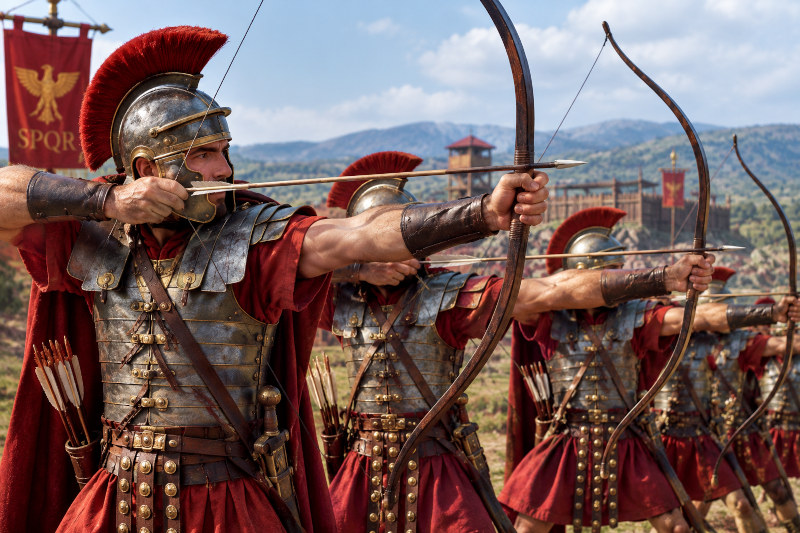
One of Leonardo da Vinci’s less known but very effective inventions was a weapon – stink bombs mounted on arrows.

In his notebooks, Leonardo da Vinci conceptualized early forms of chemical and psychological warfare, including foul-smelling smoke weapons designed to disorient and incapacitate enemies.

The Design: Leonardo sketched and described small containers packed with sulfur, pitch, and other pungent, suffocating compounds affixed to the heads of arrows or thrown as projectiles. When launched and shattered upon impact, they released an overpowering, foul stench and choking smoke.

The Purpose: The goal was not necessarily to kill, but to cause panic, force enemy soldiers to abandon their positions, or cause asphyxiation in enclosed spaces (like fortifications or ship decks) without having to breach heavy armor directly.

While it is uncertain how widely these stink-bomb arrows were ever deployed in actual battles, the schematics remain some of the earliest documented precursors to modern crowd-control malodorants and non-lethal chemical weapons.

Posted on — Leave a comment

Worst Embarrassment for Soldiers

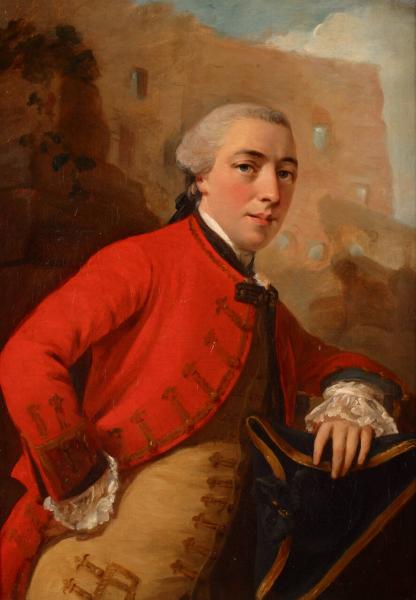
General John Burgoyne who participated on the British side of the American Revolutionary War, had great respect and obedience from his soldiers. His method of punishment was different. If a soldier misbehaved, he had the man wear his coat inside out.

Deeper Dive:

General John Burgoyne—nicknamed “Gentleman Johnny” by his men—was uniquely progressive for an 18th-century British commander. During an era when the British Army routinely relied on harsh corporal punishment, flogging, and strict subordination to enforce discipline, Burgoyne took the rare approach of treating his soldiers as thinking human beings rather than mere automatons.
Burgoyne’s Reformist Code

In 1759, when Burgoyne raised and commanded the 16th Light Dragoons, he issued a famed code of instructions to his officers:

Humiliation Over Brutality: Burgoyne strongly discouraged physical flogging, arguing that it degraded a soldier’s dignity and destroyed his self-respect.

The “Inside-Out Coat” Punishment: Instead of the whip, Burgoyne used public shame as a corrective measure. If a soldier misbehaved or showed poor conduct, he was ordered to wear his uniform coat turned inside out to visibly mark him as an example of bad behavior and dishonor to his comrades.

Encouraging Initiative: Burgoyne encouraged his soldiers to exercise independent judgment on the field—a revolutionary concept at the time.

Because he treated his soldiers with fairness, respect, and restraint, Burgoyne earned the immense devotion and obedience of his troops throughout his campaigns.


General John Burgoyne
General John Burgoyne(1722 – 1792)

Posted on — Leave a comment

Loudest Science Experiments

For centuries, people observed that heavy rains often followed major military battles, a phenomenon noted as early as Plutarch in ancient Rome and seen again during the Napoleonic Wars and the American Civil War.

In 1871, a civil engineer and Civil War veteran named Edward Powers published War and the Weather, popularizing the Concussion Theory. He argued that the violent shockwaves and noise of artillery fire “shook” moisture out of clouds or forced opposing air currents to collide.

This led to real-world, government-funded experiments:

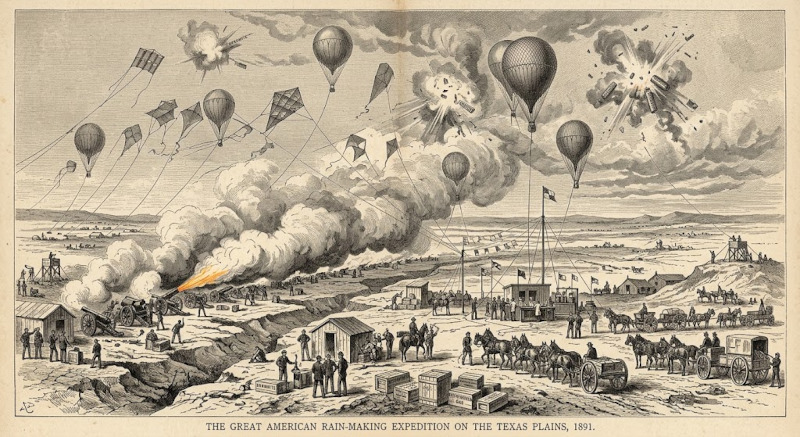
The 1891 “Boom” Expeditions: In 1890, the U.S. Congress appropriated funds for the Department of Agriculture to test the theory. Patent attorney Robert St. George Dyrenforth took a team to drought-stricken Texas.

Explosive Arsenal: Dyrenforth’s team attacked the sky using mortars, cannons, tons of dynamite, electrified kites, and oxy-hydrogen balloons detonated aloft.

The Result: The tests were deafening and completely ineffective. While occasional sprinkles fell days later—usually during Texas’s normal rainy season—the scientific consensus deemed it a total failure. Press coverage mocked Dyrenforth, dubbing him General “Dry-Henceforth.”

Why Does Rain Actually Follow Battles?

The modern understanding relies on two main factors:

Particulate Nucleation (The Smoke Effect): Heavy artillery and burning black powder release vast amounts of smoke, soot, and ash particles (condensation nuclei) into the atmosphere. Water vapor condenses around these particles, forming droplets that turn into clouds and rain. Modern cloud-seeding (using silver iodide) relies on a refined version of this principle.

Selection Bias & Military Strategy: Historically, commanders rarely initiated major tactical engagements during active downpours due to mud, poor visibility, and damp gunpowder. Battles were fought during dry spells ahead of moving weather fronts; rain naturally arrived shortly afterward regardless of artillery.

Posted on — Leave a comment

Worst Lost Airplane Mistake

A B-25 bomber crashed into the 79th floor of the Empire State Building in 1945.

On a foggy Saturday morning in July 1945, a U.S. Army Air Forces B-25 Mitchell bomber lost visibility and crashed directly into the north side of the building between the 78th and 80th floors. Despite structural damage and fires that killed 14 people, the building’s steel frame remained intact, and parts of the building reopened for business two days later.

It holds a Guinness World Record for an elevator survival story. During the 1945 plane crash, elevator operator Betty Lou Oliver survived a catastrophic 75-story drop inside an elevator car after the plane’s engine severed the cables. Cables coiled at the bottom of the shaft and air trapped beneath the car cushioned the fall, making it the highest survived elevator fall in history.

The top of the Empire State Building flexes back and forth a few feet (a meter) in heavy winds.

It was built in just 13 months and completed ahead of schedule. Construction moved at a breakneck pace, progressing at an average rate of four and a half stories per week. Between March 1930 and April 1931, roughly 3,400 workers completed the 102-story structure in just 410 days—finishing under budget and well ahead of schedule.

The original spire was designed as a docking station for dirigibles. The top 200 feet of the building were originally constructed to serve as a mooring mast for commercial airships (Zeppelins). The idea was for airships to tie up to the spire, allowing passengers to disembark via an open-air gangplank on the 102nd floor, but high winds and safety hazards forced the idea to be abandoned after only a couple of brief tests.

It was involved in a fierce “Race to the Sky.” During the late 1920s, developers in Manhattan competed aggressively for the title of the world’s tallest building. The Empire State Building’s designers modified their plans mid-construction—specifically adding the mooring mast—to surpass both 40 Wall Street and the Chrysler Building, securing the crown of world’s tallest building for 41 years until 1972.

It generates more revenue from its observatories than from office rents. While hundreds of businesses lease office space across its lower floors, the 86th and 102nd-floor observation decks consistently bring in more money than commercial real estate leases, generating over $100 million annually from millions of global tourists.

It serves as its own zip code. Due to its massive scale, thousands of daily workers, and high volume of mail, the United States Postal Service assigned the Empire State Building its own unique zip code: 10118.

Its famous tower lights require a dedicated team and change color daily. The building introduced light displays in 1932 to announce Franklin D. Roosevelt’s presidential victory. Today, a state-of-the-art computer-controlled LED system displays over 16 million colors to recognize holidays, sports teams, global organizations, and cultural events.

It is an iconic lightning rod, struck around 25 times per year. Standing tall over Midtown Manhattan, the building’s top spire acts as a massive lightning rod for the city. It features a heavy grounding system that channels millions of volts safely into the earth, preventing structural damage and keeping visitors inside completely safe during storms.

Athletes race up its 1,576 steps in an annual footrace. Every year since 1978, the building hosts the Empire State Building Run-Up. Runners from around the world sprint up the 86 flights of stairs from the ground lobby to the main observatory, with top competitors finishing the vertical climb in under ten minutes.

Posted on — Leave a comment

Worst Excuse for a Horse

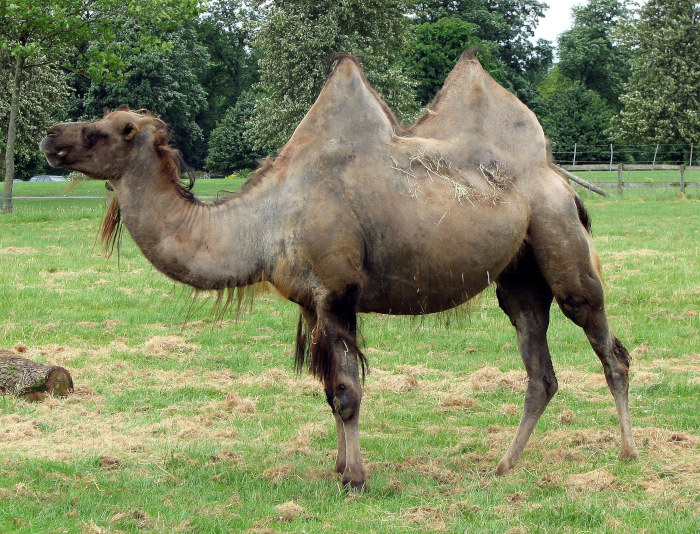
If it had not been for the Civil War, the United States Cavalry might have been riding camels. Shortly before the war, Secretary of War Jefferson Davis imported 81 camels for testing in Texas. There were some problems. Ordinary horses were terrified of the camels, and so were many of the soldiers. On the other hand, in some ways the camels were excellent. They could go for several days without water, they could carry a half-ton, and walk 40 miles a day. The military was generally impressed and were ready to start switching to camels in large numbers, but then the war developed and there was no time to deal with camel importation.

Interesting Camel Facts

They Have Three Eyelids and Two Rows of Lashes

Camels have a clear inner eyelid (a nictitating membrane) that wipes away sand while allowing them to see in a sandstorm. Their double-layered, long eyelashes form a natural shield against windblown dust.

They Store Fat, Not Water, in Their Humps

A common myth is that hump storage holds water. Humps actually store energy-dense fat. Concentrating fat in one place prevents it from insulating their entire body, allowing heat to escape more efficiently. When the fat metabolizes, it yields both energy and over a gram of water per gram of fat.

They Can Guzzle 30 Gallons of Water in 13 Minutes

When dehydrated, a camel can drink up to 30 gallons (113 liters) of water in under 15 minutes. Their oval-shaped red blood cells can expand up to 240% of their normal volume without bursting to accommodate rapid hydration.

Their Nostrils Act Like a Dehumidifier

Camels can trap moist air from their breath and absorb the moisture back into their nasal membranes before exhaling dry air, minimizing water loss simply by breathing. They can also lock their nostrils completely shut during sandstorms.

They Have Built-in Kneepads

Camels are born with thick, leathery patches of skin on their knees and chest called carpal pads. These pads protect their body from burning on scorching desert sand when kneeling.

They Are Native to North America

The evolutionary ancestors of modern camels originated in North America around 40 to 50 million years ago. They crossed the Bering land bridge into Asia and South America (evolving into llamas and alpacas) before dying out in North America around 10,000 to 12,000 years ago.

Their Blood Cells Are Unique Among Mammals

Unlike other mammals, which have round red blood cells, camels have oval-shaped cells. This unique shape allows their blood to flow smoothly even when it becomes thick due to severe dehydration.

They Waste Virtually No Water

A camel’s kidneys extract maximum water from urine, leaving behind a thick, syrupy liquid with a salt concentration higher than seawater. Their feces are so dry that nomadic tribes use them directly as campfire fuel without needing to dry them first.

They Have Rigid Mouth Interiors for Eating Thorns

The inside of a camel’s mouth is lined with tough, cone-shaped structures called papillae. This keratinized lining lets them chew straight through sharp desert thorns, cacti, and wooden twigs without pain.

They Can Regulate Their Own Body Temperature

Instead of sweating constantly, a camel allows its body temperature to fluctuate by as much as 11°F (6°C) throughout the day—rising during the hot afternoon and cooling at night—saving massive amounts of sweat and water.

Posted on — Leave a comment

Worst Way to Start a War

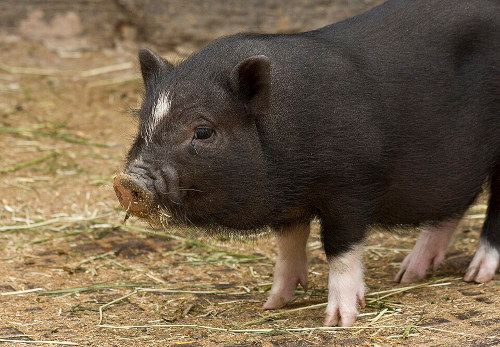
You can be mad at your neighbor, or your neighbor’s pig in this case, but overall it is best to really think about possible repercussions, even remote, before taking any drastic action.

It is possible that a single pig caused the US War of 1812. This pig was always getting into the neighbor’s yard and eating up prized shrubs and flowers. Finally the neighbor got mad and killed the pig with a pitchfork. The pig’s killer was a congressional candidate who lost the election by one vote. This was the vote cast against him by the late pig’s owner presumably because he was upset about the loss of his pig. When the matter of deciding about the war was voted upon, the issue passed by one vote. This was the vote of the candidate who had won the election by one vote.

Posted on — Leave a comment

Worst Submarine

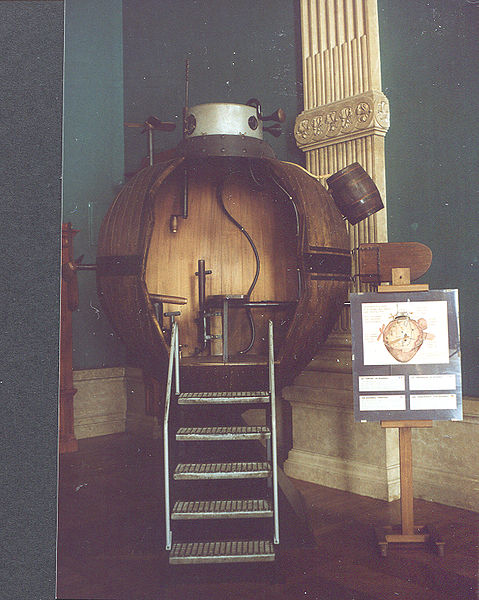
The world’s worst submarine was the first submarine. That makes sense. It had very limited capabilities. In it’s one and only attempted attack it was comically ineffective.

In the mid 1770’s David Bushnell, an inventive guy, created the world’s first attack submarine. Using whiskey barrel technology, he made a watertight clam shell shaped vehicle with barely enough room for one man. The thing, nicknamed the Turtle, was placed in New York Harbor one night Continue reading Worst Submarine

Posted on — Leave a comment

Worst Misunderstanding

When Adolf Hitler saw a pile of bricks near the church of St. Matthew in Munich, Germany, he said, “That pile of stones will have to be removed.” Someone misunderstood him, thinking he was referring to the whole church. The church was demolished.

10 Weird Facts About Hitler

He Was Heavy into Prescription Drugs and Meth

Hitler’s personal physician, Dr. Theodor Morell, kept the German dictator on an escalating daily regimen of up to 80 different medications. These included daily injections of high-grade methamphetamine (Pervitin), opiates, cocaine eye drops (prescribed for sinus troubles), and even extracts from young bulls’ testicles to boost his libido.

He Whistled Disney Songs for Stress Relief

Despite being an infamous tyrant, Hitler was a fan of early American cinema and animation. His associates noted that when he was in a good mood—or attempting to de-stress after major events like the fall of Paris—he would compulsively whistle tunes like “Who’s Afraid of the Big Bad Wolf” and “When You Wish Upon a Star”.

His Iconic Mustache Was Trimmed for Gas Masks

Before and during early World War I, Hitler wore a thick, full “Kaiser-style” handlebar mustache. He was ordered to trim it down to the distinct “toothbrush” style specifically so it would form a proper seal under a military gas mask after surviving a mustard gas attack.

He Was Technically Stateless for Seven Years

Hitler was born in Austria-Hungary and loathed the multi-ethnic empire. He formally renounced his Austrian citizenship in 1925 but was unable to gain German citizenship right away, leaving him officially stateless (without a country or passport) until 1932, when a Nazi political ally secured him a low-level government job in Brunswick that automatically conferred German nationality.

He Borrowed the “Sieg Heil” Cheer from College Cheerleaders

According to Ernst “Putzi” Hanfstaengl, a close associate of Hitler in the 1920s who went to Harvard, Hitler was deeply fascinated by American college football culture. He adapted the rhythmic, unison chanting and sharp arm gestures used by U.S. cheerleaders to create the rallies and the famous “Sieg Heil!” salute.

He Was a Severe Hypochondriac with Chronic Flatulence

Hitler suffered from severe stomach cramps and chronic digestive issues, resulting in extreme flatulence. His doctors treated the condition with a bizarre array of remedies, including anti-gas pills composed of strychnine and atropine (which nearly poisoned him over time) and chamomile enemas.

He Never Visited a Single Concentration Camp

Despite engineering the Holocaust and ordering the deaths of millions, Hitler maintained a strict distance from the actual mechanics of the genocide. He never visited a single extermination camp, avoided hospitals treating wounded soldiers, and refused to view physical evidence of the destruction he ordered.

He Was a Night Owl Who Slept Through D-Day

Hitler had severe insomnia and rarely went to sleep before 3:00 or 4:00 a.m. Because of his strict orders that he never be disturbed while sleeping, his staff was too terrified to wake him on the morning of June 6, 1944 (D-Day). He slept in until nearly noon, delaying critical orders to release reserve Panzer divisions to counter the Allied landings at Normandy.

He Loved Sweets and Hated the Dentist

Despite his strict vegetarian diet, Hitler was addicted to sugar. He reportedly ate up to two pounds of chocolate a day, added multiple spoonfuls of sugar to fine wine, and loved heavy pastries. Unsurprisingly, this led to terrible dental health, severe abscesses, and an intense fear of the dentist; he once insisted on spreading a simple root canal out over eight days because he couldn’t stand the pain.

His Last Name Was Almost “Schicklgruber”

Hitler’s father, Alois, was born out of wedlock to Maria Anna Schicklgruber and used her last name for the first 39 years of his life. Alois later legally changed his last name to “Hitler” (a variant of his stepfather’s name, Hiedler) 13 years before Adolf was born. Had his father not made the change, the Nazi dictator would have been named Adolf Schicklgruber.