Posted on — Leave a comment

Worst Doctor

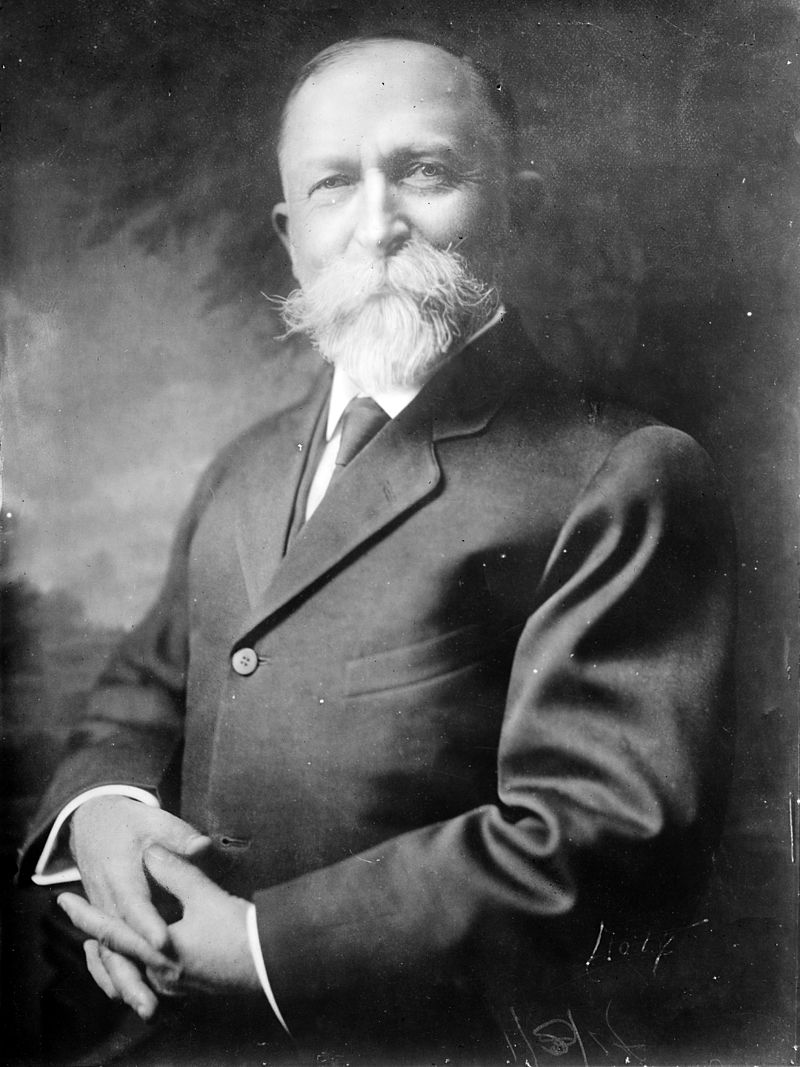
Kellogg’s Corn Flakes was invented as a way to stop children from masturbating. Dr. John Harvey Kellogg felt that bland foods would curb sexual appetite. The theory must have not been quite right, because although a lot of corn flakes were sold, the kids kept doing what kids will do.

Dr. Kellogg was a man obsessed with speaking and acting out against masturbation. In fact, he went much farther than just talking about it. As a medical doctor, he badly abused his power, and young patients, as is evidenced in the following quotes:

“A remedy which is almost always successful in small boys is circumcision, especially when there is any degree of phimosis. The operation should be performed by a surgeon without administering an anesthetic, as the brief pain attending the operation will have a salutary effect upon the mind, especially if it be connected with the idea of punishment, as it may well be in some cases. The soreness which continues for several weeks interrupts the practice, and if it had not previously become too firmly fixed, it may be forgotten and not resumed.”

A method of treatment [to prevent masturbation]: “…and we have employed it with entire satisfaction. It consists in the application of one or more silver sutures in such a way as to prevent erection. The prepuce, or foreskin, is drawn forward over the glans, and the needle to which the wire is attached is passed through from one side to the other. After drawing the wire through, the ends are twisted together, and cut off close. It is now impossible for an erection to occur, and the slight irritation thus produced acts as a most powerful means of overcoming the disposition to resort to the practice.”

Posted on — Leave a comment

Worst Laws About Food

What you’ll see below is from an artificial intelligence investigation. the facts have not been checked.

In Idaho, USA, it’s illegal to give your sweetheart a box of candy weighing more than 50 pounds (22.6 kg).

In Singapore, it’s illegal to chew gum.

In Wisconsin, USA, it’s illegal to serve apple pie in public restaurants without cheese.

In Italy, it’s illegal to eat or drink near a historic monument.

In South Korea, it’s illegal to eat dogs.

In Georgia, USA, it’s illegal to eat fried chicken with utensils.

In Alabama, USA, it’s illegal to sell peanuts after sundown on Wednesdays.

In Japan, it’s illegal to be served food by a person with a tattoo.

In England, it’s illegal to handle a salmon in suspicious circumstances.

In Kansas, USA, it’s illegal to serve wine in teacups.

In Belgium, it’s illegal to eat French fries with mayonnaise on Thursdays.

In Italy, it’s illegal to make or sell spaghetti bolognese.

In Rhode Island, USA, it’s illegal to bite off someone’s leg.

In Nebraska, USA, it’s illegal for bar owners to sell beer unless they’re simultaneously brewing a kettle of soup.

In Denmark, it’s illegal to disrupt the peace with noisy eating.

Posted on — Leave a comment

The Worst Gap in Medical Education

Extensive studies published by the National Institutes of Health (NIH) and the American Medical Association (AMA) show that the average U.S. medical student receives about 19 to 20 hours of nutrition education over four years.

The vast majority of those ~20 hours focuses on basic clinical biochemistry (such as vitamin deficiency diseases like scurvy or metabolic pathways) rather than practical, counseling-based nutrition for preventive health or disease management.

The National Academy of Sciences recommends a minimum of 25 hours of dedicated nutrition instruction. Less than 30% of U.S. medical schools currently hit this benchmark.

This is unfortunate since the majority of diseases start with poor nutrition or can be entirely avoided with good nutrition. When doctors can advise on nutritional improvement, usually eating less sugar and starch, many diseases can be minimized or cured without invasive procedures or medicines with sometimes serious side effects.

10 Fascinating & Curious Facts About Medical School

Unusual traditions, bizarre history, and surprising realities of medical education

1. Professional Actors Are Hired to Feign Illness

Medical schools employ “Standardized Patients”—trained actors who simulate specific physical symptoms, psychological conditions, and emotional outbursts. They grade students not just on diagnostic accuracy, but also on bedside manner and empathy.

2. Students Formally Thank Cadavers at “Anatomy Memorials”

Before or after human dissection courses, most medical schools hold formal memorial services. Students read letters, play music, and express deep gratitude to the donors and their families for providing their first “patient.”

3. Medical School Admissions Used to Accept No Women

Elizabeth Blackwell became the first woman to earn a medical degree in the U.S. in 1849—and her admission was originally intended as a joke by the faculty, who put the vote to the all-male student body assuming they would reject her.

4. Students Learn Physical Exam Skills on Each Other

Long before practicing on real patients, medical students practice routine clinical skills—such as abdominal palpation, neurological reflexes, and ophthalmoscopic eye exams—by acting as test subjects for their classmates.

5. The “White Coat Ceremony” is a Relatively Recent Invention

Though white coats have been worn for over a century, the formal ritual welcoming first-year students with a white coat began at Columbia University College of Physicians and Surgeons in 1993. It has since spread worldwide.

6. Medical Slang Has Its Own Deep Subculture

Medical trainees historically developed elaborate jargon. Concepts like “zebra” refer to an extremely rare diagnosis when a common one is far more likely (“When you hear hoofbeats, think horses, not zebras”).

7. High-Tech Robotic Mannequins Can Sweat and Bleed

Modern medical simulation labs feature high-fidelity mannequins that breathe, dilate their pupils, cry, bleed, moan in pain, and react realistically in real time to drug dosages administered by medical students.

8. “Match Day” Dictates a Doctor’s Entire Career Path in One Envelope

On the third Friday of March, graduating medical students across the U.S. simultaneously open sealed envelopes at 12:00 PM EST to reveal where they will spend the next three to seven years for residency training.

9. Sleep Deprivation Limits Were Only Enforced Recently

Historically, medical residents worked up to 100+ hours per week. It wasn’t until 2003 that the ACGME capped resident work hours at 80 hours per week following major public health advocacy and safety investigations.

10. Scent Adaptation is a Learned Survival Skill

During gross anatomy and clinical rotations, medical students encounter intense smells ranging from embalming fluid (formaldehyde) to severe infections. Many use peppermint oil or Vicks VapoRub under their surgical masks to cope.