If a drop of liquor gets on a scorpion, it will immediately commit suicide with its own stinger.
Facts About Scorpions
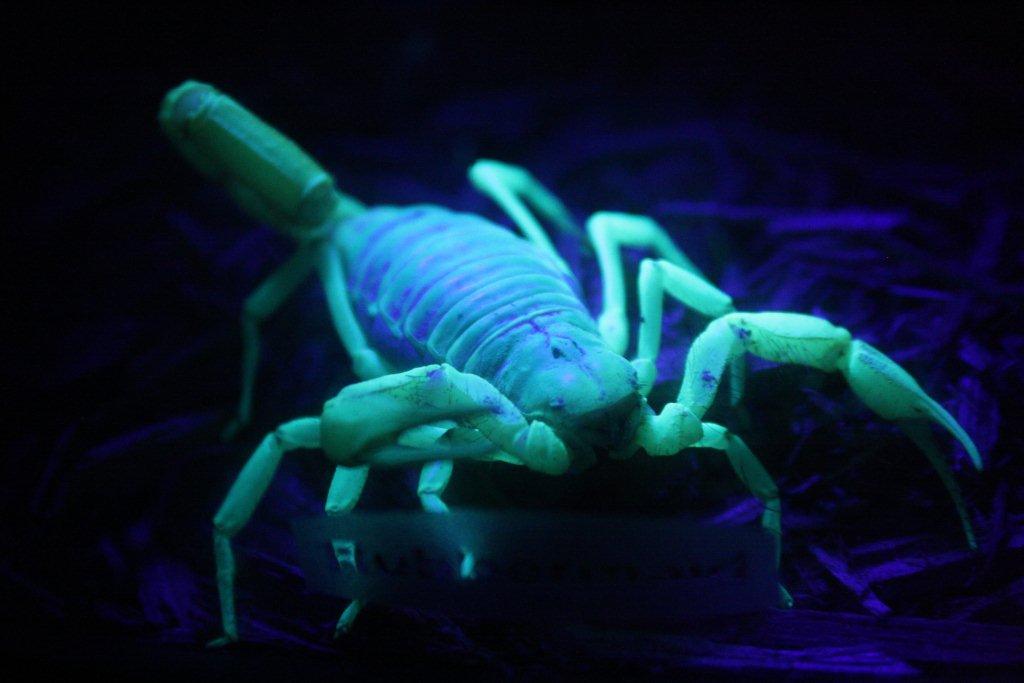
- Glow Under UV Light: Scorpions fluoresce a vibrant blue-green color under ultraviolet light due to special chemicals (like beta-carboline) present in their exoskeleton’s hyaline layer.
- Ancient Survivors: Scorpions are among the oldest land animals on Earth, with fossil records dating back over 400 million years—predating the dinosaurs.
- Live Birth & Maternal Care: Unlike most arachnids that lay eggs, scorpions give birth to live young. Mother scorpions carry their soft, pale offspring on their backs until their first molt.
- Extreme Survival Abilities: Scorpions can slow their metabolism so drastically that some species can survive up to a year without food and remain submerged underwater for up to 48 hours.
- Controllable Venom Injection: A scorpion can regulate how much venom it injects depending on the size of its prey or threat level, sometimes delivering a “dry sting” with no venom at all to conserve resources.
- Courtship “Promenade”: Mating involves a ritualistic dance called the promenade à deux, where the male grasps the female’s pedipalps (pincers) and leads her around to find a suitable surface to deposit his spermatophore.
- Rare Toxicity to Humans: Out of over 2,500 known scorpion species, only about 30 produce venom strong enough to be lethal or dangerous to healthy adult humans.
- Sensory Combs (Pectines): On their undersides, scorpions possess unique comb-like organs called pectines that detect subtle vibrations, textures, and chemical trails on the ground.
- Fluorescent Fossil Clues: Even fossilized scorpions that are millions of years old can still glow under ultraviolet light if their hyaline coating remains intact.
- Venom in Medicine: Scorpion venom contains complex cocktails of peptides that researchers are studying to treat cancer, target tumors, develop immunosuppressants, and engineer targeted pain relievers.