Posted on — Leave a comment

10 Worst Neil deGrasse Tyson Jokes

Neil deGrasse Tyson walks into a bar. The bartender says, “What can I get you?” Neil replies, “A glass of water. But only if you accurately account for the 4×10⁻¹³ mole fraction of D2​O you are serving me.”

Neil deGrasse Tyson was fired from his job as a barista because he kept insisting that the coffee cup was actually “mostly empty space.”

Why did Neil deGrasse Tyson break up with his girlfriend? She claimed the Earth was the center of his universe, and he found the assertion unscientific.

What’s Neil’s favorite part of a joke? The part where he fact-checks the premise.

Neil deGrasse Tyson was pulled over for speeding. The officer asked, “Do you know how fast you were going?” Neil said, “I have a general idea, but according to Heisenberg’s Uncertainty Principle, the more accurately I measure my momentum, the less accurately I know my position relative to the patrol car.”

A movie producer told Neil he wanted to make a sci-fi film where a spaceship travels faster than light. Neil said, “I’m sorry, I can only consult on movies where the physics are merely implausible, not fundamentally incorrect.”

I asked Neil deGrasse Tyson what his least favorite planet was. He said, “Pluto. Just kidding, I find its reclassification as a ‘dwarf planet’ perfectly defensible based on its orbit and mass ratio.” (He then smiled very slightly.)

You know you’ve met Neil deGrasse Tyson when your conversation is less about feelings and more about escape velocity.

Neil deGrasse Tyson doesn’t say “Bless you” when you sneeze. He says, “Gesundheit, a fascinating linguistic artifact, though biologically, a sneeze is merely an involuntary expulsion of air.”

How does Neil deGrasse Tyson organize a party? He focuses on the distribution of mass to maximize gravitational stability.

What did Neil deGrasse Tyson say when he dropped his phone? “Fascinating. The Earth’s gravitational pull seems to be functioning within expected parameters.”

Neil deGrasse Tyson only wears bow ties because neckties are geometrically inefficient.

What’s Neil’s advice for looking at the bright side? “The bright side is merely a region of high photon flux. Try to maintain a cosmic perspective instead.”

Neil deGrasse Tyson walked into a restaurant and ordered a steak, but then he sent it back. Why? Because the chef claimed it was “out of this world,” and Neil found the statement factually erroneous.

Neil deGrasse Tyson stood up against injustice with a sign in his yard that read: “All Lives are Matter.”

My mom told me Neil deGrasse Tyson was talking about me. I panicked! She clarified, “No, he was talking about how carbon-based life forms are inherently fragile.”

Neil deGrasse Tyson never gets lost. He simply determines his precise coordinates within the observable universe.

What’s Neil’s least favorite type of art? Anything that depicts two people kissing in space without acknowledging the lack of atmospheric pressure.

Neil deGrasse Tyson was asked about his greatest fear. He said, “A scientifically illiterate populace… and also running out of coffee.”

Did you hear about Neil deGrasse Tyson’s new line of clothing? It’s designed to be thermodynamically efficient and cosmically tasteful.

When Neil plays darts, he doesn’t aim for the bullseye. He aims for the barycenter of the board’s mass.

When Neil deGrasse Tyson looks at a shooting star, it apologizes for being unscientific.

Neil deGrasse Tyson once told a joke about gravity. It was so heavy, it pulled everyone in.

Why did the Sun invite Neil deGrasse Tyson over for dinner?
It needed help with its fusion recipe.

When Neil deGrasse Tyson says “Pluto isn’t a planet,” Pluto sends him a strongly worded ice crystal.

Neil deGrasse Tyson once stared into the abyss — and the abyss got a lecture on astrophysics.

Neil deGrasse Tyson can explain quantum mechanics using only breakfast cereal.

Neil deGrasse Tyson once told a joke about relativity. It was funny, but only from certain frames of reference.

Neil deGrasse Tyson’s favorite planet is Earth… because it’s where his audience lives.

Neil deGrasse Tyson doesn’t say “bless you” when you sneeze. He explains the airflow dynamics instead.

The universe keeps expanding because it’s trying to make more room for Neil deGrasse Tyson’s explanations.

Posted on — Leave a comment

Worst Explanation of Physics

Michio Kaku Explains Physics in a Compact Way

I asked AI, “If Michio Kaku was asked to explain physics in a very entertaining way, what would he say?”

Keep in mind, this is not really Dr. Kaku speaking. It’s an AI interpretation of what he might say.

“Physics is just the universe’s user manual… written in hieroglyphics and hidden under a black hole.” Imagine you’re trying to understand your toaster, except your toaster is powered by quantum fields, occasionally behaves like a wave, and might vanish into another dimension if you’re not looking at it. That’s physics! We ask the big questions, like: “What happened before the Big Bang?” Spoiler alert: there was no before. Time took the day off.

At the atomic level, things get weird. Electrons don’t orbit the nucleus like planets; they jitter around like caffeinated toddlers in a bounce house, only showing up when you try to measure them. It’s called the “observer effect,” and it basically means the universe is a shy teenager—nothing happens unless you’re watching, and even then, it lies to you about what it was doing five seconds ago.

Einstein told us that space and time are like a stretchy fabric. If you put something heavy on it—like a star, a planet, or your cousin Gary after Thanksgiving dinner—it bends! That’s gravity. It’s not just stuff falling—it’s space saying, “Come this way, my squishy friend.” GPS systems literally have to account for time running differently in space, or you’ll end up in the wrong Starbucks.

And let’s not forget string theory, my personal favorite. It says that the tiniest particles aren’t dots—they’re vibrating strings, like little cosmic violin notes. If it’s right, then the universe is a symphony, and we’re all dancing to a tune played in 11 dimensions. Either that, or I’ve had way too much coffee. Probably both.

Posted on — Leave a comment

Worst Jokes About Science

Why don’t scientists trust atoms? Because they make up everything!

Did you hear about the chemist who was reading a book about helium? He just couldn’t put it down!

Why was the math book sad? Because it had too many problems!

What did one magnet say to the other magnet? I find you very attractive!

Why do chemists like nitrates so much? They’re cheaper than day rates!

How do you organize a space party? You planet!

What did the zero say to the eight? Nice belt!

Why did the physics teacher break up with the biology teacher? There was no chemistry.

What’s the fastest way to determine the sex of a chromosome? Pull down its genes!

Why don’t skeletons fight each other? They don’t have the guts!

Did you hear about the biologist who had twins? He named them Gene and Jean!

What do you call a dinosaur with an extensive vocabulary? A thesaurus!

Why did the bacteria join the gym? They wanted to get a little culture!

What’s a scientist’s favorite type of dog? A lab!

What’s the difference between a chemist and a plumber? A chemist washes their hands before they go to the bathroom, while a plumber washes their hands afterward.

Did you hear about the chemist who lost an electron? He’s positive he’ll never find it.

Two antennas met on a roof and fell in love. The ceremony wasn’t much, but the reception was excellent!

What’s a physicist’s favorite food? Fission chips!

Why did the bicycle fall over? Because it was two-tired!

How did the mathematician solve his constipation problem? He worked it out with a pencil!

What did one DNA strand say to the other? “Do these genes make me look fat?”

Did you hear about the mathematician who’s afraid of negative numbers? He will stop at nothing to avoid them.

What’s the difference between a dog and a marine biologist? One wags a tail, and the other tags a whale.

Posted on — Leave a comment

Worst Way to Speak

Try to say the alphabet without moving your lips or your tongue. Every letter will sound exactly the same.

More Unexpected Facts About Speech

2. Foreign Accent Syndrome

A rare neurological condition (often caused by a stroke or head trauma) can cause a person’s speech pattern, pitch, and rhythm to suddenly shift, making them sound like they are speaking their native language with a foreign accent.

3. The McGurk Effect

Your eyes actively trick your ears when listening to someone speak. If you watch a video of a person mouthing “ga-ga” while the audio plays “ba-ba,” your brain fuses the two inputs and causes you to hear “da-da.”

4. Speech Jamming with Echoes

You can completely paralyze someone’s ability to speak simply by playing their own voice back to them with a delay of about 200 milliseconds. This phenomenon, called Delayed Auditory Feedback, overwhelms the brain’s cognitive loop, causing most people to stutter or stop speaking entirely.

5. Trained Whistled Languages

In rugged, mountainous regions like La Gomera in the Canary Islands, people developed Silbo Gomero—a fully functional whistled version of Spanish. It converts vocal phonemes into high-pitched whistles that can travel over three miles across deep valleys.

6. The “Yesterday” Temporal Shift

In English, we use spatial metaphors for time (e.g., looking “forward” to the future and leaving the past “behind”). However, speakers of Aymara, an indigenous language of the Andes, perceive the past as being in front of them (because it is known/seen) and the future behind them.

7. Unconscious Vocal Accommodation

When two people talk, they naturally and unconsciously mirror each other’s speech cadence, accent, volume, and pause lengths. Known as “communication accommodation,” this subconscious habit is a built-in human mechanism to build rapport.

8. The Speed of the Human Tongue

The tongue is one of the fastest and most precise muscles in the human body, capable of executing up to 90 distinct movements per minute during rapid speech to modulate airflow against teeth and palate.

9. Involuntary Vowel Lengthening

When people lie, their vocal cords often tighten due to stress, subtly raising the pitch of their voice. To compensate, liars frequently extend their vowel sounds (“uuuh”) to buy time without creating suspicious silent pauses.

10. The “Gag” Reflex Inhibitor

When you speak, your soft palate rises to seal off the nasal cavity so air flows properly through your mouth. This movement temporarily suppresses your gag reflex, which is why swallowing or talking prevents gagging during dental exams.

Posted on — Leave a comment

Worst Thing About Mattresses

A mattress gains a measurable amount of weight over a decade, typically ranging from a few ounces to a couple of pounds (a kilogram), due to absorbed moisture and trapped biological debris.

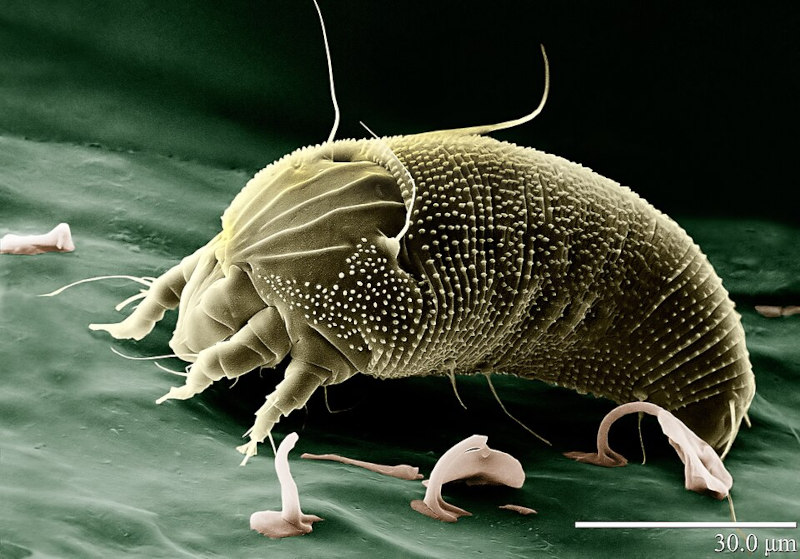
Dust Mite Populations: A typical used mattress can indeed harbor hundreds of thousands to a few million dust mites (Dermatophagoides). They thrive in warm, humid environments and feed almost exclusively on shed human skin cells.

Mite Debris: The majority of the allergen mass associated with dust mites comes from their microscopic fecal pellets and shed exoskeletons rather than the live insects themselves.

Accumulated Human Waste: Over 8 to 10 years, an average adult loses hundreds of liters of sweat in bed, along with millions of dead skin cells daily. Over time, volatile organic compounds, oils, skin flakes, and traces of bodily fluids penetrate standard woven sheets and settle within the underlying foam or fiber layers.

Posted on — Leave a comment

Worst Understanding About Male Dreaming

People assume men mostly dream about women. Men dream more often about their male heroes, bosses, friends or role models than about women.

The Unexpected Demographics of Dreams: Why Men Dream About Other Men

When people imagine the secret landscape of the human subconscious, they often picture romantic fantasies, abstract nightmares, or surreal reflections of daily life. Yet decades of quantitative sleep research have revealed a striking, counterintuitive pattern in night-time cognition: when men fall asleep, their dreams are overwhelmingly populated by other men.

Pioneered by psychologists Calvin S. Hall and Robert Van de Castle in the mid-20th century, the systematic coding of dream content has yielded consistent data across diverse cultures. While women’s dreams feature a balanced character ratio—roughly 50 percent male and 50 percent female—men’s dreams tell a vastly different demographic story. Across thousands of studied dream journals, approximately 67 percent of all characters appearing in men’s dreams are male.

Rather than focusing primarily on romantic interests or family members, male dreamers routinely encounter male colleagues, bosses, friends, authority figures, and strangers. However, these nightly appearances are rarely passive. Quantitative dream analysis shows that male-on-male interactions in REM sleep feature a disproportionately high degree of physical aggression, social competition, and status negotiation compared to any other demographic pairing.

Psychologists and evolutionary theorists offer two main explanations for this phenomenon:

  • Social Simulation Theory: Sleep acts as a low-stakes virtual reality environment where the brain rehearses real-world social dynamics. Because men historically navigated complex male-dominated hierarchies—balancing the need for strategic alliances with the threat of physical or social rivalry—the sleeping brain continues to process and simulate these critical dynamics.
  • Threat Mitigation: From an evolutionary perspective, non-kin males represented the single largest potential physical threat to early human survival. The brain’s REM-sleep threat simulation mechanism naturally prioritizes tracking, assessing, and confronting male characters to maintain high readiness for waking life.

Ultimately, dream content reflects the brain’s deepest survival priorities rather than conscious waking desires. Whether facing down an overbearing boss or navigating a competitive arena with male peers, a man’s subconscious mind spends two-thirds of its night focusing on the side of humanity it feels most compelled to understand, outwit, or align with.

Posted on — Leave a comment

From the Worst Bumps
to the Smoothest Ride

From Belfast Cobblestones to the Modern Road: The Surprising Veterinary Origins of the Inflatable Tire

When we picture the foundation of the modern automotive industry, we usually think of industrial assembly lines, steel foundries, and visionary mechanical engineers. Yet one of the most critical breakthroughs in transport history came from an entirely different source: a Scottish veterinarian trying to make his young son’s tricycle ride a little less bumpy.

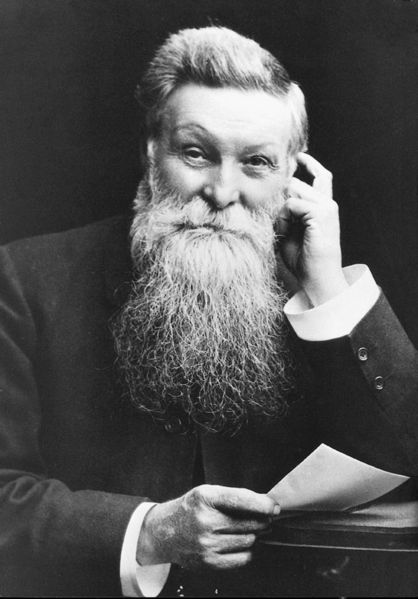
In 1887, Dr. John Boyd Dunlop was practicing veterinary medicine in Belfast, Ireland. Navigating the city’s rough, uneven cobblestone streets on horse-drawn carriages and solid-rubber-wheeled bicycles made for a harsh, jarring ride. The problem was especially severe for his nine-year-old son, Johnny, who suffered from frequent headaches while riding his tricycle.

At the time, tires were made of solid, unyielding rubber. Drawing on his medical background—where flexible sheet rubber, rubber aprons, and surgical tubing were common clinical tools—Dunlop set out to invent a dampening system that could absorb shocks from the road.

His solution was as simple as it was revolutionary. Dunlop constructed a flexible tube out of thin, sheet rubber, wrapped it around a wooden disk, and protected it with a outer casing of heavy canvas cloth. He then inflated the tube using a football pump and glued the entire assembly directly onto the wooden wheels of his son’s tricycle. The air-filled cushion—or “pneumatic” tire—proved to be an immediate success, offering an effortlessly smooth ride and remarkably lower rolling resistance.

Dunlop patented his pneumatic tire design in 1888 and soon founded the Dunlop Pneumatic Tyre Company. While initial skeptics dismissed the air-filled tires as fragile “pudding wheels,” the technology quickly proved its superiority on the bicycle racing track, where riders using Dunlop’s tires routinely dominated competitors riding on solid rubber.

As the automobile emerged at the turn of the 20th century, Dunlop’s invention was rapidly adapted for motor cars, transforming global transportation forever. Today, every passenger vehicle on the road relies on the fundamental concept pioneered in a veterinarian’s workshop to keep his son comfortable: trapping a cushion of compressed air inside a ring of flexible rubber.

Posted on — Leave a comment

Worst Sexual Intercourse

The Secret Weapon of Snail Courtship: Unraveling the Mystery of the Love Dart

In the world of invertebrate biology, few rituals are as dramatically misunderstood as the mating behavior of land snails. Popular folklore often imagines snail reproduction as a solitary, once-in-a-lifetime marathon fueled by natural stimulants. The physical reality, while just as fascinating, operates on an entirely different evolutionary logic: a high-stakes, competitive process centered around a biological tool known as the “love dart.”

Land snails are simultaneous hermaphrodites, meaning every adult individual possesses both male and female reproductive organs. When two snails meet for courtship—a deliberate, multi-hour affair—they engage in a mutual exchange of sperm. However, before sperm transfer occurs, many species deploy a sharp, calcium carbonate needle fired directly into their partner’s body wall.

Contrary to popular myth, this sharp dart does not inject a stimulant designed to heighten arousal or prolong the duration of the encounter. Snail mating sessions naturally stretch across several hours due to their slow metabolism and complex physical alignment, regardless of whether a dart is successfully deployed.

Instead, the love dart acts as a vehicle for a specialized hormonal mucus. In snail reproduction, the recipient’s body routinely digests up to 99% of incoming sperm before it can reach the eggs. The mucus coating on the love dart triggers structural changes within the recipient’s reproductive tract, temporarily shutting down the sperm-digesting organ. By neutralizing this biological defense, the snail firing the dart ensures that a vastly higher percentage of its own sperm survives to fertilize the eggs.

Far from being a rare or singular event, land snails repeat this intricate courtship multiple times throughout their adult lives with various partners. The love dart is not a gift of stimulation, but a sophisticated instrument of sperm competition—proving that even in the slowest corners of the animal kingdom, evolutionary strategy is remarkably sharp.

Posted on — Leave a comment

Worst Element in Your Body

You might consider phosphorus as the worst element in your body. Handling pure phosphorus is extremely dangerous and requires highly specialized safety equipment:

Spontaneous Combustion:

It auto-ignites in air at around 30°C (86°F). Because of this, it must be stored and handled completely submerged in water or inside an inert-gas glove box (nitrogen or argon).

Physical Handling:

It cut easily like paraffin wax under water. If taken out into the air, it immediately begins to fume, turn yellow, and catch fire, releasing dense, toxic white clouds of phosphorus pentoxide.

Health Hazard:

It causes severe, deep chemical and thermal burns that eat through skin down to the bone. It is also toxic if absorbed, inhaled, or ingested. If exposed, skin must be kept submerged in cold water continuously while particles are manually removed with non-sparking tools or forceps – never bare hands.

Here Are the Elements That Make Up the Human Body

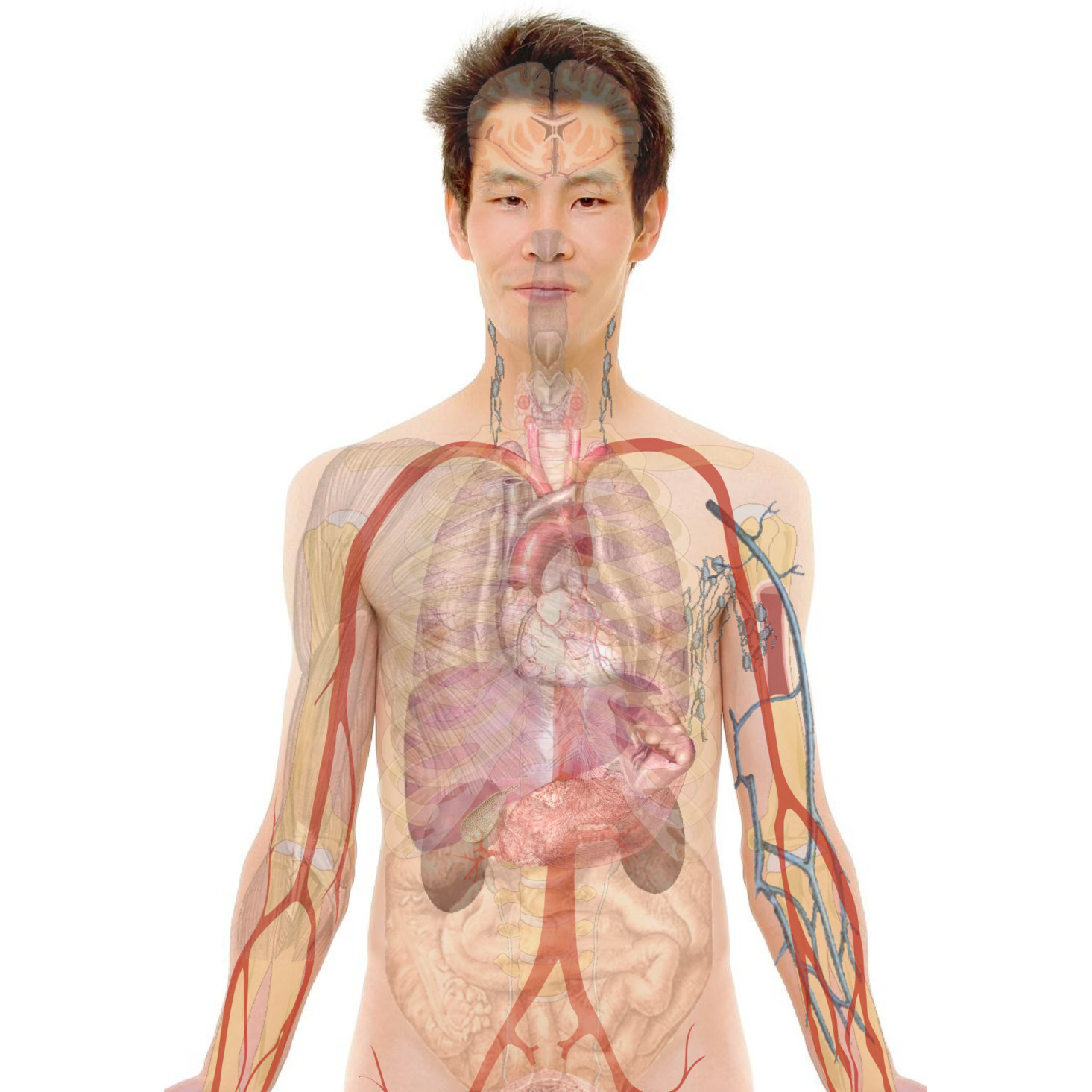
Major Elements (~99% of Body Mass)

  • Oxygen (O): ~65%
  • Carbon (C): ~18.5%
  • Hydrogen (H): ~9.5%
  • Nitrogen (N): ~3.2%
  • Calcium (Ca): ~1.5%
  • Phosphorus (P): ~1.0%

Minor & Electrolyte Elements (~0.85% of Body Mass)

  • Potassium (K): ~0.4%
  • Sulfur (S): ~0.25%
  • Sodium (Na): ~0.2%
  • Chlorine (Cl): ~0.15%
  • Magnesium (Mg): ~0.05%

Essential Trace Elements (<0.1% Combined)

  • Iron (Fe)
  • Zinc (Zn)
  • Fluorine (F)
  • Copper (Cu)
  • Iodine (I)
  • Manganese (Mn)
  • Molybdenum (Mo)
  • Selenium (Se)
  • Chromium (Cr)
  • Cobalt (Co)

Ultratrace Elements (Tiny, Variable Quantities)

  • Silicon (Si)
  • Vanadium (V)
  • Nickel (Ni)
  • Boron (B)
  • Tin (Sn)
  • Arsenic (As)
Posted on — Leave a comment

Worst Thing About Being Normal

Dr. David Weeks, a psychologist, has studied eccentric people extensively. He has discovered that eccentric people are typically more intelligent and have a better sense of humor than the average population. They are healthier, visiting the doctor only 1/24 as often as typical folks, and live from five to ten years longer than average! When asked about their happiness, eccentrics report that they are quite happy.

10 Notable Instances of Eccentric People and Their Actions

  1. Lord Timothy Dexter (1747–1806)

    The Eccentricity: A poorly educated 18th-century merchant who gained immense wealth through wildly counterintuitive business moves. He famously exported warming pans (used to warm cold beds) to the tropical West Indies, where locals bought them to use as molasses ladles.

    The Action: Curiosity about his own social standing led him to fake his own death. Around 3,000 people attended his lavish mock funeral—during which Dexter revealed himself to the crowd and publicly berated his wife for not crying enough during the service.

  2. Nikola Tesla (1856–1943)

    The Eccentricity: The brilliant electrical pioneer operated under severe obsessive-compulsive traits, particularly an intense fixation on the number three and a profound aversion to spherical objects.

    The Action: Before entering any building, Tesla walked around its perimeter three times. During meals, he required exactly 18 napkins to polish his dining utensils, and he famously refused to speak to or interact with any woman wearing pearl jewelry.

  3. Tycho Brahe (1546–1601)

    The Eccentricity: The famed Danish astronomer maintained a flamboyant lifestyle at his island observatory, keeping a wide array of unusual companions.

    The Action: Brahe kept a fully domesticated adult moose that roamed his castle freely and sat at the dinner table like a household dog. The moose died after drinking a vast quantity of beer at a dinner party and falling down the castle stairs.

  4. Benjamin Franklin (1706–1790)

    The Eccentricity: The American polymath held unusual views on personal hygiene and respiratory health, believing that traditional water baths were less effective than exposure to fresh air.

    The Action: Every morning, Franklin took what he called an “air bath.” He would sit entirely nude in his first-floor room for an hour with the windows wide open, regardless of the season, while reading, writing, and drafting letters. He lived to the age of 83 which was rare in his era.

  5. President Lyndon B. Johnson (1908–1973)

    The Eccentricity: The 36th U.S. President owned an Amphicar – a rare civilian vehicle designed to operate on both land and water.

    The Action: Johnson routinely terrified guests visiting his Texas ranch by driving them downhill toward his lake in the car, shouting at the top of his lungs that the brakes had failed, right before plunging into the water and cruising along smoothly.

  6. Salvador Dalí (1904–1989)

    The Eccentricity: The surrealist painter turned his entire public life into an artistic performance, using absurdity to generate inspiration and control his surroundings.

    The Action: Dalí bought a pet ocelot named Babou, which he brought on a leash to high-end restaurants in New York and Paris. When a diner expressed fear over the wild predator, Dalí calmly assured her it was just a domestic cat he had painted with spots.

  7. Michelangelo (1475–1564)

    The Eccentricity: The Renaissance master was intensely secretive and displayed an extreme disregard for personal comfort and hygiene while absorbed in his work.

    The Action: Michelangelo rarely changed his clothing or took off his leather boots while sculpting or painting, often sleeping in them for weeks at a time. Contemporary biographers noted that when he finally removed his boots, skin would frequently peel off with them.

  8. Henry Cavendish (1731–1810)

    The Eccentricity: The English scientist who discovered hydrogen suffered from extreme social anxiety, particularly around women, to the extent that he avoided all face-to-face contact.

    The Action: Cavendish built a separate private entrance and staircase in his house so he would never accidentally bump into his female house servants. He communicated with his household staff exclusively through written notes left on the dining table.

  9. Dr. Seuss (Theodor Geisel) (1904–1991)

    The Eccentricity: When facing creative blocks, the beloved author used unusual tactile and visual stimulation to reset his mental focus.

    The Action: Geisel maintained a hidden closet containing over 300 elaborate hats—ranging from firefighter helmets to obscure military caps. Whenever he suffered writer’s block, he would sit in his office wearing a wacky hat until inspiration struck, occasionally forcing his dinner guests to wear them as well.

  10. Honoré de Balzac (1799–1850)

    The Eccentricity: The French novelist relied on massive sensory stimulation to fuel his marathon writing sessions, which often lasted 15 hours a day.

    The Action: Balzac consumed an estimated 40 to 50 cups of thick black coffee daily. When fluid coffee was no longer fast-acting enough, he began eating dry, crushed coffee grounds directly on an empty stomach to maintain continuous energy.