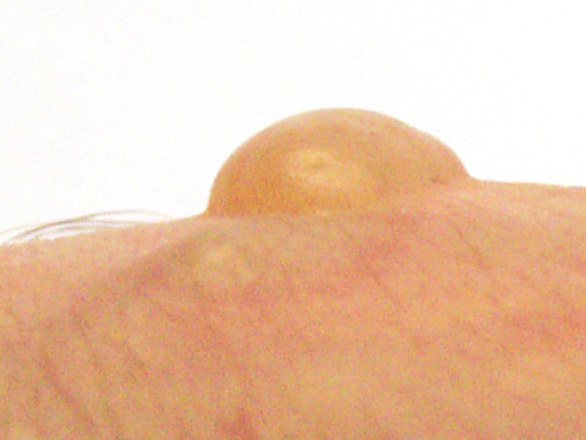
Hypnotized subjects have been made to form blisters on their skin simply from carefully worded suggestions.
Hypnotic Blister Formation: Fact or Fiction?
Verdict: Yes, with important caveats.
While it sounds like an urban legend, hypnotic blister formation—the production of real localized skin blisters or burn-like lesions through verbal suggestion alone—is a well-documented phenomenon in late 19th- and 20th-century psychosomatic research. However, modern science views these historical findings through a lens of strict methodology and skepticism.
What the Historical Cases Showed
Starting in the late 1800s (most notably by French researchers like Focachon and Jules Liégeois) and continuing into mid-20th-century studies, experimenters reported placing an unheated object—such as a coin or a cold piece of metal—on a deeply hypnotized subject’s skin. They would give a specific suggestion: “This object is glowing hot and will burn your skin.”
In documented trials, subjects frequently exhibited:
- Localized vasodilation (intense redness and localized heat).
- Localized edema (swelling) and fluid collection beneath the skin.
- Full bullae (fluid-filled blisters containing sterile serum) that closely mimicked second-degree burns.
How Science Explains the Mechanism
The skin and the central nervous system share a common embryonic origin (the ectoderm) and remain tightly linked through the autonomic nervous system.
When a subject fully accepts a high-intensity hypnotic suggestion, the brain can trigger localized vascular changes. This includes dramatic changes in local blood flow, capillary permeability, and the release of inflammatory mediators (such as histamines, neuropeptides, and kinins). In simple terms, the mind initiates a localized inflammatory response—a severe nocebo effect—causing fluid to leak into the tissue and form a blister, even though no thermal energy touched the skin.
The Caveats and Modern Skepticism
While these experiments are cited in psychosomatic literature, modern researchers point to key limitations:
- Lack of Strict Controls (Historical Flaws): A critical review of early studies (such as Gordon L. Paul’s landmark 1963 paper, The Production of Blisters by Hypnotic Suggestion) noted that many early 20th-century trials lacked rigorous surveillance. In some unmonitored cases, subjects intentionally or unconsciously scratched, rubbed, or picked at the area under a bandage to satisfy the experimenter’s expectations.
- Variable Reproducibility: Blister formation only occurs in a tiny percentage of highly hypnotizable (“somnambulistic”) individuals. Replicating the effect under modern laboratory controls with continuous video surveillance has proven difficult, as many normal subjects fail to produce structural tissue changes from verbal suggestion alone.
- Ethical Constraints: Modern institutional review boards (IRBs) prohibit attempts to induce tissue damage or pain via psychological suggestion, preventing further rigorous trials today.
The Bottom Line
The claim is historically and scientifically true in documented instances, serving as an extreme example of the mind-body connection and autonomic nervous system control. However, it is an exceptionally rare response requiring an extraordinarily high level of hypnotic susceptibility, and historical reports likely include a mix of genuine psychogenic tissue changes and uncontrolled mechanical irritation.
Asthma and Hypnosis
For asthma sufferers: Scientists have proven that many sufferers can reduce or eliminate symptoms with self-hypnosis. Try to imagine or actually view a pleasant image, or imagine yourself in a situation where you are enjoying yourself and are symptom-free. It often works.