Posted on — Leave a comment

Worst Motorhome

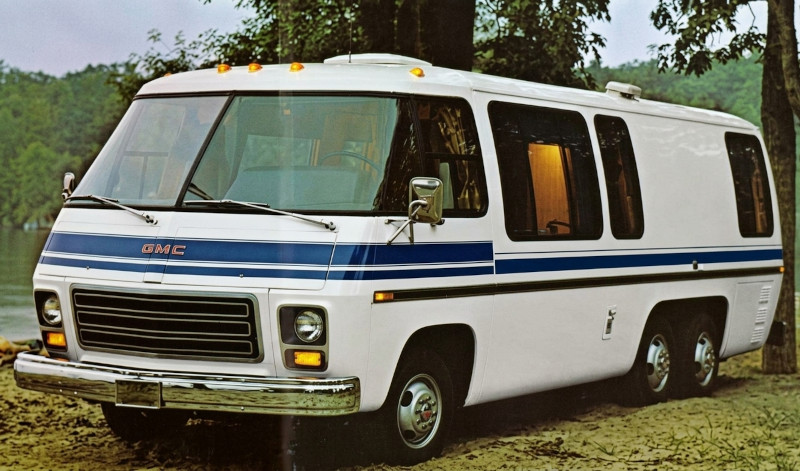
The GMC Motorhome (produced from 1973 to 1978) is widely considered a design masterpiece of its era, featuring front-wheel drive, a low profile, and a sleek fiberglass-and-aluminum body. It’s sleek look causes many people upon seeing one for the first time to believe that it is a current, ultra-modern motorhome.

I bought one of these in 1978 that was four years old. I like to claim that I spent more time under it fixing things, than in it. I drove it back and forth across the USA for three and a half round trips, and into Canada twice during the six years that I owned it. It looked almost identical to the one pictured above.

However, its unique engineering choices and vintage mechanicals came with a specific set of notorious problems and vulnerabilities:

Mechanical & Drivetrain Issues

Front-Wheel-Drive Heavy Loads:
The GMC used GM’s Unified Powerpack – the same 455 cu in (7.5L) or 403 cu in (6.6L) Oldsmobile V8 engine and Turbo-Hydramatic 425 transmission used in the Oldsmobile Toronado and Cadillac Eldorado. While innovative for an RV, transferring that much torque to front drive axles carrying up to 12,000+ lbs caused premature wear on CV joints, front axle shafts, and front wheel bearings (which often required replacement or repacking every 25,000–30,000 miles). Yes, I had to replace a CV joint.

Engine Bay Overheating & Vapor Lock:
Because the front-wheel-drive engine was shoved tightly under the cab forward of the front axle, ventilation was tight. Under heavy loads, mountain climbs, or hot summer driving, the engine bays were prone to extreme heat build-up, occasionally leading to vapor lock in the mechanical fuel pump system. I didn’t have that problem, but found the transmission oil turning brown, so I had to install an auxiliary cooler.

Front Traction Problems:
Because all driving force came from the front wheels while much of the living space and cargo weight rested over the rear tandem axles, traction could be poor on wet grass, steep unpaved inclines, or loose gravel. Towing heavy trailers could unweight the front end further. I never experienced that.

Rear Suspension & Brake Shortcomings

Air Suspension System Leaks:
The GMC Motorhome famously omitted a rear axle across the middle of the vehicle (dual rear wheels, or ‘dualies’), using an electro-pneumatic air bag system to self-level the rear tandem wheels and provide a smooth ride. The original rubber air bladders, air compressor, leveling valves, and air lines are notoriously leak-prone over time, causing the rear end to sag or drop completely to the bump stops when parked or driving. I never had a leak, but an air bag blew out in the middle of one night. I thought someone had shot the side of the motorhome with a shotgun. In the morning, I discovered pieces of rubber blown twenty feet (7 meters) away. People claimed a smooth ride, but no, it was noisy and bumpy, although perhaps no more than most motorhomes.

The differential gearing was the same as the Oldsmobile, but the wheels were larger and the vehicle weighted much more. It was geared so high that it couldn’t climb out of some not-so-steep driveways.

Not only that but the tandem rear wheels put tremendous lateral stress on the bearings when turning sharply such as backing into parking spaces. As a consequence, I had a wheel fly off on the freeway in Ohio one morning. Fortunately, the bearing and brake parts were standard Oldsmobile Toronado, so I was able to get replacements at a nearby junkyard. I also had to replace a pivot pin at another time.

The frame was a little lighter duty than ideal. GM sold shim kits so as the frame slowly twisted at the rear wheels, the wheels could be made perpendicular again.

Marginal Braking Performance:
Stopping a 10,000-to-12,000 lb vehicle with 1970s drum brakes on the four rear wheels and discs up front was challenging. Brake fade on long downhill mountain descents was a common complaint among owners, requiring careful gear-down engine braking. I never experienced that.

Electrical Flaws

12V Wiring & Grounding Issues:
The original 12V DC wiring harnesses suffer from inadequate grounding, leading to flickering lights, erratic instrument panel gauges, and persistent battery drain issues when sitting. I didn’t have that, but I could understand the problem. Lights and other components had to have two wires instead of one. In a steel vehicle, the electricity can be grounded through the frame.

Ownership & Living Space Drawbacks

Even in the late 1970s, replacement parts were expensive and hard to get. At the same time, owners of the ubiquitous Class C motorhomes, those with an ordinary van chassis, were low-cost and easy to maintain.

The curved entry door would slowly uncurve. General Motors offered a special block and tackle kit to bend it back into shape. Mine leaked when it rained.

The curved walls made it feel small inside. Curtains had to have runner attachments at the top and bottom.

Fuel Economy:
Despite its aerodynamic styling compared to boxy competitors of the 1970s, the massive big-block Oldsmobile V8 typically delivers only 8 to 11 MPG on highway trips. Yup, I averaged 10 miles per gallon.

A total of 12,921 GMC Motorhomes were produced during its manufacturing run from model years 1973 through 1978.

Two length options were offered:
26-foot models: Accounted for the vast majority of production (around 11,000 units).
23-foot models: Made up the remaining ~1,900 units.

Mine was 26 feet long.

Survival Rate:
One of the most remarkable aspects of the GMC Motorhome is its longevity. Thanks to its aluminum and fiberglass body construction and an enthusiastic enthusiast community, an estimated 8,000 to 9,000 of these motorhomes are still in running condition and on the road today.

On The Other Hand:
Owners of recent motorhomes made after approximately 2014 have a lot of complaints about low-quality materials, over-engineering with too many failure-prone electronics, and poor workmanship. Rain leaking in and causing mold damage is common. One of the biggest issues seems to be with the slide-out rooms. Imagine getting ready to leave your campground, but you can’t get a slide to go back in!
Posted on — Leave a comment

France’s Worst President

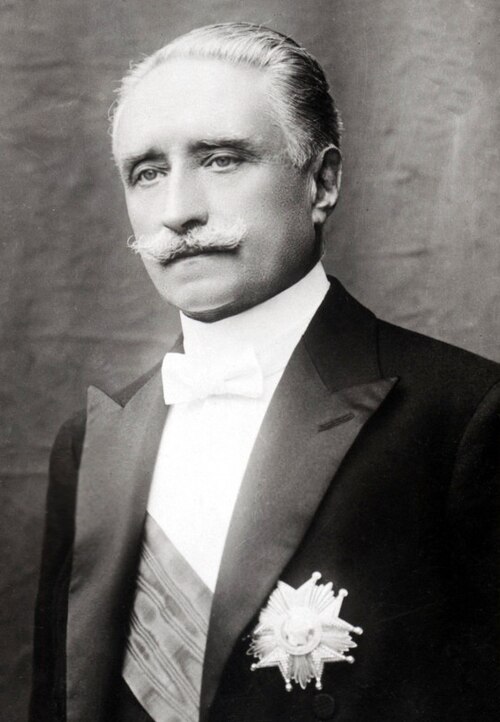
Paul Deschanel was a French politician, orator, and writer who served as the 10th President of the French Third Republic in 1920. While he enjoyed a long, distinguished political and literary career, he is best remembered for his brief, tragicomic presidency, which lasted just seven months before being cut short by a severe mental breakdown.


Rise to Power

  • Distinguished Career: Prior to his presidency, Deschanel was an influential parliamentarian representing the Eure-et-Loir department for 35 years. He served twice as President of the Chamber of Deputies (the lower house of Parliament), notably holding the position throughout World War I, where he gained fame as a patriotic orator.
  • Literary Achievement: An accomplished intellectual, he authored numerous books on literature and political science and was elected to the prestigious Académie française in 1899.
  • Defeating “The Tiger”: In January 1920, Deschanel achieved his lifelong ambition of becoming president by defeating Georges Clemenceau—France’s legendary wartime Prime Minister—in a surprise election victory.

The Presidency & Mental Collapse

Shortly after taking office, Deschanel began suffering from severe anxiety, depression, and neurological deterioration, likely brought on by dementia or extreme overwork. His erratic behavior quickly became the talk of Paris:

  1. The Train Incident (May 24, 1920): While traveling overnight on the presidential train to Montbrison, an intoxicated or confused Deschanel fell out of his compartment window while trying to open it. The train was moving slowly, so he survived with only minor scrapes. Dressed only in his pajamas, he walked to a nearby railway track-watcher’s cottage, claiming to be the President of France. The worker’s wife famously brushed him off at first, thinking he was a drunk local.
  2. Strange Public Episodes: Reports began surfacing of other bizarre occurrences—such as signing state documents as “Napoleon” or “Charlemagne,” receiving dignitaries while wearing only his presidential sash, and wandering into a lake fully clothed at the Château de Rambouillet.

Resignation and Legacy

  • Resignation: Realizing he was unfit to govern, Deschanel resigned on September 21, 1920, after just 216 days in office. He was succeeded by Prime Minister Alexandre Millerand.
  • Recovery: After resting at a sanatorium, his mental health improved significantly. He was elected to the French Senate in early 1921, where he served until his death from pleurisy in April 1922.
  • Historical Impact: Beyond the popular folklore surrounding his train fall, Deschanel was notable for his progressive stance on foreign affairs and his lifelong opposition to the death penalty; notably, no state executions took place during his time as head of state.
Posted on — Leave a comment

Worst Hallelujah Ever


10 Surprising Hallelujah Facts

  • Slow Commercial Burn: Leonard Cohen spent over five years writing “Hallelujah,” drafting as many as 80 different verses before releasing it on his 1984 album Various Positions. Columbia Records initially refused to release the album in the United States, believing it wasn’t commercially viable.
  • Musical Self-Reference: The lyrics in the first verse famously describe the song’s own chord progression: “It goes like this, the fourth, the fifth / The minor fall, the major lift,” shifting to F major, G major, A minor, and F major respectively.
  • John Cale’s Pivotal Rewrite: Velvet Underground founding member John Cale arranged a version for a 1991 tribute album, asking Cohen to fax him all existing draft verses. Cale spliced together a sweeter, less cynical selection of verses that established the template used by almost every cover artist since.
  • Jeff Buckley’s Definitive Cover: Inspired by Cale’s arrangement, Jeff Buckley recorded a haunting solo acoustic version for his 1994 album Grace. His interpretation transformed the song into an iconic masterpiece and is widely considered one of the greatest cover songs of all time.
  • Massive Pop Culture Resurgence: Rufus Wainwright recorded a version based on Cale’s arrangement for the soundtrack of the 2001 animated movie Shrek, introducing the song to an entirely new generation and turning it into a global mainstream phenomenon.
  • Explosion of Cover Versions: “Hallelujah” is one of the most covered songs in modern music history, with over 300 recorded versions across multiple languages by artists ranging from K.D. Lang and Bob Dylan to Bono and Pentatonix.
  • Dual Sacred and Secular Themes: The lyrics blend biblical iconography—referencing the stories of Samson and Delilah as well as King David and Bathsheba—with themes of heartbreak, existential questioning, and sensual love.
  • Chart Triumph Decades Later: Cohen’s original version did not enter the Billboard charts when released in 1984. It finally made its first appearance on the Hot 100 in November 2016, reaching number 59 shortly after Cohen’s death.
  • An Unofficial Anthem for Shared Moments: Despite its melancholic and complex lyrics, the song has become an all-purpose hymn performed around the world at weddings, funerals, charity events, and national memorials.
  • Agonizing Composition Process: Cohen famously recalled sitting in his underwear at the Royalton Hotel in New York City, banging his head against the floor in frustration while trying to complete the lyrics to the song.
Posted on — Leave a comment

Worst Doctor

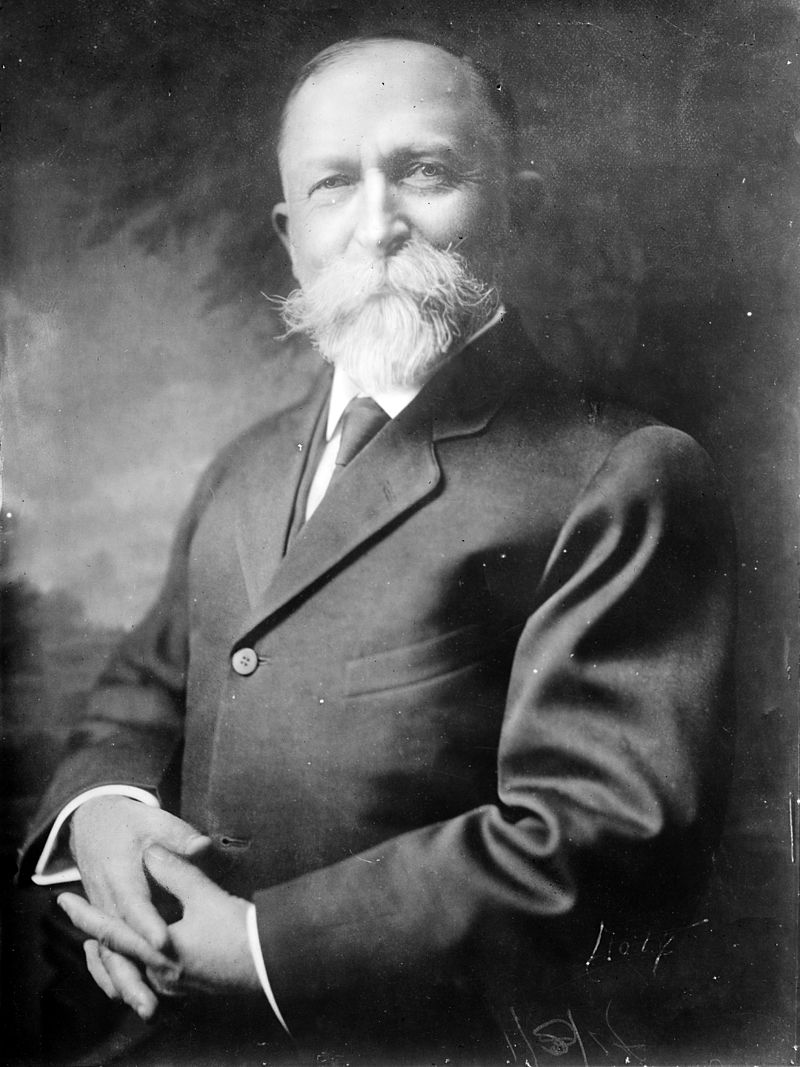
Kellogg’s Corn Flakes was invented as a way to stop children from masturbating. Dr. John Harvey Kellogg felt that bland foods would curb sexual appetite. The theory must have not been quite right, because although a lot of corn flakes were sold, the kids kept doing what kids will do.

Dr. Kellogg was a man obsessed with speaking and acting out against masturbation. In fact, he went much farther than just talking about it. As a medical doctor, he badly abused his power, and young patients, as is evidenced in the following quotes:

“A remedy which is almost always successful in small boys is circumcision, especially when there is any degree of phimosis. The operation should be performed by a surgeon without administering an anesthetic, as the brief pain attending the operation will have a salutary effect upon the mind, especially if it be connected with the idea of punishment, as it may well be in some cases. The soreness which continues for several weeks interrupts the practice, and if it had not previously become too firmly fixed, it may be forgotten and not resumed.”

A method of treatment [to prevent masturbation]: “…and we have employed it with entire satisfaction. It consists in the application of one or more silver sutures in such a way as to prevent erection. The prepuce, or foreskin, is drawn forward over the glans, and the needle to which the wire is attached is passed through from one side to the other. After drawing the wire through, the ends are twisted together, and cut off close. It is now impossible for an erection to occur, and the slight irritation thus produced acts as a most powerful means of overcoming the disposition to resort to the practice.”

Posted on — Leave a comment

The Messiest House in Britain


Surprising Facts About Messy Homes

  1. Messy desks and rooms are linked to higher creativity. A famous study by the University of Minnesota found that participants placed in messy environments generated more creative, unconventional ideas than those in tidy rooms.
  2. Clutter increases cortisol levels, especially in women. Research from UCLA’s Center on Everyday Lives of Families showed a direct link between high density of household objects and elevated stress hormones in mothers.
  3. Famous geniuses were notoriously messy room dwellers. Albert Einstein, Steve Jobs, Mark Twain, and Thomas Edison all maintained famously chaotic workspaces, holding that disorder fostered non-linear thinking.
  4. Messiness can promote charitable and generous choices. While orderly environments encourage traditional convention, messy environments can prompt people to challenge old habits and seek out new ways to give back.
  5. A messy room can disrupt healthy eating habits. Studies indicate that people stressed by chaotic kitchen environments are more likely to reach for high-calorie snack foods than those in tidy, organized kitchens.
  6. Dust in messy homes contains complex microbial ecosystems. Household dust isn’t just dirt; it contains skin cells, textile fibers, pet dander, and thousands of distinct species of microflora unique to each home.
  7. Physical clutter impairs visual processing focus. Neuroscientists at Princeton University found that multiple visual stimuli in a cluttered room compete for attention, reducing the brain’s capacity to process information efficiently.
  8. Clutter negatively impacts sleep quality. Studies on sleep hygiene demonstrate that sleeping in cluttered, disorganized bedrooms can lead to longer light-sleep stages and increased nighttime awakenings.
  9. The average home holds over 300,000 items. The sheer volume of consumer goods in modern residences makes maintaining order vastly more labor-intensive than in previous centuries.
  10. Messy environments encourage trial-and-error problem solving. Psychological experiments suggest that messy settings break people out of rigid mindsets, making them more willing to experiment with unexpected solutions.
Posted on — Leave a comment

Moldiest House

10 Surprising Facts About Mold

  1. Mold gave humanity its first true antibiotic. Alexander Fleming accidentally discovered penicillin in 1928 when a stray spore of Penicillium rubens landed on a Petri dish of bacteria and inhibited its growth, revolutionizing modern medicine.
  2. Slime molds can solve complex mazes without a brain. Though technically protists rather than true fungi, slime molds spread efficiently toward food sources and can map optimal pathways through mazes and city transit networks using basic chemical signaling.
  3. Mold is responsible for unique aged cheeses. Varieties like Penicillium roqueforti and Penicillium camemberti give blue cheese, Roquefort, Brie, and Camembert their distinct flavors, textures, and characteristic rinds.
  4. Spores are virtually everywhere in the air. Mold spores exist in almost all indoor and outdoor air currents, floating constantly until they land on an environment with moisture and organic matter to colonize.
  5. Mold reproduces both sexually and asexually. Depending on environmental conditions and species type, mold can propagate by producing asexual spores or by fusing hyphae with compatible strains to form genetically unique sexual spores.
  6. The “black mold” health panic is widely misunderstood. While Stachybotrys chartarum produces mycotoxins and thrives in damp buildings, toxicological studies show that inhaling ordinary levels of black mold spores does not produce unique “poisoning” beyond general allergic reactions and respiratory irritation.
  7. Mold is nature’s essential recycling engine. As primary decomposers, molds secrete digestive enzymes that break down tough organic materials like cellulose and lignin in dead trees, returning vital nutrients to the soil.
  8. Soy sauce and sake rely on mold fermentation. The mold species Aspergillus oryzae (known as koji-kin) is essential for breaking down complex starches in soybeans and rice into simple sugars during traditional fermentation.
  9. Certain molds can grow on plastics and synthetic materials. While mold prefers wood and drywall, species like Aspergillus tubingensis have adapted to secrete enzymes that break down polyurethane and other synthetic polymers.
  10. Mold spores can survive extreme radiation and space exposure. Experiments aboard the International Space Station showed that spores of Aspergillus niger can survive high doses of ionizing radiation, highlighting their extreme resilience.
Posted on — Leave a comment

Worst Beach

10 Interesting Facts About Dead Horse Bay

  1. Ghastly Origin of the Name:
    In the 1850s, the surrounding area housed numerous rendering plants. Dead horses from the streets of New York City were brought here to be boiled down into glue, fertilizer, and animal oil, giving the bay its macabre name.
  2. A Treasure Trove of Vintage Trash:
    In the 1950s, a cap holding back a massive 1930s landfill burst open. Ever since, decades-old trash, predominantly from the 1920s to the 1950s, has been washing up onto the shore continuously.
  3. The “Glass Bottle Beach”:
    Dead Horse Bay is famous among urban explorers and collectors for its carpet of vintage glass bottles. Thousands of perfume bottles, medicine vials, soda bottles, and liquor flasks from early 20th-century New York line the beach.
  4. Accidental Time Capsule:
    Because the landfill buried items in an oxygen-deprived environment before it ruptured, many delicate artifacts—such as leather shoes, nylon stockings, bone buttons, and plastic toys—remained remarkably preserved for over half a century.
  5. Connected to Robert Moses:
    Famous NYC urban planner Robert Moses used garbage, sand, and incinerator ash in the 1930s to fill in the marshland, aiming to connect Barren Island to Brooklyn to expand Marine Park.
  6. Barren Island’s Ghost Town:
    Before becoming a giant landfill, Barren Island (which borders Dead Horse Bay) was home to a tight-knit community of factory workers, immigrants, and off-grid residents. The city evicted the remaining community members in the 1930s to clear space for Floyd Bennett Field.
  7. Radioactive Discovery and Closure:
    In 2020, the National Park Service indefinitely closed the primary beach area at Dead Horse Bay after elevated levels of gamma radiation—traced back to buried vintage industrial waste like radium dials—were detected on the surface.
  8. A Clanging Symphony of Sound:
    Visitors to the beach often noted a distinct sound: as tides roll in and out, thousands of glass bottles bang against one another and against rocks, creating a unique, wind-chime-like clanging sound.
  9. Part of a National Recreation Area:
    Despite its industrial and toxic past, Dead Horse Bay sits on land managed by the National Park Service as part of the Gateway National Recreation Area in Brooklyn, New York.
  10. A Haven for Horseshoe Crabs:
    In addition to historical detritus, the bay serves as an important spawning ground for horseshoe crabs—ancient marine arthropods that come ashore every spring during full and new moons to lay their eggs.
Posted on — Leave a comment

Worst X Factor Auditions

10 Interesting Facts About The X Factor

  1. It Triggered a Massive Legal Battle with Pop Idol
    Simon Cowell created The X Factor as a replacement for Pop Idol after a fallout with franchise creator Simon Fuller. Fuller sued Cowell for copyright infringement, claiming The X Factor stole the format. The dispute was settled out of court, granting Fuller a percentage of The X Factor profits and an executive producer credit.
  2. Noel Gallagher Turned Down £2 Million to Be a Judge
    When Simon Cowell left the UK judging panel in 2011 to launch the US version, he personally begged Oasis guitarist Noel Gallagher to replace him for £2 million. Gallagher declined, famously explaining that he didn’t want to do it because “Saturday night is for getting drunk”.
  3. Contestants Pass Up to 5 Secret Auditions First
    The iconic moment of a nervous singer walking into an audition room or onto a stage in front of celebrity judges is actually the final stage of a long process. Most contestants pass 3 to 5 rounds of auditions in front of low-level producers and talent scouts first.
  4. Producers Actively Scout Talent and “Invite” Contestants
    Not every contestant queuing outside stadium auditions applied on their own. Producers actively browse YouTube, gig circuits, and social media to recruit talented performers—offering them fast-tracked auditions directly into the higher production rounds.
  5. One Direction and Fifth Harmony Were “Losers” on the Show
    Two of the biggest pop acts spawned by the franchise never actually won their respective seasons. One Direction placed third in the 2010 UK series, and Fifth Harmony placed third in the 2012 US series—yet both went on to surpass the sales of their season winners by millions of copies.
  6. Original Format: Judges Were Supposed to Manage the Acts
    When the show was originally conceived, the panel consisted of music managers (Simon Cowell, Louis Walsh, and Sharon Osbourne). The original plan was for whichever judge won to become the actual real-world manager of the winning artist. This rule was abandoned once non-manager celebrities like Dannii Minogue joined the panel.
  7. Continuity Wardrobe Rules for Audition Days
    Because audition episodes are shot across multiple days and edited together for narrative pacing, contestants who make it past early producer rounds are instructed to bring and wear the exact same clothes, makeup, and hair accessories to every filming session.
  8. “Rage Against the Machine” Hijacked the Christmas #1 Spot
    In the UK, winning The X Factor guaranteed a lucrative shot at the coveted “Christmas Number One” single on the music charts. However, in 2009, a mass fan campaign rallied behind Rage Against the Machine’s 1992 metal anthem “Killing in the Name” to protest the show’s dominance. The campaign succeeded, beating 2009 winner Joe McElderry to the top spot.
  9. The Show’s Title Refers to the Unquantifiable “It Factor”
    Simon Cowell named the show The X Factor to describe the invisible, magnetic charisma that sets a true global superstar apart from just a “good singer”.
  10. The Fast-Track Record: Album Released in 3 Months
    2013 UK winner Sam Bailey holds the record for the quickest album turnaround in the show’s history. After winning in mid-December, her debut studio album, The Power of Love, was rushed through production and released just three months later in March 2014—it went straight to #1.
Posted on — Leave a comment

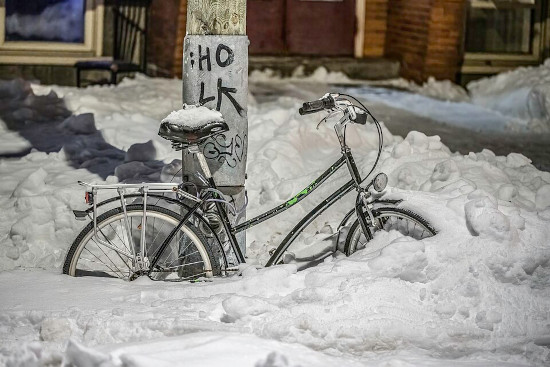
10 Worst Jokes About Winter

What do you call a snowman who’s always asking questions? A Snow-it-all.

A snowstorm knocked out my Wi-Fi, and for a moment I wanted to pretend I was one of those rugged outdoorsy types. Then I remembered rugged people don’t cry when Netflix stops buffering.

I told my friend I slipped on the ice yesterday. He said, “That’s what happens when you try to skate without skates.” I said, “No, that’s what happens when you try to walk with dignity.”

What did the icy sidewalk say to the pedestrian?
“Slip happens.”

A snowman applied for a job. The interviewer asked, “What’s your greatest strength?” The snowman said, “I’m outstanding in my field.”

I saw a squirrel digging in the snow, and it looked at me like it knew I wasn’t prepared for winter either. We shared a moment of mutual panic before it scampered off to judge someone else.

I made a cup of hot chocolate, and for six glorious minutes, everything was perfect.
Then I stood up, spilled half of it on my socks, and remembered who I truly am.

The snowplow left a four-foot snow wall at the end of my driveway. I’m considering turning it into a castle and declaring independence from the rest of the neighborhood.

I tried to jog in the cold, but after two minutes my lungs sounded like creaky door hinges. I decided fitness could wait until April or possibly 2047.

I asked the ski instructor if I was improving. He said I was going downhill fast.

I bought one of those hand warmers, and now I rely on it more emotionally than physically.
It’s the closest thing to a supportive relationship I’ve had all winter.

My mailbox froze shut, which honestly feels like the universe protecting me from bills.
Winter is harsh, but sometimes it’s merciful.

My neighbor spent three hours building an elaborate snowman family in his front yard – a dad, mom, two kids, even a snow dog. That night it rained and the next morning they were just puddles. His actual family came outside, looked at the yard, and his wife said, “Well, that’s basically what happens to all families eventually.” He hasn’t built a snowman since.

My neighbor bragged about loving the cold, which is suspicious behavior in my opinion.
No one should be that excited about weather that hurts your face.

How does a snowman flirt? He gives you the cold shoulder… then warms up with a hug.

I went to a winter survivalist training course last year. The instructor kept saying “there’s no such thing as bad weather, only bad clothing.” So on the last day, I showed up in a Hawaiian shirt and flip-flops. Turns out there is such a thing as bad students, and I was no longer welcome.

My wife opens the bedroom window every winter “just a crack” for fresh air.
When I asked why we can’t close it, she said, “Cold air improves sleep quality.”
I said, “Does it also improve marriage quality? Because right now I’m spooning the radiator.”

I decided to start winter bird watching as a hobby. Spent $200 on binoculars, a guide book, and warm gear. Went out every morning for a week. Saw exactly three pigeons and a plastic bag that I followed for ten minutes thinking it was a rare bird.

My gym has a sauna, and in winter the parking lot becomes this bizarre social experiment. People sprint from their cars in tank tops and shorts through sub-zero temperatures to get to the sauna. We’re literally running through winter to sit in artificial summer. Evolution did not prepare us for this level of irony.

My car’s “winter emergency kit” that I put together in November is basically just a confession that I’ve given up. There’s a blanket, some granola bars, a flashlight with dead batteries, and a note that says “I’m sorry” to whoever finds me. My wife found it and said, “This is the most ‘you’ thing I’ve ever seen.” Not sure how to take that.

Every year I tell myself I’m going to embrace winter and try a new snow sport. Last year I tried snowshoeing. I made it about 200 feet before I realized I was just walking slowly while looking ridiculous.

I signed up for a winter photography class to take beautiful pictures of snow-covered landscapes. The instructor kept talking about “golden hour” and “perfect light conditions.” I waited outside in -15 degree weather for golden hour. My phone died in three minutes. My regular camera froze. I got one blurry photo of my own breath. The instructor said it had “interesting texture.” I think he was being kind.

I tried making snow ice cream with my kids like my grandmother used to make. We gathered fresh snow, added vanilla and sugar, and it tasted like frozen sadness and car exhaust. Turns out snow in the suburbs isn’t the same as snow on my grandmother’s farm in 1950. My kids asked if we could just have regular ice cream. Even they know when to quit. But I ate mine anyway out of principle. The principle of poor decision-making.

Posted on — Leave a comment

Worst Personality Turn

People who can construct things including art, music or writing find fulfillment and joy in their creations. However, those who can’t, or believe they can’t, tend to use the same energy, but to destroy things.

How can we help redirect people who are destructive into constructive pursuits?

Perhaps if this became a ‘thing,’ the world would be free from bullies, crooked politicians and undesirable people. Maybe helping everyone become constructive would even end warfare.


constructive vs destructive

constructive vs destructive