Posted on — Leave a comment

Worst Doctor

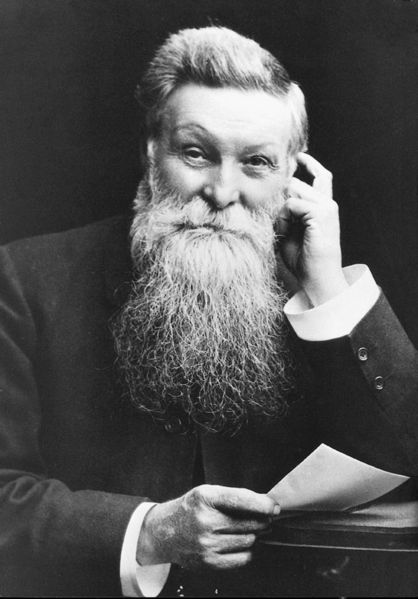
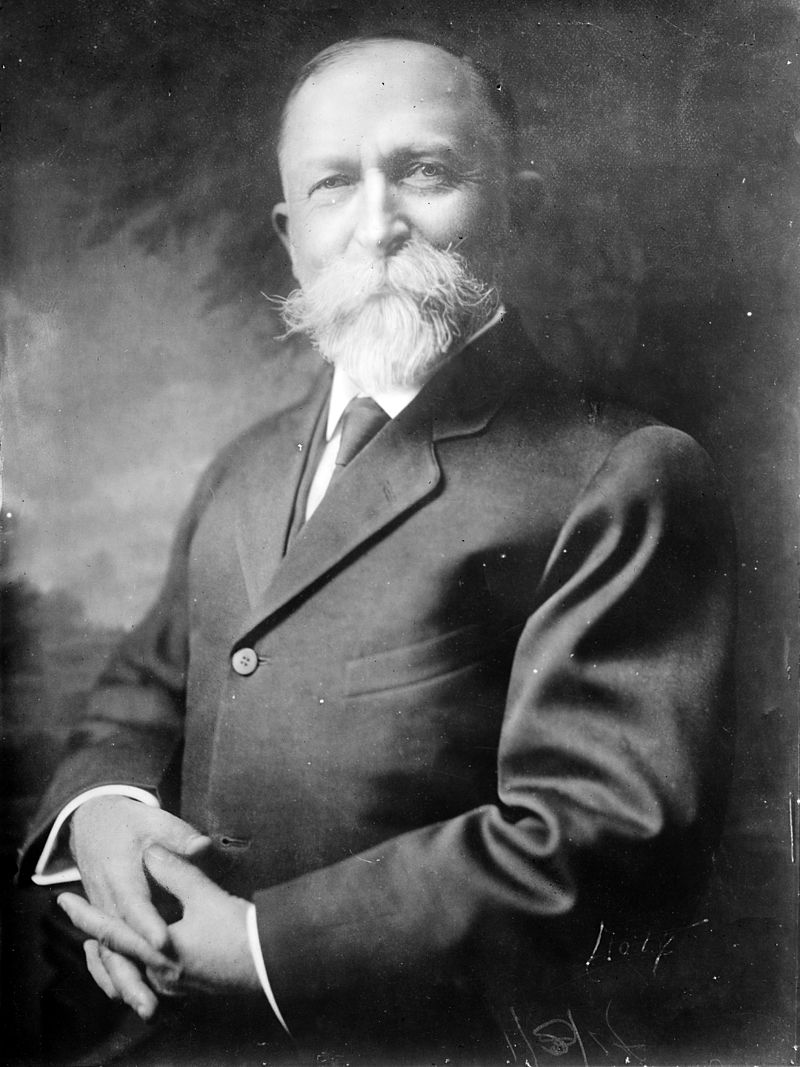
Kellogg’s Corn Flakes was invented as a way to stop children from masturbating. Dr. John Harvey Kellogg felt that bland foods would curb sexual appetite. The theory must have not been quite right, because although a lot of corn flakes were sold, the kids kept doing what kids will do.

Dr. Kellogg was a man obsessed with speaking and acting out against masturbation. In fact, he went much farther than just talking about it. As a medical doctor, he badly abused his power, and young patients, as is evidenced in the following quotes:

“A remedy which is almost always successful in small boys is circumcision, especially when there is any degree of phimosis. The operation should be performed by a surgeon without administering an anesthetic, as the brief pain attending the operation will have a salutary effect upon the mind, especially if it be connected with the idea of punishment, as it may well be in some cases. The soreness which continues for several weeks interrupts the practice, and if it had not previously become too firmly fixed, it may be forgotten and not resumed.”

A method of treatment [to prevent masturbation]: “…and we have employed it with entire satisfaction. It consists in the application of one or more silver sutures in such a way as to prevent erection. The prepuce, or foreskin, is drawn forward over the glans, and the needle to which the wire is attached is passed through from one side to the other. After drawing the wire through, the ends are twisted together, and cut off close. It is now impossible for an erection to occur, and the slight irritation thus produced acts as a most powerful means of overcoming the disposition to resort to the practice.”

Posted on — Leave a comment

10 Worst Parenting Jokes

My toddler asked me where babies come from. I said, “The stork brings them.” He replied, “Then who brings the stork?” I’m not ready for this level of philosophical inquiry at 7 AM.

I used to have a clean house, a full night’s sleep, and disposable income. Then I had kids. Now I have character-building experiences and sticky everything.

My 4-year-old announced she’s running away from home. I helped her pack. She made it to the end of the driveway before coming back for snacks.

Before kids: “I’ll never let my child have tantrums in public.” After kids: Bribing my screaming toddler with candy in the grocery store while other parents nod in solidarity.

My teenager asked for money for the movies. I said, “Money doesn’t grow on trees.” He replied, “Then why do banks have branches?”

Parenting is basically a constant cycle of “Don’t touch that,” “Put that down,” and “Where did you find that?”

My 5-year-old lost a tooth and expected money from the tooth fairy. I forgot, so in the morning I told him the tooth fairy was having supply chain issues.

Teaching your child to ride a bike is like giving them the gift of independence. Teaching them to drive is like giving them the keys to your anxiety disorder.

My toddler has mastered the art of selective hearing. She can’t hear me calling her name from across the room, but she can hear a candy wrapper opening from three houses away.

I thought terrible twos were bad until I discovered threenagers exist. They have all the attitude of a teenager with none of the reasoning skills.

My child asked why adults get to stay up late. I explained we don’t get to; we have to. There’s a difference between privilege and punishment.

The fastest way to get your kids’ attention is to sit down and look comfortable. Suddenly they need water, snacks, and help with seventeen different things.

My 6-year-old asked if he could have ice cream for breakfast. I said no. He asked if he could have frozen yogurt. The negotiation skills are strong with this one.

Parenting hack: If you want your kids to eat something, just start eating it yourself and tell them it’s not for children. Reverse psychology at its finest.

I asked my teenager to clean their room. They said it’s their “creative space.” I said creativity doesn’t require old pizza boxes and dirty socks as artistic elements.

My toddler has two volumes: mute when I need them to answer me, and jet engine when I need them to be quiet.

The most unrealistic part of movies isn’t the explosions or car chases—it’s parents having uninterrupted phone conversations while their kids play quietly in the background.

My child can lose their shoes between the car and the front door, but they can remember every toy they’ve ever owned and its exact location from three years ago.

Bedtime stories have evolved from “Once upon a time” to “If you get out of bed one more time…” The fairy tales are definitely darker now.

My teenager told me I don’t understand them. I agreed. I don’t understand how they can survive on three hours of sleep and energy drinks, but here we are.

The most dangerous phrase in parenting is “It’s quiet… too quiet.” That’s when you know someone is either asleep or destroying something valuable.

My child asked if we could get a pet. I pointed out that we already have children, which are basically pets that eventually learn to talk back and borrow money.

I told my kids that when I was their age, we didn’t have smartphones. They looked at me with the same pity usually reserved for historical tragedy documentaries.

The hardest part about raising kids isn’t the sleepless nights or the tantrums – it’s pretending to be excited about their 47th drawing of a stick figure family.

Parenting has taught me that children are basically tiny drunk adults: they stumble around, make poor decisions, cry for no reason, and need constant supervision to avoid injury. The main difference is that drunk adults eventually sober up.

My kids wanted to know what it’s like to be a parent, so I woke them up at 3 a.m. to tell them my sock was missing.

Parenting is 80% asking your kid where they put their shoes and 20% stepping on the shoes they said were gone.

Parenting: Where you buy organic kale, then watch it rot in the fridge while your kid eats spaghetti with their hands under the table.

You think you’re patient until you try to buckle a toddler into a car seat while they’re holding a stick they found.

No one is more determined than a child who’s been told it’s bedtime and suddenly remembers they have 14 urgent questions about whales.

Nothing builds character like trying to explain taxes to a teenager who just discovered minimum wage.

My 4-year-old wanted to know if dinosaurs invented cars. Honestly? I’m too tired to fact-check that.

“Enjoy every moment!” they said. I assume they didn’t mean the moment I found yogurt on the cat.

My kid brought me a pretend cup of tea. I drank it and she said, “That was poison.” I’m sleeping with one eye open now.

My daughter said she doesn’t like broccoli, but she loves green trees. Guess who’s eating “tree nuggets” tonight?

Parenting is discovering a banana peel in the bathtub and realizing you’re too tired to ask why.
Posted on — Leave a comment

From the Worst Bumps
to the Smoothest Ride

From Belfast Cobblestones to the Modern Road: The Surprising Veterinary Origins of the Inflatable Tire

When we picture the foundation of the modern automotive industry, we usually think of industrial assembly lines, steel foundries, and visionary mechanical engineers. Yet one of the most critical breakthroughs in transport history came from an entirely different source: a Scottish veterinarian trying to make his young son’s tricycle ride a little less bumpy.

In 1887, Dr. John Boyd Dunlop was practicing veterinary medicine in Belfast, Ireland. Navigating the city’s rough, uneven cobblestone streets on horse-drawn carriages and solid-rubber-wheeled bicycles made for a harsh, jarring ride. The problem was especially severe for his nine-year-old son, Johnny, who suffered from frequent headaches while riding his tricycle.

At the time, tires were made of solid, unyielding rubber. Drawing on his medical background—where flexible sheet rubber, rubber aprons, and surgical tubing were common clinical tools—Dunlop set out to invent a dampening system that could absorb shocks from the road.

His solution was as simple as it was revolutionary. Dunlop constructed a flexible tube out of thin, sheet rubber, wrapped it around a wooden disk, and protected it with a outer casing of heavy canvas cloth. He then inflated the tube using a football pump and glued the entire assembly directly onto the wooden wheels of his son’s tricycle. The air-filled cushion—or “pneumatic” tire—proved to be an immediate success, offering an effortlessly smooth ride and remarkably lower rolling resistance.

Dunlop patented his pneumatic tire design in 1888 and soon founded the Dunlop Pneumatic Tyre Company. While initial skeptics dismissed the air-filled tires as fragile “pudding wheels,” the technology quickly proved its superiority on the bicycle racing track, where riders using Dunlop’s tires routinely dominated competitors riding on solid rubber.

As the automobile emerged at the turn of the 20th century, Dunlop’s invention was rapidly adapted for motor cars, transforming global transportation forever. Today, every passenger vehicle on the road relies on the fundamental concept pioneered in a veterinarian’s workshop to keep his son comfortable: trapping a cushion of compressed air inside a ring of flexible rubber.

Posted on — Leave a comment

Growing Disgust

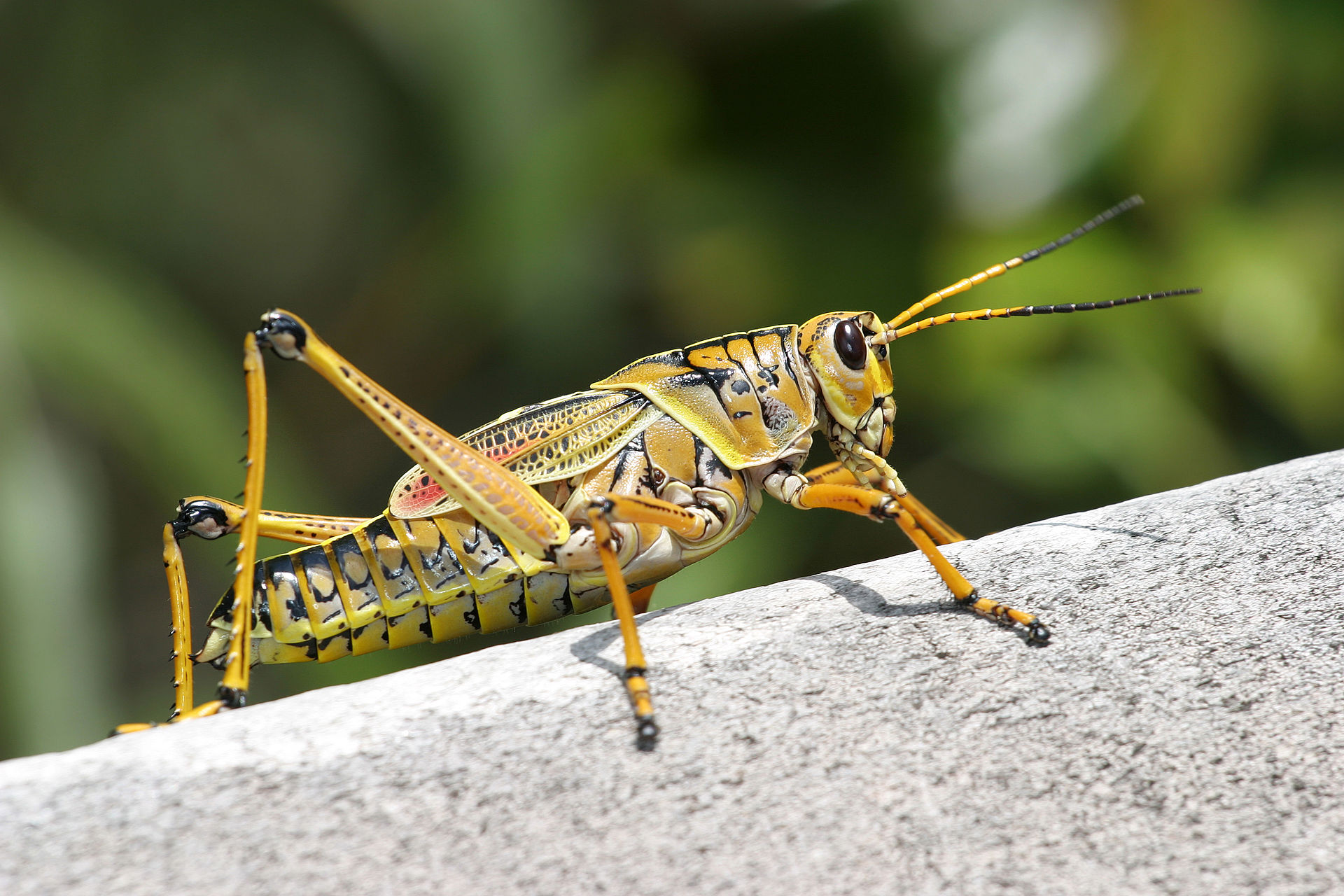
Infants are born without the emotion of disgust. It does not fully develop until age seven. As everyone knows children at age two will put everything in their mouths. Researchers put grasshoppers into milk glasses and offered them to five-year-olds. The kids took the grasshoppers out and drank the milk. By age seven, the kids understood the concept of contamination, and would not drink the milk.

The foundational research in this area was conducted by psychologist Dr. Paul Rozin and his colleagues at the University of Pennsylvania. Their experiments revealed key patterns in how disgust develops:

Inborn vs. Acquired Responses: Infants are born with a taste rejection for bitter or sour substances (distaste), but they do not have an innate sense of disgust—which is a culturally learned, higher-level cognitive emotion. Infants and young toddlers under age two frequently explore their environment by putting almost anything into their mouths, including insects, animal feces, and non-edible items.

The Contamination Principle: In developmental studies testing the concept of contagion, researchers presented young children with a favorite beverage (such as milk or juice) that had come into brief contact with a disgust-eliciting object (like a grasshopper, comb, or sterile hair).

Age Differences: Children under age five or six routinely removed the insect or object from the drink and happily drank the remaining liquid, seeing it as completely separate. They did not yet grasp the invisible concept of trace contamination (“once in contact, always in contact”).

Development Around Age Seven: It is typically between the ages of 5 and 7 that children fully acquire sensitivity to trace contamination. By around age seven, most children will refuse to drink a beverage if it has touched an offensive object—even after the object is completely removed.

Posted on — Leave a comment

Worst Teacher

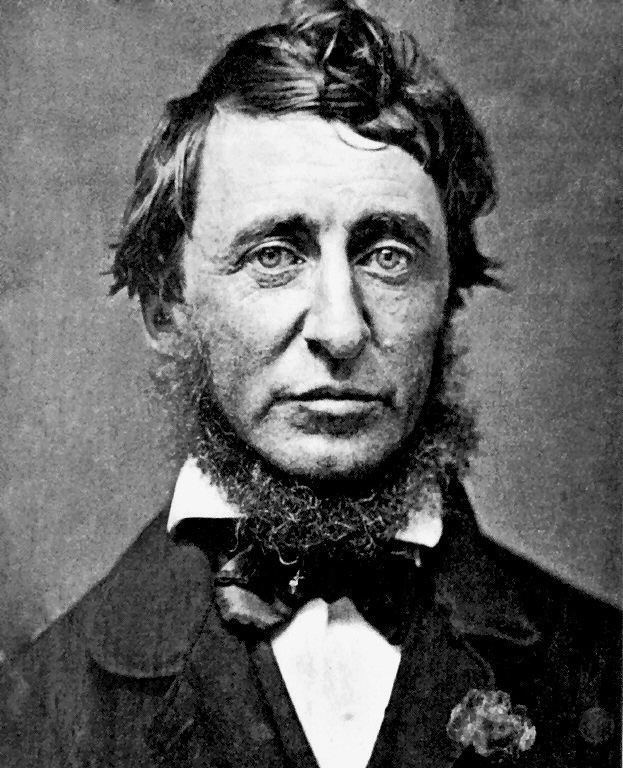
At one time Henry David Thoreau, who according to a Wikipedia article, was an American essayist, poet, philosopher, abolitionist, naturalist, tax resister, development critic, surveyor, yogi, and historian, was also at one point a school teacher. When he was accused by his principal of leniency, he immediately grabbed six random kids and spanked them.

In September 1837, a 20-year-old Henry David Thoreau took a job as a schoolmaster at the Center School in his hometown of Concord, Massachusetts. He had strong personal objections to corporal punishment and refused to whip or strike the children, opting instead to maintain order through dialogue and mutual respect.

After about two weeks, a member of the local school committee (Deacon Nehemiah Ball) visited the classroom, accused Thoreau of being too lenient, and insisted that he use corporal punishment to keep the students in line.

To make a point about the absurdity of mandatory whipping, Thoreau selected six students at random after school and struck them with a ruler (a practice known as feruling). One of the students he feruled happened to be a maid-servant who worked in his family’s own household.

Troubled by his actions and refusing to work under a system that demanded physical punishment, Thoreau tendered his resignation that very evening.

Posted on — Leave a comment

Worst Cookies

In 1973, Velma Anstadt, a 10th-grade student from Turbotville, Pennsylvania, made national news by baking and serving protein-rich “earthworm cookies”.

The Experiment: To demonstrate alternative, highly nutritious, low-cost protein sources to combat food shortages, Anstadt harvested earthworms, thoroughly washed and dried them, ground them into a powder/flour, and incorporated them into chocolate chip cookie dough.

The Result: Her project won top honors at local and regional science fairs, subsequently qualifying her to present her work at the 26th International Science and Engineering Fair. The story gained widespread media attention at the time as a novelty example of entomophagy (and invertebrate consumption) for human nutrition.

10 Surprising Facts About Earthworms

  1. They Have 5 “Hearts”
    Earthworms don’t have a single heart like humans do. Instead, they have five pairs of muscular arches called aortic arches that pump blood through their circulatory system.
  2. They Breathe Through Their Skin
    Earthworms have no lungs. They absorb oxygen and release carbon dioxide directly through their skin. To make this work, their skin must remain moist at all times; if an earthworm dries out, it suffocates.
  3. Every Earthworm Has Both Male and Female Organs
    Earthworms are hermaphrodites. Each worm possesses both male and female reproductive structures. However, they still usually need a partner to mate, exchanging sperm to fertilize each other’s eggs.
  4. They Can Eat Their Own Body Weight Every Day
    In rich soil conditions, an earthworm can consume and process its own weight in soil, decaying leaves, and organic matter every 24 hours.
  5. Their Digestion Creates “Black Gold” for Soil
    When earthworms digest organic material, their excretions—called worm castings—are rich in nitrogen, phosphorus, potassium, and magnesium. Castings serve as a powerful natural fertilizer, while worm tunnels aerate soil and help retain water.
  6. They Can Live for Up to 8 Years
    While most wild earthworms die early due to predators (like birds and moles) or drying out, some species can live for 4 to 8 years under safe, ideal conditions.
  7. Cutting One in Half Doesn’t Make Two
    Contrary to popular belief, if you cut an earthworm in half, it will not become two living worms. Only the head end might survive and regenerate its tail if the cut occurs behind vital organs. The tail portion cannot grow a new head and will die.
  8. Giant Earthworms Can Reach 10 Feet Long
    The Giant Gippsland earthworm (Megascolides australis), native to Australia, averages around 3 feet long but can grow to over 9 to 10 feet in length and can be as thick as a human thumb.
  9. They Are Covered in Microscopic Bristles
    Earthworms aren’t completely smooth; they are covered in tiny, hair-like bristles called setae. They anchor these bristles into the surrounding dirt to push and pull themselves forward through the soil.
  10. They Are Not All Native to North America
    Glaciers wiped out native earthworm populations across northern North America thousands of years ago. Most common species found in gardens today, such as nightcrawlers (Lumbricus terrestris), were accidentally introduced by European settlers in plant soil and ships’ ballast.
Posted on — Leave a comment

How To Avoid Raising the Worst Daughters

From a book written in 1858:

Daughters: Mothers, who wish not only to discharge well their own duties in the domestic circle, but to train up their daughters at a later day to make happy and comfortable firesides for their families, should watch well, and guard well, the notions which they imbibe and with which they grow up. There will be so many persons ready to fill their young heads with false and vain fancies, and there is so much always afloat in society opposed to duty and common sense, that if mothers do not watch well, they may contract ideas very fatal to their future happiness and usefulness, and hold them till they grow into habits of thought or feeling. A wise mother will have her eyes open, and be ready for every case.

Posted on — Leave a comment

Worst Disregard for a Free Gift

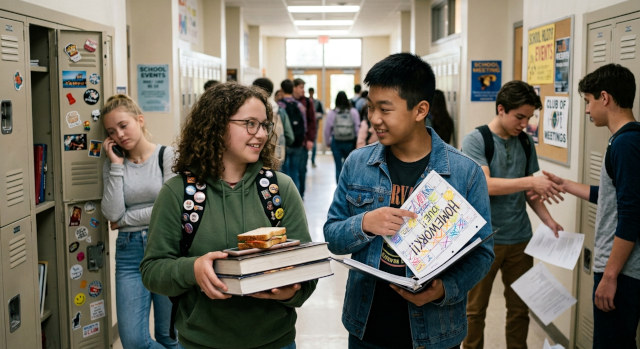
It is tempting for American kids to drop out of school. Who would want to finish school if their plans are only to build race cars or marry somebody rich? But sometimes plans don’t work out the way you expected. More importantly, in the United States, school is free, supported by taxpayers. It’s free! You might as well take as much as you can get.

More About High School

1. “School spirit” became strongly associated with organized high-school athletics

In the early 20th century, schools increasingly used football games, pep rallies, school colors, songs and mascots to create a sense of community. High school consequently became not just a place for classes, but a miniature social institution.

2. The first U.S. high school was established in Boston in 1821

Boston English High School was created primarily to provide practical education for boys who were not necessarily headed for college. It is still operating today.

3. High school sports helped create some of America’s earliest school mascots

Schools began adopting animals, warriors, and other symbols partly to give students a shared identity at athletic competitions. The mascot could become almost as important to a school’s identity as its name.

4. “Prom” is short for “promenade”

Early American proms were essentially formal dances where students dressed up and socialized. The modern elaborate prom, with expensive dresses, limousines and elaborate “promposals,” evolved considerably later.

5. Some high schools once had rifle teams as ordinary school activities

Marksmanship was offered at many American schools, particularly during the early and mid-20th century. School rifle teams could receive substantial institutional support, especially during periods when military preparedness was emphasized.

6. The SAT has roots in military intelligence testing

The SAT’s ancestry can be traced to standardized tests developed for the U.S. military during World War I. Carl Brigham, who later helped develop the SAT, worked with Army intelligence testing.

7. High-school yearbooks weren’t originally just memory books

Early yearbooks often functioned more like elaborate school records, containing photographs, literary pieces, school history, activities and student organizations. The tradition gradually evolved into the senior-focused yearbook familiar today.

8. “Senioritis” is real as a behavior, but it isn’t a medical disease

The unofficial term describes the tendency of some graduating students to lose motivation once they believe their remaining schoolwork has little effect on their future. The phenomenon has been studied by psychologists under more respectable names such as declining academic motivation.

Posted on — Leave a comment

Worst Name for a Child

On September 12, 1984, Sandra Williams gave birth to her daughter in Texas. Originally, Sandra and her husband gave the child an unusually long name: Rhoshandiatellyneshiaunneveshenk Koyaanisquatsiuth Williams.

However, three weeks later, Sandra felt the name wasn’t unique enough and filed a formal amendment to extend it, taking roughly six years to craft the full string of letters by combining words, family names, car models, and movie titles.

The Full Name

The amendment expanded her first name to 1,019 letters, added a 36-letter middle name, and ended with her surname.

Her official first name is:

Rhoshandiatellyneshiaunneveshenkescianneshaimondrischlyndasaccarnaerenquellenendrasamecashaunettethalemeicoleshiwhalhinive’onchellecaundenesheaalausondrilynnejeanetrimyranaekuesaundrilynnezekeriakenvaunetradevonneyaestonyeawenaavedenneyshaevamassneylekeyancndrolyneciauonstadesiashviliyashawnequadvanceboundasneydneauvhawnondasneequawasdainyevranowashawnequawisdandnaseawawnefawne… (along with hundreds of additional letter combinations)

Her 36-letter middle name is Koyaanisquatsiuth, and her last name is Williams.

Key Details & Impact

  • The Record & Birth Certificate: The resulting birth certificate was two feet (61cm) long to accommodate the entire name, setting a Guinness World Record for the longest personal name.
  • Everyday Life: For obvious practical reasons, her family and friends simply call her “Jamie”. As a child, her mother had to record her full name onto an audiotape and play it repeatedly so Jamie could memorize how to pronounce it.
  • Oprah Appearance: In 1997, Sandra and 12-year-old Jamie appeared on The Oprah Winfrey Show, where Jamie successfully recited her full name on air to a stunned studio audience.
  • State Law Change: Following this incident, the state of Texas updated its vital statistics laws to require that a child’s name must fit within the standard “name” box on the state birth certificate form, effectively closing the loophole.

Following her brief media exposure in the mid-1990s as a child, Jamie stepped entirely out of the public eye.

Posted on — Leave a comment

Worst Babies

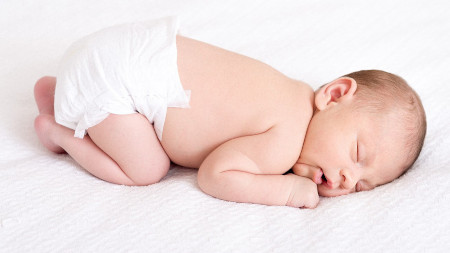
The worst babies are human babies. The babies of all other animals are born with capabilities that we have to learn. For instance, a baby horse can stand and run within a few minutes. A baby turtle has everything it needs the moment it is born. Scientists have determined that even chimpanzee babies are more intelligent than human babies. Yet, a baby person cannot even lift it’s head when born.

More About Babies

They are born with roughly 300 bones.
Adults have 206 bones, but newborns start with around 300. Many of these are smaller, cartilage-based pieces that fuse together over time as the baby grows.

They don’t have hard kneecaps.
Newborns are born without solid, bony kneecaps (patellae). Instead, they have soft cartilage structures that don’t fully ossify into hard bone until between ages 2 and 6.

They can cry without producing actual tears.
While newborns certainly scream and wail, their tear ducts aren’t fully developed at birth. They generally produce only enough moisture to lubricate their eyes, so true emotional tears usually don’t appear until around 1 to 3 months of age.

Their grasp reflex is strong enough to support their weight.
The palmar grasp reflex—where a baby tightly curls their fingers around anything touching their palm—is an evolutionary trait. A newborn’s grip strength can be so firm that it can briefly support their entire body weight.

They can swallow and breathe at the same time.
For about the first 3 to 6 months, a baby’s larynx sits higher in the throat than an adult’s. This positioning allows them to suckle and breathe simultaneously without choking, making feeding much more efficient.

They are born with automatic swimming and stepping reflexes.
Place a newborn face-down in water, and they will naturally hold their breath and make swimming motions (the bradycardic response). Hold them upright with feet touching a flat surface, and they will perform a stepping motion. Both reflexes disappear within a few months.

They briefly double their brain size in year one.
At birth, a baby’s brain is about 25% of its adult size. By their first birthday, it grows dramatically, reaching nearly 70% to 75% of full adult volume.

Their vision is mostly black-and-white and blurry.
Newborns can only focus on objects about 8 to 12 inches away—roughly the distance to a caregiver’s face while feeding. Their color vision is limited, and they see primarily in high-contrast shades of black, white, and gray for the first few weeks.

They lose their newborn hair.
Many babies are born with a full head of hair, only to lose most or all of it within the first few months due to falling hormone levels after birth. The hair that grows back can be a completely different texture or color.

They have more taste buds than adults.
Babies have taste buds not just on their tongues, but also on the roof and sides of their mouths. They are especially sensitive to sweet tastes, which helps draw them to breast milk or formula.