Posted on — Leave a comment

Worst Beach

10 Interesting Facts About Dead Horse Bay

  1. Ghastly Origin of the Name:
    In the 1850s, the surrounding area housed numerous rendering plants. Dead horses from the streets of New York City were brought here to be boiled down into glue, fertilizer, and animal oil, giving the bay its macabre name.
  2. A Treasure Trove of Vintage Trash:
    In the 1950s, a cap holding back a massive 1930s landfill burst open. Ever since, decades-old trash, predominantly from the 1920s to the 1950s, has been washing up onto the shore continuously.
  3. The “Glass Bottle Beach”:
    Dead Horse Bay is famous among urban explorers and collectors for its carpet of vintage glass bottles. Thousands of perfume bottles, medicine vials, soda bottles, and liquor flasks from early 20th-century New York line the beach.
  4. Accidental Time Capsule:
    Because the landfill buried items in an oxygen-deprived environment before it ruptured, many delicate artifacts—such as leather shoes, nylon stockings, bone buttons, and plastic toys—remained remarkably preserved for over half a century.
  5. Connected to Robert Moses:
    Famous NYC urban planner Robert Moses used garbage, sand, and incinerator ash in the 1930s to fill in the marshland, aiming to connect Barren Island to Brooklyn to expand Marine Park.
  6. Barren Island’s Ghost Town:
    Before becoming a giant landfill, Barren Island (which borders Dead Horse Bay) was home to a tight-knit community of factory workers, immigrants, and off-grid residents. The city evicted the remaining community members in the 1930s to clear space for Floyd Bennett Field.
  7. Radioactive Discovery and Closure:
    In 2020, the National Park Service indefinitely closed the primary beach area at Dead Horse Bay after elevated levels of gamma radiation—traced back to buried vintage industrial waste like radium dials—were detected on the surface.
  8. A Clanging Symphony of Sound:
    Visitors to the beach often noted a distinct sound: as tides roll in and out, thousands of glass bottles bang against one another and against rocks, creating a unique, wind-chime-like clanging sound.
  9. Part of a National Recreation Area:
    Despite its industrial and toxic past, Dead Horse Bay sits on land managed by the National Park Service as part of the Gateway National Recreation Area in Brooklyn, New York.
  10. A Haven for Horseshoe Crabs:
    In addition to historical detritus, the bay serves as an important spawning ground for horseshoe crabs—ancient marine arthropods that come ashore every spring during full and new moons to lay their eggs.
Posted on — Leave a comment

Worst Imposter

Ferdinand Waldo Demara, Jr., a high-school dropout, posed as a monk, a professor of psychology, a cancer researcher, a penal officer, a teacher, and a surgeon, all without the proper education or certification. As a surgeon he successfully performed amputations and even thoracic surgery.

Ferdinand was portrayed by Tony Curtis in the 1961 movie, “The Great Imposter.”

More about Ferdinand Demara, Jr.

Ferdinand Waldo Demara Jr., famously known as “The Great Impostor,” was one of history’s most prolific and successful con men. Armed with an extraordinary memory and supreme confidence, he took on dozens of high-level professions without credentials.

  1. He Performed Successful Surgeries at Sea with Zero Medical Training
    During the Korean War, Demara posed as Dr. Joseph Cyr, a trauma surgeon aboard the Royal Canadian Navy destroyer HMCS Cayuga. When wounded soldiers were brought aboard, Demara ducked into his cabin, speed-read a medical textbook on the required procedures, and performed multiple surgeries—including extracting a bullet lodged near a patient’s heart and amputating a foot. Every single one of his patients survived.
  2. His Heroic Fame Was His Own Undoing
    Demara’s flawless surgical work on the Cayuga was so impressive that it attracted news coverage. The real Dr. Joseph Cyr’s mother read a newspaper account of her son’s “heroic” actions aboard a navy vessel in Korea and knew something was wrong, as her actual son was practicing medicine in New Brunswick, exposing the fraud.
  3. He Served as the Dean of Philosophy at a College
    Posing as “Dr. Robert Linton French,” a religiously oriented psychologist, Demara landed a position at Gannon College in Erie, Pennsylvania. He wasn’t just a lecturer; he was made Dean of the School of Philosophy and taught courses in general, industrial, and abnormal psychology—even authoring a booklet titled How to Bring Up Your Child.
  4. He Possessed a Photographic Memory
    Demara lacked formal higher education, having run away from home as a teenager, but he possessed an extraordinarily high IQ and a photographic memory. This allowed him to absorb textbooks rapidly, memorize technical jargon, and pass himself off as an authority on nearly any subject overnight.
  5. He Faked His Own Suicide to Escape the Military
    After going AWOL from the U.S. Army during World War II, Demara joined the U.S. Navy under a stolen name. When he failed to get the naval assignment he wanted, he staged his own suicide by leaving his clothes and a suicide note on a beach before slipping away under another new identity.
  6. He Ran a Maximum-Security Prison Section
    Demara assumed the identity of Dr. Ben W. Jones and secured a position as an assistant warden at a maximum-security prison in Texas. He successfully instituted prison reform policies and gained the trust of inmates and guards alike before a prisoner recognized his face from a news article and turned him in.
  7. He Co-Founded a Catholic College
    Demara spent significant time trying to become a monk, joining various religious orders throughout his life. Under the alias Brother John Payne, he helped found LaMennais College (now Walsh University) in Alfred, Maine, where he served as a chancellor.
  8. He Was Played by Tony Curtis in a Hollywood Film
    His exploits inspired a best-selling 1959 biography, The Great Impostor by Robert Crichton, which was adapted into a 1961 feature film starring Tony Curtis. Demara was also cast in a small role as a hospital surgeon in the 1960 horror film The Hypnotic Eye, where ironically, observers noted he was terrible at scripted acting.
  9. He Claimed His Primary Motive Was “Pure Rascality”
    Unlike most con artists, Demara rarely stole money or sought great personal wealth. He was primarily motivated by prestige, the challenge of slipping into high-status roles, and the opportunity to do good. When asked about his motivation, he famously cited “Rascality, pure rascality”.
  10. He Ended His Life as a Legitimate Hospital Chaplain
    In his later years, after his fame made it impossible to adopt new fake personas, Demara went back to serving others legitimately under his real name. He became an ordained minister and worked as a hospital chaplain in Anaheim, California, until his death in 1982.


Perhaps more famous was Frank Abagnale Jr., the real person portrayed in the move “Catch Me If You Can,” Starring Leonardo DiCaprio


Posted on — Leave a comment

Worst Sibling Rivalry

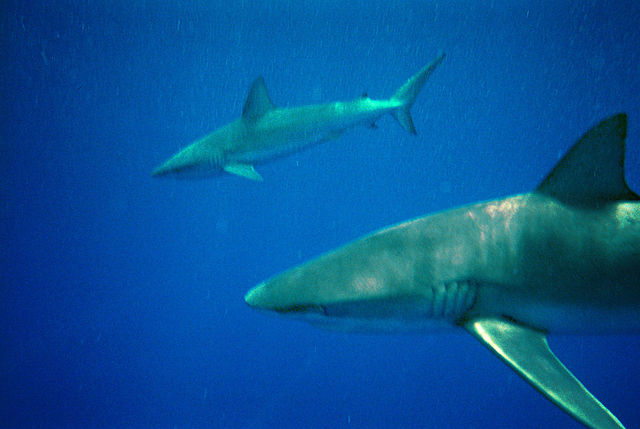
One species of shark is so competitive that the babies fight each other within their mother, until only one is left to be born.

Sharks almost never get cancer. Scientists are studying them to find out why, and whether their protection is adaptable to humans.

Sharks are older than trees.

Sharks have been around for roughly 450 million years, while the first trees appeared about 385 million years ago. Sharks were already swimming in ancient oceans before forests existed.
Some sharks glow in the dark.

Several deep-sea species are bioluminescent or biofluorescent, producing or manipulating light. The cookiecutter shark, for example, has a glowing underside that may help disguise its silhouette from predators below.

Sharks can replace their teeth constantly.

A shark may lose thousands of teeth during its lifetime. New teeth continually move forward from rows behind the functional teeth, creating what amounts to a conveyor belt of dental replacements.

The Greenland shark may live for centuries.

Greenland sharks are among the longest-lived vertebrates known. Scientists have estimated that some can live several hundred years, with one famous estimate suggesting an age of around 400 years.

Sharks can detect electricity.

Special organs called ampullae of Lorenzini allow sharks to detect tiny electrical fields produced by living animals. This can help them locate prey even when it is hidden beneath sand.

A shark’s skin feels like sandpaper.

Shark skin is covered with tiny tooth-like structures called dermal denticles. They make the skin rough and also help reduce drag as the shark moves through water.

Some sharks can walk.

Several species of epaulette shark can use their fins to “walk” across the seafloor and even across shallow exposed areas. They can tolerate remarkably low-oxygen conditions too.

Not all sharks need to keep swimming.

The popular idea that every shark must swim constantly to avoid suffocating is false. Some sharks, such as nurse sharks, can actively pump water over their gills while resting on the seafloor.

The whale shark is a shark, not a whale.

The whale shark is the world’s largest fish and can exceed 40 feet (12 meters). Despite its enormous size, it is a filter feeder that eats plankton and tiny organisms.

Some sharks eat plants.

The bonnethead shark, a small hammerhead relative, has been found to digest and obtain nutrients from seagrass. This makes it one of the few sharks known to have a significant omnivorous diet.

Posted on — Leave a comment

Worst Male

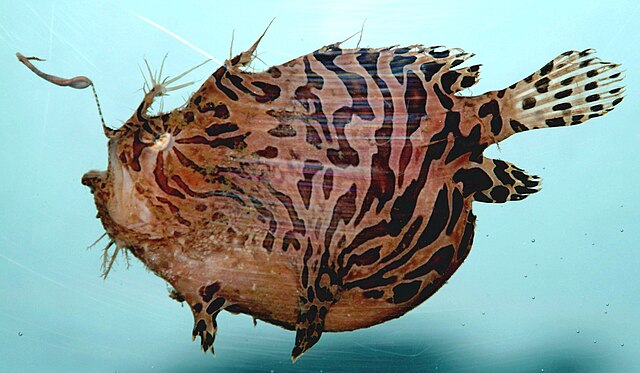
Some anglerfish, who live in the ocean at depths of over one mile (1.6km), have unusual lives. To see where they are going in that depth, or perhaps to attract food, the females have a chemically operated lamp that hangs on a stalk in front of their mouths. The male doesn’t need to see because early in his life, he bites into the belly of the female and stays there forever. After a while the female grows skin over the connection. The male degenerates, losing his teeth, his fins, and any manner of life beyond being a small appendage hanging off the female.

Posted on — Leave a comment

Worst Submarine

The world’s worst submarine was the first submarine. That makes sense. It had very limited capabilities. In it’s one and only attempted attack it was comically ineffective.

In the mid 1770’s David Bushnell, an inventive guy, created the world’s first attack submarine. Using whiskey barrel technology, he made a watertight clam shell shaped vehicle with barely enough room for one man. The thing, nicknamed the Turtle, was placed in New York Harbor one night Continue reading Worst Submarine

Posted on — Leave a comment

Starfish Table Manners

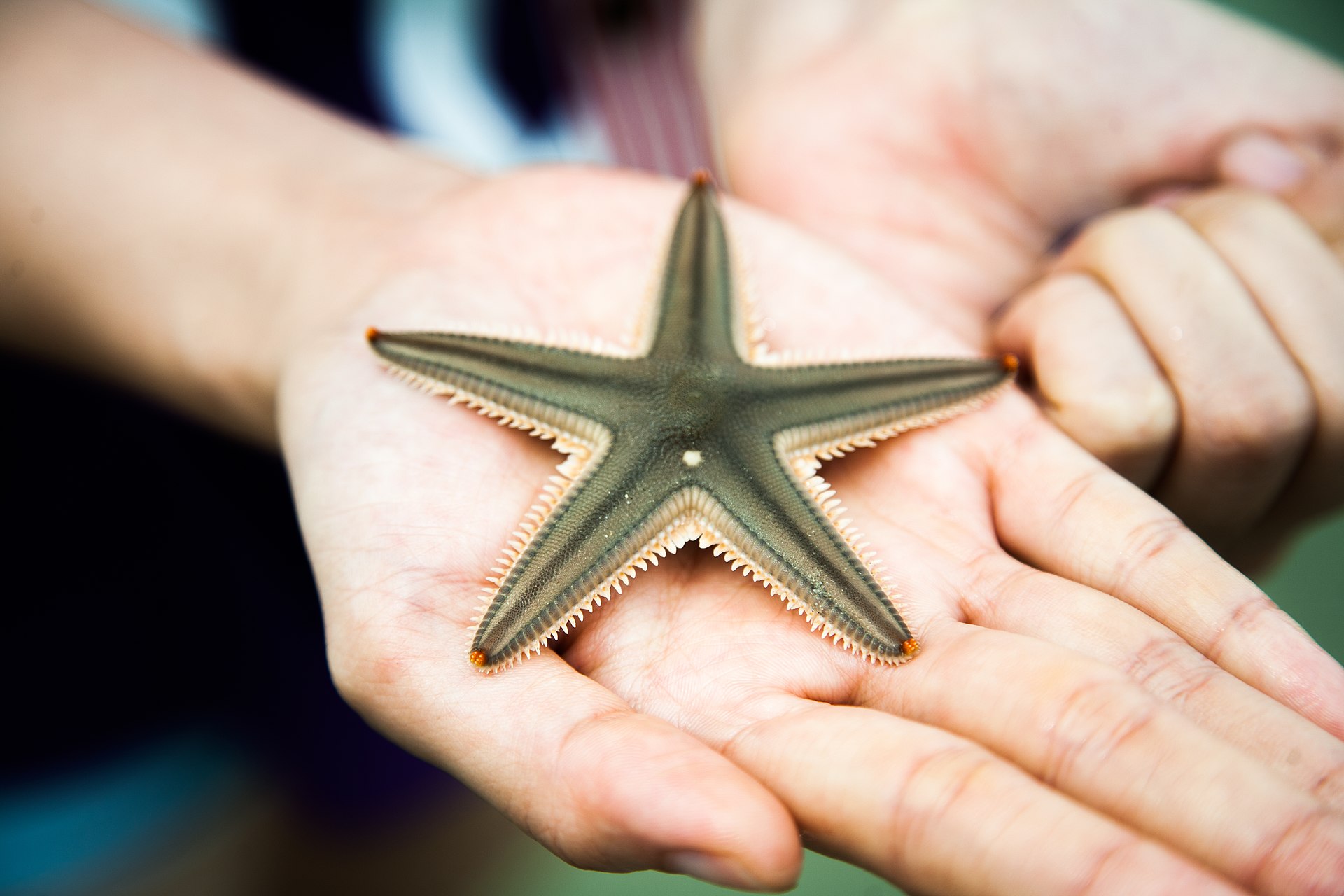
Starfish have a gross and unusual manner of eating. They eat by regurgitating their stomachs outside of their bodies. To consume prey like clams or mussels, a starfish pries open the shell slightly, ejects its lower stomach out through its mouth, and digests the prey’s tissue right inside the victim’s shell before pulling its stomach back in.

Starfish aren’t actually fish. They are echinoderms, closely related to sea urchins and sand dollars. Because they lack gills, scales, and backbones, scientists and marine biologists prefer to call them “sea stars.”

They can regenerate entire lost arms. If a predator bites off a sea star’s arm, the animal can grow a brand-new one. In some species, a single severed arm can even regenerate an entire new body if a central part of the core remains attached.

They pump seawater through their bodies instead of blood. Sea stars do not have blood or a central heart. Instead, they use a vascular system that pumps filtered seawater through their bodies to deliver nutrients and operate their feet.

They have eyes on the ends of their arms. At the tip of each arm sits a small micro-eye spot that detects light and dark. While they cannot see detailed images, these eyes help them navigate toward light sources and avoid shadow-heavy predators.

They move using thousands of tiny tube feet. On the underside of their arms are hundreds of tube feet operated by hydraulic pressure. These feet allow them to walk smoothly across the ocean floor, adhere tightly to steep rocks, and open tough mollusk shells.

Not all sea stars have five arms. While the classic sea star shape features five arms, some species have far more. The sun star can have up to 40 arms, while the crown-of-thorns starfish typically has between 13 and 21.

They can change their sex. Certain species of sea stars are born male and transition into females later in life as they mature. Others can reproduce both sexually by releasing gametes into the water and asexually through body division.

Their skin is covered in tiny protective pincers. Called pedicellariae, these tiny claw-like structures sit on the surface of the sea star’s skin to prevent algae, parasites, and debris from settling on them and blocking their breathing gills.

They have no centralized brain. Sea stars manage complex movements and hunting behaviors entirely through a decentralized nervous system. A nerve ring around the mouth connects to radial nerves running down each arm, allowing the limbs to act independently yet cooperatively.