Posted on — Leave a comment

Worst Shoes


Interesting Facts About Shoes

  1. High heels were originally created for men. Persian horsemen in the 10th century wore heels to keep their feet secured in stirrups while riding and shooting arrows. European aristocrats later adopted them to signify high status and wealth.
  2. Left and right shoes were not distinct until the 19th century. For centuries, shoes were made “straight”—identical for both feet—and had to be worn in gradually to fit the left or right foot. Philadelphia shoemakers began crafting distinct left and right shoes around 1818.
  3. Sneakers got their name because they were quiet. In the late 1800s, rubber-soled shoes were nicknamed “sneakers” because the soft bottoms allowed the wearer to walk silently without making noise on hard surfaces.
  4. The world’s oldest preserved leather shoe is over 5,500 years old. Discovered in an Armenian cave in 2008, the Areni-1 shoe is made of a single piece of cowhide laced with leather cord, remarkably preserved by dry cave conditions and sheep manure.
  5. The term “sneakerhead” emerged in the late 1980s. The culture of collecting sneakers exploded following the release of Nike’s Air Jordan line in 1985, turning basketball footwear into a major fashion and collector movement.
  6. Medieval shoes were styled so long they had to be tied to the wearer’s knees. Popular in 14th-century Europe, “crakow” or “poulaine” shoes featured long, extended toes up to two feet long, forcing wearers to loop string or chains to their knees to prevent tripping.
  7. Red soles on Christian Louboutin shoes were inspired by nail polish. In 1993, fashion designer Christian Louboutin grabbed a bottle of his assistant’s red Chanel nail polish and painted the underside of a prototype shoe, instantly creating his signature brand look.
  8. Astronaut boots remain on the Moon. Neil Armstrong and the Apollo astronauts left their moon-walking boots behind on the lunar surface to reduce weight on the spacecraft for the journey back to Earth.
  9. Space-age mattress foam revolutionized athletic shoes. Memory foam and TPU cushioning materials, originally developed for aircraft ejection seats and NASA padding, were later adapted by shoe manufacturers to build modern high-impact running soles.
  10. The phrase “pull yourself up by your bootstraps” was originally an absurd joke. In the 19th century, the expression described an impossible physical feat—attempting to lift oneself off the ground by pulling on shoe loops—before its meaning shifted to self-reliance.
Posted on — Leave a comment

Worst Haircuts of All Time


10 Interesting Facts About Haircuts

  1. Barbers used to perform surgeries and dentistry. During the Middle Ages, “barber-surgeons” handled bloodletting, tooth extractions, and minor surgical procedures alongside hair trimming.
  2. The barber pole colors symbolize blood and bandages. The classic red-and-white pole originated in the medieval era: red represents blood, white represents clean bandages, and the pole itself represents the staff patients held to make their veins swell for bloodletting.
  3. Alexander the Great mandated short hair for military strategy. He ordered his soldiers to shave their heads and beards so enemies couldn’t grab their hair during hand-to-hand combat.
  4. Frequent trims do not make hair grow faster. Hair growth occurs entirely at the follicle beneath the scalp. Trimming removes split ends to keep hair healthy and prevent breakage, giving the illusion of faster growth, but it doesn’t affect the growth rate.
  5. The bob haircut caused major social uproar in the 1920s. When short “flapper” bobs became popular, some department stores fired women who cut their hair, and doctors claimed short hair caused medical issues to discourage the trend.
  6. Ancient haircuts relied on sharp flint and obsidian. Long before metal shears existed, prehistoric humans cut their hair using sharpened volcanic glass (obsidian), flint blades, and fire.
  7. The world’s most expensive haircut cost over $20,000. Celebrity hairstylist Stuart Phillips charged £8,000 (around $16,000 to $24,000 depending on exchange rates) for a haircut for billionaire Beverly Lateo, which included first-class flights and luxury limousine service.
  8. Astronauts use vacuum-attached clippers in space. To keep microgravity from scattering thousands of tiny hair clippings into air filters and navigation equipment, astronauts use electric clippers attached directly to a suction hose.
  9. Your hair grows faster during warmer weather. Higher temperatures and increased circulation during summer months slightly boost metabolic activity, causing hair to grow marginally faster than in winter.
  10. The mullet has ancient origins. Long before its 1980s peak, the “business in the front, party in the back” style was worn by ancient Roman warriors and Assyrian soldiers to keep hair out of their eyes while protecting the back of their necks from sun exposure and weapon strikes.

Bonus: Your hair grows 83 feet (25 meters) per day. Explanation, each hair grows about 1/100-inch and you have 100,000 hairs.

Posted on — Leave a comment

10 Worst Crochet Jokes

I bought “just one skein” of yarn. The cashier said, “Oh, you’re new here.”

I told myself I’d crochet “just one row before bed.” I finished a blanket, three coasters, and a mild emotional crisis.

Crochet math: one skein = not enough, two skeins = still not enough, ten skeins = too much but I’ll buy more.

I brought my crochet project to a party. Someone asked if it was “grandma stuff.” Later they complained about being cold. Guess who didn’t get a blanket?

I tried teaching my cat to crochet. She didn’t learn, but she did steal the yarn and start a modern art installation under the couch.

Crochet patterns say “easy.” That’s a lie. They mean “easy for someone else.”

I crocheted a hat for my cat. He hasn’t forgiven me.

I crocheted in public and someone said, “Oh, you knit?” That was the moment I learned humans can survive being corrected with only one eye twitch.

My friend asked how long a blanket takes to crochet. I said, “Somewhere between one week and six years.”

Crochet hooks are like wands. Except they summon tangles instead of magic.

I crocheted a sweater. It fits… someone, somewhere, in another dimension.

I joined a crochet group. We spent 80% of the time crocheting and 20% judging yarn that didn’t deserve its price tag.

Crochet projects are like relationships. They start with passion and end with “what was I thinking?”

Telling a crocheter “you could just buy that for cheaper” is like telling a chef “you could just go to a restaurant.” Technically true, emotionally devastating.

I crocheted a toy for my dog. He unraveled it in five minutes.

Non-Crocheter: “Wow, that looks so relaxing. Do you just, like, not think while you do that?” Me: (Internal Monologue: Was that a C2C or a Moss stitch? Did I miss a chain space? Which side is the right side? Why is it pulling?) “Oh, yes. Very relaxing.”

I have 30 crochet hooks. I currently only know the location of two of them.

Crocheters are like “I can’t afford groceries” while sitting on a throne of $400 worth of yarn they bought “just in case.”

Crocheters will video-call each other just to hold up yarn and ask “is this blue or green?” Our friends don’t understand this is a legitimate crisis.

Me, at 2 AM: I know I should go to sleep, but I’m only three rows away from being able to start a new color, and I absolutely have to see how the border works.

The most exercise a crocheter gets is running to five different stores looking for one specific shade of yarn that definitely exists and we definitely saw it somewhere.

The four stages of a crochet project: excitement, confidence, denial that you miscounted stitches, and rage-frogging at midnight.

The UFO (unfinished object) pile isn’t clutter, it’s a collection of “alternative timeline projects” where we had better time management. Which timeline? Not this one.

Crochet hooks are tiny weapons against boredom.

I go to the store for three things: milk, eggs, and a specific size G hook. I come home with 14 skeins of mohair, a pattern book, and no groceries.

“I’m just going to crochet until this podcast ends” is a lie. We’re crocheting through three more podcasts and possibly into next Tuesday.

I was crocheting and someone asked if it was “stress-relieving.” Sure — right after I untangle this knot.

Yarn label: “Machine Wash, Tumble Dry Low.” Crocheter: “Don’t you dare put this baby in the washing machine. I will hand-wash it in lukewarm water and lay it flat on a mesh screen for two days.”

I crocheted a scarf for my husband. He said it was “a bit long.” He’s now the proud owner of a 13-foot emotional support noodle.

I once counted stitches out loud in a café. A stranger tried to join in. We are no longer friends.

My crochet bag has yarn, hooks, scissors, stitch markers, and enough crumbs to feed a family of squirrels.

I crocheted in the waiting room and an old man said, “My wife used to do that.” Then he added, “She swore at it a lot.” I felt seen.

I gave someone a handmade crochet gift and they said, “Oh… neat.” I now crochet exclusively for people who visibly gasp.

People say crocheting is slow. They haven’t seen me unravel two hours of work in five seconds.

I crocheted a coaster. Then I crocheted matching coasters. Then I crocheted 14 more because I don’t know how to stop.

Someone asked if crocheting is expensive. I laughed so hard I dropped my $48 skein of imported alpaca.

I crocheted a blanket for the winter. By the time I finished, it was summer. The cycle continues.

I crocheted while watching a movie and didn’t notice the plot twist because I was too busy being betrayed by my stitch count.

Every crocheter has at least one project that’s been “almost done” for three years.

The most unrealistic part of horror movies is when someone hears a noise and investigates immediately. A real crocheter would think “just one more row” six times first.

Non-crocheters think we’re being productive. Really we’re just hoarding yarn while binge-watching TV and occasionally panicking about whether that was a single or double crochet three rows ago.
Every crocheter has confidently started a project without reading the pattern, then spent two hours frogging it. We never learn.

At the craft fair, I saw a guy crocheting with one hand while eating a sandwich with the other. He dropped the sandwich into the yarn bowl and accidentally made a ham-and-cheese potholder.

Someone asked if I could crochet them something “real quick.” I asked if they wanted it real quick or real good. They backed away slowly.

I crocheted a bag to hold all my yarn. The yarn unionized and demanded a bigger one.

Crocheters will spend $200 on yarn they don’t need but complain that a $6 pattern is too expensive. Math isn’t our strong suit—we’re still trying to figure out gauge.

“I’ll just make a small blanket” is the crocheter’s version of “I’ll just have one potato chip.”
Posted on — Leave a comment

10 Worst Jokes About Fashion

“Fashion is a form of ugliness so intolerable that we have to alter it every six months.”
-Oscar Wilde

How do you spot a fake designer bag? It’s bragging louder than the outfit.

What’s a tailor’s favorite hobby? Fixing everyone else’s mistakes.

How do you annoy a fashion designer? Wear their prototype backward.

ow do you know a fashion trend is dead? It’s on sale at every outlet mall.

Fashion week is just like regular life, except everyone’s late and pretending it’s on purpose.

I tried to dress “business casual” but ended up looking like a substitute teacher who got fired for being too chill.

I bought ripped jeans for $80. My grandma offered to sew them for free and now won’t speak to me.

My closet has 40 shirts, but I still wear the same 3. The others are just there for moral support.

I don’t follow trends. I just slowly absorb them through shame and social media.

I bought one designer jacket and now I have to explain to everyone why I can’t afford lunch.

My style is best described as “I tried” with subtle notes of “gave up halfway.”

Model on the runway: fierce and flawless. Me: tripping over a sock on the floor in my own house.

I wore all black to look chic. Turns out, I just looked like I was going to fix someone’s Wi-Fi.

I tried to do a fashion selfie. The camera got tired and just shut itself off.

Wardrobe malfunction? I prefer “unexpected design decision.”

I saw a guy wearing a cape and honestly, he had more confidence than my entire family tree.

The label said “dry clean only” so now it lives in a special drawer for clothes I never wear again.

My personal shopper is named “impulse” and they work mostly on Sundays.

Nothing says “fashion victim” like running into a glass door in your designer sunglasses.

At one time in Japan, fashionable women painted their teeth black.

Posted on — Leave a comment

Celebrities with the Worst Eccentricities

Salvador Dali – The surrealist artist was known for his strange behaviors, such as wearing an antique diving suit and carrying a walking stick with a built-in phallus.

Nikola Tesla – The brilliant inventor was known for his aversion to germs and obsession with the number 3.

Howard Hughes – The billionaire industrialist and aviator was known for his extreme germophobia, reclusiveness, and obsession with aviation.

Lady Gaga – The pop icon is known for her avant-garde fashion sense and eccentric performances, such as wearing a meat dress to an awards show.

Marlon Brando – The legendary actor was known for his peculiar habits, such as having his lines fed to him through an earpiece and insisting on being filmed only in close-ups.

Rasputin – The Russian mystic was known for his wild behavior, such as engaging in orgies and claiming to have healing powers.

Hunter S. Thompson – The journalist and author was known for his drug use, love of firearms, and eccentric personality.

Timothy Leary – The psychologist and counterculture icon was known for his advocacy of psychedelic drugs and unconventional lifestyle.

John McAfee – The software entrepreneur was known for his eccentric behavior, such as claiming to have developed a method to communicate with whales.

Steve Jobs – The Apple co-founder was known for his minimalist fashion sense and perfectionist tendencies.

Richard Branson – The billionaire entrepreneur is known for his adventurous spirit, such as attempting to circumnavigate the world in a hot air balloon.

Oscar Wilde – The writer was known for his flamboyant fashion sense and wit, as well as his homosexuality in a time when it was illegal.

Sarah Winchester – The widow of the Winchester rifle heir was known for her belief in spirits and building a mansion with constantly changing architecture to appease them.

H.R. Giger – The artist and designer was known for his disturbing and erotic artwork, including designing the iconic alien in the movie “Alien”.

Stanley Kubrick – The filmmaker was known for his obsessive attention to detail and control over his films.

Johnny Depp – The actor is known for his eclectic fashion sense and collection of oddities, such as a preserved human finger.

Angelina Jolie – The actress is known for her unusual tattoos, including a Buddhist prayer and the coordinates of her children’s birthplaces.

Shia LaBeouf – The actor is known for his strange behavior, such as wearing a paper bag over his head at a red carpet event.

Madonna – The pop star is known for her controversial music videos and stage performances, such as simulating masturbation during a live concert.

Britney Spears – The pop star is known for her public breakdowns and erratic behavior, such as shaving her head in 2007.

Ozzy Osbourne – The rock star is known for his wild behavior and drug use, as well as biting the head off a bat during a live performance.

Posted on — Leave a comment

Worst Museums

Enjoy this list of museums. They aren’t all bad, but some are the worst in the world.

Museum of Bad Art – a collection of artwork too bad to be ignored

The Icelandic Phallological Museum – a collection of over 215 penises and penile parts from over 93 species

The Parasite Museum – a museum that focuses on the strange world of parasites

In San Rafael, California, you’ll find the Museum of International Propaganda.

The Sulabh International Museum of Toilets – a museum dedicated to the evolution of toilets around the world

The Museum of Broken Relationships – a collection of objects left over from failed relationships

The International Cryptozoology Museum – a museum that studies creatures that are rumored to exist, but have not been proven to exist

The Mütter Museum – a museum of medical oddities and human specimens

The Museum of Death – a museum that explores the subject of death through exhibits of real human remains and death-related artifacts

Marin Museum of Bicycling – a museum dedicated to bikes and bicycling, specializing in mountain bikes.

The Museum of Questionable Medical Devices – a museum that showcases medical devices that have questionable effectiveness

The Hand Fan Museum – a museum of hand fans, the devices used by women mostly in past eras to cool themselves, and send semi-secret signals to others.

The Museum of Jurassic Technology – a museum that explores the intersection of art, science, and the imagination

The Vent Haven Museum – a museum dedicated to ventriloquism and the history of ventriloquists’ dummies

The Museum of Neon Art – a museum that collects, preserves, and exhibits neon signs and related art forms

The House on the Rock – a museum that features a collection of oddities, including the world’s largest indoor carousel

The Kansas Barbed Wire Museum – a museum dedicated to the history and development of barbed wire

The National Museum of Funeral History – a museum that explores the history and cultural significance of funerals and funeral practices

The International Spy Museum – a museum that explores the history and methods of espionage

The American Banjo Museum – a museum that explores the history and evolution of the banjo

The Museum of Osteology – a museum that showcases the skeletal system of animals from around the world

The Teddy Bear Museum – a museum that showcases the history and evolution of teddy bears

The Museum of the Weird – a museum that showcases bizarre and unusual artifacts from around the world

The Elevator Museum – a museum that explores the history and development of elevators

The Canadian Potato Museum – a museum that explores the history and cultural significance of potatoes in Canada

The Skyscraper Museum – a museum that explores the history and evolution of skyscrapers

The Salt and Pepper Shaker Museum – a museum that features over 20,000 salt and pepper shakers from around the world

The Museum of Miniature Houses – a museum that showcases a collection of miniature houses and other miniatures

The National Museum of Roller Skating – a museum that explores the history and evolution of roller skating

The Museum of Handbags and Purses – a museum that showcases the history and evolution of handbags and purses

The Museum of Chinese in America – a museum that explores the history and experiences of Chinese immigrants in America

The New Orleans Pharmacy Museum – a museum that showcases the history and development of pharmacy and medicine in New Orleans

The Musée Mécanique – a museum that features a collection of antique arcade machines and mechanical instruments.

Posted on — Leave a comment

Worst Male Vanity

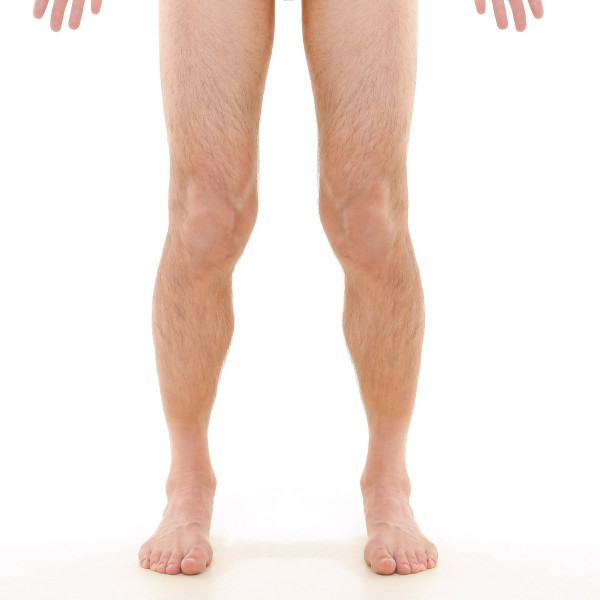
European men used to be vain about their legs – to the point where they knew which leg was the best looking. These men would place their “best foot forward.”

More On Male Vanity

1. The Louis XIV Heel Revolution

High-heeled shoes were originally invented for male aristocrats in Persia for horseback riding, but King Louis XIV of France popularized them as the ultimate symbol of royal male vanity. He restricted red-heeled shoes strictly to his inner circle of noble men to display elevated status.

2. 18th-Century “Macaronis”

In 1770s England, young wealthy men known as “Macaronis” took male grooming and fashion vanity to extreme heights. They wore towering, oversized powdered wigs, tight colorful silk clothing, and carried delicate perfume bottles, sparking saturated satirical cartoons of the era.

3. The “Brotox” Surge

Cosmetic procedures among men have surged dramatically over the past decade, leading to the coining of terms like “Brotox” (male botulinum toxin injections). According to plastic surgery associations, male Botox treatments have grown by over 400% since 2000.

4. Beard Oil in Ancient Mesopotamia

Male vanity regarding facial hair is thousands of years old. Ancient Assyrian and Babylonian men spent hours daily curling, braiding, and oiling their beards with gold dust, scented oils, and intricate ringlets to signal wealth and high military rank.

5. George “Beau” Brummell’s 5-Hour Routine

Beau Brummell, the 19th-century British dandy who reshaped modern male suits, spent upwards of five hours every single day dressing and grooming. His vanity routine included polishing his leather boots with champagne to achieve a perfect shine.

6. The Symmetrical Face Bias

Evolutionary psychologists note that male vanity often centers heavily on jawlines and facial symmetry. Studies show men with highly symmetrical facial features and pronounced jawlines subconsciously receive higher social perception scores regarding leadership and physical competence.

7. The Roman “Calvities” Panic

Julius Caesar was notoriously insecure about his receding hairline (calvities). To conceal his baldness, he famously used the ancient equivalent of a “comb-over” and pushed hard for the Roman Senate to grant him the privilege of wearing a laurel wreath at all times.

8. Makeup as War Paint in Ancient Egypt

Egyptian men of all social classes wore heavy black eye makeup (kohl) and green copper pigments. While partly functional against harsh desert sun and eye infections, it was equally driven by vanity, as cosmetic aesthetics were linked directly to divine beauty and status.

9. The Rise of “Bigorexia”

Male body image vanity has a documented clinical counterpart known as Muscle Dysmorphia (or “Bigorexia”). Individuals affected by this condition view themselves as small or insufficiently muscular regardless of how massive or lean their physique actually is.

10. Codpiece Fashion Inflation

In 16th-century Europe, male vanity focused on the groin area via the “codpiece.” Originally a functional flap on trousers, men began padding, embroidering, and inflating codpieces to absurd proportions to project virility, social dominance, and power.

Posted on — Leave a comment

Worst Comment on Fashion

“Fashion is a form of ugliness so intolerable that we have to alter it every six months.”
-Oscar Wilde

Oscar Wilde (1854–1900) was an Irish poet, playwright, and novelist, widely recognized as one of the most brilliant wits and literary figures of the late Victorian era. Known for his flamboyance, aesthetic philosophy (“art for art’s sake”), and razor-sharp satire, Wilde achieved massive acclaim with his plays—most notably The Importance of Being Earnest—and his iconic novel, The Picture of Dorian Gray. His career came to a tragic end following his conviction for “gross indecency” under Victorian anti-homosexuality laws, leading to two years of hard labor and his premature death in exile in Paris.

10 Interesting & Weird Facts About Oscar Wilde

  1. He was an aesthetic fashion icon and toured America wearing velvet knee breeches.
    In 1882, Wilde embarked on a year-long lecture tour across North America to teach aesthetics. He famously dressed in velvet jackets, knee breeches, silk stockings, and flowing cravats, becoming an instant media sensation.
  2. When entering U.S. customs, he allegedly declared only his genius.
    While likely an apocryphal story or a late-in-life exaggeration, legend holds that when asked by a customs officer in New York if he had anything to declare, Wilde replied: “I have nothing to declare except my genius.”
  3. He out-drank rugged silver miners in Leadville, Colorado.
    During his American tour, Wilde visited a mining town in Colorado. Expecting him to be a frail aesthete, the local miners were stunned when Wilde happily went down into the mines, drank straight whiskey with them, and out-drank almost every miner at the table.
  4. He edited a Victorian women’s magazine.
    From 1887 to 1889, Wilde served as the editor of The Lady’s World, which he promptly renamed The Woman’s World. He broadened its scope from light fashion and gossip to include articles on female education, politics, and employment.
  5. He was a brilliant student who excelled at classical studies.
    Behind his playful dandy persona was a formidable scholar. Wilde attended Trinity College Dublin and later Oxford University, winning the prestigious Newdigate Prize for poetry and earning top first-class honors in Literae Humaniores (Classics).
  6. His trial was sparked by a misspelled insult on a calling card.
    The Marquess of Queensberry (the father of Wilde’s lover, Lord Alfred Douglas) left a calling card at Wilde’s club addressed to “Oscar Wilde, posing somdomite” [sic]. Wilde sued him for criminal libel, a disastrous legal move that ultimately backfired and led to Wilde’s own arrest and conviction.
  7. He wrote his play Salomé in French.
    Wilde was fluent in French and chose to write his controversial 1891 tragedy Salomé directly in the language. It was initially banned from the London stage because British law prohibited the depiction of biblical figures in theater.
  8. He befriended and championed Walt Whitman.
    During his visit to the U.S., Wilde made a point to visit the aging poet Walt Whitman at his home in Camden, New Jersey. The two spent hours chatting and drinking elderberry wine, and Wilde later wrote fondly of Whitman’s influence.
  9. His final years were spent under a fake name in Paris.
    After surviving two years of harsh prison conditions—which severely ruined his health and finances—Wilde left England for France in 1897. He lived out his remaining years penniless, adopting the alias Sebastian Melmoth (inspired by the saint and a gothic novel written by his great-uncle).
  10. His famous last words targeted a piece of home decor.
    As he lay dying in a modest Parisian hotel room in November 1900, Wilde reportedly retained his famous wit to the very end, quipping: “My wallpaper and I are fighting a duel to the death. One or the other of us has to go.”
Posted on — Leave a comment

Worst Chinese Taboo

If you have ever looked at old Chinese art, you will note that they were very free in painting eroticism. However, you will never ever see a naked woman’s foot. In their culture, that would have been incredibly shocking.

The cultural context behind why this was true centers on the history of foot binding in Imperial China (from the Song dynasty through the early 20th century):

The Ultimate Sexual Taboo:

Bound feet (lotus feet) were considered the most intimate and erotic part of a woman’s body. While nudity of the breasts or genitalia was depicted relatively freely in erotic art—known as Chungongtu or “Spring Palace Paintings” — unveiling the bare, unbound foot was strictly taboo.

Depiction in Art:

In traditional Chinese erotica, women are frequently shown fully naked except for their shoes or the fabric wrappings (zubu) around their feet. A man touching, holding, or seeing a woman’s bare foot was considered a deeply explicit act of intimacy.

The Reality of Bound Feet:

Beyond the eroticization, bound feet were severely deformed and bone-broken, often suffering from tissue damage and infection. Keeping the feet wrapped in embroidered silk shoes maintained the fantasy and aesthetic of the “three-inch golden lotus” while concealing the physical reality underneath.

Posted on — Leave a comment

Worst Affectation

In the late 1500’s, among the people of England, sadness became fashionable. People practiced and preened in the art of acting melancholy. To dress all in black was common.

During the late 16th and early 17th centuries (the late Elizabethan and Jacobean eras), England experienced a distinct cultural phenomenon that historians call “the cult of melancholy” or “fashionable melancholy.”

1. Sadness as an Aesthetic

In Elizabethan society, affectation of sadness was transformed into a sign of intellectual depth, sensitivity, and artistic genius. Inspired by Renaissance philosophy, being “melancholic” meant you were a deep thinker, a poet, a tortured lover, or an introspective scholar—not merely sad. Young men in particular would perform or exaggerate this mood in public spaces, lounging in dramatic poses, sighing, and avoiding cheerful company to appear sophisticated.

2. The Black Wardrobe

Dressing in all black became the ultimate uniform for this trend. Black served a dual purpose:

  • Symbolism: It physically represented the “black bile” (humor) believed to cause melancholia, signaling a somber, brooding interior world.
  • Prestige: Rich, deep black dyes were notoriously difficult and expensive to produce. Wearing high-quality black velvet, silk, or wool was a major status symbol imported from Spanish and Italian court fashions.

3. Pop Culture Echoes

This trend heavily influenced the art and literature of the time:

  • Shakespeare’s Plays: The archetype was satirized and immortalized in characters like Hamlet (who famously wears his “customary suits of solemn black” while moping around court) and Jaques in As You Like It (who boasts about his unique, personal brand of melancholy).
  • Portraits: Figures like the poet John Donne were painted in brooding black outfits with unbuttoned collars, slouched hats, and folded arms to signify their fashionable, melancholy state.
  • Music: Lutenist and composer John Dowland built a wildly successful career writing mournful, sorrowful lute songs (even adopting the motto “Semper Dowland, semper dolens” — Always Dowland, always grieving).