Posted on — Leave a comment

Moldiest House

10 Surprising Facts About Mold

  1. Mold gave humanity its first true antibiotic. Alexander Fleming accidentally discovered penicillin in 1928 when a stray spore of Penicillium rubens landed on a Petri dish of bacteria and inhibited its growth, revolutionizing modern medicine.
  2. Slime molds can solve complex mazes without a brain. Though technically protists rather than true fungi, slime molds spread efficiently toward food sources and can map optimal pathways through mazes and city transit networks using basic chemical signaling.
  3. Mold is responsible for unique aged cheeses. Varieties like Penicillium roqueforti and Penicillium camemberti give blue cheese, Roquefort, Brie, and Camembert their distinct flavors, textures, and characteristic rinds.
  4. Spores are virtually everywhere in the air. Mold spores exist in almost all indoor and outdoor air currents, floating constantly until they land on an environment with moisture and organic matter to colonize.
  5. Mold reproduces both sexually and asexually. Depending on environmental conditions and species type, mold can propagate by producing asexual spores or by fusing hyphae with compatible strains to form genetically unique sexual spores.
  6. The “black mold” health panic is widely misunderstood. While Stachybotrys chartarum produces mycotoxins and thrives in damp buildings, toxicological studies show that inhaling ordinary levels of black mold spores does not produce unique “poisoning” beyond general allergic reactions and respiratory irritation.
  7. Mold is nature’s essential recycling engine. As primary decomposers, molds secrete digestive enzymes that break down tough organic materials like cellulose and lignin in dead trees, returning vital nutrients to the soil.
  8. Soy sauce and sake rely on mold fermentation. The mold species Aspergillus oryzae (known as koji-kin) is essential for breaking down complex starches in soybeans and rice into simple sugars during traditional fermentation.
  9. Certain molds can grow on plastics and synthetic materials. While mold prefers wood and drywall, species like Aspergillus tubingensis have adapted to secrete enzymes that break down polyurethane and other synthetic polymers.
  10. Mold spores can survive extreme radiation and space exposure. Experiments aboard the International Space Station showed that spores of Aspergillus niger can survive high doses of ionizing radiation, highlighting their extreme resilience.
Posted on — Leave a comment

Thinnest Apartment

10 Surprising Facts About Tokyo

  1. World’s Most Populous Metropolitan Area

    Greater Tokyo is home to over 37 million residents across its metropolitan area, making it the most populous urban agglomeration in the world—housing roughly 30% of Japan’s total population.

  2. It Was Originally Named “Edo”

    Before becoming Japan’s capital in 1868, Tokyo was a modest fishing village named Edo. It was renamed “Tokyo” when Emperor Meiji moved his seat from Kyoto, meaning “Eastern Capital.”

  3. The World’s Busiest Train Station

    Shinjuku Station serves over 3.5 million passengers daily, making it the busiest transport hub in the world according to the Guinness World Records. It has over 200 exits and dozens of platform tracks.

  4. Vending Machines on Every Corner

    Tokyo features one of the highest densities of vending machines in the world. You can buy hot coffee, cold ice tea, hot soup, umbrellas, snacks, and fresh eggs 24 hours a day on virtually any street corner.

  5. The Famous Shibuya Scramble

    Shibuya Crossing is believed to be the busiest pedestrian intersection in the world. During peak hours, up to 3,000 people cross the street at the exact same time with every signal change.

  6. Home to the World’s Tallest Tower

    Standing at 634 meters (2,080 feet), the Tokyo Skytree is the tallest freestanding tower in the world and the third-tallest structure overall, offering panoramas extending all the way to Mount Fuji on clear days.

  7. Incredible Michelin Culinary Density

    Tokyo regularly leads global rankings for the total number of Michelin stars awarded to its restaurants—outpacing Paris. Stars span high-end traditional kaiseki to affordable ramen shops.

  8. An Underground Flood Shield

    To prevent catastrophic flooding during typhoons and severe storms, Tokyo built the G-Cans project—an enormous underground water discharge channel featuring gigantic concrete pillars often compared to a subterranean cathedral.

  9. Earthquake-Resistant Tokyo Tower

    Built in 1958 and inspired by the Eiffel Tower, the iconic red-and-white Tokyo Tower was constructed partly using scrap metal recycled from American tanks damaged during the Korean War.

  10. Extraordinary Safety and Public Honesty

    Tokyo consistently ranks as one of the safest major cities globally. Lost property networks are remarkably efficient: over 80% of lost wallets turned in to local police stations (Koban) are returned to their owners intact with money inside.

Posted on — Leave a comment

Worst Lost Airplane Mistake

A B-25 bomber crashed into the 79th floor of the Empire State Building in 1945.

On a foggy Saturday morning in July 1945, a U.S. Army Air Forces B-25 Mitchell bomber lost visibility and crashed directly into the north side of the building between the 78th and 80th floors. Despite structural damage and fires that killed 14 people, the building’s steel frame remained intact, and parts of the building reopened for business two days later.

It holds a Guinness World Record for an elevator survival story. During the 1945 plane crash, elevator operator Betty Lou Oliver survived a catastrophic 75-story drop inside an elevator car after the plane’s engine severed the cables. Cables coiled at the bottom of the shaft and air trapped beneath the car cushioned the fall, making it the highest survived elevator fall in history.

The top of the Empire State Building flexes back and forth a few feet (a meter) in heavy winds.

It was built in just 13 months and completed ahead of schedule. Construction moved at a breakneck pace, progressing at an average rate of four and a half stories per week. Between March 1930 and April 1931, roughly 3,400 workers completed the 102-story structure in just 410 days—finishing under budget and well ahead of schedule.

The original spire was designed as a docking station for dirigibles. The top 200 feet of the building were originally constructed to serve as a mooring mast for commercial airships (Zeppelins). The idea was for airships to tie up to the spire, allowing passengers to disembark via an open-air gangplank on the 102nd floor, but high winds and safety hazards forced the idea to be abandoned after only a couple of brief tests.

It was involved in a fierce “Race to the Sky.” During the late 1920s, developers in Manhattan competed aggressively for the title of the world’s tallest building. The Empire State Building’s designers modified their plans mid-construction—specifically adding the mooring mast—to surpass both 40 Wall Street and the Chrysler Building, securing the crown of world’s tallest building for 41 years until 1972.

It generates more revenue from its observatories than from office rents. While hundreds of businesses lease office space across its lower floors, the 86th and 102nd-floor observation decks consistently bring in more money than commercial real estate leases, generating over $100 million annually from millions of global tourists.

It serves as its own zip code. Due to its massive scale, thousands of daily workers, and high volume of mail, the United States Postal Service assigned the Empire State Building its own unique zip code: 10118.

Its famous tower lights require a dedicated team and change color daily. The building introduced light displays in 1932 to announce Franklin D. Roosevelt’s presidential victory. Today, a state-of-the-art computer-controlled LED system displays over 16 million colors to recognize holidays, sports teams, global organizations, and cultural events.

It is an iconic lightning rod, struck around 25 times per year. Standing tall over Midtown Manhattan, the building’s top spire acts as a massive lightning rod for the city. It features a heavy grounding system that channels millions of volts safely into the earth, preventing structural damage and keeping visitors inside completely safe during storms.

Athletes race up its 1,576 steps in an annual footrace. Every year since 1978, the building hosts the Empire State Building Run-Up. Runners from around the world sprint up the 86 flights of stairs from the ground lobby to the main observatory, with top competitors finishing the vertical climb in under ten minutes.

Posted on — Leave a comment

Ben Franklin’s Failed Architecture

When plans were required for a new house of government, Ben Franklin was given a crack at the architect’s job, but his design was rejected. It was just too offbeat. He had planned to hook all the seats in the meeting room to the fireplace chimney. The bottoms of the seats would have many small holes. The draft from the chimney would create a slight suction at these holes in the seats, carrying away what he called “personal odors.”

But, one has to try things, right? Look how well his other ideas worked out!

Lightning Rod
Designed in the 1750s after his famous kite experiment, this pointed iron rod attached to the tops of buildings grounded electrical charges from storm clouds, preventing disastrous structure fires.

Franklin Stove
Invented in 1741, this metal-lined fireplace featured a hollow baffle and a rear flue system designed to radiate more heat into the room while using significantly less wood than traditional open fireplaces.

Bifocal Eyeglasses
Tired of constantly swapping between distance and reading glasses, Franklin cut lenses from both types of preview spectacles in half and combined them into a single frame in 1784.

Flexible Urinary Catheter
In 1752, Franklin created a modified, flexible catheter made of hinged segments of silver tubing to help ease the medical discomfort experienced by his brother John, who suffered from kidney stones.

Glass Armonica
Inspired by wine glass music, Franklin invented a mechanical instrument in 1761 consisting of nested, color-coded glass bowls mounted on a rotating spindle operated by a foot pedal.

Odometer
While serving as Postmaster General, Franklin built a hub-attached gear mechanism for carriage wheels in the 1760s to accurately measure distances along postal routes and calculate efficient delivery rates.

Long Arm (Reach Extender)
To reach books on high shelves without a ladder, Franklin created a wood pole with two wooden fingers at the end operated by a cord, serving as an early mechanical grabber.

Three-Wheel Clock
Designed in 1757, this simplified mechanical clock used only three gears and two hands to keep accurate time, making it far cheaper and easier to manufacture than standard timepieces of the era.

Swim Fins
As an avid young swimmer in Boston around 1717, an 11-year-old Franklin crafted hand-held wooden fins shaped like painter’s palettes to increase propulsion in the water.

The Library Chair and Stepstool-Ladder
A master of practical furniture design, Franklin created a conversion library chair whose seat flipped over to turn into a short ladder, as well as a rocking chair fitted with a foot-powered fan to keep insects away.

Posted on — Leave a comment

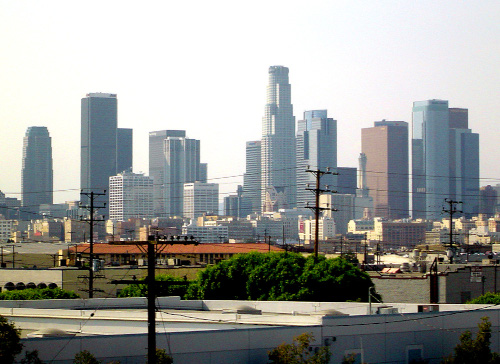
Worst Name for a City

We all know LA. is an abbreviation for a big city in California, but most people don’t know the full name. It is, “El Pueblo de Nuestra Senora la Reina de los Angeles de Porciuncula.”

More Unexpected Facts About Los Angeles

It is legally illegal to drive more than 2,000 sheep down Hollywood Boulevard at once. You can, however, herd up to 2,000 sheep without breaking the city ordinance.

The famous Hollywood Sign originally said “HOLLYWOODLAND.” Built in 1923 as an outdoor billboard for a real estate development, the final four letters were removed during a restoration in 1949.

Los Angeles is home to an active, working oil field hidden in plain sight. High schools, shopping centers, and office buildings often double as camouflaged oil rigs—including a 14-story, brightly painted tower right on the campus of Beverly Hills High School.

It holds the world record for the shortest railway line. The Angels Flight funicular railway in Downtown L.A. covers a track of just 298 feet (about 91 meters) up Bunker Hill.

L.A. has a secret network of underground tunnels. Built during Prohibition to move illegal alcohol between speakeasies beneath the city streets, the roughly 11 miles of tunnels have also been used to transport prisoners and VIPs away from crowds.

Santa Monica Pier’s famous Ferris wheel is 100% solar-powered. It was the world’s first solar-powered Ferris wheel, operating on a series of panels that capture the Southern California sun.

There are more cars than people in Los Angeles County. Vehicles occupy roughly 14% of the city’s total land area, dedicated strictly to streets, freeways, parking structures, and driveways.

The Tar Pits in the middle of the city are still actively bubbling. La Brea Tar Pits is one of the world’s most famous paleontological urban sites, where natural asphalt continuously seeps up from the ground, trapping prehistoric fossils—and occasionally confusing modern tourists.

L.A. was once a major producer of celery and avocados. Long before it became the entertainment capital of the world, much of the Los Angeles Basin was dominated by citrus groves, bean fields, and massive agricultural farms.

See also Worst Jokes About Los Angeles.