Posted on — Leave a comment

10 Worst Yoga Jokes

Yoga is the practice of paying money to find out which parts of your body you’ve been ignoring since 2009.

My yoga instructor says I need to be more flexible. I told her I already rescheduled twice this month.

Yoga: because punching people is frowned upon.

Yoga teaches patience. Like waiting for the person in front of you to stop wobbling.

Yoga taught me that balance is just falling very slowly with confidence.

Every yoga class has that one person who looks like a Renaissance painting while I look like furniture being assembled incorrectly.

Why did the yogi get a new dog? He wanted a downward-facing friend.

The hardest part of yoga is not laughing at the person next to you who’s struggling just as much.

Yoga is the only workout where you’re both deeply calm and deeply confused at the same time.

The hardest pose is pretending you’re not checking to see if everyone else is struggling too.

I love how yoga encourages self-acceptance, right after showing me what I will never physically achieve.

I tried hot yoga and learned that heat removes all illusions of dignity.

I tried yoga to reduce stress, but now I’m stressed about whether I’m doing yoga wrong.

My balance improves dramatically when no one is watching.

The real flexibility yoga teaches is learning to laugh at yourself while falling over.

Posted on — Leave a comment

Worst Way to Assure a Career

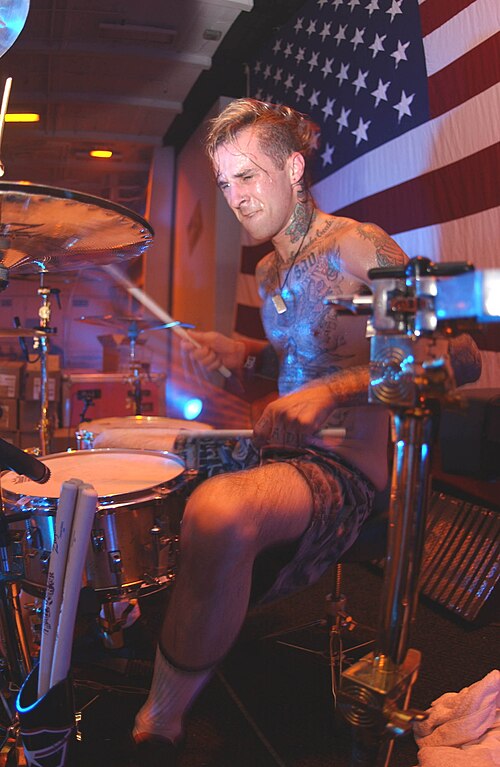
Early in his career, Travis Barker decided he wanted to be a drummer so badly that he was willing ta take a huge risk. He wanted to make sure he was unemployable so he couldn’t escape from his dream by taking an ordinary job. So, he got some tattoos on his face. Any prospective employer would look at him and say, “No way.”

Now, Travis had to be a drummer. He had quite purposely eliminated all other choices. For Travis it worked to such a degree that he is world-famous, and has branched out into multi-million dollar merchandising.

I’m not sure I recommend something so drastic for you. On the other hand, many people have fallen short of the life they really wanted because they took the easy way out.

Interesting Facts about Travis Barker

Travis Barker is widely recognized as one of pop-punk’s most influential drummers, but his career, training, and personal life go far beyond blink-182.


  1. He Learned 20 blink-182 Songs in 45 Minutes
    When blink-182 parted ways with original drummer Scott Raynor mid-tour in 1998, Barker—who was touring with opening act The Aquabats—stepped in. He memorized a 20-song setlist in under 45 minutes right before going on stage, earning him a permanent spot in the band.
  2. Marching Band & Jazz Training
    Barker’s fast, hit-hard playing style comes from extensive formal training. He took drum lessons starting at age four, joined his high school marching band (snare drum), and played in jazz ensembles, which gave him his signature speed and polyrhythmic technique.
  3. He Survived a Deadly Plane Crash in 2008
    Barker was one of only two survivors (alongside DJ AM) when a private Learjet crashed during takeoff in Columbia, South Carolina. He suffered third-degree burns covering 65% of his body, underwent 27 surgeries, and spent nearly four months in the hospital.
  4. He Avoided Flying for 13 Years
    Following the 2008 crash, Barker developed severe post-traumatic stress disorder and a fear of flying. He traveled strictly by bus or ship for over a decade, only taking his first commercial flight again in 2021 with the support of his wife, Kourtney Kardashian.
  5. He Founded the Clothing Brand Famous Stars and Straps
    In 1999, he launched Famous Stars and Straps (FSAS), an apparel brand heavily influenced by punk rock, skate culture, and hip-hop. The “F” logo became an iconic staple of early 2000s streetwear.
  6. He’s a Major Hip-Hop Collaborator
    Beyond rock, Barker is a sought-after producer and drummer in rap and hip-hop. He recorded a full collaborative album with $uicideboy$, produced Machine Gun Kelly’s pop-punk pivot (Tickets to My Downfall), and has collaborated with Eminem, Lil Wayne, Cypress Hill, and Game.
  7. He Was Once a Trash Collector
    Before making it big with blink-182, Barker worked as a trash collector in Laguna Beach, California, while playing in local punk bands like Snot and The Feeble 80s.
  8. Strict Vegan Lifestyle
    After surviving his 2008 plane crash, Barker adopted a strict vegan diet to aid his recovery and maintain his health. He is also an investor in vegan businesses, including the vegan restaurant Crossroads Kitchen in Los Angeles.
  9. Starred in Reality TV Long Before the Kardashians
    Before marrying into the Kardashian family in 2022, Barker starred in his own MTV reality show, Meet the Barkers (2005–2006), which chronicled his family life with his then-wife, former Miss USA Shanna Moakler.
  10. His Hands Are Heavily Insured
    Because his rapid-fire drumming style relies heavily on wrist and finger stamina—and has led to broken bones and tendon damage over the years—Barker’s hands have reportedly been insured for millions of dollars.
Posted on — Leave a comment

Worst Hypnosis

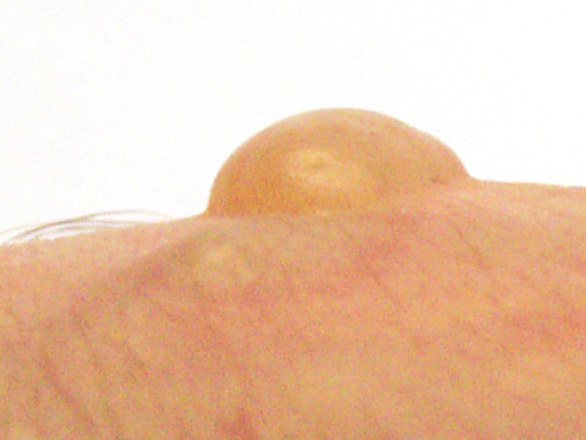
Hypnotized subjects have been made to form blisters on their skin simply from carefully worded suggestions.

Hypnotic Blister Formation: Fact or Fiction?

Verdict: Yes, with important caveats.

While it sounds like an urban legend, hypnotic blister formation—the production of real localized skin blisters or burn-like lesions through verbal suggestion alone—is a well-documented phenomenon in late 19th- and 20th-century psychosomatic research. However, modern science views these historical findings through a lens of strict methodology and skepticism.

What the Historical Cases Showed

Starting in the late 1800s (most notably by French researchers like Focachon and Jules Liégeois) and continuing into mid-20th-century studies, experimenters reported placing an unheated object—such as a coin or a cold piece of metal—on a deeply hypnotized subject’s skin. They would give a specific suggestion: “This object is glowing hot and will burn your skin.”

In documented trials, subjects frequently exhibited:

  • Localized vasodilation (intense redness and localized heat).
  • Localized edema (swelling) and fluid collection beneath the skin.
  • Full bullae (fluid-filled blisters containing sterile serum) that closely mimicked second-degree burns.

How Science Explains the Mechanism

The skin and the central nervous system share a common embryonic origin (the ectoderm) and remain tightly linked through the autonomic nervous system.

When a subject fully accepts a high-intensity hypnotic suggestion, the brain can trigger localized vascular changes. This includes dramatic changes in local blood flow, capillary permeability, and the release of inflammatory mediators (such as histamines, neuropeptides, and kinins). In simple terms, the mind initiates a localized inflammatory response—a severe nocebo effect—causing fluid to leak into the tissue and form a blister, even though no thermal energy touched the skin.

The Caveats and Modern Skepticism

While these experiments are cited in psychosomatic literature, modern researchers point to key limitations:

  1. Lack of Strict Controls (Historical Flaws): A critical review of early studies (such as Gordon L. Paul’s landmark 1963 paper, The Production of Blisters by Hypnotic Suggestion) noted that many early 20th-century trials lacked rigorous surveillance. In some unmonitored cases, subjects intentionally or unconsciously scratched, rubbed, or picked at the area under a bandage to satisfy the experimenter’s expectations.
  2. Variable Reproducibility: Blister formation only occurs in a tiny percentage of highly hypnotizable (“somnambulistic”) individuals. Replicating the effect under modern laboratory controls with continuous video surveillance has proven difficult, as many normal subjects fail to produce structural tissue changes from verbal suggestion alone.
  3. Ethical Constraints: Modern institutional review boards (IRBs) prohibit attempts to induce tissue damage or pain via psychological suggestion, preventing further rigorous trials today.

The Bottom Line

The claim is historically and scientifically true in documented instances, serving as an extreme example of the mind-body connection and autonomic nervous system control. However, it is an exceptionally rare response requiring an extraordinarily high level of hypnotic susceptibility, and historical reports likely include a mix of genuine psychogenic tissue changes and uncontrolled mechanical irritation.

Asthma and Hypnosis

For asthma sufferers: Scientists have proven that many sufferers can reduce or eliminate symptoms with self-hypnosis. Try to imagine or actually view a pleasant image, or imagine yourself in a situation where you are enjoying yourself and are symptom-free. It often works.

Posted on — 2 Comments

Worst Synonyms For Drunk

According to the “Guiness Book of World Records,” there are as many as 2,241 synonyms for the state of being “drunk.” How many can you list? Seriously, how many can you list? Go ahead and leave your synonyms for ‘drunk’ in the comment area below. When we have enough of them, I’ll publish the list.

Tipsy

Smashed

Wasted

Plastered

Sloshed

Hammered

Buzzed

Sauced

Pickled

Inebriated

Humorous

Swimming in gin

Feeling no pain

Seeing double

Having a chat with the floor

Danced with Dionysus

Holding onto walls for dear life

On a liquid diet

In the bag

Turned into a karaoke monster

Brain marinated in whiskey

Regional Slang

Trollied (UK)

Langered (Ireland)

Maggoted (Australia)

Bladdered (UK)

Pished (Scotland)

Off your face (UK)

Rotten (New Zealand)

Arseholed (UK)

Munted (NZ/Aus)

Paralytic (UK)

Obscure or Old-Timey

Three sheets to the wind

Well-oiled

In one’s cups

Pie-eyed

Half-seas over

Stewed

Blotto

Tight

Juiced

Tanked

Medical or Formal

Intoxicated

Under the influence

Experiencing ethanol impairment

Exhibiting symptoms of alcohol toxicosis

Impaired judgment

BAC elevated

CNS depressant activated

Alcohol-positive

Neurologically uninhibited

Liver-challenged

Animal Inspired

Drunk as a skunk

Buzzed like a bee

Soared like a bat

Waddling like a duck

Sloshed like a fish

Stumbling like a newborn foal

Rabid raccoon energy

Eyes like a barn owl

Mooing like a drunk cow

Oinking through karaoke

Vehicle or Mechanical Metaphors

Off the rails

Spinning the wheels

Out of gas, full of wine

Clutch slipping

Running on booze fumes

Leaking oil

Headlights off

In a tailspin

Crash landed

Shifting without a clutch

Food and Drink

Marinated

Pickled

Fermented

Soaked

Battered

Breaded and deep-fried

Drenched in spirits

Whiskey-braised

Wine-glazed

Beer-battered soul

Descriptive Phrases

Not walking a straight line

Lacking vertical loyalty

Speaking in slurs

Laughing at nothing

Red-faced and rambly

Brain swimming

Senses foggy

Volume at 150%

Emotional and confused

Loosened tongue

Mythical & Magical

Hexed by hops

Elven-wine drunk

Wizard-whiskey whammied

Goblin-mode activated

Cursed by ale

Under the mead spell

Dragon-breathed

On a unicorn bender

Satyr-influenced

Bacchus-blessed

Literary & Poetic

Drenched in dusk-colored wine

Floating on amber tides

Mind adrift in barley clouds

A symphony of slurred syllables

Thoughts swimming through molasses

Smiling through fogged glass

Drunk on stars and bourbon

Lips dripping poetry and vodka

Slurring through Shakespeare

Marooned on merlot shores

Modern & Internet-Inspired

Glitched out

Lagging IRL

Buffering badly

Full emoji mode

TikTok stumble star

Drunkposting

Podcasting from the floor

Autocorrect in real life

Streaming sideways

IRL screenshot fail

Visual Metaphors

Blurred like an old TV

Candle in a wind tunnel

Cross-eyed at the moon

Eyes in disco mode

Face in Picasso formation

Seeing with beer goggles

World on spin cycle

Legs on spaghetti setting

Lights on, everyone partying

Jello-legged

Music & Sound

Volume maxed

Singing off-key with confidence

DJ Vodka took over

Echo chamber in the brain

Doing the two-step on one leg

Waltzing with wobble

Speaking jazz

Soundtrack: chaos

Dissonant monologue

Karaoke heroics

Pop Culture References

Tony Stark at a press conference

Homer Simpson after Moe’s

Bridget Jones on a breakup night

Jack Sparrow swagger

Stumbling like a sitcom dad

Ron Swanson, but on wine

Tyrion Lannister level

The Hangover: live edition

Thor after mead

Wario cart driving

Situational

Clinging to a lamp post

Talking to a fire hydrant

Arguing with a pizza

Hugging strangers

Crying at commercials

Dancing with shadows

Toasting to no one

Walking like a crab

Singing to an ATM

Laughing alone in the mirror

Objects & Elements

Liquid lightning inside

Whiskey-tornado brain

Fog-machine internal

Corked up emotions

Glass full of bad ideas

Carbonated decisions

Wine-slick soul

Firewater madness

Bubbly brainstorm

Iceberg-level tipsy

Surreal & Absurd

Cheesed and confused

Moonwalking through molasses

Astronaut without gravity

Talking in cursive

Wearing invisible roller skates

Brain on vacation

Internal earthquake

Rodeo of regrets

Wobble-dimensional

On a first-name basis with gravity

Clever Wordplay

Chardonnay-shay

Gin-giggled

Cognac-comatose

Tequila-vision

Vodka-vaporized

Rum-rattled

Brew-boozled

Ale-ments of confusion

Martini-mushed

Scotch-guarded memory

Just Plain Weird

Emotionally sticky

Conducting invisible orchestra

Body on shuffle

Stomach singing show tunes

Conversing in whale

Napping while standing

Flirting with chairs

Horizontal ambition

Sense of time: melted

More spirit than man

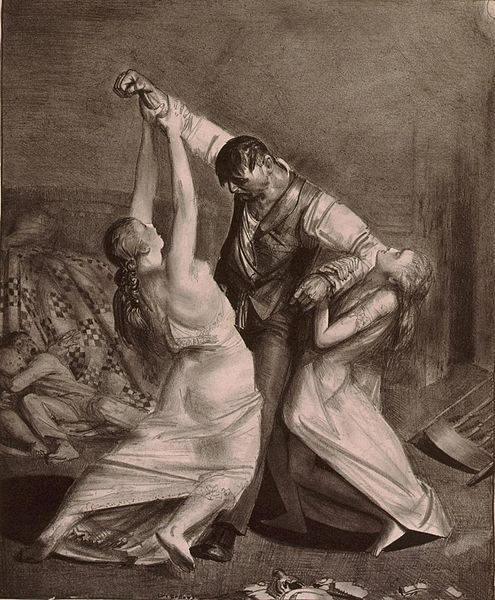
Pictured above: “Drunk Father,” by George Bellows
Posted on — Leave a comment

Worst Book

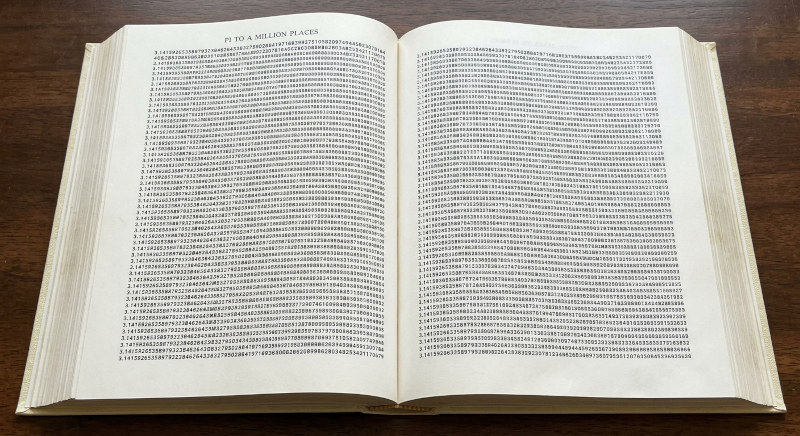
Perhaps the most uninteresting book ever written is the calculation of pi to two million places, in 800 pages. Just think of the TV special that could be made from this book.

Weird Facts About Pi

  • It Has Its Own Secret Language

    There is a dialect of constrained writing called “Pilish,” where the length of consecutive words corresponds to the digits of π. For example, “How I need a drink, alcoholic of course…” matches 3–1–4–1–5–9–2–6. Author Mike Keith wrote an entire 10,000-word novel titled Not A Wake written completely in Pilish.

  • NASA Only Uses 15 Digits for Space Travel

    Despite supercomputers calculating π to tens of trillions of digits, NASA only uses 15 decimal places (3.141592653589793) for interplanetary navigation. Using 15 digits gives them enough precision to calculate the circumference of a circle 78 billion miles wide (about 16 times the distance from the Earth to Pluto) with an error no larger than the width of a human index finger.

  • The Mirror Trick Spells Food

    If you write out the first three digits of π (3.14) on a piece of paper and hold it up to a mirror, the reflected image spells out the word “PIE”.

  • An Indiana Law Almost Changed Its Value

    In 1897, a physician named Edward J. Goodwin introduced Indiana House Bill No. 246, claiming he had discovered a way to “square the circle”. The mathematical implications of his complex method would have legally set the value of π to approximately 3.2. The bill actually passed the state House of Representatives before a university math professor intervened, causing the state Senate to postpone the bill indefinitely.

  • A Tombstone Showing Off Pi

    Dutch-German mathematician Ludolph van Ceulen devoted a huge portion of his life in the late 16th century calculating π to 35 decimal places. He was so proud of the accomplishment that he had the numbers engraved on his tombstone in Leiden, Netherlands. In Germany, π was historically referred to as the “Ludolphine number” in his honor.

  • It Makes Squaring the Circle Impossible

    Because π is a transcendental number (it is not the root of any non-zero polynomial equation with rational coefficients), it was proven in 1882 that “squaring the circle”—constructing a square with the exact same area as a given circle using only a straightedge and compass—is mathematically impossible.

  • Albert Einstein and Stephen Hawking Share Pi Day

    Pi Day is celebrated on March 14 (3/14). Albert Einstein was born on Pi Day in 1879. Coincidentally, famed theoretical physicist Stephen Hawking died on Pi Day in 2018.

  • It Shows Up in Wave Mechanics and Probability

    Although most people first learn about π in geometry, it appears in areas of math that have no obvious circles. For instance, in Buffon’s Needle Problem, if you drop a needle onto a floor lined with parallel strips of wood, the probability that the needle will cross one of the lines is directly related to π. It also shows up constantly in quantum mechanics, wave frequencies, and signal processing.

  • The Human Memorization Record Exceeds 70,000 Digits

    The official Guinness World Record for memorizing and reciting digits of π belongs to Rajveer Meena of India, who recited 70,000 decimal places from memory on March 21, 2015. The feat took him roughly 10 hours while blindfolded.

  • A Single Mistake Ruined 20 Years of Hand Calculations

    In 1873, English mathematician William Shanks announced he had calculated π to 707 decimal places entirely by hand. It stood as the record for over 70 years until 1944, when another mathematician discovered that Shanks had made an error on the 527th digit. Because the calculation relied on earlier values, every digit he calculated after the 526th was completely wrong!

Posted on — Leave a comment

Worst Thing to do About the Game of Chess

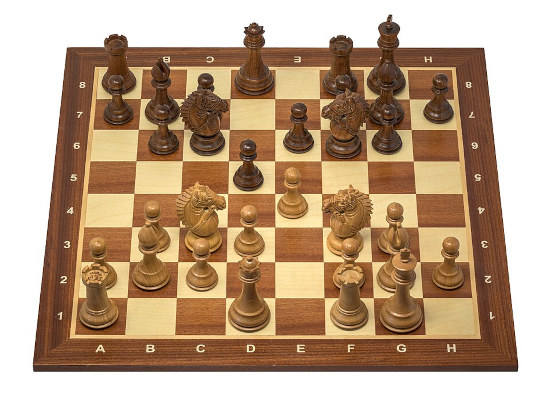
Do not write another book about chess. More than 35,000 books have been written about the game so far.

More Unexpected Info About Chess

The Queen Was Once the Weakest Piece

When chess was first created, the queen could only move one square diagonally at a time. It wasn’t until around the late 15th century—partly influenced by the rise of powerful European monarchs like Queen Isabella I of Spain—that the queen gained her modern, multi-directional powers to become the most lethal piece on the board.

The “Turk” Hoax Fooled the World for Decades

In 1770, an inventor named Wolfgang von Kempelen unveiled “The Turk,” a mechanical automaton that could play chess against human opponents. It famously defeated figures like Napoleon Bonaparte and Benjamin Franklin. Decades later, it was revealed to be a complete hoax: a human chess master was hiding inside the cabinet using a complex system of levers and magnets to control the automaton’s arm.

There are More Possible Games Than Atoms in the Universe

The total number of possible unique chess games is estimated at around 10¹²⁰ (known as Shannon’s number). By comparison, the observable universe contains roughly 10⁸⁰ total atoms, meaning there are vastly more ways a chess game can play out than physical particles in existence.

Folding Boards Were Invented to Disguise the Game as Books

In 1125, a priest wanted to play chess despite a church ban on the game. To bypass the rule, he designed a folding chessboard that, when closed and placed on a shelf, looked like two books sitting side by side.

A Player Once Spent 2+ Hours Thinking About One Early Move

Before strict modern chess clocks were enforced, players could take as long as they wanted per turn. In a 1980 match, Brazilian International Master Francisco Trois spent 2 hours and 20 minutes deciding on his 7th move—only to later admit he couldn’t explain why he hesitated so long over just two basic options!

“Checkmate” Literally Means “The King is Helpless”

The word checkmate comes from the Persian phrase “Shāh Māt”. While many people translate it as “the king is dead,” it actually translates closer to “the king is left helpless” or “the king has been paralyzed,” as the king piece is technically never captured or killed on the board.

The Longest Official Game Took 269 Moves and Over 20 Hours

The record for the longest grandmaster game ever played in an official tournament belongs to Ivan Nikolić and Goran Arsović in Belgrade, 1989. The grueling match lasted 269 moves, took over 20 hours to complete, and ultimately ended in a draw.

Rookies Get Their Name From Chess

The slang word “rookie”—meaning a beginner, newcomer, or first-year athlete—is widely believed to trace its roots back to the Rook. Because rooks are usually the last major pieces to be moved out into action during a game’s opening phase, they were colloquially associated with latecomers or new entrants.

The Second Book Ever Printed in English Was About Chess

Shortly after Johannes Gutenberg introduced the printing press, William Caxton printed The Game and Playe of Chesse in the 1470s. It was only the second book ever published in the English language.

A Grandmaster Once Played 604 Games at the Same Time

In 2011, Iranian Grandmaster Ehsan Ghaem-Maghami set a record by playing 604 simultaneous games of chess over a 25-hour marathon. Walking continuously from board to board, he won 580 of the matches, drew 16, and lost only 8.

Posted on — Leave a comment

Worst Diet

King Henry VIII of England, long known for his many wives and culinary gluttony, died at age 56, probably from scurvy, a condition of dietary deficiency. It was fashionable in his time for wealthy people to eat mostly meat, and very few vegetables, because ‘vegetables were for peasants.’

Here are 10 Weird Facts About King Henry VIII

He had a dedicated court official called the “Groom of the Stool.”

This high-ranking noble was responsible for assisting the King with his bodily functions, monitoring his digestive health, and wiping him. Because of their intimate proximity to the monarch, the Groom of the Stool was one of the King’s most powerful and trusted advisors.

He composed popular music and played multiple instruments.

Far from just a tyrant, Henry VIII was an accomplished musician and composer. He played the lute, organ, and harp, held a massive personal collection of instruments, and wrote several pieces of music—including the famous courtly song “Pastime with Good Company”.

His waistline expanded by over 20 inches.

In his youth, Henry was an athletic, broad-shouldered jousting champion with a 32-inch waist. However, after severe injuries curtailed his activity while his massive calorie intake remained unchanged, his waist grew to roughly 54 inches late in life, and his armor had to be continually enlarged.

He required a mechanical winch to hoist him into saddle and bed.

In his final years, suffering from painful, festering leg ulcers, gout, and extreme obesity, the King could no longer walk upstairs or mount a horse on his own. His attendants used block-and-tackle pulley systems and specialized wooden chairs to lift and transport him around his palaces.

He taxed men for growing beards.

In 1535, Henry VIII introduced a tax on facial hair, with the rate varying depending on the beard grower’s social status. Ironically, Henry grew out his own full, iconic beard around the same time and wore it until his death.

He owned one of history’s largest weapons collections, including a “Walking Staff.”

Henry was obsessed with weaponry and armor. He used to roam the streets of London incognito at night carrying a giant spike-headed mace known as “Henry VIII’s Walking Stick,” which featured three hidden gun barrels inside the spiked ball.

He spent the equivalent of millions of dollars on a single party.

At the “Field of the Cloth of Gold” meeting with King Francis I of France in 1520, Henry built a temporary, two-story palace made of wood and canvas decorated to look like stone. The event featured fountains that flowed continuously with red wine and cost an estimated $19 million in modern currency.

He banned commoners from reading the Bible.

Although Henry broke away from the Catholic Church to establish the Church of England and authorized the creation of the English Great Bible, he later passed the 1543 Act for the Advancement of True Religion. This law prohibited women, laborers, apprentices, and lower-class citizens from reading the Bible, restricting access solely to noble men.

He was a severe hypochondriac.

Henry lived in constant terror of sickness, particularly the “Sweating Sickness” and the plague. Whenever an outbreak occurred in London, he would immediately flee to the country, change locations constantly, and lock himself away with only his physicians.

His body allegedly ruptured inside his coffin.

According to contemporary accounts, Henry was so bloated at the time of his death in 1547 that his heavy wooden and lead coffin strained under internal pressure while resting overnight at Syon Monastery during the funeral procession. The coffin reportedly leaked or burst, fulfilling a prophecy made by a Franciscan friar years earlier that “dogs would lick his blood.”

Posted on — Leave a comment

Chocolate’s Hidden Truth

Thinking you ought to eat less chocolate? Knowing this might help: The US FDA (Food and Drug Administration) considers chocolate acceptable for public consumption as long as there are less than 60 microscopic insect fragments per 100 grams (four ounces, or approximately one candy bar).

Chocolate was once used as currency. The ancient Mayans and Aztecs valued cacao beans so highly that they used them as money to trade for food, clothes, and tools.

White chocolate isn’t technically chocolate. Because it contains no cocoa solids or chocolate liquor—only cocoa butter, sugar, milk solids, and lecithin—it fails the strict legal definition of chocolate in many countries.

It melts right at human body temperature. Cocoa butter has a unique melting point between 86°F and 90°F (30°C to 32°C), which is just below normal body temperature (98.6°F). This is why chocolate yields that distinct “melt-in-your-mouth” sensation.

It takes around 400 cacao beans to make one pound of chocolate. A single cacao tree produces about 20 to 30 pods per year, meaning one tree yields enough beans to make only a few bars of chocolate.

Chocolate was originally consumed as a bitter, spicy drink. For nearly 90% of its history, cacao was brewed as a liquid, often mixed with chili peppers, water, and cornmeal. Solid eating chocolate wasn’t mass-produced until the mid-19th century.

The world’s largest chocolate bar weighed over 12,000 pounds. Crafted in the UK in 2011, the bar set a Guinness World Record at 12,770 lbs (5,792 kg) and measured over 13 feet long.

The smell of chocolate increases theta brain waves. Smelling chocolate triggers relaxation by stimulating theta waves in the brain, which are associated with a calm, meditative state.

Rats are as vulnerable to chocolate toxicity as dogs. Theobromine, the bitter alkaloid found in cacao, is toxic to many animals because their metabolisms process it much slower than humans do. Dark chocolate contains the highest concentrations.

The word “chocolate” comes from Classical Nahuatl. It derives from the Aztec word chocolātl, which in turn gave rise to the Spanish word chocolate before spreading globally.

Ruth Wakefield sold the chocolate chip cookie recipe for $1. The creator of the Toll House Cookie gave her recipe to Nestlé in 1939 in exchange for a lifetime supply of chocolate and a dollar (which she reportedly never collected).