Posted on — Leave a comment

The Messiest House in Britain


Surprising Facts About Messy Homes

  1. Messy desks and rooms are linked to higher creativity. A famous study by the University of Minnesota found that participants placed in messy environments generated more creative, unconventional ideas than those in tidy rooms.
  2. Clutter increases cortisol levels, especially in women. Research from UCLA’s Center on Everyday Lives of Families showed a direct link between high density of household objects and elevated stress hormones in mothers.
  3. Famous geniuses were notoriously messy room dwellers. Albert Einstein, Steve Jobs, Mark Twain, and Thomas Edison all maintained famously chaotic workspaces, holding that disorder fostered non-linear thinking.
  4. Messiness can promote charitable and generous choices. While orderly environments encourage traditional convention, messy environments can prompt people to challenge old habits and seek out new ways to give back.
  5. A messy room can disrupt healthy eating habits. Studies indicate that people stressed by chaotic kitchen environments are more likely to reach for high-calorie snack foods than those in tidy, organized kitchens.
  6. Dust in messy homes contains complex microbial ecosystems. Household dust isn’t just dirt; it contains skin cells, textile fibers, pet dander, and thousands of distinct species of microflora unique to each home.
  7. Physical clutter impairs visual processing focus. Neuroscientists at Princeton University found that multiple visual stimuli in a cluttered room compete for attention, reducing the brain’s capacity to process information efficiently.
  8. Clutter negatively impacts sleep quality. Studies on sleep hygiene demonstrate that sleeping in cluttered, disorganized bedrooms can lead to longer light-sleep stages and increased nighttime awakenings.
  9. The average home holds over 300,000 items. The sheer volume of consumer goods in modern residences makes maintaining order vastly more labor-intensive than in previous centuries.
  10. Messy environments encourage trial-and-error problem solving. Psychological experiments suggest that messy settings break people out of rigid mindsets, making them more willing to experiment with unexpected solutions.
Posted on — Leave a comment

Worst Over-Production of a Game

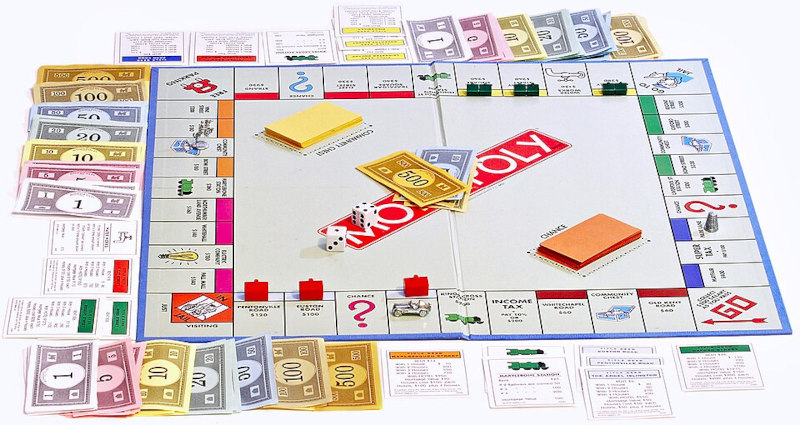
Parker Brothers have made more than 275 million copies of their Monopoly game. They have printed more Monopoly money than the US Federal Reserve has issued in real money for America. If you stacked up all the Monopoly sets they have made, the pile would be over 7,100 miles (11,400 km) tall, almost the diameter of Earth.

Here’s a deeper Analysis:

1. Printed Money Comparison: False (Misleading / Dependent on Definition)

  • Number of Bills: In terms of total physical paper notes, printing companies (including Parker Brothers and Hasbro) do produce vastly more paper bills per year than the Bureau of Engraving and Printing produces U.S. dollar bills.
  • Monetary Value: A standard Monopoly set contains $20,580 in play money. Across all the Monopoly games produced worldwide since 1935, the total face value of Monopoly money ever printed is roughly $6 trillion to $10 trillion. By comparison, the U.S. Federal Reserve currently manages a U.S. broad money supply (M2) exceeding $21 trillion.

2. Stacking the Monopoly Sets

  • A standard Monopoly game box measures roughly 1.5 inches (3.8 cm) thick.
  • Hasbro and Parker Brothers have produced over 275 million to 300 million copies of the game globally.
  • Stacking 300 million boxes at 1.5 inches each yields:
(300,000,000 × 1.5 inches) / (12 inches/ft × 5,280 ft/mile) ≈ 7,100 miles (11,400 km)

Even if you stack only the folded game boards or measure a stack of roughly 50 million boxes, the height easily exceeds 1,100 miles (1,770 km).


Part 2: Monopoly Money Placed End to End Around the Globe

If you placed all the Monopoly money ever printed end to end, it would circle the globe roughly 145 to 160 times (and up to 260+ times under higher production estimates).

1. Key Variables

  • Bills per Game: A standard Monopoly set includes 210 paper bills (30 notes each of $1, $5, $10, $20, $50, $100, and $500).
  • Length of a Bill: A standard Monopoly bill is 4 inches (10.16 cm) long.
  • Total Games Produced: Hasbro/Parker Brothers have manufactured between 275 million and 300 million standard Monopoly games worldwide since 1935 (with some estimates reaching 500 million including special editions).
  • Earth’s Circumference: Approximately 24,901 miles (40,075 km) around the equator.

2. Step-by-Step Calculation

For 300 Million Games (Standard Estimate):

  1. Total Number of Bills:

    300,000,000 games × 210 bills/game = 63,000,000,000 bills
  2. Total Length in Inches:

    63,000,000,000 bills × 4 inches = 252,000,000,000 inches
  3. Convert Inches to Miles:

    252,000,000,000 inches / (12 in/ft × 5,280 ft/mile) ≈ 3,977,273 miles (6,400,820 km)
  4. Orbits Around the Earth:

    3,977,273 miles / 24,901 miles/orbit ≈ 159.7 times

Comparison Summary

  • 275 Million Sets: ~3.65 million miles → ~146 times around Earth
  • 300 Million Sets: ~3.98 million miles → ~160 times around Earth
  • 500 Million Sets (All Editions): ~6.63 million miles → ~266 times around Earth

For perspective, placing all those bills end-to-end wouldn’t just circle the Earth—it would reach the Moon and back about 8 to 13 times!

Posted on — Leave a comment

Worst Fact About Toilet Paper

Americans use enough toilet paper in one day to wrap around the world nine times. If it were on one giant roll, we would be unrolling it at the rate of 7,600 miles per hour (12,200 kph) – roughly mach. 10, ten times the speed of sound.

Ten More Facts About Toilet Paper

1. Early Commercial Toilet Paper Was Marketed as Splinter-Free

In 1935, Northern Tissue proudly advertised its product as “splinter-free.” Manufacturing techniques prior to the mid-1930s often left stray wood fibers in the paper rolls, making splinters a genuine risk for users.

2. The Original Patent Settles the “Over vs. Under” Debate

Seth Wheeler, who patented the perforated toilet paper roll in 1891, included official illustrations in his patent filing showing the paper hanging “over” the top of the roll rather than “under.”

3. Roman Citizens Used a Shared Sponge on a Stick

Before paper was invented, ancient Romans in public latrines cleaned themselves using a tersorium—a communal sea sponge attached to a wooden stick, which was soaked in a bucket of salt water or vinegar between uses.

4. Modern Toilet Paper Was Originally Sold Infused with Aloe

In 1857, Joseph Gayetty introduced the first commercially available packaged toilet paper in the U.S. “Gayetty’s Medicated Paper” consisted of flat hemp sheets lubricated with aloe and featured his name printed on every individual sheet.

5. Johnny Carson Once Caused a Real-Life Shortage

During a 1973 episode of The Tonight Show, host Johnny Carson made a joke during his monologue about an impending toilet paper shortage. Viewers panicked and rushed to stores, causing an actual nationwide shortage that lasted almost a month.

6. A Single Tree Yields Roughly 100 to 200 Rolls

An average mature tree yields roughly 100 to 200 rolls of toilet paper depending on the wood species and manufacturing process. Globally, over 27,000 trees are cut down or recycled daily to meet consumption demands.

7. The Sears Catalog Was the First Choice for Rural America

In the late 19th and early 20th centuries, many rural Americans relied on the mail-order Sears, Roebuck & Co. catalog in outhouses. Usage declined significantly when Sears began printing catalog pages on glossy, non-absorbent paper.

8. Colored Toilet Paper Was a Major 1970s Fashion Trend

During the 1960s and 1970s, toilet paper was manufactured in pastel shades of pink, green, yellow, and blue to match bathroom decor. Manufacturers phased it out due to health concerns, plumbing issues, and dye allergies.

9. Astronauts Don’t Use Toilet Paper in Space

Because zero-gravity environments render standard plumbing useless, space station toilets use air-vacuum suction systems to collect solid waste, which is then compressed, stored, and incinerated during atmospheric re-entry.

10. Corncobs Were the Pre-Industrial Standard in America

Prior to the widespread availability of cheap paper, dried corncobs were the most popular toilet paper alternative in early agricultural America due to their soft, absorbent texture and abundance after harvest.
Posted on — Leave a comment

Worst Thing About Mattresses

A mattress gains a measurable amount of weight over a decade, typically ranging from a few ounces to a couple of pounds (a kilogram), due to absorbed moisture and trapped biological debris.

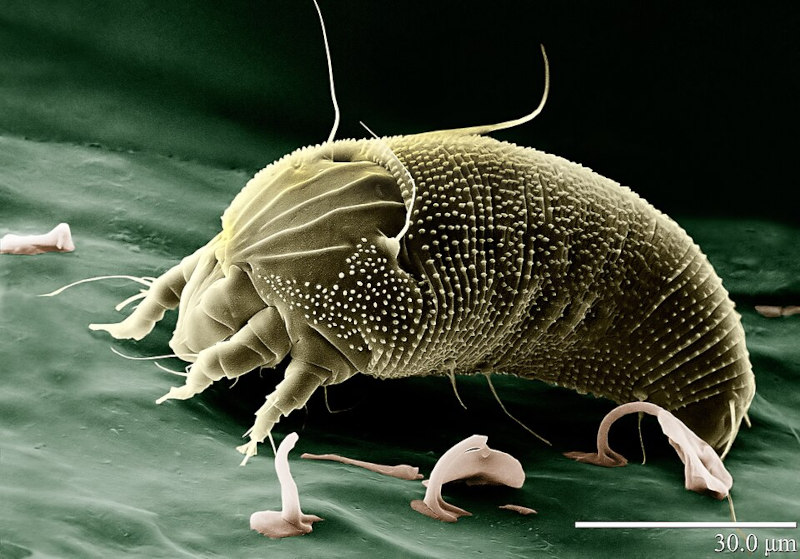
Dust Mite Populations: A typical used mattress can indeed harbor hundreds of thousands to a few million dust mites (Dermatophagoides). They thrive in warm, humid environments and feed almost exclusively on shed human skin cells.

Mite Debris: The majority of the allergen mass associated with dust mites comes from their microscopic fecal pellets and shed exoskeletons rather than the live insects themselves.

Accumulated Human Waste: Over 8 to 10 years, an average adult loses hundreds of liters of sweat in bed, along with millions of dead skin cells daily. Over time, volatile organic compounds, oils, skin flakes, and traces of bodily fluids penetrate standard woven sheets and settle within the underlying foam or fiber layers.

Posted on — Leave a comment

Worst Carpet Tacking Situation

I found the following in a book published in 1858:

“An English gentleman, traveling some years ago in Ireland, took a hammer and tacks with him, because he found dog’s-eared carpets at all the inns where he rested. At one of these inns he tacked down the carpet which, as usual, was loose near the door, and soon afterwards rang for his dinner. While the carpet was loose the door could not be opened without a hard push: so when the waiter came up, he just unlatched the door, and then going back a couple of yards, he rushed against it, as his habit was, with a sudden spring to force it open. But the wrinkles of the carpet were no longer there to stop it, and not meeting with the expected resistance, the unfortunate waiter fell full sprawl into the room. It had never entered his head that so much trouble might be saved by means of a hammer and half-a-dozen tacks, until his fall taught him that make-shift is a very unprofitable kind of shift.”

Posted on — Leave a comment

How To Avoid Raising the Worst Daughters

From a book written in 1858:

Daughters: Mothers, who wish not only to discharge well their own duties in the domestic circle, but to train up their daughters at a later day to make happy and comfortable firesides for their families, should watch well, and guard well, the notions which they imbibe and with which they grow up. There will be so many persons ready to fill their young heads with false and vain fancies, and there is so much always afloat in society opposed to duty and common sense, that if mothers do not watch well, they may contract ideas very fatal to their future happiness and usefulness, and hold them till they grow into habits of thought or feeling. A wise mother will have her eyes open, and be ready for every case.

Posted on — Leave a comment

Worst Advice for the Preservation of Health

From a book written in 1858:

Of course this advice is mostly wrong but some is surprisingly accurate.

“Rules for the preservation of health: Pure atmospheric air is composed of nitrogen, oxygen, and a very small proportion of carbonic acid gas. Air once breathed has lost the chief part of its oxygen, and acquired a proportionate increase of carbonic acid gas. Therefore, health requires that we breath the same air once only.

The solid part of our bodies are continually wasting, and requires Continue reading Worst Advice for the Preservation of Health

Posted on — Leave a comment

Worst Waste of Money

Avoid the temptation to buy a top-of-the-line model unless you have money to burn. In almost all categories of merchandise, the difference between the top of the line, and middle is not all that great in terms of features and quality, but very noticeable in price.  Lets look at some examples: Continue reading Worst Waste of Money

Posted on — Leave a comment

Worst Household Shedding

Humans shed a lot of skin, roughly 30,000 to 40,000 cells per minute.

Studies show that skin cells make up about 20% to 50% of household dust. The percentage can spike higher in specific localized spots (like inside mattress covers or on worn couches). The remaining majority of household dust is a mixture of outdoor and indoor debris, including:

Outdoor material: Soil minerals, sand, plant pollen, and outdoor pollution tracked in on shoes or blown in through windows.

Fibers: Clothing, carpet, furniture, and paper fibers.

Organic debris: Pet dander, insect parts, hair, and dust mite droppings.

Trace particles: Cooking soot and even microscopic space dust (micrometeorites).

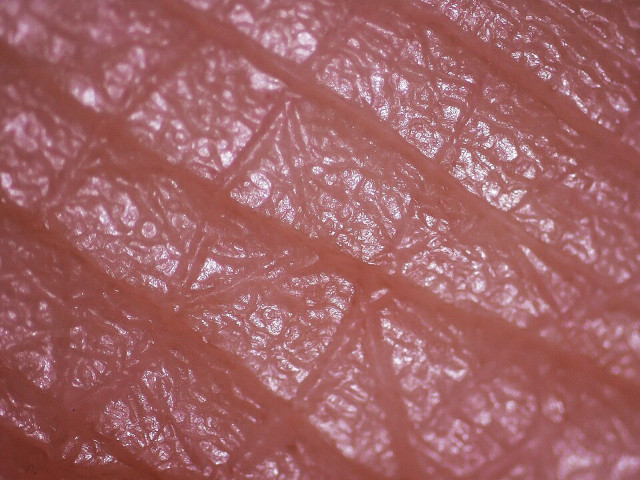
Shown above: Close view of skin of hand.