Posted on — Leave a comment

Worst Thing to Give to Children

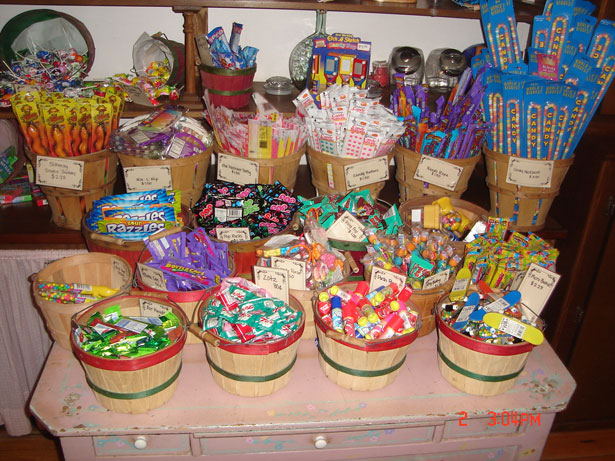
If you filled trucks with all the candy American kids eat in one year, they would line up bumper to bumper from San Diego to San Francisco.

Sugar is highly addictive. Some have said it’s more addictive than cocaine. Speaking of cocaine, some have said that overcoming an addition to sugar is even more difficult than an addition to cocaine.

Sugar is strongly implicated in numerous scientific studies covering a wide range of diseases from high blood pressure to cancer and especially diabetes.

The number of children and young adults afflicted with diabetes and blood pressure has skyrocketed since the increase of sugar in the standard American diet.

Starchy foods aren’t much better. If you eat bread, pies, cake or anything of that sort, your digestive process converts it to sugar.

Soft drinks have an amazing 10 or more teaspoons of sugar dissolved in every can.

What about fruit juice? Nope, not good either. Although natural juices don’t contain sucrose – table sugar – fruit sugars without their roughage are nearly as deadly.

Yeah, deadly. The problem is most people don’t recognize sugar as deadly because it isn’t a quick acting poison. People don’t eat a fudge brownie and fall over dead. It’s insidious because the death cames slowly yet painfully, usually, but not always after 40 or more years.

How about sugar substitutes? Things like corn syrup or honey have the same effect as other types of sugar.

However, there are two products that can satisfy in the same way as sugar, yet they are not sugars and contain no calories. Those are stevia and monk fruit.

You’ll find stevia often served in little packets in restaurants and cafes where the management is trying to think of their patrons’ health. If you read the small print on the packets of stevia, you may be shocked to discover the actual amount of stevia is slight. The packet mostly contains fillers such as Erythritol. Some manufacturers even mix their stevia with dextrose or sucrose – sugar.

Why would they do that? Because stevia is 200 to 300 times sweeter than table sugar. Although rare, you can buy pure stevia on Amazon and elsewhere. You would be amazed at how little is needed to sweeten a food or beverage.

The taste of stevia or monk fruit is so close to sugar that if you use it as a sugar substitute, children will not detect the difference, but they are likely to live longer and healthier.

As one who has overcome a sugar addiction, it wasn’t as hard as they say, I have noticed that I have more consistent energy. I used to get suddenly tired, sometimes even dizzy after short bursts of exertion. For instance, I might have to sit out every other game of pickleball. Now, I can play for hours at a time with no sugar bonk.

Posted on — Leave a comment

Worst Vote

In 1968 Liechtenstein held a vote to determine whether women should be allowed to vote. Women were allowed to participate only in this vote, because until then women were not allowed to vote. The result of the vote was that women were not allowed to vote.


Worst Vote Ever in was in Liechtenstein

Here are Some Interesting Facts about Liechtenstein

It is the double-landlocked country with no airport: Liechtenstein is surrounded entirely by landlocked countries (Switzerland and Austria), making it one of only two doubly landlocked nations in the world (alongside Uzbekistan). It also has no airport—the nearest major airport is in Zurich, Switzerland.

You can rent the entire country: For around $70,000 a night, groups can symbolically rent the entire nation through a private events company. The package includes custom street signs, temporary local currency, a ceremonial key to the country, and wine tasting at the Prince’s estate.

It produces millions of false teeth: Despite its tiny size, Liechtenstein is a global powerhouse in dental manufacturing. The company Ivoclar Vivadent, based in Schaan, produces tens of millions of prosthetic teeth every year, supplying a significant portion of the global market.

The Prince is a practicing monarch with real political power: Unlike most European monarchs who play purely ceremonial roles, the Prince of Liechtenstein (currently Prince Hans-Adam II) holds substantial executive powers, including the veto power over legislation and the ability to appoint judges.

It accidentally invaded its neighbor (and brought back a friend): During the Austro-Prussian War in 1866, Liechtenstein sent an army of 80 men to guard an Alpine pass. They saw no action, suffered zero casualties, and allegedly returned with 81 men because they befriended an Italian soldier along the way.

There are more registered businesses than residents: Thanks to low corporate tax rates, business-friendly laws, and high economic stability, Liechtenstein hosts more registered corporate entities and holdings than its population of roughly 40,000 people.

It has no national military: Liechtenstein officially disbanded its army in 1868 to save money. Today, national security is handled by the national police force, and Switzerland maintains a informal protective relationship with the country.

The billionaire Prince owns the entire country’s bank: Prince Hans-Adam II is one of the world’s wealthiest monarchs, with a fortune largely derived from owning LGT Group, a private banking and asset management group.

National Day features a party in the Castle gardens: Every August 15th on Liechtenstein’s National Day, the Princely Family invites all citizens and visitors to the grounds of Vaduz Castle for drinks, receptions, and a public fireworks display.

It is one of the wealthiest countries per capita: Driven by high-tech manufacturing (such as power tools and precision instruments), finance, and specialized industry, Liechtenstein consistently boasts one of the highest GDPs per capita in the world and virtually zero unemployment.

Posted on — Leave a comment

Worst Diet

King Henry VIII of England, long known for his many wives and culinary gluttony, died at age 56, probably from scurvy, a condition of dietary deficiency. It was fashionable in his time for wealthy people to eat mostly meat, and very few vegetables, because ‘vegetables were for peasants.’

Here are 10 Weird Facts About King Henry VIII

He had a dedicated court official called the “Groom of the Stool.”

This high-ranking noble was responsible for assisting the King with his bodily functions, monitoring his digestive health, and wiping him. Because of their intimate proximity to the monarch, the Groom of the Stool was one of the King’s most powerful and trusted advisors.

He composed popular music and played multiple instruments.

Far from just a tyrant, Henry VIII was an accomplished musician and composer. He played the lute, organ, and harp, held a massive personal collection of instruments, and wrote several pieces of music—including the famous courtly song “Pastime with Good Company”.

His waistline expanded by over 20 inches.

In his youth, Henry was an athletic, broad-shouldered jousting champion with a 32-inch waist. However, after severe injuries curtailed his activity while his massive calorie intake remained unchanged, his waist grew to roughly 54 inches late in life, and his armor had to be continually enlarged.

He required a mechanical winch to hoist him into saddle and bed.

In his final years, suffering from painful, festering leg ulcers, gout, and extreme obesity, the King could no longer walk upstairs or mount a horse on his own. His attendants used block-and-tackle pulley systems and specialized wooden chairs to lift and transport him around his palaces.

He taxed men for growing beards.

In 1535, Henry VIII introduced a tax on facial hair, with the rate varying depending on the beard grower’s social status. Ironically, Henry grew out his own full, iconic beard around the same time and wore it until his death.

He owned one of history’s largest weapons collections, including a “Walking Staff.”

Henry was obsessed with weaponry and armor. He used to roam the streets of London incognito at night carrying a giant spike-headed mace known as “Henry VIII’s Walking Stick,” which featured three hidden gun barrels inside the spiked ball.

He spent the equivalent of millions of dollars on a single party.

At the “Field of the Cloth of Gold” meeting with King Francis I of France in 1520, Henry built a temporary, two-story palace made of wood and canvas decorated to look like stone. The event featured fountains that flowed continuously with red wine and cost an estimated $19 million in modern currency.

He banned commoners from reading the Bible.

Although Henry broke away from the Catholic Church to establish the Church of England and authorized the creation of the English Great Bible, he later passed the 1543 Act for the Advancement of True Religion. This law prohibited women, laborers, apprentices, and lower-class citizens from reading the Bible, restricting access solely to noble men.

He was a severe hypochondriac.

Henry lived in constant terror of sickness, particularly the “Sweating Sickness” and the plague. Whenever an outbreak occurred in London, he would immediately flee to the country, change locations constantly, and lock himself away with only his physicians.

His body allegedly ruptured inside his coffin.

According to contemporary accounts, Henry was so bloated at the time of his death in 1547 that his heavy wooden and lead coffin strained under internal pressure while resting overnight at Syon Monastery during the funeral procession. The coffin reportedly leaked or burst, fulfilling a prophecy made by a Franciscan friar years earlier that “dogs would lick his blood.”

Posted on — Leave a comment

Ben Franklin’s Failed Architecture

When plans were required for a new house of government, Ben Franklin was given a crack at the architect’s job, but his design was rejected. It was just too offbeat. He had planned to hook all the seats in the meeting room to the fireplace chimney. The bottoms of the seats would have many small holes. The draft from the chimney would create a slight suction at these holes in the seats, carrying away what he called “personal odors.”

But, one has to try things, right? Look how well his other ideas worked out!

Lightning Rod
Designed in the 1750s after his famous kite experiment, this pointed iron rod attached to the tops of buildings grounded electrical charges from storm clouds, preventing disastrous structure fires.

Franklin Stove
Invented in 1741, this metal-lined fireplace featured a hollow baffle and a rear flue system designed to radiate more heat into the room while using significantly less wood than traditional open fireplaces.

Bifocal Eyeglasses
Tired of constantly swapping between distance and reading glasses, Franklin cut lenses from both types of preview spectacles in half and combined them into a single frame in 1784.

Flexible Urinary Catheter
In 1752, Franklin created a modified, flexible catheter made of hinged segments of silver tubing to help ease the medical discomfort experienced by his brother John, who suffered from kidney stones.

Glass Armonica
Inspired by wine glass music, Franklin invented a mechanical instrument in 1761 consisting of nested, color-coded glass bowls mounted on a rotating spindle operated by a foot pedal.

Odometer
While serving as Postmaster General, Franklin built a hub-attached gear mechanism for carriage wheels in the 1760s to accurately measure distances along postal routes and calculate efficient delivery rates.

Long Arm (Reach Extender)
To reach books on high shelves without a ladder, Franklin created a wood pole with two wooden fingers at the end operated by a cord, serving as an early mechanical grabber.

Three-Wheel Clock
Designed in 1757, this simplified mechanical clock used only three gears and two hands to keep accurate time, making it far cheaper and easier to manufacture than standard timepieces of the era.

Swim Fins
As an avid young swimmer in Boston around 1717, an 11-year-old Franklin crafted hand-held wooden fins shaped like painter’s palettes to increase propulsion in the water.

The Library Chair and Stepstool-Ladder
A master of practical furniture design, Franklin created a conversion library chair whose seat flipped over to turn into a short ladder, as well as a rocking chair fitted with a foot-powered fan to keep insects away.

Posted on — Leave a comment

Chocolate’s Hidden Truth

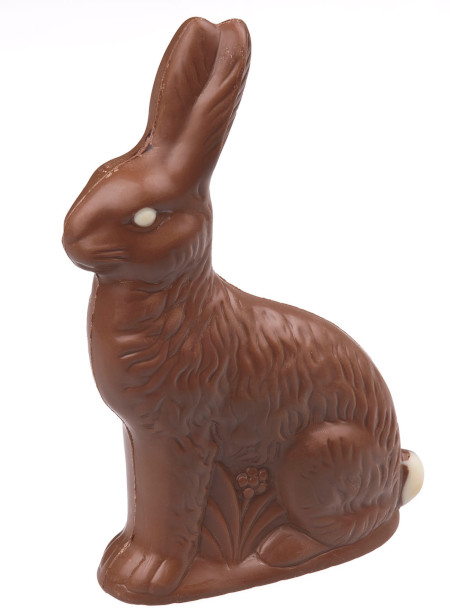
Thinking you ought to eat less chocolate? Knowing this might help: The US FDA (Food and Drug Administration) considers chocolate acceptable for public consumption as long as there are less than 60 microscopic insect fragments per 100 grams (four ounces, or approximately one candy bar).

Chocolate was once used as currency. The ancient Mayans and Aztecs valued cacao beans so highly that they used them as money to trade for food, clothes, and tools.

White chocolate isn’t technically chocolate. Because it contains no cocoa solids or chocolate liquor—only cocoa butter, sugar, milk solids, and lecithin—it fails the strict legal definition of chocolate in many countries.

It melts right at human body temperature. Cocoa butter has a unique melting point between 86°F and 90°F (30°C to 32°C), which is just below normal body temperature (98.6°F). This is why chocolate yields that distinct “melt-in-your-mouth” sensation.

It takes around 400 cacao beans to make one pound of chocolate. A single cacao tree produces about 20 to 30 pods per year, meaning one tree yields enough beans to make only a few bars of chocolate.

Chocolate was originally consumed as a bitter, spicy drink. For nearly 90% of its history, cacao was brewed as a liquid, often mixed with chili peppers, water, and cornmeal. Solid eating chocolate wasn’t mass-produced until the mid-19th century.

The world’s largest chocolate bar weighed over 12,000 pounds. Crafted in the UK in 2011, the bar set a Guinness World Record at 12,770 lbs (5,792 kg) and measured over 13 feet long.

The smell of chocolate increases theta brain waves. Smelling chocolate triggers relaxation by stimulating theta waves in the brain, which are associated with a calm, meditative state.

Rats are as vulnerable to chocolate toxicity as dogs. Theobromine, the bitter alkaloid found in cacao, is toxic to many animals because their metabolisms process it much slower than humans do. Dark chocolate contains the highest concentrations.

The word “chocolate” comes from Classical Nahuatl. It derives from the Aztec word chocolātl, which in turn gave rise to the Spanish word chocolate before spreading globally.

Ruth Wakefield sold the chocolate chip cookie recipe for $1. The creator of the Toll House Cookie gave her recipe to Nestlé in 1939 in exchange for a lifetime supply of chocolate and a dollar (which she reportedly never collected).

Posted on — Leave a comment

Worst Way of Eating

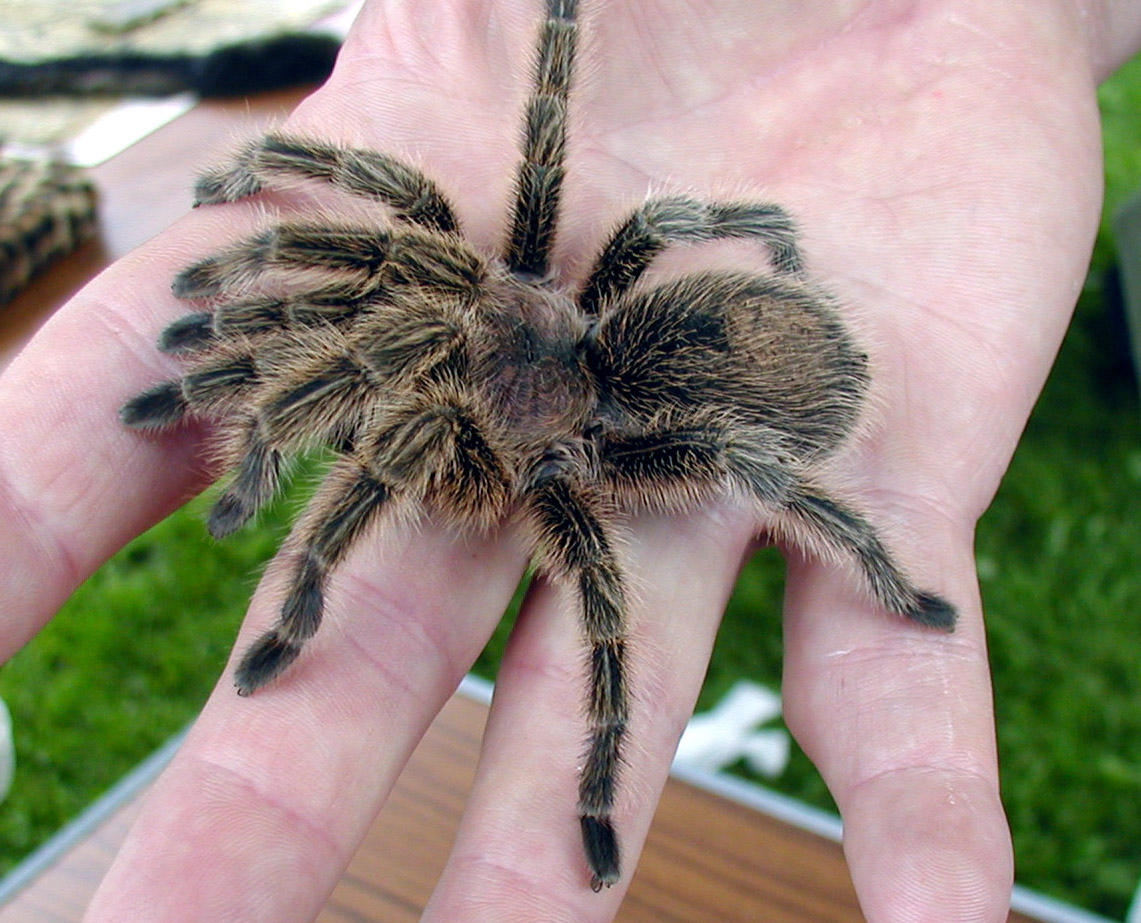
Spiders inject their victims with a chemical that dissolves them. Then the spiders drink their lunch with their mouths which are soda straw-like. A tarantula can totally liquefy a mouse.

More Unexpected Information About Spiders

Some Spiders Cartwheel Away from Danger

The golden wheel spider (Carparachne aureoflava) of the Namib Desert escapes predatory pompilid wasps by flipping on its side, curling its legs, and cartwheel-rolling down sand dunes at speeds of up to 44 turns per second.

They Eat Their Own Webs to Recycle Silk

Spider silk is made of complex protein chains that require significant energy to produce. To conserve resources, many orb-weaver spiders tear down their webs every night and eat the silk, digesting the amino acids to spin brand-new webs the next day.

Vegetarian Spiders Actually Exist

Out of over 50,000 known spider species, Bagheera kiplingi—a species of jumping spider found in Central America—is almost entirely vegetarian. Up to 90% of its diet consists of specialized nutrient-rich buds (Beltian bodies) harvested from acacia trees.

They Hydraulic-Pump Their Legs Instead of Using Muscles

Spiders don’t use opposing muscle pairs to extend their legs like mammals do. Instead, they rely on a hydraulic system, pumping hemolymph (blood) into their limbs to force them outward. When a spider dies, its hydraulic system loses pressure, causing its legs to curl inward.

Sub-Aquatic Spiders Live Underwater in Air Bubbles

The diving bell spider (Argyroneta aquatica) spends almost its entire life under freshwater lakes and ponds. It spins a bell-shaped silk web underwater and traps air bubbles from the surface, creating an aquatic “diving bell” that functions like an artificial gill to absorb oxygen from the surrounding water.

Some Spiders Mimic Ants to Avoid Being Eaten

Myrmecarachne jumping spiders use myrmecomorphy (ant mimicry) to deter predators like birds and wasps, which usually avoid aggressive, bad-tasting ants. These spiders hold their front two legs in the air to resemble ant antennae and walk in frantic, ant-like zig-zags.

The Huntsman Spider Can Creep Through Cardboard-Thin Gaps

Despite having a leg span reaching up to 12 inches (30 cm), giant huntsman spiders have uniquely flattened bodies and specialized hip joints. This allows their legs to extend sideways rather than vertically, enabling them to squeeze into crevices no thicker than a coin.

Their Blood is Blue

Unlike human blood, which uses iron-based hemoglobin to transport oxygen and turns red, spider blood uses a copper-based protein called hemocyanin. When exposed to oxygen, spider blood turns a pale translucent blue.

Peacock Spiders Perform Elaborate Dance Routines

Male peacock spiders (Maratus) engage in intricate courtship displays that rival tropical birds. They raise their iridescent, colorful abdominal flaps, wave their legs in complex patterns, and vibrate their bodies in rhythmic beats to court females—who will promptly eat them if the dance isn’t impressive enough.

Spider Silk Is Stronger Than Steel and Tougher Than Kevlar

Weight for weight, dragline spider silk is roughly five times stronger than high-grade steel and significantly tougher than Kevlar. It can stretch to over 30% of its length without snapping, allowing it to absorb high-impact energy without breaking.