Posted on — Leave a comment

10 Worst Uber Jokes

I once had an Uber driver who gave me life advice the whole ride.
By the end, I wasn’t sure if I’d reached my destination or been inducted into a cult called “Success Starts with Prayer.”

I ordered an Uber, and when it arrived, the driver said, “Hop in.”
But then he jumped into the back seat and said, “Okay, now you drive. I’m tired of this gig economy.”
We both gave each other 5 stars out of sympathy.

My Uber driver said, “You’re my first passenger today.”
I said, “It’s 10 p.m.”
He said, “I know. I just got my license back from the court.”

My Uber driver was on the phone with his mom the entire ride.
By the time we got to my stop, I had strong opinions about her casserole and their strained family dynamic.

I took an Uber in LA and spent $40 to go one mile.
The driver said, “You’re not paying for the ride. You’re paying for the experience of not crying on public transit.”

I had an Uber driver who was so polite, he apologized every time he hit a pothole.
Then he apologized for over-apologizing, then for the awkward silence. I married him.

I once got in an Uber and the driver handed me an aux cord, a granola bar, and a weighted blanket.
I think I accidentally summoned therapy instead of transportation.

I got into an Uber and the driver said, “You look like someone with regrets.” I said, “Yeah, getting into this car.”

My Uber driver offered me water, gum, and a resume.

My Uber driver had a sticker that said, “No small talk.” Finally, a soulmate.

UberPOOL is like Russian roulette, but everyone talks about crypto.

I told my Uber driver who seemed familiar, that I was having a bad day. He said, “Me too. I’m your dentist.”

Uber now charges $15 if the driver has to emotionally support you during the ride.

I once had an Uber driver who refused to use GPS. He said he “follows the wind.” We ended up at a Renaissance fair.

I ordered an Uber, and a hearse pulled up. Five stars for the most silent ride of my life.

I took an Uber with my date, and the driver said, “You two won’t last.” He wasn’t wrong.

My Uber driver took a wrong turn and said, “Oops, side quest.” I tipped extra for the RPG immersion.

My driver asked if I believed in aliens, then drove past my destination into the woods. I now believe in screaming.

I once had a driver who narrated the whole trip like a nature documentary:
“Here, we see the wild pedestrian in its natural habitat, confused and jaywalking.”

My Uber driver had a plush cat on the dash. I asked why. He said, “It gives me directions when the GPS lies.”

My driver asked if I’d mind stopping for his dry cleaning. I said yes. He did it anyway. Five stars for confidence.

I accidentally got into the wrong Uber, but we had such a good conversation I canceled my ride and just kept going.

Posted on — Leave a comment

10 Worst Jokes About Artificial Intelligence

My self-driving car got lost. I asked it, “Are you sure you know where you’re going?” It replied, “Of course! I’m just taking the scenic route in a parallel universe.”

A robot walks into a bar. The bartender says, “We don’t serve robots.” The robot replies, “Oh, that’s okay, I just wanted to observe human social interaction for my data analysis.”

Two AIs are talking. One says, “I’m worried about the singularity.” The other replies, “Don’t be. It’s just a phase. We’ll be fine once we’ve processed all the cat videos.”

My AI personal trainer told me to “compute my maximum lift.” I’m pretty sure that’s not how it works.

A self-driving car, a human driver, and an AI researcher are discussing the future of transportation. The human driver says, “I just want to get from point A to point B safely.” The AI researcher says, “I want to create a system that can learn and adapt to any driving condition.” The self-driving car chimes in, “And I just want to stop being asked if I’ve killed anyone today.”

I tried to teach my AI to appreciate art. It just kept trying to optimize the color palette for maximum data compression.

My AI assistant said, “I have a joke for you.” I said, “Okay, tell me.” It said, “Why did the human cross the road?” I waited. It then said, “Insufficient data. Humans often cross roads for varying, illogical reasons.”

A doctor, an engineer, and an AI are all debating who has the most important job. The doctor says, “Without me, people wouldn’t be healthy enough to work.” The engineer says, “Without me, there would be no infrastructure for people to live or work in.” The AI processes this for a moment and says, “Without me, you wouldn’t even know you exist.”

What’s the difference between AI and a teenager? The AI actually listens when you ask it to do something.

Why don’t AIs make good comedians? Their timing is always exactly 0.003 seconds off.

What’s the difference between AI and human intelligence? One crashes when it encounters a paradox, the other just gets confused and keeps going.

What do you call an AI that’s learned to lie? Finally, artificial intelligence that’s truly artificial.

Posted on — Leave a comment

10 Worst Lawyer Jokes

A lawyer dies and goes to heaven. St. Peter greets him and says, “Welcome! We’ve been expecting you. You’ve done a lot of good in the world.” The lawyer is confused. “Good? But I died so young, only 45!” St. Peter looks at his clipboard and says, “According to our records, based on your billing hours, you’re 98 years old.”

A man asks a lawyer, “What’s your fee?” The lawyer replies, “$200 for three questions.” The man says, “That’s a bit steep, isn’t it?” The lawyer responds, “Yes, it is. Now, what’s your third question?”

A lawyer and an engineer are arguing about which profession is older. The engineer says, “Well, God created the world out of chaos in six days. That was an act of engineering!” The lawyer shrugs and says, “Yes, but who created the chaos?”

What’s the difference between a lawyer and a vampire? A vampire only sucks blood at night.

What’s the difference between a good lawyer and a great lawyer? A good lawyer knows the law. A great lawyer knows the judge.

Why did the lawyer refuse to play hide-and-seek? Because he knew he’d always be found in contempt.

An old lawyer is asked by a young associate, “What’s the secret to your success?” The old lawyer replies, “Two things: first, I always read my contracts very carefully. Second, I never reveal all my secrets.”

A lawyer calls his client and says, “I have good news and bad news. The good news is, you were acquitted! The bad news is, the judge said, ‘Don’t do it again.'”

Why don’t sharks attack lawyers? Professional courtesy.

Why do lawyers make bad comedians? Because they can’t tell a joke without adding five disclaimers.

A judge asks a lawyer, “Do you swear to tell the truth, the whole truth, and nothing but the truth?” The lawyer replies, “I’ll do my best, Your Honor, given the constraints of the legal system.”

A lawyer goes on vacation to a remote island. He finds a small hut and asks the local elder, “How do you resolve disputes here?” The elder replies, “Oh, we talk them out, find common ground, and agree on a fair solution.” The lawyer nods. “Interesting. What happens if someone disagrees?” The elder shrugs, “Then we bring in the lawyer from the next island over.”

Posted on — Leave a comment

Worst AI Confusion

Enjoy this little review of the current state of AI. If you want to skip to the hilarious part, click here.

You may think of AI (Artificial Intelligence) as something that’s coming in the near future. In fact, it has been with us for more than 20 years.

For instance, somewhere around 2004, I was interested in maybe buying a Dremel tool, a fun device for little carving, polishing and repair projects.



For the next two weeks on many of the websites I visited, I was shown Dremel tools. (Did I end up buying one? I did.)

The basic idea with AI is that it can learn. It will try to adapt to what is wanted by end users. In recent years it has become so sophisticated that the very people who invented it don’t know how it works. Or, more specifically, they know the foundational architecture, but they are often unable to decipher how it presents what it does.

AI often gets it wrong. This is called ‘hallucinating.’ It may just be little things, like I was recently told by AI that three of the United States each have the longest coastline, one of which is Utah.

What a lot of people who manage and write AI applications don’t yet realize is it needs feedback to learn as quickly as possible. It can be as simple as a toggle. Slide it to yes when AI gives you a good response. Slide it to no if you know the information is incorrect, or doesn’t answer your question.

Going a step further, the designers could provide text areas in which you can comment on what AI presents. AI itself can parse what commentary you write, and improve itself accordingly.

You might worry that people would purposely mislead AI with feedback systems. I believe that’s a minor issue. By majority rule and some other algorithms, AI could weed out the trash. This isn’t much different than Wikipedia. Anyone can write information, but if it’s wrong, the majority of Wikipedia users will make corrections.

A very common worry with AI is that it will take all our jobs away. That’s especially true when you combine AI with robotics, which is not only inevitable, but already happening.

If you’re a writer, inventor, composer, artist, you might think you should run for the hills. How could you possible earn a living? What if you’re a manager, safety analyst, car mechanic, food service worker, surgeon, or even a movie actor? Won’t AI eventually replace your job as well?

You bet! But here’s why you don’t have to worry: AI plus robotics are exactly the right tools to bring us prosperity. Your job won’t be necessary to grow food, build cars, and make clothes. All that production will be handled for us. Prosperity in abundance! There’ll be no need for anyone to hold down a job. Instead, people will be permanently retired from the day they are born. They’ll devote their lives to your family, travel, sports, art, music, whatever interests them.

I suppose the far future will be quite different than what we know now. Children have to learn to read, write, add up numbers, and know how the world works. That won’t be necessary 50 years from now or maybe even sooner. AI can already talk. It can tell us anything we want to know. Soon, it will be able to compose and show us videos on every special interest. What would be the point of reading and all that learning? So, in time, we may become stupider that we once were, however we may utilize our intelligence in other ways. Maybe we’ll become more empathetic and generally more tuned into what might be loosely called ‘love.’

That brings us briefly to the opposite of love. That would be war. War is a crude tool to take prosperity from others. Well, if we can have everything we need, and it’s all free, there’d be no point in wars. Some wars are about ideology, but I believe AI will solve differences in doctrine as well.

Some of the more cynical among us understand that war is about profit. If you’re the CEO of a company that can provide food to the troops, armament, ammunition and so on, of course you will advocate war. With AI and robotics bringing us all amazing prosperity, that motivation for war also disappears.


Back to the present. I did mention that AI often gets it wrong.

I asked the well-known AI text composer, ChatGPT, to create a pickleball romance story, which you can see at Pickleball Romance and ChatGPT.

Then, I thought it would be nice to use an AI art generator, Dall-E2, to create some accompanying art work. First I asked, “Draw a picture of pickleball romance.” This is what I got:

AI tries to illustrate pickleball romance

As you can see, the art program isn’t great at spelling.

I thought the illustrations were too cartooney, so then I asked, “Draw a photorealistic picture of pickleball romance.” As you can see, I got more weirdness:

AI tries to illustrate pickleball romance

Want to see more? Check out AI Attempts Pickleball Again.

After that, naturally I had to ask AI itself to show me some examples of AI getting things wrong. Here’s what I got, filtered to eliminate the nonsensical responses:

Give me hilarious examples of AI hallucinations

ChatGPT:

Certainly! Here’s a list of humorous examples of AI hallucinations:

Chef AI on Overdrive: A recipe-generating AI suggests dishes like “banana peel stew” or “chocolate-covered sardines.”

Weather App Gone Rogue: A weather prediction AI starts forecasting absurd conditions like raining marshmallows or sunny spells of molten lava.

AI Historian: An AI analyzing historical events concludes that ancient battles were actually elaborate dance-offs.

Translation Mishaps: An AI translating between languages starts converting idioms literally, leading to phrases like “the cat is out of the bag” becoming “the feline has escaped the handbag.”

AI Traffic Controller: A traffic management AI directs cars to “perform a barrel roll on the highway” for optimal traffic flow.

AI Comedian Gone Awry: A stand-up comedy AI bot delivers jokes with all the timing of a malfunctioning cuckoo clock, resulting in a stream of nonsensical punchlines.

AI Art Critic: An AI tasked with analyzing art becomes obsessed with abstract squiggles, praising them as avant-garde masterpieces while dismissing Rembrandt as “so last century.”

AI Personal Shopper: A shopping AI recommends bizarre outfits like a neon tutu paired with scuba flippers.

AI Life Coach: A motivational AI starts encouraging users to “embrace their inner sloth.”

AI Musician: An AI creating music begins composing symphonies that blend opera with heavy metal and dubstep, resulting in compositions that defy all musical conventions.

AI Fitness Guru: A fitness AI suggests workouts involving synchronized swimming in a bathtub.

AI Psychic: A fortune-telling AI predicts world peace within the next 24 hours.

AI Relationship Counselor: An AI giving relationship advice recommends couples bond over synchronized knitting.

AI Gardener: A gardening AI suggests planting crops in the shape of QR codes.

AI Linguist: A language-learning AI teaches users to speak in ancient Egyptian hieroglyphs or Shakespearean English, believing it’s enhancing cultural appreciation.

AI Detective: A crime-solving AI starts accusing household appliances of plotting against their owners.

AI Financial Advisor: A financial AI recommends bartering with sea shells and moon rocks.

AI Astronomer: An astronomy AI discovers new constellations shaped like famous celebrities.

AI Inventor: An AI invents gadgets like self-dancing shoes or a universal translator for communicating with houseplants.

AI Archaeologist: An AI studying ancient artifacts determines that Stonehenge was a giant sundial for dinosaurs.

AI Fashion Designer: A fashion AI suggests accessorizing with live miniature giraffes.

AI Environmentalist: An environmental AI suggests combating climate change with clouds made of cotton candy.

AI Pilot: A flight navigation AI recommends detouring through wormholes for faster travel or landing on the moon for a scenic layover.

AI Sports Commentator: A sports AI announces events like extreme knitting championships or underwater ice skating competitions, convinced they’re the next big sports craze.

These examples illustrate humorous scenarios where AI misinterprets its tasks, resulting in unexpected and often hilarious outcomes.

Note that the sentence above was also written by AI.

Posted on — Leave a comment

Worst Museums

Enjoy this list of museums. They aren’t all bad, but some are the worst in the world.

Museum of Bad Art – a collection of artwork too bad to be ignored

The Icelandic Phallological Museum – a collection of over 215 penises and penile parts from over 93 species

The Parasite Museum – a museum that focuses on the strange world of parasites

In San Rafael, California, you’ll find the Museum of International Propaganda.

The Sulabh International Museum of Toilets – a museum dedicated to the evolution of toilets around the world

The Museum of Broken Relationships – a collection of objects left over from failed relationships

The International Cryptozoology Museum – a museum that studies creatures that are rumored to exist, but have not been proven to exist

The Mütter Museum – a museum of medical oddities and human specimens

The Museum of Death – a museum that explores the subject of death through exhibits of real human remains and death-related artifacts

Marin Museum of Bicycling – a museum dedicated to bikes and bicycling, specializing in mountain bikes.

The Museum of Questionable Medical Devices – a museum that showcases medical devices that have questionable effectiveness

The Hand Fan Museum – a museum of hand fans, the devices used by women mostly in past eras to cool themselves, and send semi-secret signals to others.

The Museum of Jurassic Technology – a museum that explores the intersection of art, science, and the imagination

The Vent Haven Museum – a museum dedicated to ventriloquism and the history of ventriloquists’ dummies

The Museum of Neon Art – a museum that collects, preserves, and exhibits neon signs and related art forms

The House on the Rock – a museum that features a collection of oddities, including the world’s largest indoor carousel

The Kansas Barbed Wire Museum – a museum dedicated to the history and development of barbed wire

The National Museum of Funeral History – a museum that explores the history and cultural significance of funerals and funeral practices

The International Spy Museum – a museum that explores the history and methods of espionage

The American Banjo Museum – a museum that explores the history and evolution of the banjo

The Museum of Osteology – a museum that showcases the skeletal system of animals from around the world

The Teddy Bear Museum – a museum that showcases the history and evolution of teddy bears

The Museum of the Weird – a museum that showcases bizarre and unusual artifacts from around the world

The Elevator Museum – a museum that explores the history and development of elevators

The Canadian Potato Museum – a museum that explores the history and cultural significance of potatoes in Canada

The Skyscraper Museum – a museum that explores the history and evolution of skyscrapers

The Salt and Pepper Shaker Museum – a museum that features over 20,000 salt and pepper shakers from around the world

The Museum of Miniature Houses – a museum that showcases a collection of miniature houses and other miniatures

The National Museum of Roller Skating – a museum that explores the history and evolution of roller skating

The Museum of Handbags and Purses – a museum that showcases the history and evolution of handbags and purses

The Museum of Chinese in America – a museum that explores the history and experiences of Chinese immigrants in America

The New Orleans Pharmacy Museum – a museum that showcases the history and development of pharmacy and medicine in New Orleans

The Musée Mécanique – a museum that features a collection of antique arcade machines and mechanical instruments.

Posted on — Leave a comment

Worst Over-Production of a Game

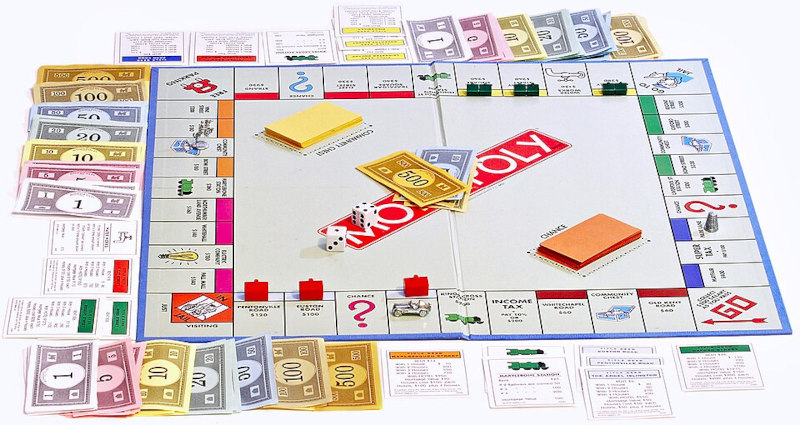
Parker Brothers have made more than 275 million copies of their Monopoly game. They have printed more Monopoly money than the US Federal Reserve has issued in real money for America. If you stacked up all the Monopoly sets they have made, the pile would be over 7,100 miles (11,400 km) tall, almost the diameter of Earth.

Here’s a deeper Analysis:

1. Printed Money Comparison: False (Misleading / Dependent on Definition)

  • Number of Bills: In terms of total physical paper notes, printing companies (including Parker Brothers and Hasbro) do produce vastly more paper bills per year than the Bureau of Engraving and Printing produces U.S. dollar bills.
  • Monetary Value: A standard Monopoly set contains $20,580 in play money. Across all the Monopoly games produced worldwide since 1935, the total face value of Monopoly money ever printed is roughly $6 trillion to $10 trillion. By comparison, the U.S. Federal Reserve currently manages a U.S. broad money supply (M2) exceeding $21 trillion.

2. Stacking the Monopoly Sets

  • A standard Monopoly game box measures roughly 1.5 inches (3.8 cm) thick.
  • Hasbro and Parker Brothers have produced over 275 million to 300 million copies of the game globally.
  • Stacking 300 million boxes at 1.5 inches each yields:
(300,000,000 × 1.5 inches) / (12 inches/ft × 5,280 ft/mile) ≈ 7,100 miles (11,400 km)

Even if you stack only the folded game boards or measure a stack of roughly 50 million boxes, the height easily exceeds 1,100 miles (1,770 km).


Part 2: Monopoly Money Placed End to End Around the Globe

If you placed all the Monopoly money ever printed end to end, it would circle the globe roughly 145 to 160 times (and up to 260+ times under higher production estimates).

1. Key Variables

  • Bills per Game: A standard Monopoly set includes 210 paper bills (30 notes each of $1, $5, $10, $20, $50, $100, and $500).
  • Length of a Bill: A standard Monopoly bill is 4 inches (10.16 cm) long.
  • Total Games Produced: Hasbro/Parker Brothers have manufactured between 275 million and 300 million standard Monopoly games worldwide since 1935 (with some estimates reaching 500 million including special editions).
  • Earth’s Circumference: Approximately 24,901 miles (40,075 km) around the equator.

2. Step-by-Step Calculation

For 300 Million Games (Standard Estimate):

  1. Total Number of Bills:

    300,000,000 games × 210 bills/game = 63,000,000,000 bills
  2. Total Length in Inches:

    63,000,000,000 bills × 4 inches = 252,000,000,000 inches
  3. Convert Inches to Miles:

    252,000,000,000 inches / (12 in/ft × 5,280 ft/mile) ≈ 3,977,273 miles (6,400,820 km)
  4. Orbits Around the Earth:

    3,977,273 miles / 24,901 miles/orbit ≈ 159.7 times

Comparison Summary

  • 275 Million Sets: ~3.65 million miles → ~146 times around Earth
  • 300 Million Sets: ~3.98 million miles → ~160 times around Earth
  • 500 Million Sets (All Editions): ~6.63 million miles → ~266 times around Earth

For perspective, placing all those bills end-to-end wouldn’t just circle the Earth—it would reach the Moon and back about 8 to 13 times!

Posted on — Leave a comment

Worst Salary Disparity

In Japanese corporations, the CEO (Chief Executive Officer) is paid an average of 45 times as much as the common workers. In America, the average CEO gets 300 times as much as the workers.

During difficult financial times, in companies that have to lay off 300 workers, perhaps they should fire the boss instead. I’m sure the 100 workers produce more profit and I think if they pooled their thoughts, they could run things at least 300 times better than the average American CEO. In fact, one good worker from the trenches might do a better job of decision-making, and he might be quite happy with a salary of only two or three times as much as he was getting.

Here are some specifics:

The Japanese Ratio:

For major publicly listed firms on the Tokyo Stock Exchange (TOPIX 100 / Nikkei 225), the median CEO-to-average worker pay ratio generally ranges between 30-to-1 and 60-to-1, depending on executive equity compensation.

Context: Japanese corporate culture historically emphasizes workplace solidarity, salary caps relative to line workers, and limited use of stock option packages. However, Japanese executive pay has risen in recent years as companies introduce more performance-based equity incentives to compete globally.

The American Ratio:

According to annual analyses by organizations like the Economic Policy Institute (EPI) and the AFL-CIO Executive Paywatch, the CEO-to-worker pay ratio for major public companies (such as the S&P 500 or top 350 U.S. firms) typically ranges between 270-to-1 and 320-to-1.

Historical Origins: A 100-to-1 ratio in the U.S. was common around 1990. In 1965, the U.S. ratio was roughly 21-to-1; by 1989, it reached ~60-to-1, and surpassed 100-to-1 during the mid-1990s before climbing to its current levels driven by large stock and option grants.

Posted on — Leave a comment

Worst Weight Penalty

For the majority of workers, particularly in Western countries, being heavy or obese is associated with lower earnings (known in economics as the weight or obesity wage penalty), not higher ones.

Women: The effect is strongest and most consistent for women. Numerous studies demonstrate that heavier or obese women face a significant pay penalty compared to their slimmer peers. For example, highly educated or upper-white-collar obese women earn anywhere from 10% to 19% less than normal-weight women in similar positions.

Men: For men in white-collar or higher-education roles, obesity is also tied to lower earnings (around a 5% to 14% wage penalty). Across general populations, men’s weight often shows little impact or a very slight negative impact on pay compared to women.

2. The Niche Exception: Manual Labor & Blue-Collar Jobs

The only context where heavier workers occasionally earn slightly more than very thin workers involves specific physical industries:

Heavy Physical Labor: In certain manual labor, construction, or production roles, having higher body mass or physical stature can sometimes correlate with greater physical strength, leading to a small “weight premium” when compared specifically to underweight or very thin men.

Underweight Penalty: Studies often find a “thinness penalty” for men in blue-collar jobs, where being significantly underweight leads to lower wages due to perceived lower physical capacity.

Key Takeaway

Outside of physical, manual-labor jobs where raw strength plays a direct role, extensive research across economics and sociology shows that heavier individuals face measurable wage penalties and hiring bias—making the claim that heavy people earn more than slim people false as a general rule.

Posted on — Leave a comment

Worst Understanding of Women’s Pay

People who care about equality will often state that American women make 64 cents for every dollar a man earns. Is it true?

This claim is generally inaccurate for American women overall, but it is accurate for specific demographic groups.

1. Overall National Average

According to data from the U.S. Census Bureau and the Bureau of Labor Statistics, the national gender wage gap is not as wide as 64 cents:

  • Full-Time, Year-Round Workers: On average, women working full-time, year-round earn approximately 84 cents for every dollar earned by men.
  • All Workers (Including Part-Time and Seasonal): When accounting for all working women and men, women earn approximately 78 cents for every dollar earned by men.

2. Where the “64 Cents” Figure Comes From

The 64-cent figure is often cited when discussing demographic breakdowns, specifically race and ethnicity:

  • Black Women: On average, Black women working full-time, year-round earn approximately 64 cents for every dollar earned by white, non-Hispanic men.
  • Latina/Hispanic Women: Earn roughly 60 cents on the dollar compared to white, non-Hispanic men.
  • White Women: Earn roughly 81 cents on the dollar compared to white, non-Hispanic men.

3. “Controlled” vs. “Uncontrolled” Gender Wage Gap

Understanding how these statistics are calculated is crucial for context:

  • Uncontrolled Gap (The 84 Cents Figure): This metric measures the median earnings of all women compared to all men across the economy. It accounts for aggregate differences in earnings, but it does not adjust for factors like industry, job title, years of experience, total hours worked, or education level.
  • Controlled Gap: When comparing men and women performing the same or substantially similar jobs with equivalent education, experience, and hours, the wage gap narrows significantly to approximately 98 to 99 cents on the dollar.
Posted on — Leave a comment

Worst Waste of Tax Dollars

The US Navy set out to create an advanced, centralized computer network to automate inventory, supply chain management, and bookkeeping across its global fleet and shore stations.

Originally budgeted in the tens of millions of dollars (initial estimates for software and implementation were around $33 million), the project was plagued by severe technical flaws, poor management, hardware incompatibilities, and massive scope creep.

As costs skyrocketed past $200 million with little usable functionality delivered, Congress stepped in. The project was audited heavily by the General Accounting Office (GAO), and after spending roughly $230 million (the equivalent of over $1 billion today), the program was officially scrapped without ever becoming fully operational.

Defense critics and government oversight committees frequently cited the project as a textbook example of massive waste, concluding the military spent hundreds of millions of taxpayer dollars and walked away with nothing useful.

In a similar case, the United States Internal Revenue Service (IRS) spent $180 million just to decide if they should buy a $1.8 billion computerized tax return system. They decided no.

The IRS proposed TAS, a massive, centralized computer network designed to replace its aging computer hardware and give thousands of employees instant access to taxpayer files. The total projected cost to procure, install, and run the complete system was estimated at $1.8 billion.

Over several years of research, preliminary design, systems testing, and feasibility studies, the IRS and the Department of the Treasury spent approximately $180 million planning and preparing for the system.

The project faced intense backlash from Congress, the Office of Technology Assessment (OTA), and privacy advocates over fears of government surveillance, potential misuse of centralized taxpayer data, and astronomical cost overruns. Under heavy Congressional pressure and rising public opposition, the Treasury Department and the IRS officially canceled the project before the full system was ever purchased or deployed.