Posted on — Leave a comment

France’s Worst President

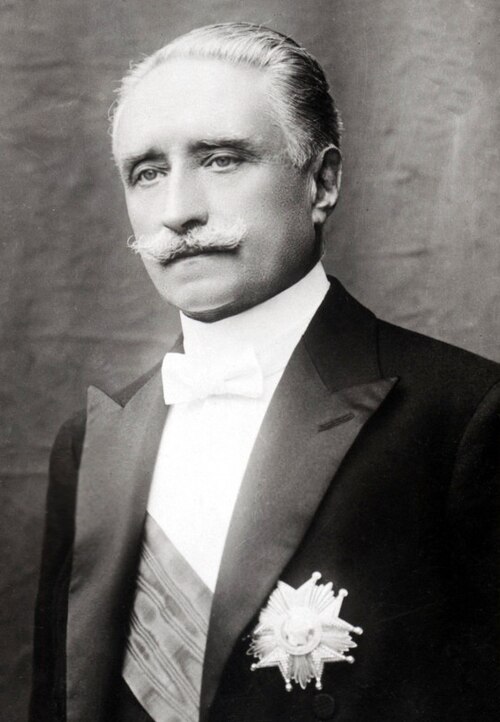
Paul Deschanel was a French politician, orator, and writer who served as the 10th President of the French Third Republic in 1920. While he enjoyed a long, distinguished political and literary career, he is best remembered for his brief, tragicomic presidency, which lasted just seven months before being cut short by a severe mental breakdown.


Rise to Power

  • Distinguished Career: Prior to his presidency, Deschanel was an influential parliamentarian representing the Eure-et-Loir department for 35 years. He served twice as President of the Chamber of Deputies (the lower house of Parliament), notably holding the position throughout World War I, where he gained fame as a patriotic orator.
  • Literary Achievement: An accomplished intellectual, he authored numerous books on literature and political science and was elected to the prestigious Académie française in 1899.
  • Defeating “The Tiger”: In January 1920, Deschanel achieved his lifelong ambition of becoming president by defeating Georges Clemenceau—France’s legendary wartime Prime Minister—in a surprise election victory.

The Presidency & Mental Collapse

Shortly after taking office, Deschanel began suffering from severe anxiety, depression, and neurological deterioration, likely brought on by dementia or extreme overwork. His erratic behavior quickly became the talk of Paris:

  1. The Train Incident (May 24, 1920): While traveling overnight on the presidential train to Montbrison, an intoxicated or confused Deschanel fell out of his compartment window while trying to open it. The train was moving slowly, so he survived with only minor scrapes. Dressed only in his pajamas, he walked to a nearby railway track-watcher’s cottage, claiming to be the President of France. The worker’s wife famously brushed him off at first, thinking he was a drunk local.
  2. Strange Public Episodes: Reports began surfacing of other bizarre occurrences—such as signing state documents as “Napoleon” or “Charlemagne,” receiving dignitaries while wearing only his presidential sash, and wandering into a lake fully clothed at the Château de Rambouillet.

Resignation and Legacy

  • Resignation: Realizing he was unfit to govern, Deschanel resigned on September 21, 1920, after just 216 days in office. He was succeeded by Prime Minister Alexandre Millerand.
  • Recovery: After resting at a sanatorium, his mental health improved significantly. He was elected to the French Senate in early 1921, where he served until his death from pleurisy in April 1922.
  • Historical Impact: Beyond the popular folklore surrounding his train fall, Deschanel was notable for his progressive stance on foreign affairs and his lifelong opposition to the death penalty; notably, no state executions took place during his time as head of state.
Posted on — Leave a comment

Worst Doctor

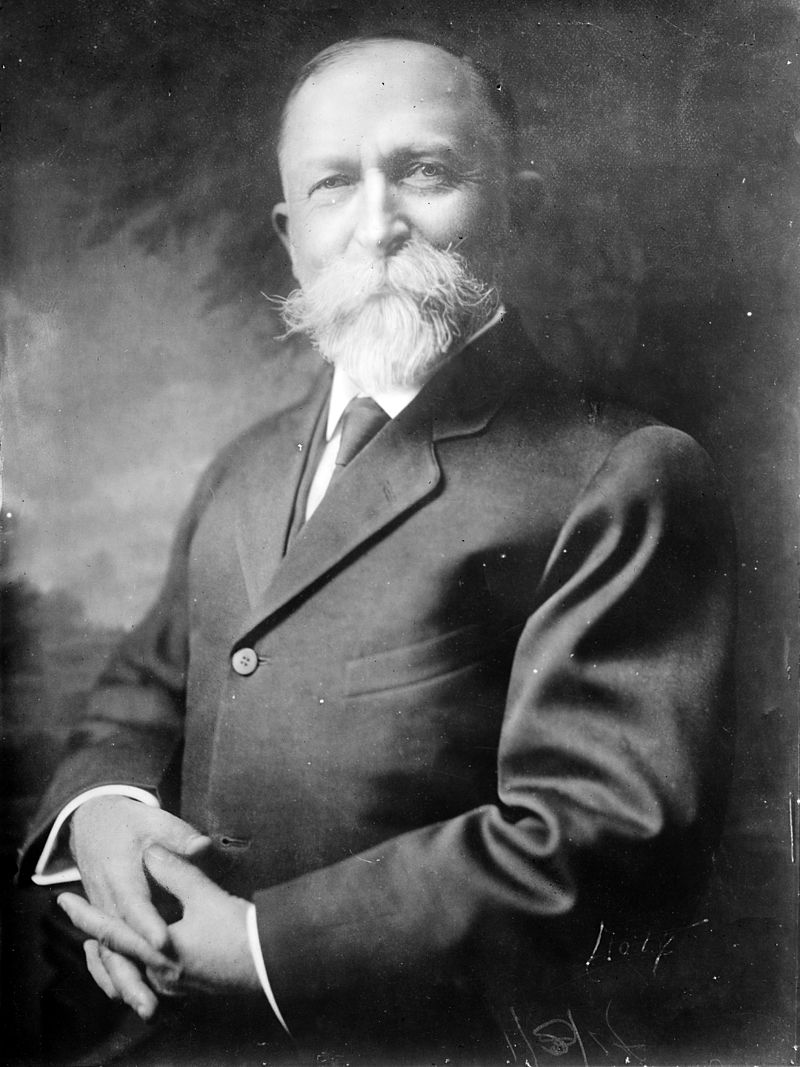
Kellogg’s Corn Flakes was invented as a way to stop children from masturbating. Dr. John Harvey Kellogg felt that bland foods would curb sexual appetite. The theory must have not been quite right, because although a lot of corn flakes were sold, the kids kept doing what kids will do.

Dr. Kellogg was a man obsessed with speaking and acting out against masturbation. In fact, he went much farther than just talking about it. As a medical doctor, he badly abused his power, and young patients, as is evidenced in the following quotes:

“A remedy which is almost always successful in small boys is circumcision, especially when there is any degree of phimosis. The operation should be performed by a surgeon without administering an anesthetic, as the brief pain attending the operation will have a salutary effect upon the mind, especially if it be connected with the idea of punishment, as it may well be in some cases. The soreness which continues for several weeks interrupts the practice, and if it had not previously become too firmly fixed, it may be forgotten and not resumed.”

A method of treatment [to prevent masturbation]: “…and we have employed it with entire satisfaction. It consists in the application of one or more silver sutures in such a way as to prevent erection. The prepuce, or foreskin, is drawn forward over the glans, and the needle to which the wire is attached is passed through from one side to the other. After drawing the wire through, the ends are twisted together, and cut off close. It is now impossible for an erection to occur, and the slight irritation thus produced acts as a most powerful means of overcoming the disposition to resort to the practice.”

Posted on — Leave a comment

The Messiest House in Britain


Surprising Facts About Messy Homes

  1. Messy desks and rooms are linked to higher creativity. A famous study by the University of Minnesota found that participants placed in messy environments generated more creative, unconventional ideas than those in tidy rooms.
  2. Clutter increases cortisol levels, especially in women. Research from UCLA’s Center on Everyday Lives of Families showed a direct link between high density of household objects and elevated stress hormones in mothers.
  3. Famous geniuses were notoriously messy room dwellers. Albert Einstein, Steve Jobs, Mark Twain, and Thomas Edison all maintained famously chaotic workspaces, holding that disorder fostered non-linear thinking.
  4. Messiness can promote charitable and generous choices. While orderly environments encourage traditional convention, messy environments can prompt people to challenge old habits and seek out new ways to give back.
  5. A messy room can disrupt healthy eating habits. Studies indicate that people stressed by chaotic kitchen environments are more likely to reach for high-calorie snack foods than those in tidy, organized kitchens.
  6. Dust in messy homes contains complex microbial ecosystems. Household dust isn’t just dirt; it contains skin cells, textile fibers, pet dander, and thousands of distinct species of microflora unique to each home.
  7. Physical clutter impairs visual processing focus. Neuroscientists at Princeton University found that multiple visual stimuli in a cluttered room compete for attention, reducing the brain’s capacity to process information efficiently.
  8. Clutter negatively impacts sleep quality. Studies on sleep hygiene demonstrate that sleeping in cluttered, disorganized bedrooms can lead to longer light-sleep stages and increased nighttime awakenings.
  9. The average home holds over 300,000 items. The sheer volume of consumer goods in modern residences makes maintaining order vastly more labor-intensive than in previous centuries.
  10. Messy environments encourage trial-and-error problem solving. Psychological experiments suggest that messy settings break people out of rigid mindsets, making them more willing to experiment with unexpected solutions.
Posted on — Leave a comment

Worst Personality Turn

People who can construct things including art, music or writing find fulfillment and joy in their creations. However, those who can’t, or believe they can’t, tend to use the same energy, but to destroy things.

How can we help redirect people who are destructive into constructive pursuits?

Perhaps if this became a ‘thing,’ the world would be free from bullies, crooked politicians and undesirable people. Maybe helping everyone become constructive would even end warfare.


constructive vs destructive

constructive vs destructive

Posted on — Leave a comment

Worst Jokes About Men

Why is psychoanalysis so much quicker for a man than for a woman? Because when it’s time to go back to his childhood, he’s already there.

A man’s idea of helping with the housework is lifting his legs so you can vacuum.

What’s the difference between a man and a government bond? The bond matures.

Men are like fine wine. They start out as grapes, and it’s up to women to stomp the heck out of them until they turn into something acceptable to have dinner with.

A man has six items in his bathroom: a toothbrush, toothpaste, a razor, shaving cream, a bar of soap, and a towel from a hotel he stayed at in 1998.

How do you know a man is about to say something smart? He starts his sentence with “My wife told me…”

Why do men like remote controls? Because it gives them a sense of control over at least one thing.

A man’s favorite movie is GoodFellas. His wife’s favorite movie is whatever is playing on the one screen at the theater that isn’t showing GoodFellas.

If a man says he’ll fix it, he will. There’s no need to remind him every six months about it.

What did the man say when he walked into a bar? “Ouch.”

Why don’t men have mid-life crises? They get stuck in adolescence.

A man’s idea of a clean house is a clear path from his chair to the refrigerator.

A woman marries a man expecting he will change, but he doesn’t. A man marries a woman expecting she won’t change, and she does.

Men are just like commercials. You can’t believe a word they say.

A man and his wife are at a restaurant, and the waiter tells the man, “Your credit card was declined.” The man replies, “Try my wife’s. She has a much better job than I do.”

A man is talking to his friend. “I don’t know what to do. My wife is so messy. She’s always leaving her clothes all over the place.” His friend replies, “I have the same problem. My wife leaves her clothes all over the floor, the chair, the bed… but at least she’s in them.”

A man comes home from work and his wife says, “Honey, the car won’t start. I think there’s water in the carburetor.” The man asks, “Where’s the car?” His wife replies, “In the lake.”

A husband and wife are trying to set up a new password for their computer. The husband types, “Mypenis,” and the wife falls on the floor laughing because the computer responds, “Error. Not long enough.”

A man told his doctor that he wasn’t able to do all the things around the house that he used to do. When the doctor finished his checkup, he said, “Now, I can’t find anything wrong with you. So you’ll have to give me a good reason why you can’t do all those things.” The man replied, “Because my wife won’t let me.”

A man goes to the library and asks for a book on paranoia. The librarian whispers, “They’re right behind you.”

A man walks into a bar and orders a drink. He then pulls a tiny piano and a 12-inch-tall man out of his pocket. The tiny man starts playing the piano. The bartender says, “That’s amazing! Where did you find him?” The man replies, “I found a magic lamp, and the genie granted me a wish.” The bartender says, “You should have wished for a million bucks!” The man replies, “What, and do you think I wished for a 12-inch pianist?”

A guy is reading his newspaper and says to his wife, “It says here that women use twice as many words as men.” His wife replies, “That’s because we have to repeat everything we say.” He says, “What?”

A man is filling out a job application. He comes to the question, “Have you ever been arrested?” He writes, “No.” The next question, “Why?” He writes, “I’ve never been caught.”

Why are husbands like lawnmowers? They’re hard to get started, emit foul odors, and half the time they don’t work.

A woman says to her friend, “I’ve been married for 20 years, and I’m still in love with the same man.” Her friend says, “That’s so sweet!” The first woman replies, “I know. If my husband ever finds out, he’ll kill me.”

How many men does it take to change a roll of toilet paper? We don’t know. It’s never happened.

A wife asks her husband, “Honey, if I died, would you remarry?” The husband says, “Well, I suppose so.” The wife asks, “Would you let her wear my clothes?” He says, “I guess, if she wanted to.” The wife asks, “Would you let her use my golf clubs?” The husband replies, “Of course not. She’s left-handed.”

See also: Worst Jokes About Women.

Posted on — Leave a comment

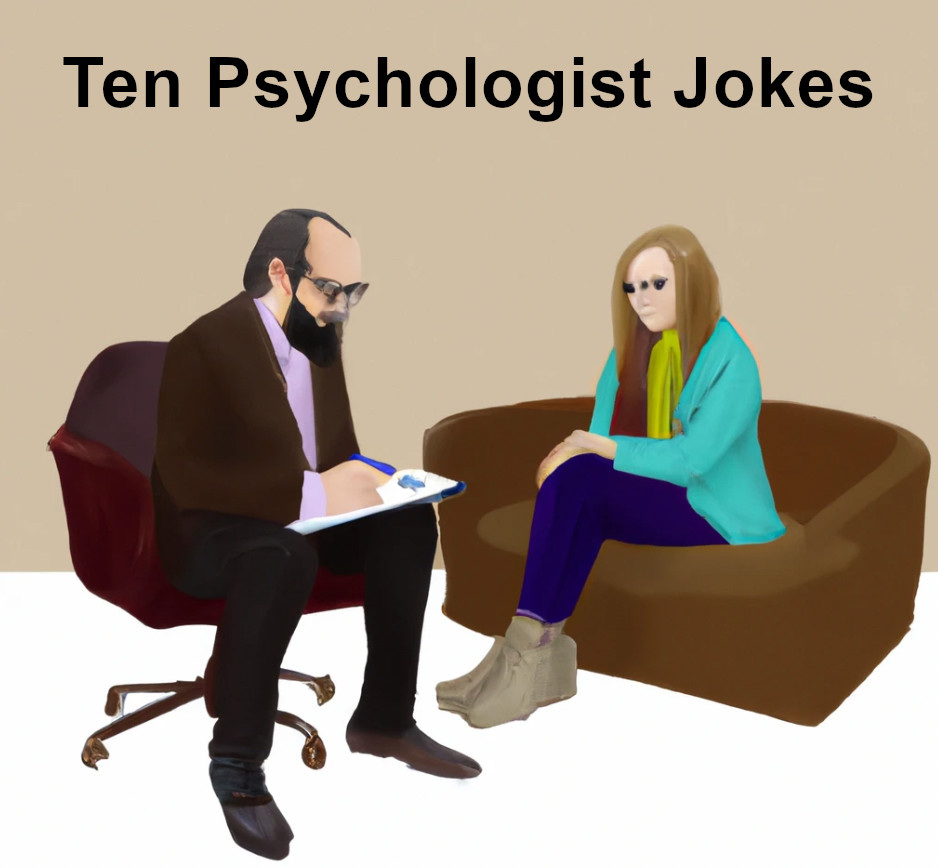
Worst Psychologist Jokes

How many psychologists does it take to change a light bulb? Only one, but the light bulb has to want to change.

Why did the psychologist become a gardener? Because he wanted to help people “grow.”

Why did the psychologist become a chef? Because he wanted to “analyze” food for thought.

Why did the psychologist bring a spoon to work? To help his patients “dig deep” into their issues.

What do you call a group of psychologists? A “psycho-babble” of psychologists.

Why did the psychologist always carry a mirror? To help his patients “reflect” on themselves.

How many psychologists does it take to screw in a light bulb? None, the light bulb will change when it’s ready.

Why did the psychologist become an artist? He wanted to paint people’s “emotional landscapes.”

What do you call a psychologist who also acts? A “psycho-dramatist.”

What do you call a psychologist who specializes in canine behavior? A “dogtor” of psychology.

Why did the psychologist bring a broom to work? To sweep away his patients’ “mental clutter.”

What’s a psychologist’s favorite dance move? The “Freudian slip.”

Why did the psychologist bring a telescope to work? To help his patients gain a “clearer” perspective.

Why did the psychologist become a magician? Because he loved making people’s issues “disappear.”

Why did the psychologist bring a stopwatch to work? To help his patients “track” their progress.

What’s a psychologist’s favorite dessert? “Sigmund Freud” cake — it’s layered with deep meaning.

Posted on — Leave a comment

Worst Waste of Time

The average American spends more than a work week (40 hours) ever year waiting in lines.

More About Waiting In Line

The Psychology & Perception of Lines

  • Unoccupied time feels longer than occupied time: When your mind is active, time moves faster. That’s why elevator lobbies have mirrors—installed in 1950s New York to distract people while waiting, which drastically reduced complaints without speeding up the elevators.
  • Uncertainty breeds anxiety: Knowing how long a wait will be makes it significantly more tolerable. Being told “the doctor will see you in 20 minutes” produces far less stress than “the doctor will see you shortly”.
  • People judge queues by their ending: Behavioral research shows the “Peak-End Rule” applies to lines. If the wait ends with a warm greeting or quick check-out, customers generally forget earlier delays and rate the whole experience positively.

The Economics & Mechanics of Queueing

  • Single lines move faster than multiple lines: Serpentine queues (one winding line feeding multiple cashiers) are mathematically more efficient than traditional multi-line setups. They prevent the “slow register” delay and reduce overall average wait times.
  • The “First-In, First-Out” (FIFO) standard: Queueing theory relies heavily on FIFO as the universal baseline for fairness. Violating fairness (like watching someone arrive later but get served first) triggers immediate anger and makes the wait feel significantly longer.
  • The “getting started” illusion: Restaurants give you menus at the entrance or take drink orders early to trick your brain into believing the service process has already begun, which lowers abandonment rates.

Cultural & Historical Quirks

  • The British queuing reputation: In the UK, structured queueing became a cultural point of national pride during World War II, when strict rationing forced citizens to wait orderly in line for basic goods.
  • The “Other Line Always Moves Faster” bias: Illusions like Erma Bombeck’s Law or Murphy’s Law aren’t just in your head. Statistically, if there are 3 parallel lines, there is a 66% chance that one of the other two lines will move faster than yours simply due to random variance.
  • Overestimating wait times: Disney parks intentionally overestimate posted wait times for popular rides. If a sign claims a 60-minute wait but you board in 45, you exit the ride feeling like you gained time, boosting overall satisfaction.
  • Professional line standers exist: In major cities, professional line sitters can earn $20 to $50 an hour waiting for product launches, ticket sales, or popular restaurant seats on behalf of busy clients.
Posted on — 2 Comments

Worst Fears

Here is a list of common fears:

Acrophobia – Fear of heights
Ailurophobia – Fear of cats
Arachnophobia – Fear of spiders
Ophidiophobia – Fear of snakes
Claustrophobia – Fear of confined spaces
Nyctophobia – Fear of the dark
Glossophobia – Fear of public speaking
Thanatophobia – Fear of death or dying
Trypophobia – Fear of clusters of small holes or bumps
Coulrophobia – Fear of clowns
Thalassophobia – Fear of deep bodies of water
Aviophobia – Fear of flying
Mysophobia – Fear of germs or dirt
Agoraphobia – Fear of open or crowded spaces
Hemophobia – Fear of blood
Dentophobia – Fear of dentists
Emetophobia – Fear of vomiting
Autophobia – Fear of being alone
Xenophobia – Fear of strangers or foreigners
Nosocomephobia – Fear of hospitals
Pyrophobia – Fear of fire
Taphophobia – Fear of being buried alive
Zoophobia – Fear of animals
Galeophobia – Fear of sharks
Atychiphobia – Fear of failure
Decidophobia – Fear of making decisions
Achluophobia – Fear of darkness
Entomophobia – Fear of insects
Phonophobia – Fear of loud noises
Cacophobia – Fear of ugliness or things perceived as ugly
Amaxophobia – Fear of driving or riding in a vehicle

Which one of these do you consider the worst fear?

Posted on — Leave a comment

Worst Understanding About Male Dreaming

People assume men mostly dream about women. Men dream more often about their male heroes, bosses, friends or role models than about women.

The Unexpected Demographics of Dreams: Why Men Dream About Other Men

When people imagine the secret landscape of the human subconscious, they often picture romantic fantasies, abstract nightmares, or surreal reflections of daily life. Yet decades of quantitative sleep research have revealed a striking, counterintuitive pattern in night-time cognition: when men fall asleep, their dreams are overwhelmingly populated by other men.

Pioneered by psychologists Calvin S. Hall and Robert Van de Castle in the mid-20th century, the systematic coding of dream content has yielded consistent data across diverse cultures. While women’s dreams feature a balanced character ratio—roughly 50 percent male and 50 percent female—men’s dreams tell a vastly different demographic story. Across thousands of studied dream journals, approximately 67 percent of all characters appearing in men’s dreams are male.

Rather than focusing primarily on romantic interests or family members, male dreamers routinely encounter male colleagues, bosses, friends, authority figures, and strangers. However, these nightly appearances are rarely passive. Quantitative dream analysis shows that male-on-male interactions in REM sleep feature a disproportionately high degree of physical aggression, social competition, and status negotiation compared to any other demographic pairing.

Psychologists and evolutionary theorists offer two main explanations for this phenomenon:

  • Social Simulation Theory: Sleep acts as a low-stakes virtual reality environment where the brain rehearses real-world social dynamics. Because men historically navigated complex male-dominated hierarchies—balancing the need for strategic alliances with the threat of physical or social rivalry—the sleeping brain continues to process and simulate these critical dynamics.
  • Threat Mitigation: From an evolutionary perspective, non-kin males represented the single largest potential physical threat to early human survival. The brain’s REM-sleep threat simulation mechanism naturally prioritizes tracking, assessing, and confronting male characters to maintain high readiness for waking life.

Ultimately, dream content reflects the brain’s deepest survival priorities rather than conscious waking desires. Whether facing down an overbearing boss or navigating a competitive arena with male peers, a man’s subconscious mind spends two-thirds of its night focusing on the side of humanity it feels most compelled to understand, outwit, or align with.

Posted on — Leave a comment

Worst Thing About Being Normal

Dr. David Weeks, a psychologist, has studied eccentric people extensively. He has discovered that eccentric people are typically more intelligent and have a better sense of humor than the average population. They are healthier, visiting the doctor only 1/24 as often as typical folks, and live from five to ten years longer than average! When asked about their happiness, eccentrics report that they are quite happy.

10 Notable Instances of Eccentric People and Their Actions

  1. Lord Timothy Dexter (1747–1806)

    The Eccentricity: A poorly educated 18th-century merchant who gained immense wealth through wildly counterintuitive business moves. He famously exported warming pans (used to warm cold beds) to the tropical West Indies, where locals bought them to use as molasses ladles.

    The Action: Curiosity about his own social standing led him to fake his own death. Around 3,000 people attended his lavish mock funeral—during which Dexter revealed himself to the crowd and publicly berated his wife for not crying enough during the service.

  2. Nikola Tesla (1856–1943)

    The Eccentricity: The brilliant electrical pioneer operated under severe obsessive-compulsive traits, particularly an intense fixation on the number three and a profound aversion to spherical objects.

    The Action: Before entering any building, Tesla walked around its perimeter three times. During meals, he required exactly 18 napkins to polish his dining utensils, and he famously refused to speak to or interact with any woman wearing pearl jewelry.

  3. Tycho Brahe (1546–1601)

    The Eccentricity: The famed Danish astronomer maintained a flamboyant lifestyle at his island observatory, keeping a wide array of unusual companions.

    The Action: Brahe kept a fully domesticated adult moose that roamed his castle freely and sat at the dinner table like a household dog. The moose died after drinking a vast quantity of beer at a dinner party and falling down the castle stairs.

  4. Benjamin Franklin (1706–1790)

    The Eccentricity: The American polymath held unusual views on personal hygiene and respiratory health, believing that traditional water baths were less effective than exposure to fresh air.

    The Action: Every morning, Franklin took what he called an “air bath.” He would sit entirely nude in his first-floor room for an hour with the windows wide open, regardless of the season, while reading, writing, and drafting letters. He lived to the age of 83 which was rare in his era.

  5. President Lyndon B. Johnson (1908–1973)

    The Eccentricity: The 36th U.S. President owned an Amphicar – a rare civilian vehicle designed to operate on both land and water.

    The Action: Johnson routinely terrified guests visiting his Texas ranch by driving them downhill toward his lake in the car, shouting at the top of his lungs that the brakes had failed, right before plunging into the water and cruising along smoothly.

  6. Salvador Dalí (1904–1989)

    The Eccentricity: The surrealist painter turned his entire public life into an artistic performance, using absurdity to generate inspiration and control his surroundings.

    The Action: Dalí bought a pet ocelot named Babou, which he brought on a leash to high-end restaurants in New York and Paris. When a diner expressed fear over the wild predator, Dalí calmly assured her it was just a domestic cat he had painted with spots.

  7. Michelangelo (1475–1564)

    The Eccentricity: The Renaissance master was intensely secretive and displayed an extreme disregard for personal comfort and hygiene while absorbed in his work.

    The Action: Michelangelo rarely changed his clothing or took off his leather boots while sculpting or painting, often sleeping in them for weeks at a time. Contemporary biographers noted that when he finally removed his boots, skin would frequently peel off with them.

  8. Henry Cavendish (1731–1810)

    The Eccentricity: The English scientist who discovered hydrogen suffered from extreme social anxiety, particularly around women, to the extent that he avoided all face-to-face contact.

    The Action: Cavendish built a separate private entrance and staircase in his house so he would never accidentally bump into his female house servants. He communicated with his household staff exclusively through written notes left on the dining table.

  9. Dr. Seuss (Theodor Geisel) (1904–1991)

    The Eccentricity: When facing creative blocks, the beloved author used unusual tactile and visual stimulation to reset his mental focus.

    The Action: Geisel maintained a hidden closet containing over 300 elaborate hats—ranging from firefighter helmets to obscure military caps. Whenever he suffered writer’s block, he would sit in his office wearing a wacky hat until inspiration struck, occasionally forcing his dinner guests to wear them as well.

  10. Honoré de Balzac (1799–1850)

    The Eccentricity: The French novelist relied on massive sensory stimulation to fuel his marathon writing sessions, which often lasted 15 hours a day.

    The Action: Balzac consumed an estimated 40 to 50 cups of thick black coffee daily. When fluid coffee was no longer fast-acting enough, he began eating dry, crushed coffee grounds directly on an empty stomach to maintain continuous energy.