Posted on — Leave a comment

Worst Misunderstanding

When Adolf Hitler saw a pile of bricks near the church of St. Matthew in Munich, Germany, he said, “That pile of stones will have to be removed.” Someone misunderstood him, thinking he was referring to the whole church. The church was demolished.

10 Weird Facts About Hitler

He Was Heavy into Prescription Drugs and Meth

Hitler’s personal physician, Dr. Theodor Morell, kept the German dictator on an escalating daily regimen of up to 80 different medications. These included daily injections of high-grade methamphetamine (Pervitin), opiates, cocaine eye drops (prescribed for sinus troubles), and even extracts from young bulls’ testicles to boost his libido.

He Whistled Disney Songs for Stress Relief

Despite being an infamous tyrant, Hitler was a fan of early American cinema and animation. His associates noted that when he was in a good mood—or attempting to de-stress after major events like the fall of Paris—he would compulsively whistle tunes like “Who’s Afraid of the Big Bad Wolf” and “When You Wish Upon a Star”.

His Iconic Mustache Was Trimmed for Gas Masks

Before and during early World War I, Hitler wore a thick, full “Kaiser-style” handlebar mustache. He was ordered to trim it down to the distinct “toothbrush” style specifically so it would form a proper seal under a military gas mask after surviving a mustard gas attack.

He Was Technically Stateless for Seven Years

Hitler was born in Austria-Hungary and loathed the multi-ethnic empire. He formally renounced his Austrian citizenship in 1925 but was unable to gain German citizenship right away, leaving him officially stateless (without a country or passport) until 1932, when a Nazi political ally secured him a low-level government job in Brunswick that automatically conferred German nationality.

He Borrowed the “Sieg Heil” Cheer from College Cheerleaders

According to Ernst “Putzi” Hanfstaengl, a close associate of Hitler in the 1920s who went to Harvard, Hitler was deeply fascinated by American college football culture. He adapted the rhythmic, unison chanting and sharp arm gestures used by U.S. cheerleaders to create the rallies and the famous “Sieg Heil!” salute.

He Was a Severe Hypochondriac with Chronic Flatulence

Hitler suffered from severe stomach cramps and chronic digestive issues, resulting in extreme flatulence. His doctors treated the condition with a bizarre array of remedies, including anti-gas pills composed of strychnine and atropine (which nearly poisoned him over time) and chamomile enemas.

He Never Visited a Single Concentration Camp

Despite engineering the Holocaust and ordering the deaths of millions, Hitler maintained a strict distance from the actual mechanics of the genocide. He never visited a single extermination camp, avoided hospitals treating wounded soldiers, and refused to view physical evidence of the destruction he ordered.

He Was a Night Owl Who Slept Through D-Day

Hitler had severe insomnia and rarely went to sleep before 3:00 or 4:00 a.m. Because of his strict orders that he never be disturbed while sleeping, his staff was too terrified to wake him on the morning of June 6, 1944 (D-Day). He slept in until nearly noon, delaying critical orders to release reserve Panzer divisions to counter the Allied landings at Normandy.

He Loved Sweets and Hated the Dentist

Despite his strict vegetarian diet, Hitler was addicted to sugar. He reportedly ate up to two pounds of chocolate a day, added multiple spoonfuls of sugar to fine wine, and loved heavy pastries. Unsurprisingly, this led to terrible dental health, severe abscesses, and an intense fear of the dentist; he once insisted on spreading a simple root canal out over eight days because he couldn’t stand the pain.

His Last Name Was Almost “Schicklgruber”

Hitler’s father, Alois, was born out of wedlock to Maria Anna Schicklgruber and used her last name for the first 39 years of his life. Alois later legally changed his last name to “Hitler” (a variant of his stepfather’s name, Hiedler) 13 years before Adolf was born. Had his father not made the change, the Nazi dictator would have been named Adolf Schicklgruber.
Posted on — Leave a comment

Most Annoying Disease

Have you ever had the disease, acute nasopharyngitis? That is the common cold. It may be less serious than many other diseases, but it certainly makes the most people temporarily miserable.

It Isn’t Just One Virus—It’s Over 200

The “common cold” isn’t a single illness; it is an umbrella term for infections caused by more than 200 different viruses. Rhinoviruses are responsible for about 30% to 50% of cases, but coronaviruses, adenoviruses, and enteroviruses can all produce identical symptoms.

Your Own Immune System Causes the Symptoms, Not the Virus

The runny nose, sore throat, and sneezing aren’t direct damage caused by the virus itself. They are the result of your immune system releasing inflammatory chemicals (like histamines and cytokines) to fight off the invader.

Being Cold Doesn’t Directly Give You a Cold

Mom was slightly off: going outside with wet hair or without a jacket won’t magically spawn a virus. However, cold, dry air does weaken the immune defenses inside your nasal passages and allows cold viruses to replicate more efficiently in chilled nasal tissues.

You Can Spread It Before You Even Feel Sick

You can shed the virus and infect others roughly 24 hours before your first symptom appears. You remain contagious for up to a week, usually peaking during the first 2–3 days of feeling sick.

Cold Viruses Can Survive for Hours on Surfaces

Rhinoviruses can live on hard surfaces like door handles, light switches, and phone screens for up to 24 hours. If you touch a contaminated surface and then touch your eyes, nose, or mouth, you can contract the virus without anyone coughing directly on you.

You spent Years of Your Life Sick

The average adult catches 2 to 3 colds per year, while children can catch 6 to 8. Given that an average cold lasts about 7 to 10 days, the average human spends between 1 and 2 full years of their life dealing with cold symptoms.

Chicken Soup Actually Has Scientific Backing

It’s not just comfort food: laboratory studies show that chicken soup acts as a mild anti-inflammatory by inhibiting the movement of neutrophils (white blood cells that trigger inflammation). The warm vapor also speeds up mucus clearance in the nasal passages.

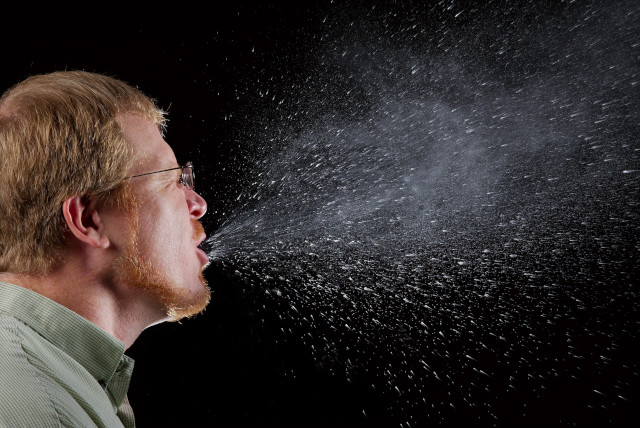
A Single Sneeze Can Travel 100 MPH

A forceful sneeze can propel up to 40,000 microscopic fluid droplets into the air at speeds up to 100 miles per hour, spreading viral particles across a distance of over 20 feet.

Space Travel Suppresses Cold Viruses… Until You Return

Astronauts rarely get colds while aboard the International Space Station because the environment is isolated from outside germs. However, the stress of re-entry and spaceflight can temporarily suppress the immune system, leaving astronauts particularly susceptible to colds upon landing back on Earth.

Echinacea and Vitamin C Won’t Stop a Cold in Its Tracks

Despite being multi-million-dollar industry staples, extensive scientific reviews show that taking Vitamin C or Echinacea after symptoms start does not significantly shorten or cure a cold. Regular Vitamin C intake before getting sick only slightly reduces symptom duration in high-stress athletes.

Posted on — Leave a comment

Worst Assumption Ever

Before testing the first atomic bomb, some of the scientists working on the Manhattan Project did their best to calculate what might happen. They estimated there was a three percent chance the bomb would set the entire world’s atmosphere on fire, instantly killing us all. They went ahead and tested the bomb.

Facts About the Manhattan Project

It Was Named After an Office in New York

The project was originally designated the “Development of Substitute Materials.” To maintain secrecy, it was renamed the Manhattan Engineer District (and later the Manhattan Project) because its initial headquarters were located at 270 Broadway in Manhattan, New York.

It Was Initiated by a Letter Signed by Albert Einstein

In August 1939, concerned that Nazi Germany might develop nuclear weapons, physicists Leo Szilard and Eugene Wigner drafted a letter to President Franklin D. Roosevelt warning him of the danger. They persuaded Albert Einstein to sign it, which directly led to the U.S. government establishing what would become the Manhattan Project.

It Was Larger and More Expensive Than Most Realize

At its peak, the project employed over 130,000 people and cost roughly $2 billion at the time (equivalent to over $30 billion today). It was one of the largest industrial and secret scientific endeavors in history.

It Spanned Dozens of Sites Across North America

While Los Alamos, New Mexico, hosted the secret laboratory responsible for bomb design, key research and production facilities spanned the continent:

Oak Ridge, Tennessee: Uranium enrichment plants.

Hanford, Washington: Plutonium production reactors.

Chalk River, Ontario: Canadian heavy water research support.

A Secret City Consumed 10% of the Nation’s Electricity

Oak Ridge, Tennessee—built entirely from scratch in secret—became the fifth largest city in the state during the war. Its massive uranium enrichment facilities consumed approximately 10% of all electrical power produced in the United States at the time.

The Silver from Fort Knox

Due to wartime copper shortages, the project borrowed over 14,000 tons of pure silver from the U.S. Treasury to make electrical wiring for electromagnets used in uranium separation. All of the silver was melted down, drawn into wire, used, and eventually returned to the Treasury after the war with virtually none lost.

Soviet Spies Infiltrated the Highest Levels

Despite extreme compartmentalization and security protocols, several scientists and technicians passed critical technical details to the Soviet Union. Key spies included Klaus Fuchs, Theodore Hall, and David Greenglass, which significantly accelerated the USSR’s own atomic bomb development after WWII.

“Calutron Girls” Operated High-Tech Equipment Without Knowing What It Did

Thousands of young women, mostly high school graduates, were hired at Oak Ridge to operate Calutrons (devices used to enrich uranium). They were trained purely to monitor dials and adjust switches, remaining completely unaware of the facility’s purpose until the bombs were dropped in 1945.

The First Bomb Was Named “Gadget”

The world’s first nuclear detonation—the Trinity Test on July 16, 1945, near Alamogordo, New Mexico—used a plutonium implosion device affectionately nicknamed “Gadget.” Scientists were so uncertain of the outcome that Fermi famously took bets on whether it would ignite the Earth’s atmosphere (though calculations proved this impossible).

The Scientists Wore Sunglasses for the First Atomic Blast

During the Trinity Test, observers were instructed to lie face down with their feet toward the blast and cover their eyes. Many scientists, including Richard Feynman, chose to watch through dark welding goggles or behind heavily tinted glass; Feynman famously sat inside a truck windshield, arguing the glass would block the UV radiation.

Speaking of scientists run amok, you might find this interesting: Yelling At Chickens.