Posted on — Leave a comment

Worst Adoption of Anesthesia

As late as 34 years after the public introduction of anesthesia, there were doctors who refused to use it. Some said that the shock of pain is a necessary ingredient to recovery. Others were afraid, because some preachers said that anesthesia was the work of the devil.

Following William T.G. Morton’s 1846 public demonstration of ether anesthesia, resistance persisted among certain surgeons and religious leaders:

The “Vital Stimulus” of Pain: Many 19th-century surgeons believed pain was a necessary physiological stimulant. Prominent figures, including French surgeon François Magendie and U.S. Civil War military doctors, argued that surgical pain triggered a beneficial shock reaction required to jumpstart the body’s natural healing and clotting mechanisms.

Religious Resistance: Clergy members—particularly opposition directed at obstetrician James Young Simpson’s use of chloroform in childbirth starting in 1847—argued that pain was a divine decree. They cited Genesis 3:16 (“In sorrow thou shalt bring forth children”) to claim that relieving labor pain interfered with God’s will or was the work of the devil.

The Timeline Context: While resistance was widespread immediately following 1846, mainstream medical adoption happened rapidly. By 1880 (34 years later), anesthesia was the standard of care in Western medicine, though a small minority of conservative traditionalists and religious objectors still refused its application.

The public acceptance of anesthesia shifted dramatically after 1853, when Queen Victoria accepted chloroform during the birth of Prince Leopold, effectively silencing religious opposition.

Posted on — Leave a comment

Worst Way to Demonstrate
Mastery Over Pain

Certain Hindu ascetics (sadhus) undertake an extreme vow called Urdhva Bahu (meaning “raised arm”).

The most famous contemporary figure is Amar Bharati, who raised his right arm in 1973 as a vow of religious devotion to the deity Shiva and a protest for world peace.

After holding an arm aloft for several years, severe muscle atrophy occurs, blood circulation drops, cartilage in the joints dries out, and bone structure calcifies. The limb eventually becomes permanently frozen in place, meaning the practitioner can no longer lower it even if they try.


Posted on — Leave a comment

Worst Laws in the United States

The following is excerpted from a book published in 1858:

THE FAMOUS CONNECTICUT BLUE LAWS. – These laws, enacted by the people of the “Dominion of New Haven,” became known as the blue laws because they were printed on blue paper. They were as follows: –

The governor and magistrates convened in general assembly are the supreme power, under God, of the independent dominion. From the determination of the assembly no appeal shall be made.

No one shall be a freeman or have a vote unless he is converted and a member of one of the churches allowed in the dominion.

Each freeman shall swear by the blessed God to bear true allegiance to this dominion and that Jesus is the only king.

No dissenter from the essential worship of this dominion shall be allowed to give a vote for electing of magistrates or any officer.

No food or lodging shall be offered to a heretic.

No one shall cross a river on the Sabbath but authorized clergymen.

No one shall travel, cook victuals, make beds, sweep houses, cut hair, or shave on the Sabbath Day.

No one shall kiss his or her children on the Sabbath or feasting days.

The Sabbath Day shall begin at sunset Saturday.

Whoever wears clothes trimmed with gold, silver, or bone lace above one shilling per yard shall be presented by the grand jurors and the selectmen shall tax the estate L300.

Whoever brings cards or dice into the dominion shall pay a fine of L5.

No one shall eat mince pies, dance, play cards, or play any instrument of music except the drum, trumpet, or jews harp.

No gospel minister shall join people in marriage. The magistrate may join them, as he may do it with less scandal to Christ’s church.

When parents refuse their children convenient marriages, the magistrate shall determine the point.

A man who strikes his wife shall be fined L10.

A woman who strikes her husband shall be punished as the law directs.

No man shall court a maid in person or by letter without obtaining the consent of her parents; L5 penalty for the first offense; L10 for the second, and for the third imprisonment during the pleasure of the court.

Posted on — Leave a comment

Worst Management of Illegitimate Daughters

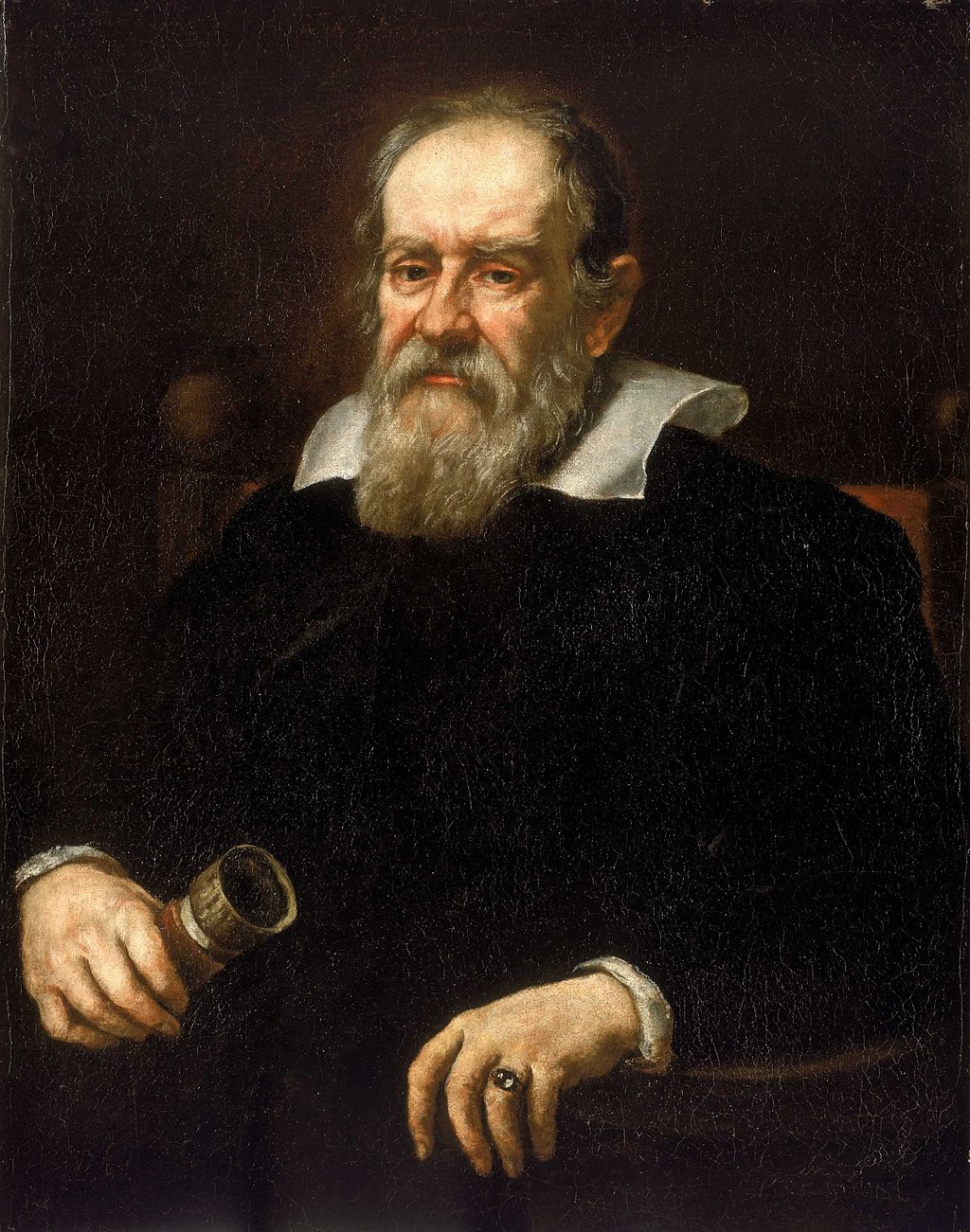
Galileo Galilei, the famous astronomer, had three children (Virginia, Livia, and Vincenzo) with his domestic partner Marina Gamba. Because they never married, the children were considered “illegitimate” under Roman Catholic law.

Due to their illegitimate status, marrying off his daughters with respectable dowries was exceedingly difficult in 17th-century Italian society. Consequently, Galileo arranged for both daughters to enter the San Matteo convent in Arcetri near Florence, where they became nuns (Sister Maria Celeste and Sister Arcangela).

More about Galileo

Galileo Was Also an Accomplished Musician

His father, Vincenzo Galilei, was a famous music theorist, composer, and lutenist who taught Galileo to play. Galileo’s younger brother, Michelagnolo Galilei, became a renowned professional lutenist and composer. (Interestingly, Galileo’s own son, Vincenzo, also played the lute!)

He Wanted to Become a Catholic Priest

As a young man, Galileo seriously considered joining the priesthood, but his father encouraged him to enroll in medical school at the University of Pisa instead. Galileo lost interest in medicine and shifted his focus to mathematics and natural philosophy.

1. He Didn’t Invent the Telescope, but He Transformed It

Dutch eyeglass makers invented the telescope in 1608. When Galileo heard of the device, he built his own without ever seeing the Dutch design, improving its magnification from 3x to 30x and turning it toward the night sky.

2. He Named Jupiter’s Moons as a Career Move

In 1610, Galileo discovered Jupiter’s four largest moons. Seeking financial patronage, he named them the “Medicean Stars” in honor of his former student, Cosimo II de’ Medici, who then hired him as official mathematician to the Medici family.

3. He Accidentally Observed Neptune 230 Years Early

While tracking Jupiter’s moons in late 1612 and early 1613, Galileo recorded a faint, dark dot next to the planet. Modern calculations show this was Neptune, though Galileo mistook it for a dim star.

4. The Famous Leaning Tower of Pisa Drop Probably Never Happened

The popular story of Galileo dropping cannonballs off the Leaning Tower of Pisa to test gravity is widely considered a legend written by his secretary decades later. Galileo actually proved his theory by rolling balls down inclined ramps.

5. He Was a University Dropout

Galileo’s father sent him to study medicine at the University of Pisa, but he became obsessed with mathematics instead. He dropped out in 1585 without a degree, yet his brilliance was so apparent that the university hired him four years later as Chair of Mathematics.

6. He Was a Master Inventor Beyond Astronomy

Beyond telescopes, Galileo invented a thermoscope (a precursor to the thermometer), a hydrostatic balance for measuring density, and a military proportional compass for calculating artillery trajectories.

7. He Tried to Measure the Speed of Light

Galileo suspected light was not instantaneous. He designed an experiment using covered lanterns on distant hilltops at night to measure light’s speed, though the speed of light was far too fast for human reaction times to detect.

8. His Middle Finger Is on Display in a Museum

Nearly a century after his death, admirers moving his body to a grand tomb removed several bones. Today, three of his fingers, a tooth, and a vertebra are preserved, with his middle finger on display at the Museo Galileo in Florence.

Posted on — Leave a comment

Worst Imposter

Ferdinand Waldo Demara, Jr., a high-school dropout, posed as a monk, a professor of psychology, a cancer researcher, a penal officer, a teacher, and a surgeon, all without the proper education or certification. As a surgeon he successfully performed amputations and even thoracic surgery.

Ferdinand was portrayed by Tony Curtis in the 1961 movie, “The Great Imposter.”

More about Ferdinand Demara, Jr.

Ferdinand Waldo Demara Jr., famously known as “The Great Impostor,” was one of history’s most prolific and successful con men. Armed with an extraordinary memory and supreme confidence, he took on dozens of high-level professions without credentials.

  1. He Performed Successful Surgeries at Sea with Zero Medical Training
    During the Korean War, Demara posed as Dr. Joseph Cyr, a trauma surgeon aboard the Royal Canadian Navy destroyer HMCS Cayuga. When wounded soldiers were brought aboard, Demara ducked into his cabin, speed-read a medical textbook on the required procedures, and performed multiple surgeries—including extracting a bullet lodged near a patient’s heart and amputating a foot. Every single one of his patients survived.
  2. His Heroic Fame Was His Own Undoing
    Demara’s flawless surgical work on the Cayuga was so impressive that it attracted news coverage. The real Dr. Joseph Cyr’s mother read a newspaper account of her son’s “heroic” actions aboard a navy vessel in Korea and knew something was wrong, as her actual son was practicing medicine in New Brunswick, exposing the fraud.
  3. He Served as the Dean of Philosophy at a College
    Posing as “Dr. Robert Linton French,” a religiously oriented psychologist, Demara landed a position at Gannon College in Erie, Pennsylvania. He wasn’t just a lecturer; he was made Dean of the School of Philosophy and taught courses in general, industrial, and abnormal psychology—even authoring a booklet titled How to Bring Up Your Child.
  4. He Possessed a Photographic Memory
    Demara lacked formal higher education, having run away from home as a teenager, but he possessed an extraordinarily high IQ and a photographic memory. This allowed him to absorb textbooks rapidly, memorize technical jargon, and pass himself off as an authority on nearly any subject overnight.
  5. He Faked His Own Suicide to Escape the Military
    After going AWOL from the U.S. Army during World War II, Demara joined the U.S. Navy under a stolen name. When he failed to get the naval assignment he wanted, he staged his own suicide by leaving his clothes and a suicide note on a beach before slipping away under another new identity.
  6. He Ran a Maximum-Security Prison Section
    Demara assumed the identity of Dr. Ben W. Jones and secured a position as an assistant warden at a maximum-security prison in Texas. He successfully instituted prison reform policies and gained the trust of inmates and guards alike before a prisoner recognized his face from a news article and turned him in.
  7. He Co-Founded a Catholic College
    Demara spent significant time trying to become a monk, joining various religious orders throughout his life. Under the alias Brother John Payne, he helped found LaMennais College (now Walsh University) in Alfred, Maine, where he served as a chancellor.
  8. He Was Played by Tony Curtis in a Hollywood Film
    His exploits inspired a best-selling 1959 biography, The Great Impostor by Robert Crichton, which was adapted into a 1961 feature film starring Tony Curtis. Demara was also cast in a small role as a hospital surgeon in the 1960 horror film The Hypnotic Eye, where ironically, observers noted he was terrible at scripted acting.
  9. He Claimed His Primary Motive Was “Pure Rascality”
    Unlike most con artists, Demara rarely stole money or sought great personal wealth. He was primarily motivated by prestige, the challenge of slipping into high-status roles, and the opportunity to do good. When asked about his motivation, he famously cited “Rascality, pure rascality”.
  10. He Ended His Life as a Legitimate Hospital Chaplain
    In his later years, after his fame made it impossible to adopt new fake personas, Demara went back to serving others legitimately under his real name. He became an ordained minister and worked as a hospital chaplain in Anaheim, California, until his death in 1982.


Perhaps more famous was Frank Abagnale Jr., the real person portrayed in the move “Catch Me If You Can,” Starring Leonardo DiCaprio


Posted on — Leave a comment

Worst Workload Heaped on a Wife

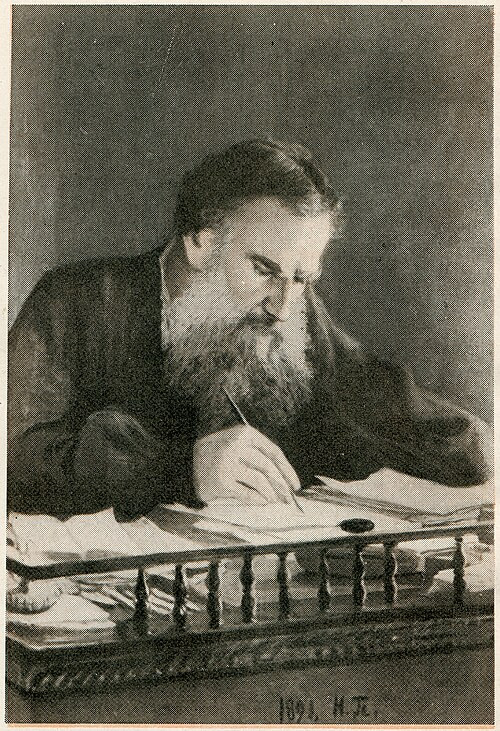
Leo Tolstoy wrote a large book called War and Peace before computers and copying machines. His wife had to copy his 3,000-page manuscript by hand seven times.

Before the advent of commercial typewriters or photocopiers, Sophia Tolstaya (Tolstoy’s wife) served as his primary scribe, editor, and transcriptionist.

Tolstoy had famously notorious, nearly illegible handwriting filled with shorthand, deletions, and additions written vertically in margins. Sophia was often the only person who could decipher it.

Tolstoy was an obsessive perfectionist who continuously edited and reworked drafts. Every time Sophia produced a clean copy by hand, Tolstoy would heavily revise, cross out, and rewrite entire sections on those new sheets—requiring her to start the process over again. She recorded in her diaries that she copied the complete draft of War and Peace by hand seven times over the course of seven years (roughly 21,000 pages of copying).

Was she rewarded for all that work?

Yes, but it’s complicated.

Leo Tolstoy was extraordinarily wealthy and financially successful, though his relationship with money was famously complicated.

His financial arc spans inherited wealth, financial disaster, massive commercial publishing success, and a total spiritual rejection of money.

Born Count Lev Nikolayevich Tolstoy, he inherited a 5,500-acre estate named Yasnaya Polyana along with hundreds of serfs. In his youth, however, he was a heavy gambler and blew through vast sums, even losing his family’s grand manor house to settle a debt.

His writing restored and vastly increased his wealth. Works like War and Peace and Anna Karenina were massive critical and financial blockbusters. He commanded huge sums from magazine publishers and used his earnings to buy back vast tracks of land, quadrupling the size of his holdings.

Later in life, Tolstoy experienced a deep spiritual crisis and adopted radical Christian anarchist and pacifist beliefs. He came to view private property and money as inherently immoral. He attempted to renounce his titles, give away his land to peasants, and place all his written works into the public domain.

His attempt to reject his wealth created decades of fierce conflict with his wife, Sophia. To prevent the family from falling into poverty, she convinced him to sign over the legal ownership of his estate and the copyright of his early works (including War and Peace) to her and their children before he renounced his remaining copyrights.

When he was nominated for the Nobel Prize in Literature in 1906, he privately urged the committee not to award it to him because he dreaded the burden of having to refuse or manage the $100,000 prize money.

Posted on — Leave a comment

Most Extreme Duplication

More than two and a half billion Bibles have been made. If you put them on a long bookshelf and started driving along the shelf at 65 mph (104 kph), you would have to drive 40 hours per week for four months to get to the end. All these Bibles would fill the New York public library 467 and one-half times.

A typical Bible contains 3,566,480 letters, or 810,697 words.

One of the first-ever printed books was the Bible, pressed by Johannes Gutenburg in Germany around the year 1450. Only 49 complete or nearly complete copies remain.

Pictured above: A Gutenberg Bible, one of the first-ever printed books.

Posted on — Leave a comment

Worst Superstitions

There are some old superstitions that were quite seriously heeded in their time. Among them: Never eat a dinner with 13 people seated at the table. Never cut off both ends of a loaf of bread – because the Devil will jump from the bread and ‘fly all over the house.’


Other old superstitions: Do not wear red and green at the same time.


People with red hair bring about unlucky circumstances.


Always pick up a comb from a table with its teeth facing away from your body.


Never watch a child sleep or you will be risking the death of that child.


If you are a male, and you wish to be irresistible to females, tie the udder of a hyena around your left arm. So says a custom from ancient Greece.

Posted on — Leave a comment

Worst Way to Treat a Scientist

According to his own retelling, when Thomas Edison was twelve years old, he had a job selling newspapers on a commuter train. He had set up a printing press on the train to make his own newspapers, and thereby increase his profits. He also set up a chemistry lab, to indulge his already well-developed scientific curiosity. One day, as the train went around a particularly tight turn, some of Edison’s phosphorus fell on the floor and started a small fire. As the train came into the station, and the conductor discovered the problem, Tom tried to run away. The conductor pulled him back up into the train by his ears. “I felt something snap inside my head,” Edison said. From that time until his death, he was hard of hearing.

Now, Here’s the Research:

This claim blends real elements of Thomas Edison’s early life with a famous myth that modern historians and medical experts widely dispute.
What Is Accurate

Newsboy on the Train: At age 12 (around 1859), Edison did work selling newspapers, candy, and snacks on the Grand Trunk Railroad between Port Huron and Detroit.

Printing Press and Chemistry Lab: He persuaded the railroad to let him use an empty baggage/box car, where he set up a small chemical laboratory and a printing press to produce his own newspaper, The Weekly Herald.

The Train Fire: While on the train, a jar of phosphorus fell, broke, and set the baggage car floor on fire. The conductor put out the fire, became enraged, and threw Edison, his laboratory, and his printing press off at the next stop.

The Quote: Edison recounted the “ears” story in later interviews, stating:

“A trainman reached over and grabbed me by the ears and lifted me… I felt something snap inside my head and the deafness started from that time…”

What Is Unclear / Factually False

Did the conductor pull him up by his ears because of the fire?
In Edison’s own retellings, he conflated two different anecdotes. In one version, the conductor boxed him on the ears as punishment for the baggage-car fire. In another version, a trainman grabbed him by the ears to pull him onto a moving train when he was running to catch it—not because he was running away from a fire.

Did this incident cause his hearing loss?
No. Medical historians and Edison biographers—such as Paul Israel, director of the Thomas A. Edison Papers at Rutgers University—agree that trauma from being pulled or boxed by the ears was unlikely to cause progressive, lifelong bilateral hearing loss.

Edison suffered a severe bout of scarlet fever in childhood, along with recurring, untreated mastoiditis and middle ear infections. Medical experts conclude that these infections—not a conductor pulling his ears—were the true medical cause of his severe hearing impairment. In fact, Edison admitted to close friends late in life that his theatrical train-conductor stories were tall tales he enjoyed telling reporters.

More About Thomas Edison

He tried to build a device to talk to the dead. Late in his life, Edison became fascinated by the occult and spiritualism. He admitted in interviews that he was working on a sensitive electronic device designed to detect and communicate with spirit entities if they existed, though no prototype was ever found.

He was almost completely deaf. Edison lost most of his hearing in childhood, likely due to a combination of scarlet fever and a bad bout of mastoiditis. Rather than seeing it as a handicap, he claimed it helped him concentrate on his work by tuning out the distracting sounds of the world.

His famous “lightbulb” wasn’t actually the first. Edison didn’t invent the incandescent light bulb from scratch; dozens of inventors had already created working versions. Edison’s actual breakthrough was developing a long-lasting, commercially viable bamboo carbon filament and an entire electrical distribution system to power it.

He proposed to his second wife using Morse code. After teaching his 20-year-old sweetheart, Mina Miller, how to tap out Morse code, the 39-year-old Edison tapped “Will you marry me?” into her hand while they were riding in a carriage. She tapped back, “Yes.”

He held a record 1,093 U.S. patents. Edison was an extraordinarily relentless inventor and businessman, securing over a thousand patents in his lifetime for everything from the phonograph and motion picture camera to concrete construction methods and battery technology.

His first patent was a commercial failure because politicians hated it. In 1869, Edison patented an electronic vote recorder for legislative bodies to speed up roll-call voting. Congress rejected it, explicitly telling him they preferred slow voting because it allowed time for filibustering and political maneuvering. Afterward, Edison vowed never to invent something unless there was a clear market demand for it.

He tattooed himself using an electric pen. Edison invented the pneumatic stencil pen in 1876 to duplicate documents. While testing it, he experimented by tattooing a series of small, uniform dots on his own forearm. Decades later, Samuel O’Reilly modified Edison’s stencil pen design to create the world’s first modern electric tattoo machine.

His final breath is preserved in a glass test tube. As Edison lay dying in 1931, his close friend and fellow industrialist Henry Ford allegedly asked Edison’s son Charles to trap a vial of air from Edison’s bedroom at the moment of his death. That sealed glass test tube is still on display today at the Henry Ford Museum in Dearborn, Michigan.

He conducted sleep-deprivation experiments using steel balls. Edison believed sleep was a waste of time and relied on micro-naps. To trigger rapid flashes of creativity, he would sit in a chair holding heavy steel balls over a metal pan. As he drifted off to sleep, his muscles would relax, dropping the balls into the pan with a loud clatter to wake him right at the edge of unconsciousness so he could write down his ideas.

He built a creepy talking doll that kids hated. In 1890, Edison created the “Edison’s Phonograph Doll,” which featured a tiny wax cylinder phonograph embedded in its chest that played a recording of a nursery rhyme. The mechanism was fragile, the sound was harsh and scratchy, and children found the dolls terrifying. It was pulled from the market after just six weeks.