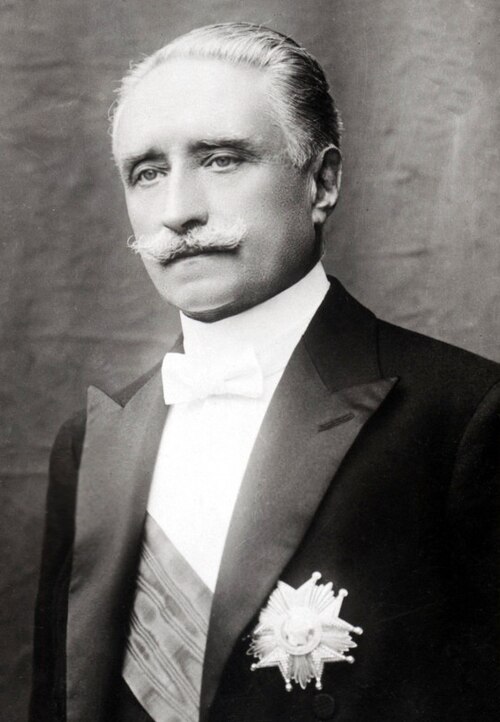
Paul Deschanel was a French politician, orator, and writer who served as the 10th President of the French Third Republic in 1920. While he enjoyed a long, distinguished political and literary career, he is best remembered for his brief, tragicomic presidency, which lasted just seven months before being cut short by a severe mental breakdown.
Rise to Power
- Distinguished Career: Prior to his presidency, Deschanel was an influential parliamentarian representing the Eure-et-Loir department for 35 years. He served twice as President of the Chamber of Deputies (the lower house of Parliament), notably holding the position throughout World War I, where he gained fame as a patriotic orator.
- Literary Achievement: An accomplished intellectual, he authored numerous books on literature and political science and was elected to the prestigious Académie française in 1899.
- Defeating “The Tiger”: In January 1920, Deschanel achieved his lifelong ambition of becoming president by defeating Georges Clemenceau—France’s legendary wartime Prime Minister—in a surprise election victory.
The Presidency & Mental Collapse
Shortly after taking office, Deschanel began suffering from severe anxiety, depression, and neurological deterioration, likely brought on by dementia or extreme overwork. His erratic behavior quickly became the talk of Paris:
- The Train Incident (May 24, 1920): While traveling overnight on the presidential train to Montbrison, an intoxicated or confused Deschanel fell out of his compartment window while trying to open it. The train was moving slowly, so he survived with only minor scrapes. Dressed only in his pajamas, he walked to a nearby railway track-watcher’s cottage, claiming to be the President of France. The worker’s wife famously brushed him off at first, thinking he was a drunk local.
- Strange Public Episodes: Reports began surfacing of other bizarre occurrences—such as signing state documents as “Napoleon” or “Charlemagne,” receiving dignitaries while wearing only his presidential sash, and wandering into a lake fully clothed at the Château de Rambouillet.
Resignation and Legacy
- Resignation: Realizing he was unfit to govern, Deschanel resigned on September 21, 1920, after just 216 days in office. He was succeeded by Prime Minister Alexandre Millerand.
- Recovery: After resting at a sanatorium, his mental health improved significantly. He was elected to the French Senate in early 1921, where he served until his death from pleurisy in April 1922.
- Historical Impact: Beyond the popular folklore surrounding his train fall, Deschanel was notable for his progressive stance on foreign affairs and his lifelong opposition to the death penalty; notably, no state executions took place during his time as head of state.