Posted on — Leave a comment

Worst Chemical Names

Some scientists have a sense of humor. You can see it when they name new molecules and compounds: Some of the chemical names they have come up with include:

Buckminster Fullerene

Megaphone

Vomitoxin

Rednose

Deadcat

Bastardane

Sonic Hedgehog

Cummingtonite

Moronic Acid

DAMN (Diaminomaleonitrile)

Curious Chloride

PU

Constipatic acid

Dead

Fucitol

Broken Windowpane

Piranha Solution

Nonanal

Periodic Acid

Diabolic Acid

Antipain

Dogcollarane

Crapinon

Arsole.

You can find more, and read the stories behind some of these names at www.chm.bris.ac.uk/sillymolecules/sillymols.htm.

Posted on — Leave a comment

Worst Aphrodisiac

An aphrodisiac is a substance such as a food, drink, drug, or potion that increases sexual desire, attraction, pleasure, or performance.

There was a time and place where plain old potatoes fetched over $1,000 per pound. Until the mid 16th century, Spaniards had never seen potatoes and for a while it was assumed that they had aphrodisiac qualities.

10 Interesting Facts About Aphrodisiacs

  1. The word comes from the Greek goddess of love
    The term “aphrodisiac” is derived from Aphrodite, the ancient Greek goddess of love, beauty, passion, and procreation.
  2. The “placebo effect” is their strongest feature
    Modern science shows that most historical and popular aphrodisiacs have little to no measurable physiological impact on human libido. Instead, their perceived effectiveness is heavily driven by the psychological placebo effect—believing something will work often makes it work.
  3. Sympathetic magic drove ancient choices
    Throughout history, many foods were labeled as aphrodisiacs simply because of their physical appearance. Known as the “Doctrine of Signatures,” ancient cultures believed that foods resembling human reproductive organs—such as figs, avocados, oysters, and rhinoceros horns—possessed magical properties to boost fertility and drive.
  4. Oysters earned their reputation through zinc and history
    Giacomo Casanova famously ate 50 oysters every morning for breakfast to maintain his stamina. While the claim may be embellished, oysters are exceptionally high in zinc, a mineral vital for testosterone production and sperm health.
  5. Chocolate contains mood-boosting chemical compounds
    Dark chocolate contains phenylethylamine (often called the “love chemical”), which releases endorphins and dopamine in the brain, as well as tryptophan, a precursor to serotonin. While the concentrations are too small to act as a direct physiological aphrodisiac, it undoubtedly elevates mood.
  6. “Mad Honey” was used as a risky physical stimulant
    In parts of Turkey and Nepal, bees collect nectar from specific rhododendron species, producing a rare honey containing grayanotoxins. In tiny doses, “mad honey” produces a mild euphoric sensation and vasodilation historically used to boost performance, though slightly higher doses cause severe toxicity, hallucinations, and cardiac issues.
  7. Spanish Fly is actually a toxic, dangerous beetle
    Historically famous as a potent aphrodisiac, “Spanish Fly” is crushed beetle tissue containing cantharidin. Rather than increasing genuine desire, cantharidin irritates the urinary tract and genital tissue, causing swelling and inflammation. It is highly toxic, causing severe kidney damage and potential death.
  8. Nutmeg was once a prized, hallucinogenic love potion
    In medieval Europe and traditional Ayurveda, nutmeg was considered a powerful aphrodisiac. In large doses, nutmeg contains myristicin, a compound that acts as a psychoactive substance, causing warmth, euphoria, and mild hallucinations—though, like Spanish Fly, large doses carry severe toxic side effects.
  9. Chili peppers trigger a physiological mimicry of arousal
    Capsaicin, the compound that makes chili peppers spicy, increases heart rate, stimulates nerve endings, causes sweating, and releases endorphins. These physiological reactions closely mirror the body’s natural response to sexual arousal.
  10. Modern medicine recognizes only a few true performance enhancers
    While true aphrodisiacs (substances that inherently generate sexual desire) remain largely elusive in pharmacology, modern medicine has successfully created erectile dysfunction treatments (like sildenafil/Viagra) which work on blood circulation, rather than altering mental libido directly.
Posted on — Leave a comment

Worst Reproduction Rate

A mouse can have eight babies. Assuming four of them are female, and knowing that a mouse can give birth 60 days after being born itself, after 18 months, a pair of mice can become 4.5 million.

10 More Facts About Mice

  1. Extraordinary jumpers and climbers:
    Despite their tiny size, mice can jump up to 18 inches (45 cm) into the air. They are also skilled climbers and capable swimmers.
  2. They sing ultrasonic love songs:
    Male mice sing complex, ultrasonic courtship songs to attract females. These sounds are at a pitch far too high for human ears to hear.
  3. Whiskers act like radar:
    Mice have poor eyesight and rely heavily on their whiskers (vibrissae) to feel surface textures, gauge distance, and navigate in total darkness.
  4. Constant tooth growth:
    A mouse’s incisors never stop growing. They grow at a rate of roughly 0.3 millimeters per day, forcing mice to constantly gnaw on materials like wood and wire to keep them worn down.
  5. Extreme flexibility:
    Mice can squeeze through tiny gaps as small as a pencil (about 1/4 inch or 6 millimeters in diameter) because their ribs are flexible and can collapse slightly.
  6. Hyperactive hearts:
    A mouse’s heart beats incredibly fast—ranging between 300 to 800 beats per minute, compared to a human’s average resting heart rate of 60 to 100 beats per minute.
  7. Resourceful tail use:
    A mouse uses its tail not just for balance while running along thin ropes or ledges, but also to help regulate its overall body temperature.
  8. Mice are clean freaks:
    Contrary to popular belief, mice are very tidy animals. They organize their nests into distinct areas for sleeping, storing food, and going to the bathroom.
  9. Expressive facial features:
    Research shows that mice use facial expressions to communicate emotions, including discomfort and pain, by flattening their ears, narrowing their eyes, and puffing their cheeks.
Posted on — Leave a comment

Worst Book

Perhaps the most uninteresting book ever written is the calculation of pi to two million places, in 800 pages. Just think of the TV special that could be made from this book.

Weird Facts About Pi

  • It Has Its Own Secret Language

    There is a dialect of constrained writing called “Pilish,” where the length of consecutive words corresponds to the digits of π. For example, “How I need a drink, alcoholic of course…” matches 3–1–4–1–5–9–2–6. Author Mike Keith wrote an entire 10,000-word novel titled Not A Wake written completely in Pilish.

  • NASA Only Uses 15 Digits for Space Travel

    Despite supercomputers calculating π to tens of trillions of digits, NASA only uses 15 decimal places (3.141592653589793) for interplanetary navigation. Using 15 digits gives them enough precision to calculate the circumference of a circle 78 billion miles wide (about 16 times the distance from the Earth to Pluto) with an error no larger than the width of a human index finger.

  • The Mirror Trick Spells Food

    If you write out the first three digits of π (3.14) on a piece of paper and hold it up to a mirror, the reflected image spells out the word “PIE”.

  • An Indiana Law Almost Changed Its Value

    In 1897, a physician named Edward J. Goodwin introduced Indiana House Bill No. 246, claiming he had discovered a way to “square the circle”. The mathematical implications of his complex method would have legally set the value of π to approximately 3.2. The bill actually passed the state House of Representatives before a university math professor intervened, causing the state Senate to postpone the bill indefinitely.

  • A Tombstone Showing Off Pi

    Dutch-German mathematician Ludolph van Ceulen devoted a huge portion of his life in the late 16th century calculating π to 35 decimal places. He was so proud of the accomplishment that he had the numbers engraved on his tombstone in Leiden, Netherlands. In Germany, π was historically referred to as the “Ludolphine number” in his honor.

  • It Makes Squaring the Circle Impossible

    Because π is a transcendental number (it is not the root of any non-zero polynomial equation with rational coefficients), it was proven in 1882 that “squaring the circle”—constructing a square with the exact same area as a given circle using only a straightedge and compass—is mathematically impossible.

  • Albert Einstein and Stephen Hawking Share Pi Day

    Pi Day is celebrated on March 14 (3/14). Albert Einstein was born on Pi Day in 1879. Coincidentally, famed theoretical physicist Stephen Hawking died on Pi Day in 2018.

  • It Shows Up in Wave Mechanics and Probability

    Although most people first learn about π in geometry, it appears in areas of math that have no obvious circles. For instance, in Buffon’s Needle Problem, if you drop a needle onto a floor lined with parallel strips of wood, the probability that the needle will cross one of the lines is directly related to π. It also shows up constantly in quantum mechanics, wave frequencies, and signal processing.

  • The Human Memorization Record Exceeds 70,000 Digits

    The official Guinness World Record for memorizing and reciting digits of π belongs to Rajveer Meena of India, who recited 70,000 decimal places from memory on March 21, 2015. The feat took him roughly 10 hours while blindfolded.

  • A Single Mistake Ruined 20 Years of Hand Calculations

    In 1873, English mathematician William Shanks announced he had calculated π to 707 decimal places entirely by hand. It stood as the record for over 70 years until 1944, when another mathematician discovered that Shanks had made an error on the 527th digit. Because the calculation relied on earlier values, every digit he calculated after the 526th was completely wrong!

Posted on — Leave a comment

Worst Motherly Advice

Sir Isaac Newton’s mother didn’t think education was necessary for farming, the business she wanted him to take up, so he had to quit school.

When Isaac Newton was around 15 or 16 years old, his mother, Hannah Ayscough, pulled him out of The King’s School in Grantham to manage the family’s farm and estate at Woolsthorpe Manor. She intended for him to take over the family business, as his late father had been a farmer.

However, Newton was a disaster as a farmer:

He preferred reading, tinkering with mechanical models, and solving math problems over managing livestock.

He often neglected his chores—letting sheep stray into crops and cows trample fields while he lost himself in books.

Realizing his complete lack of interest and aptitude for agriculture, his uncle and the headmaster of his school persuaded his mother to allow him to return to school. He completed his secondary education and went on to study at Trinity College, Cambridge.

How financially successful was Isaac Newton?

Sir Isaac Newton was extremely successful financially and died a remarkably wealthy man, though his path to riches had one infamous detour.

His wealth came from three main areas:
1. High-Paying Government and Academic Positions

While Newton earned a comfortable income as a professor at Cambridge and Lucasian Chair of Mathematics, his real wealth began in 1696 when he moved to London to become Warden (and later Master) of the Royal Mint.

As Master of the Mint, his job was to oversee the currency, redesign coins, and hunt down counterfeiters.

He received a substantial base salary plus a commission on every coin minted. His annual income regularly exceeded £2,000 to £3,000—an enormous sum at the time, equivalent to a modern high-executive salary of millions of dollars.

2. The South Sea Bubble Misadventure

Despite his brilliant mind, Newton fell victim to one of history’s most famous financial manias: the South Sea Bubble of 1720.

Early on, Newton invested in the South Sea Company and smartly sold his shares at a 100% profit, netting around £7,000.

However, as he watched his peers continue to get rich while stock prices kept climbing, he succumbed to the fear of missing out and bought back in at the market’s peak.

When the bubble burst, Newton lost an estimated £20,000 (roughly $3 million to $4 million in today’s terms).

The disaster allegedly prompted him to remark: “I can calculate the motion of heavenly bodies, but not the madness of people.”

3. Net Worth at Death

Despite that massive investment loss, Newton was far from ruined. Because of his vast salary from the Mint and other prudent investments (such as long-term government bonds and shares in the East India Company), he easily rebuilt his fortune.

When Newton died in 1727 at age 84, his personal estate was valued at approximately £32,000 (equivalent to roughly $5 million to $8 million today). Since he never married and had no children, his estate was divided among his surviving nieces and nephews, leaving them all quite wealthy.

Posted on — Leave a comment

Worst Sex To Be

Men are twice as likely to die from accidents as women.

Across biology, health, education, and social dynamics, female physiology and social structures provide distinct advantages supported by scientific, statistical, and biological research:

1. Superior Life Expectancy and Longevity

Across nearly every culture and historical era, women outlive men by an average of 4 to 5 years. This longevity advantage exists even in extreme conditions such as severe famines and epidemics.

2. Stronger Immune Systems

Estrogen enhances immune responses, enabling women’s bodies to fight off viral and bacterial infections more aggressively. Additionally, having two X chromosomes provides a biological safeguard, as immune-related genes are concentrated on the X chromosome.

3. Protection Against Sex-Linked Genetic Disorders

Because women have two X chromosomes ($XX$), a mutated gene on one X chromosome can usually be offset by a healthy gene on the second. Men ($XY$) lack this redundancy, making them significantly more vulnerable to X-linked genetic disorders like hemophilia, color blindness, and Duchenne muscular dystrophy.

4. Greater Resistance to Muscle Fatigue in Ultra-Endurance

While men tend to excel in short-burst power and speed, women’s muscle fibers (which have a higher proportion of Type I slow-twitch fibers) demonstrate greater resistance to fatigue during prolonged exertion. In extreme ultra-marathons and open-water swims, the performance gap between men and women narrows substantially, with female athletes often out-pacing men over extreme distances.

5. Efficient Fat Metabolism and Energy Conservation

Women metabolize fat more efficiently than carbohydrates during sustained aerobic activity, preserving muscle glycogen. Historically and biologically, a higher average percentage of essential body fat provides a superior energy reserve during periods of starvation or resource scarcity.

6. Lower Risk of Cardiovascular Disease Early in Life

Estrogen helps keep blood vessels flexible and regulates healthy cholesterol levels (HDL vs. LDL), providing natural cardiovascular protection. As a result, women typically develop coronary heart disease about 10 years later in life than men do.

7. Higher Rates of Higher Education Attainment

In modern education statistics, women consistently outpace men in post-secondary educational attainment. Women earn the majority of bachelor’s, master’s, and doctoral degrees in many developed nations and maintain higher overall high school graduation rates.

8. Superior Fine Color Perception and Verbal Memory

Genetic variations on the X chromosome give women a higher capacity for distinguishing subtle variations within the color spectrum (particularly in the red-orange range). Studies also consistently show that women maintain a lifelong advantage in verbal memory—the ability to retain and recall word lists and verbal information.

9. Stronger Social Support Networks and Coping Strategies

Societal norms allow women greater emotional expression and openness, which translates into broader, more resilient social support networks. This “tend-and-befriend” stress response—mediated partly by oxytocin—helps mitigate chronic stress and contributes to better long-term mental health resilience.

10. Lower Rates of Accidental Death and Violent Crime

Men are biologically and socially prone to higher risk-taking behaviors, resulting in significantly higher rates of accidental deaths, violent crime involvement, and incarceration. Women statistically engage in less lethal risk-taking, contributing directly to higher survival rates across all age brackets.

11. Greater Joint Flexibility and Range of Motion

Hormones like relaxin and estrogen, combined with structural differences in skeletal geometry (such as a wider pelvic structure), grant women greater overall joint flexibility and range of motion, which reduces certain types of rigid impact injuries.

12. Protection Against “Loss of Y” Chromosome Degradation

As men age, their cells can suffer from a condition known as “mosaic loss of Y chromosome” (LOY) in white blood cells, which is linked to an increased risk of cardiac fibrosis, heart failure, and various cancers. Lacking a Y chromosome entirely, women are completely immune to this age-related genetic degeneration.

Posted on — Leave a comment

Worst Things to Eat

In 1985, a valve in a dairy leaked a little bit of raw milk into a large tank of pasteurized milk. Two hundred thousand people got food poisoning.

Fifty percent of all turkeys and 37 percent of all chickens that you can buy in grocery stores are contaminated with Campylobacter (food poisoning) according to the US Food and Drug Administration.

Last year 81 million Americans got sick from food poisoning and 9,000 of them died. The average American will get food poisoning 100 times in a lifetime. The symptoms are headache, sick feeling, diarrhea. Most people think this is the flu. To prevent food poisoning, clean all kitchen items with heat, never leave food at room temperature for more than a few minutes, and never handle prepared food after handling raw meat or poultry.

Posted on — Leave a comment

Worst Way to Treat a Scientist

According to his own retelling, when Thomas Edison was twelve years old, he had a job selling newspapers on a commuter train. He had set up a printing press on the train to make his own newspapers, and thereby increase his profits. He also set up a chemistry lab, to indulge his already well-developed scientific curiosity. One day, as the train went around a particularly tight turn, some of Edison’s phosphorus fell on the floor and started a small fire. As the train came into the station, and the conductor discovered the problem, Tom tried to run away. The conductor pulled him back up into the train by his ears. “I felt something snap inside my head,” Edison said. From that time until his death, he was hard of hearing.

Now, Here’s the Research:

This claim blends real elements of Thomas Edison’s early life with a famous myth that modern historians and medical experts widely dispute.
What Is Accurate

Newsboy on the Train: At age 12 (around 1859), Edison did work selling newspapers, candy, and snacks on the Grand Trunk Railroad between Port Huron and Detroit.

Printing Press and Chemistry Lab: He persuaded the railroad to let him use an empty baggage/box car, where he set up a small chemical laboratory and a printing press to produce his own newspaper, The Weekly Herald.

The Train Fire: While on the train, a jar of phosphorus fell, broke, and set the baggage car floor on fire. The conductor put out the fire, became enraged, and threw Edison, his laboratory, and his printing press off at the next stop.

The Quote: Edison recounted the “ears” story in later interviews, stating:

“A trainman reached over and grabbed me by the ears and lifted me… I felt something snap inside my head and the deafness started from that time…”

What Is Unclear / Factually False

Did the conductor pull him up by his ears because of the fire?
In Edison’s own retellings, he conflated two different anecdotes. In one version, the conductor boxed him on the ears as punishment for the baggage-car fire. In another version, a trainman grabbed him by the ears to pull him onto a moving train when he was running to catch it—not because he was running away from a fire.

Did this incident cause his hearing loss?
No. Medical historians and Edison biographers—such as Paul Israel, director of the Thomas A. Edison Papers at Rutgers University—agree that trauma from being pulled or boxed by the ears was unlikely to cause progressive, lifelong bilateral hearing loss.

Edison suffered a severe bout of scarlet fever in childhood, along with recurring, untreated mastoiditis and middle ear infections. Medical experts conclude that these infections—not a conductor pulling his ears—were the true medical cause of his severe hearing impairment. In fact, Edison admitted to close friends late in life that his theatrical train-conductor stories were tall tales he enjoyed telling reporters.

More About Thomas Edison

He tried to build a device to talk to the dead. Late in his life, Edison became fascinated by the occult and spiritualism. He admitted in interviews that he was working on a sensitive electronic device designed to detect and communicate with spirit entities if they existed, though no prototype was ever found.

He was almost completely deaf. Edison lost most of his hearing in childhood, likely due to a combination of scarlet fever and a bad bout of mastoiditis. Rather than seeing it as a handicap, he claimed it helped him concentrate on his work by tuning out the distracting sounds of the world.

His famous “lightbulb” wasn’t actually the first. Edison didn’t invent the incandescent light bulb from scratch; dozens of inventors had already created working versions. Edison’s actual breakthrough was developing a long-lasting, commercially viable bamboo carbon filament and an entire electrical distribution system to power it.

He proposed to his second wife using Morse code. After teaching his 20-year-old sweetheart, Mina Miller, how to tap out Morse code, the 39-year-old Edison tapped “Will you marry me?” into her hand while they were riding in a carriage. She tapped back, “Yes.”

He held a record 1,093 U.S. patents. Edison was an extraordinarily relentless inventor and businessman, securing over a thousand patents in his lifetime for everything from the phonograph and motion picture camera to concrete construction methods and battery technology.

His first patent was a commercial failure because politicians hated it. In 1869, Edison patented an electronic vote recorder for legislative bodies to speed up roll-call voting. Congress rejected it, explicitly telling him they preferred slow voting because it allowed time for filibustering and political maneuvering. Afterward, Edison vowed never to invent something unless there was a clear market demand for it.

He tattooed himself using an electric pen. Edison invented the pneumatic stencil pen in 1876 to duplicate documents. While testing it, he experimented by tattooing a series of small, uniform dots on his own forearm. Decades later, Samuel O’Reilly modified Edison’s stencil pen design to create the world’s first modern electric tattoo machine.

His final breath is preserved in a glass test tube. As Edison lay dying in 1931, his close friend and fellow industrialist Henry Ford allegedly asked Edison’s son Charles to trap a vial of air from Edison’s bedroom at the moment of his death. That sealed glass test tube is still on display today at the Henry Ford Museum in Dearborn, Michigan.

He conducted sleep-deprivation experiments using steel balls. Edison believed sleep was a waste of time and relied on micro-naps. To trigger rapid flashes of creativity, he would sit in a chair holding heavy steel balls over a metal pan. As he drifted off to sleep, his muscles would relax, dropping the balls into the pan with a loud clatter to wake him right at the edge of unconsciousness so he could write down his ideas.

He built a creepy talking doll that kids hated. In 1890, Edison created the “Edison’s Phonograph Doll,” which featured a tiny wax cylinder phonograph embedded in its chest that played a recording of a nursery rhyme. The mechanism was fragile, the sound was harsh and scratchy, and children found the dolls terrifying. It was pulled from the market after just six weeks.


Posted on — Leave a comment

Worst Rainstorm

One day in August 1892, in Panderborn, Germany, it started to rain. This rainstorm was unusual because somehow there were thousands of snails caught up in the clouds and they all came crashing down with their shells breaking to bits as they hit the ground. This weird event was formally recorded and analyzed by meteorologists at the time.

While it sounds like something straight out of a folklore tale, there are multiple documented historical accounts of “snail showers”.

A couple other notable historical occurrences include:

Redruth, Cornwall, England (1886): A violent thunderstorm darkened the sky over the town and showered thousands of live snails over the countryside.

Chester, Pennsylvania, USA (1870): A storm dropped so many snails over the city that local accounts described it as a dense “storm within a storm”.

How Does It Actually Happen?

It isn’t a biblical miracle, but rather a rare meteorological phenomenon known as “animal rain”.

Waterspouts and Tornadoes: When a strong storm or tornado passes over a shallow body of water, land, or marshy area, the powerful updraft inside the vortex acts like a giant vacuum cleaner.

Suction & Elevation: Small, lightweight creatures like snails, frogs, or small fish are sucked off the ground or out of the water and carried high into the atmosphere.

The Drop: As the storm system loses energy or moves over a new location, the wind speed drops, and the heavy updraft can no longer support the weight. The objects are dropped all at once, resulting in a localized “rain” of creatures. Because snails are relatively uniform in weight, the updrafts often sort and deposit them all in the same concentrated spot, making it look like a rain cloud specifically targeted gastropods.

Posted on — Leave a comment

Worst Way to Become Extinct

Some dinosaurs had two brains. Since nerve signals move from one part of the body to another relatively slowly – it takes 1/50 of second to notice a pain in your foot – and since these beasts were so large, they had a second brain at the base of the tail to maintain control of the creature’s back legs and tail. Interestingly, the rear brain was bigger than the front brain.


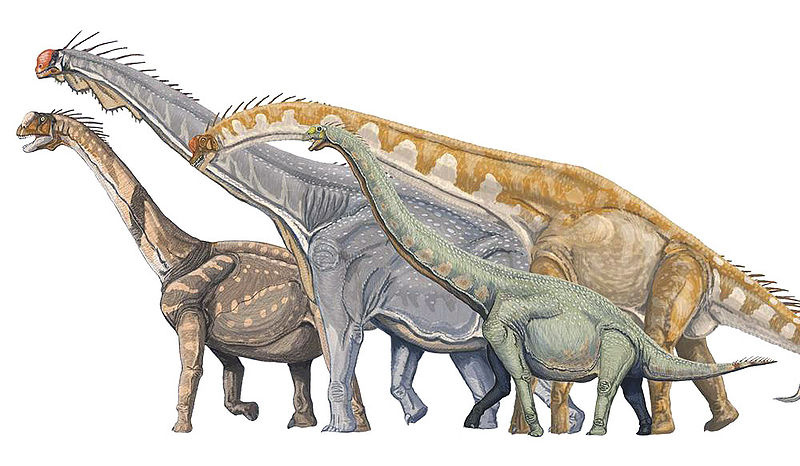
The Largest dinosaur, Brachiosaurus, weighed as much as 800 people, was taller than a four-story hotel, and was as long as two of the longest school buses.


Who says all dinosaurs have died? There is a species of lizard called Komodo Monitor, also known as Komodo Dragon, that can grow to over ten feet long and weigh 365 pounds. Komodo Monitors can eat a pig whole.


Most scientists are now saying that dinosaurs were very unlike lizards. Their legs were usually directly under their bodies, not sticking out from their sides as they are in lizards. Their bone structure was more like that of warm-blooded mammals. Tracks have been found made by of groups of dinosaurs moving together in herds with a spacing and depth of impression indicating sustained high speed, again more a mammalian trait than reptilian.


One theory regarding the extinction of dinosaurs which is gaining some acceptance is that because they were warm-blooded creatures with a high metabolism, they were more susceptible to viruses or bacterial infections than their cold-blooded predecessors. According to one scientist, they might have all died of diarrhea.