Posted on — Leave a comment

Worst Motherly Advice

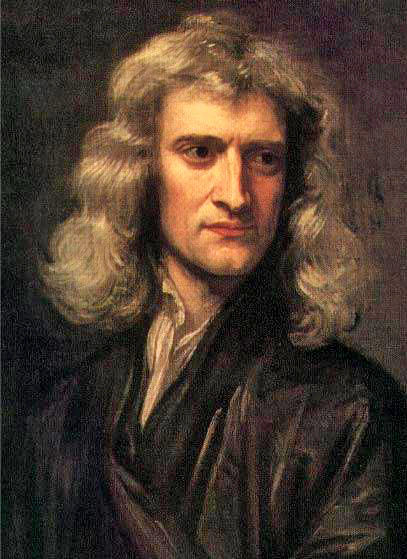
Sir Isaac Newton’s mother didn’t think education was necessary for farming, the business she wanted him to take up, so he had to quit school.

When Isaac Newton was around 15 or 16 years old, his mother, Hannah Ayscough, pulled him out of The King’s School in Grantham to manage the family’s farm and estate at Woolsthorpe Manor. She intended for him to take over the family business, as his late father had been a farmer.

However, Newton was a disaster as a farmer:

He preferred reading, tinkering with mechanical models, and solving math problems over managing livestock.

He often neglected his chores—letting sheep stray into crops and cows trample fields while he lost himself in books.

Realizing his complete lack of interest and aptitude for agriculture, his uncle and the headmaster of his school persuaded his mother to allow him to return to school. He completed his secondary education and went on to study at Trinity College, Cambridge.

How financially successful was Isaac Newton?

Sir Isaac Newton was extremely successful financially and died a remarkably wealthy man, though his path to riches had one infamous detour.

His wealth came from three main areas:
1. High-Paying Government and Academic Positions

While Newton earned a comfortable income as a professor at Cambridge and Lucasian Chair of Mathematics, his real wealth began in 1696 when he moved to London to become Warden (and later Master) of the Royal Mint.

As Master of the Mint, his job was to oversee the currency, redesign coins, and hunt down counterfeiters.

He received a substantial base salary plus a commission on every coin minted. His annual income regularly exceeded £2,000 to £3,000—an enormous sum at the time, equivalent to a modern high-executive salary of millions of dollars.

2. The South Sea Bubble Misadventure

Despite his brilliant mind, Newton fell victim to one of history’s most famous financial manias: the South Sea Bubble of 1720.

Early on, Newton invested in the South Sea Company and smartly sold his shares at a 100% profit, netting around £7,000.

However, as he watched his peers continue to get rich while stock prices kept climbing, he succumbed to the fear of missing out and bought back in at the market’s peak.

When the bubble burst, Newton lost an estimated £20,000 (roughly $3 million to $4 million in today’s terms).

The disaster allegedly prompted him to remark: “I can calculate the motion of heavenly bodies, but not the madness of people.”

3. Net Worth at Death

Despite that massive investment loss, Newton was far from ruined. Because of his vast salary from the Mint and other prudent investments (such as long-term government bonds and shares in the East India Company), he easily rebuilt his fortune.

When Newton died in 1727 at age 84, his personal estate was valued at approximately £32,000 (equivalent to roughly $5 million to $8 million today). Since he never married and had no children, his estate was divided among his surviving nieces and nephews, leaving them all quite wealthy.

Posted on — Leave a comment

Worst Failing in Business

One out of every four women fail in business. Four of every five men fail in business.

Here are 10 weird, counterintuitive, and unexpected facts about the history and mechanics of business:

Nintendo was founded as a playing card company in 1889. Long before video games, Nintendo produced hand-crafted Hanafuda cards in Kyoto. Over the next century, the company experimented with several unusual business ventures—including a taxi company, a short-stay hotel chain, a instant rice company, and vacuum cleaners—before finding massive success in electronic toys and video games.

The “100-Year-Old Company” capital of the world is Japan. Japan is home to over 33,000 shinise—businesses that have been operating continuously for more than 100 years. This includes Kongo Gumi, a construction firm founded in 578 AD that built Buddhist temples for over 1,400 years before becoming a subsidiary in 2006.

FedEx was saved from bankruptcy by a lucky night in Las Vegas. In 1973, Federal Express was down to its last $5,000 and facing complete collapse because it couldn’t afford jet fuel. Founder Frederick Smith took the remaining cash to Las Vegas, played blackjack, and turned it into $27,000. That covered fuel for another week, giving him just enough time to raise $11 million in equity funding.

Wrigley started as a soap business. William Wrigley Jr. originally moved to Chicago in 1891 to sell soap. To incentivize merchants, he offered free baking powder with every soap order. When the baking powder proved more popular than the soap, he switched to selling baking powder and offered free chewing gum with every can. Once again, the freebie outperformed the product, leading him to launch Wrigley’s Spearmint.

Lamborghini exists purely out of spite. Ferruccio Lamborghini was a wealthy tractor manufacturer who owned a Ferrari. Frustrated by constant clutch troubles, he brought feedback directly to Enzo Ferrari. Ferrari dismissed him, saying, “The problem is not with the car, but with the driver,” and told him to stick to tractors. Insulted, Lamborghini vowed to build a better sports car and launched his own automaking company in 1963.

The inventor of the friction match refused to patent it. English chemist John Walker invented the friction match in 1826 by accident while scraping a mixing stick coated with chemicals across his hearth. Believing the invention was too beneficial to humanity to monopolize, he refused to patent it. As a result, others patented similar designs (like “Lucifers”), missing out on millions in royalties while democratizing fire-starting worldwide.

McDonald’s is primarily a real estate enterprise, not a restaurant operator. While famous for burgers, McDonald’s corporate income relies heavily on real estate holdings. McDonald’s Corporation buys the land and buildings for its locations, then leases them back to franchisees—often charging a markup on rent alongside sales royalties. Former CFO Harry J. Sonneborn famously noted, “We are technically not in the food business. We are in the real estate business.”

Puma and Adidas were founded by feuding brothers. Adolf and Rudolf Dassler ran a successful shoe company together in Germany in the 1920s and 1930s. A bitter personal and political rift during World War II split the brothers permanently. In 1948, Adolf founded Adidas (from “Adi” “Dassler”), and Rudolf founded Puma. The rivalry divided their home town of Herzogenaurach for decades, down to which local businesses citizens visited depending on their footwear.

The most expensive mistake in publishing history was a typo in a phone book. In 1988, Yellow Pages printed an advertisement for a luxury travel agency named Exotic Travels, but accidentally mistyped the name as “Erotic Travels.” The error ruined the agency’s professional reputation and overwhelmed their phones with inappropriate inquiries. Yellow Pages ended up paying a court settlement of over $18 million.

Bubble wrap was originally invented to be textured 3D wallpaper. In 1957, engineers Alfred Fielding and Marc Chavannes sealed two shower curtains together, trapping air bubbles inside, in an attempt to create a trendy textured wall covering. When that failed, they tried marketing it as greenhouse insulation. It wasn’t until 1960 that Sealed Air Corporation realized its true potential as protective packaging, famously pitching it to IBM to ship their new computers.

Posted on — Leave a comment

Worst Lost Airplane Mistake

A B-25 bomber crashed into the 79th floor of the Empire State Building in 1945.

On a foggy Saturday morning in July 1945, a U.S. Army Air Forces B-25 Mitchell bomber lost visibility and crashed directly into the north side of the building between the 78th and 80th floors. Despite structural damage and fires that killed 14 people, the building’s steel frame remained intact, and parts of the building reopened for business two days later.

It holds a Guinness World Record for an elevator survival story. During the 1945 plane crash, elevator operator Betty Lou Oliver survived a catastrophic 75-story drop inside an elevator car after the plane’s engine severed the cables. Cables coiled at the bottom of the shaft and air trapped beneath the car cushioned the fall, making it the highest survived elevator fall in history.

The top of the Empire State Building flexes back and forth a few feet (a meter) in heavy winds.

It was built in just 13 months and completed ahead of schedule. Construction moved at a breakneck pace, progressing at an average rate of four and a half stories per week. Between March 1930 and April 1931, roughly 3,400 workers completed the 102-story structure in just 410 days—finishing under budget and well ahead of schedule.

The original spire was designed as a docking station for dirigibles. The top 200 feet of the building were originally constructed to serve as a mooring mast for commercial airships (Zeppelins). The idea was for airships to tie up to the spire, allowing passengers to disembark via an open-air gangplank on the 102nd floor, but high winds and safety hazards forced the idea to be abandoned after only a couple of brief tests.

It was involved in a fierce “Race to the Sky.” During the late 1920s, developers in Manhattan competed aggressively for the title of the world’s tallest building. The Empire State Building’s designers modified their plans mid-construction—specifically adding the mooring mast—to surpass both 40 Wall Street and the Chrysler Building, securing the crown of world’s tallest building for 41 years until 1972.

It generates more revenue from its observatories than from office rents. While hundreds of businesses lease office space across its lower floors, the 86th and 102nd-floor observation decks consistently bring in more money than commercial real estate leases, generating over $100 million annually from millions of global tourists.

It serves as its own zip code. Due to its massive scale, thousands of daily workers, and high volume of mail, the United States Postal Service assigned the Empire State Building its own unique zip code: 10118.

Its famous tower lights require a dedicated team and change color daily. The building introduced light displays in 1932 to announce Franklin D. Roosevelt’s presidential victory. Today, a state-of-the-art computer-controlled LED system displays over 16 million colors to recognize holidays, sports teams, global organizations, and cultural events.

It is an iconic lightning rod, struck around 25 times per year. Standing tall over Midtown Manhattan, the building’s top spire acts as a massive lightning rod for the city. It features a heavy grounding system that channels millions of volts safely into the earth, preventing structural damage and keeping visitors inside completely safe during storms.

Athletes race up its 1,576 steps in an annual footrace. Every year since 1978, the building hosts the Empire State Building Run-Up. Runners from around the world sprint up the 86 flights of stairs from the ground lobby to the main observatory, with top competitors finishing the vertical climb in under ten minutes.

Posted on — Leave a comment

Worst Small Business Decision

What the Ski Mechanic Did Wrong

Consider one rule which is the most often violated by the people who fail: You must bring in more money than you spend!

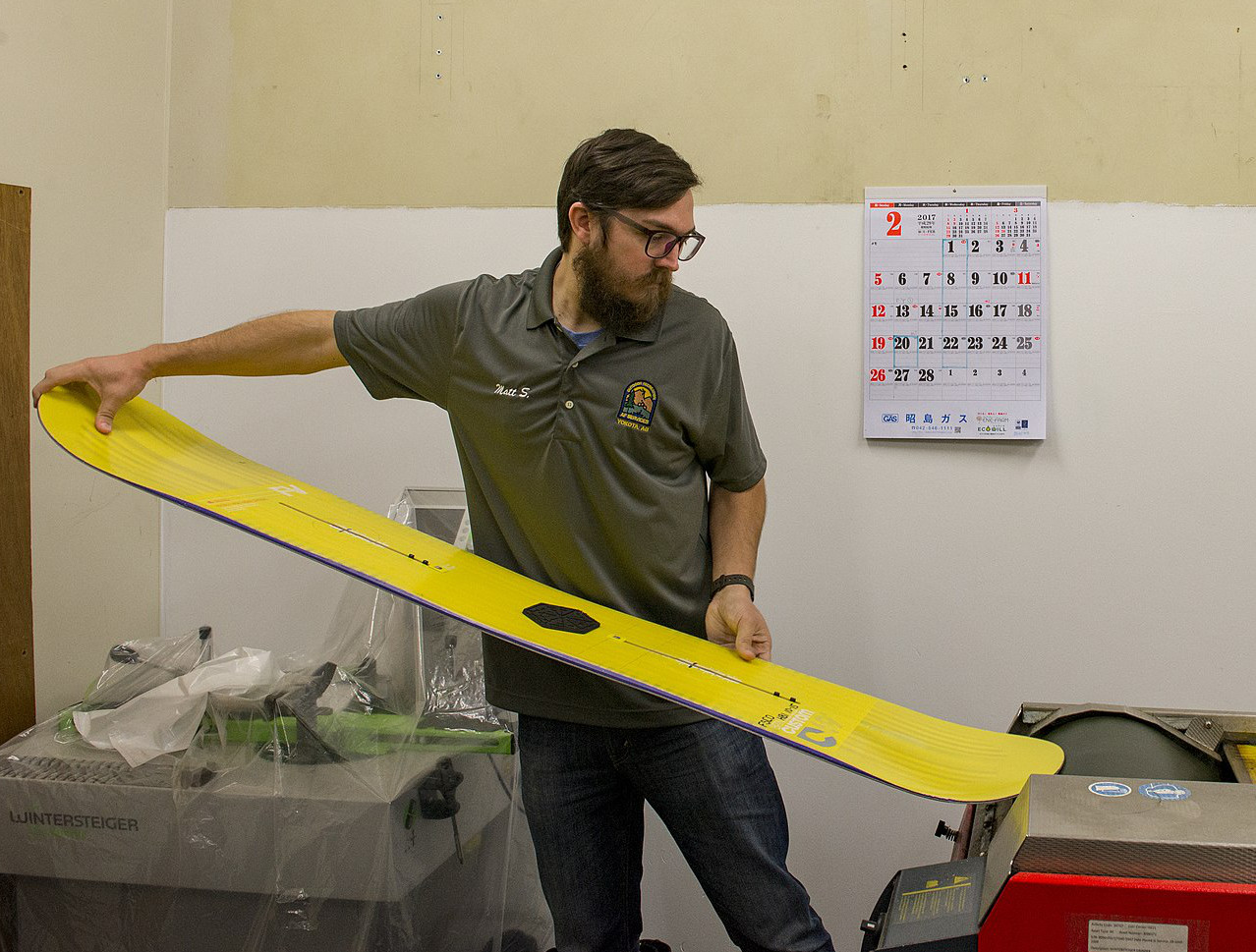
I knew a guy who was an expert ski mechanic. He bought some waxes, some plastic, an iron, some files, all the things he would need. He rented bench space in a store and put up a sign in the store window. Sure enough, skis started coming in. At the end of the first day, he earned $160. Did he spend it on advertising? Or maybe on more materials, or tools to expand his available services? No, he bought himself a pair of fancy cowboy boots and went to a party. His business lasted about a week. When it was time to pay the second week’s bench rent, he didn’t have it! Now that’s just plain bad business! You laugh, but it’s a true story, and variations of it are surprisingly common.

You might enjoy knowing the crazy story of the shop where this happened. It was a bike shop in an eastern city, looking for some kind of business that would bring in people during the winter. The amazing and unexpected true story of that bike shop is here: 5 Years In The Bike Shop.

Posted on — Leave a comment

Worst Reaction to a Catalog

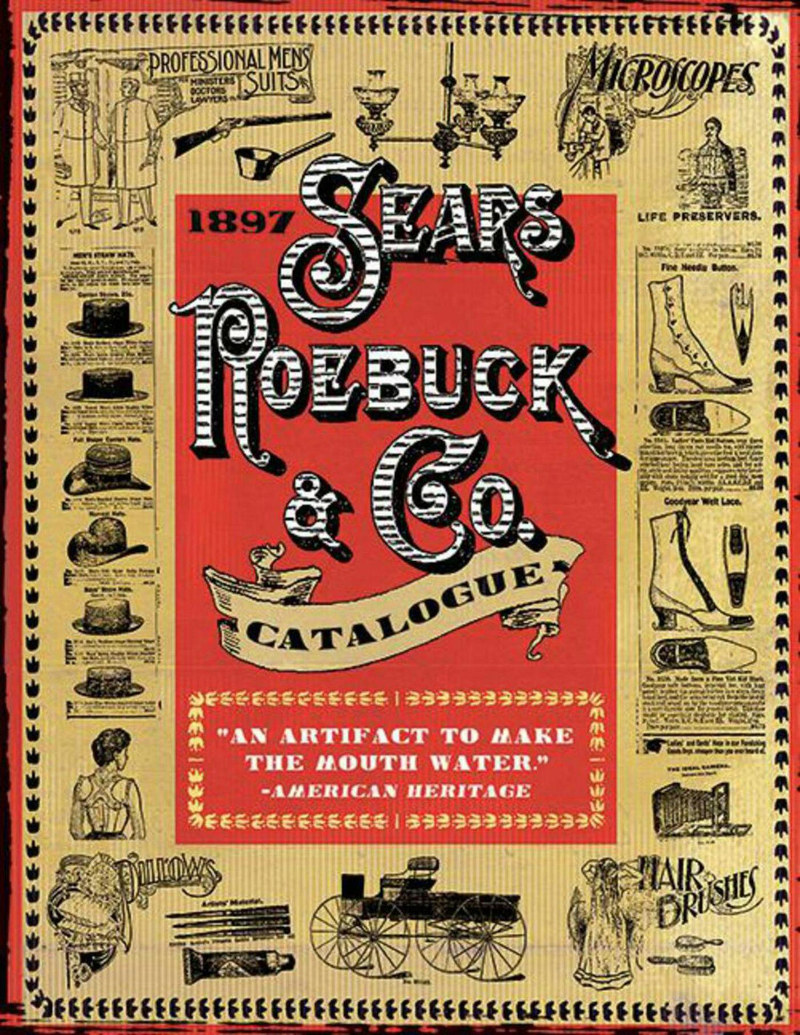
The Sears catalog and other mail-order outfits negatively affected the easy prosperity for the rural general stores. In some places the local merchants would trade with the children of the community. They’d offer one movie ticket for every Sears or Montgomery Ward catalog the kids could bring. Then these merchants would have big bonfires to burn all the catalogs.

Does this situation remind you of something? Does it seem similar to how Amazon, Temu and some other huge online companies are causing the demise of retail stores?

Unexpected Sears and Roebuck Facts

Started with an Unclaimed Shipment of Watches

In 1886, Richard Sears was a station agent for the Minneapolis and St. Louis Railroad when a local jeweler refused delivery on a shipment of gold watches. Sears bought the lot himself, sold them at a profit to other railroad agents, and founded a mail-order watch company that eventually grew into Sears, Roebuck and Co.

Alvah Roebuck Left Very Early On

Although Alvah C. Roebuck’s name remained on the company for over a century, he sold his stake in 1895 for $20,000 due to financial strain and stress. Had he held onto his share, it would have been worth hundreds of millions of dollars within a few decades. He later returned to work for the company as a publicity manager and store spokesperson during the Great Depression.

You Could Buy an Entire House by Mail

Between 1908 and 1940, Sears sold over 70,000 “Modern Homes” kit houses through its catalog. Delivered via boxcars, these kits included up to 30,000 pieces—including pre-cut lumber, nails, paint, drywall, and fitted plumbing—allowing buyers to assemble full homes themselves or hire local builders.

Engineered the Modern Shopping Mall Anchor Store

Under executive Robert E. Wood in the 1920s and 1930s, Sears recognized that the automobile was changing retail. Unlike traditional department stores built in congested city centers, Sears intentionally constructed stand-alone retail locations with dedicated parking lots on the outskirts of cities—laying the operational blueprint for the modern suburban shopping mall.

Created Household Giant Brands from Scratch

Sears built several major brands internally rather than just selling third-party goods:

Kenmore: Launched on a sewing machine in 1913 before expanding to major appliances.

Craftsman: Introduced in 1927 after buying the trademark for $500.

Allstate: Founded in 1931 as an auto insurance subsidiary sold right out of the catalog.

Launched the Discover Card

In 1985, Sears expanded into financial services and created the Discover Card. It revolutionized the credit card industry by charging no annual fee and introducing the concept of “Cashback” rewards for consumer spending.

Owned Encyclopædia Britannica

Between 1920 and 1943, Sears owned the rights to Encyclopædia Britannica. The company acquired it to help stabilize the publisher during a post-WWI financial slump and distributed the multi-volume reference sets directly through the Sears catalog.

Built the World’s Tallest Building

In 1973, Sears completed its corporate headquarters in Chicago: the Sears Tower (now the Willis Tower). Standing at 1,450 feet tall, it held the title of the world’s tallest building for 25 years until 1998.

The Catalog Functioned as an Educational Tool for Rural America

In the late 19th and early 20th centuries, the Sears catalog (often over 500 pages) was nicknamed “The Wish Book” or “The Consumer’s Bible.” Beyond selling goods, it helped standardize pricing across rural communities where local merchants charged high rates, taught rural families how to use new home technologies, and even served as reading material in rural schools.

Assisted the U.S. Postal Service Expansion

The rapid growth of Sears’ mail-order model was a key driver behind the U.S. government introducing Rural Free Delivery (RFD) in 1896 and Parcel Post in 1913. Before these services, rural Americans had to travel to distant towns to pick up mail and packages.

Lots of Signatures

You could have your kitchen remodeled through Sears. The contract required signatures in 64 places.

Posted on — Leave a comment

Worst Gold Discovery

The man who started the California gold rush, James Marshall, after a first small strike, was able to find no other gold for himself, and died a penniless alcoholic.

California State Parks says Marshall continued working as a blacksmith and in small gold mines, and that he died at age 75 in 1885. The state had actually awarded him a pension in recognition of his role, but it ended in 1878 amid criticism of his drinking.

Here are some particularly fascinating details about Marshall and the discovery:

1. He wasn’t actually looking for gold

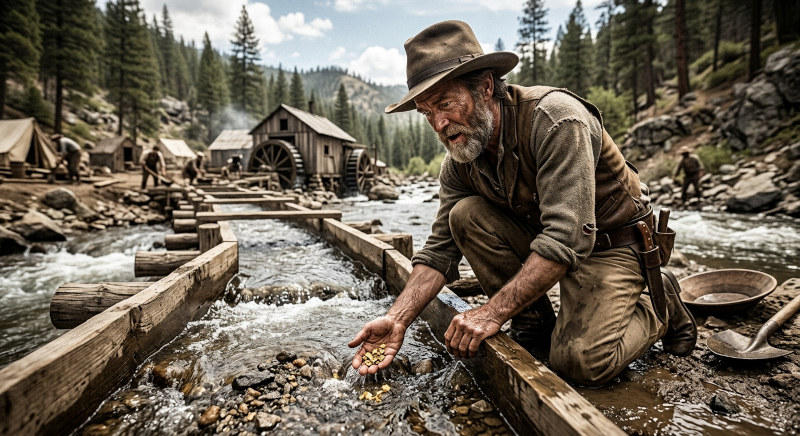
Marshall was a carpenter and mill builder working for John Sutter. He was building Sutter’s sawmill on the South Fork of the American River when he noticed something shiny in the mill’s tailrace on January 24, 1848.

In other words, one of the biggest gold rushes in history began because a carpenter was checking whether his drainage ditch was working properly.

2. His first reaction wasn’t “We’re rich!”

Marshall immediately suspected the metal was gold, but he was concerned about something much more mundane: finishing the sawmill. He and the workers temporarily stopped work and collected some of the gold, but the implications of the discovery weren’t immediately obvious.

3. The first mining tool was… a knife

This is one of my favorite details.

The flakes were difficult to pick up with the fingers, so the workers discovered they could use a knife to scrape up the gold. According to the California Geological Survey, the knife was therefore among the earliest mining implements used at Coloma. Several ounces were collected this way.

4. Marshall and Sutter tried to keep the discovery secret.

They realized that a gold discovery could cause enormous trouble for Sutter’s plans. They attempted to keep it quiet.

It didn’t work.

News leaked through the workers and then spread to other settlements. One of Sutter’s associates reportedly couldn’t resist showing the gold to people in other places.

And within a year, thousands of people were pouring into California.

5. Marshall got almost none of the fortune he created.

This is the cruelest part of the story.

Marshall eventually owned or participated in mining ventures, but he never found the fortune that prospectors dreamed about. A mine near Kelsey failed and left him nearly bankrupt. He also tried running a vineyard, but that venture failed as well.

So the man who effectively announced, “There’s gold in California!” couldn’t turn that information into a fortune for himself.

6. He actually received a government pension.

The “died penniless” version leaves out an interesting twist.

In 1872, the California legislature awarded Marshall a $200-per-month pension for two years because of his role in the discovery. It was subsequently reduced and extended, but finally ended in 1878.

At a time when $200 a month was substantial money, this could have provided considerable security. Marshall apparently wasn’t very good at turning security into prosperity.

7. Alcohol really was a problem.

There is historical evidence supporting the alcoholic part of the story. California State Parks specifically says his pension was cut amid criticism of his “weakness for liquor.” A later congressional account describes him as eccentric, contentious, unkempt and almost poverty-stricken.

But “penniless alcoholic” makes it sound as though he spent his entire later life as a hopeless drunk. That’s an oversimplification. He continued working as a blacksmith, carpenter and miner, among other things.

8. He was eventually driven out of Coloma.

Marshall became involved in a conflict involving the Nisenan people (a Native American tribe) and gold miners from Oregon. According to the historical account preserved by the Coloma community, Marshall tried to defend his Nisenan friends after violence erupted, and eventually had to flee for his life.

That’s a remarkably dark footnote to the story: the man whose discovery brought thousands of miners into the region eventually had to flee the region because of the violence accompanying the Gold Rush.

9. California’s population exploded almost immediately.

When Marshall found the gold, California’s non-Native population was only about 14,000.

By the end of 1849, it was approaching 100,000.

By 1852, it had reached roughly 250,000.

So Marshall’s discovery didn’t merely create a mining boom. It helped transform California from a remote frontier region into a rapidly growing American state.

10. The discovery wasn’t actually the first gold found in California.

This is an important historical wrinkle.

Marshall was not the first person ever to discover gold in California. Gold had been found in California before 1848, including discoveries in the Los Angeles area. What made Marshall’s discovery historically extraordinary was that it was the discovery that set off the great international rush to California.

11. Even the exact date was once disputed.

Today you’ll see January 24, 1848 everywhere, and that’s the date officially commemorated.

But Marshall himself gave somewhat inconsistent accounts of the precise date in later years. In some accounts he said January 19; in another he said the 18th, 19th or 20th. The date January 24 became firmly established later.

So even the famous “January 24” has a little historical fog around it.

12. Marshall’s prediction about his own fame came true.

Marshall reportedly said:

“Someday they’ll make a fuss over me.”

They did.

California erected a monument over his grave in 1890, and it became the state’s first historic monument. His grave overlooks the very valley where he made the discovery.

There’s a wonderfully ironic ending here: Marshall spent much of his later life frustrated that he hadn’t been adequately rewarded for the discovery, but eventually the State of California literally built a monument over his grave.

And perhaps the strangest part of the whole story is this:

Marshall discovered something that ultimately produced an estimated fortune for thousands of other people, transformed California, accelerated American settlement of the West, and helped change the demographic and economic history of the United States. Yet the discoverer himself never became rich from it.
Posted on — Leave a comment

Worst Partner Sell-Out

Alvah Curtis Roebuck born in 1864 was originally a watchmaker that Richard Warren Sears born in 1863 hired. They were opposites, Sears a promoter, Roebuck a conservative, careful man. They got along well and became partners. After a while Roebuck sold out for $25,000 because he didn’t agree with the frantic expansion of the company. He invented a typewriter and invested the proceeds of the typewriter income in Florida real estate. He lost everything in the crash of 1929. He showed up at the Sears employment office looking for any work at all. He was hired as a “celebrity” to cut ribbons at grand openings, etc.

At the age of 44 Mr. Sears retired with over $17 million.

Mr. Sears lived to an age of 51. He died after for suffering for several years with kidney disease.

Mr. Roebuck lasted 84 years. Who got the last laugh?

Posted on — Leave a comment

Worst Name for a City

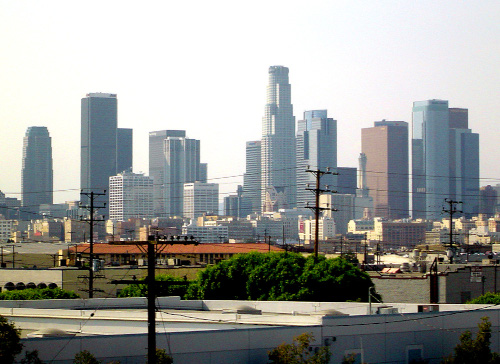
We all know LA. is an abbreviation for a big city in California, but most people don’t know the full name. It is, “El Pueblo de Nuestra Senora la Reina de los Angeles de Porciuncula.”

More Unexpected Facts About Los Angeles

It is legally illegal to drive more than 2,000 sheep down Hollywood Boulevard at once. You can, however, herd up to 2,000 sheep without breaking the city ordinance.

The famous Hollywood Sign originally said “HOLLYWOODLAND.” Built in 1923 as an outdoor billboard for a real estate development, the final four letters were removed during a restoration in 1949.

Los Angeles is home to an active, working oil field hidden in plain sight. High schools, shopping centers, and office buildings often double as camouflaged oil rigs—including a 14-story, brightly painted tower right on the campus of Beverly Hills High School.

It holds the world record for the shortest railway line. The Angels Flight funicular railway in Downtown L.A. covers a track of just 298 feet (about 91 meters) up Bunker Hill.

L.A. has a secret network of underground tunnels. Built during Prohibition to move illegal alcohol between speakeasies beneath the city streets, the roughly 11 miles of tunnels have also been used to transport prisoners and VIPs away from crowds.

Santa Monica Pier’s famous Ferris wheel is 100% solar-powered. It was the world’s first solar-powered Ferris wheel, operating on a series of panels that capture the Southern California sun.

There are more cars than people in Los Angeles County. Vehicles occupy roughly 14% of the city’s total land area, dedicated strictly to streets, freeways, parking structures, and driveways.

The Tar Pits in the middle of the city are still actively bubbling. La Brea Tar Pits is one of the world’s most famous paleontological urban sites, where natural asphalt continuously seeps up from the ground, trapping prehistoric fossils—and occasionally confusing modern tourists.

L.A. was once a major producer of celery and avocados. Long before it became the entertainment capital of the world, much of the Los Angeles Basin was dominated by citrus groves, bean fields, and massive agricultural farms.

See also Worst Jokes About Los Angeles.