Posted on — Leave a comment

Worst Waste of Time

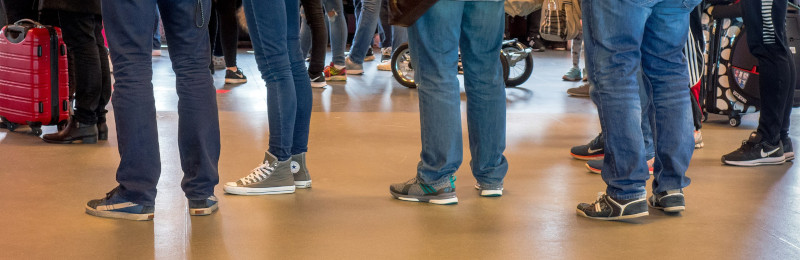
The average American spends more than a work week (40 hours) ever year waiting in lines.

More About Waiting In Line

The Psychology & Perception of Lines

  • Unoccupied time feels longer than occupied time: When your mind is active, time moves faster. That’s why elevator lobbies have mirrors—installed in 1950s New York to distract people while waiting, which drastically reduced complaints without speeding up the elevators.
  • Uncertainty breeds anxiety: Knowing how long a wait will be makes it significantly more tolerable. Being told “the doctor will see you in 20 minutes” produces far less stress than “the doctor will see you shortly”.
  • People judge queues by their ending: Behavioral research shows the “Peak-End Rule” applies to lines. If the wait ends with a warm greeting or quick check-out, customers generally forget earlier delays and rate the whole experience positively.

The Economics & Mechanics of Queueing

  • Single lines move faster than multiple lines: Serpentine queues (one winding line feeding multiple cashiers) are mathematically more efficient than traditional multi-line setups. They prevent the “slow register” delay and reduce overall average wait times.
  • The “First-In, First-Out” (FIFO) standard: Queueing theory relies heavily on FIFO as the universal baseline for fairness. Violating fairness (like watching someone arrive later but get served first) triggers immediate anger and makes the wait feel significantly longer.
  • The “getting started” illusion: Restaurants give you menus at the entrance or take drink orders early to trick your brain into believing the service process has already begun, which lowers abandonment rates.

Cultural & Historical Quirks

  • The British queuing reputation: In the UK, structured queueing became a cultural point of national pride during World War II, when strict rationing forced citizens to wait orderly in line for basic goods.
  • The “Other Line Always Moves Faster” bias: Illusions like Erma Bombeck’s Law or Murphy’s Law aren’t just in your head. Statistically, if there are 3 parallel lines, there is a 66% chance that one of the other two lines will move faster than yours simply due to random variance.
  • Overestimating wait times: Disney parks intentionally overestimate posted wait times for popular rides. If a sign claims a 60-minute wait but you board in 45, you exit the ride feeling like you gained time, boosting overall satisfaction.
  • Professional line standers exist: In major cities, professional line sitters can earn $20 to $50 an hour waiting for product launches, ticket sales, or popular restaurant seats on behalf of busy clients.
Posted on — Leave a comment

Worst Counterfeiting

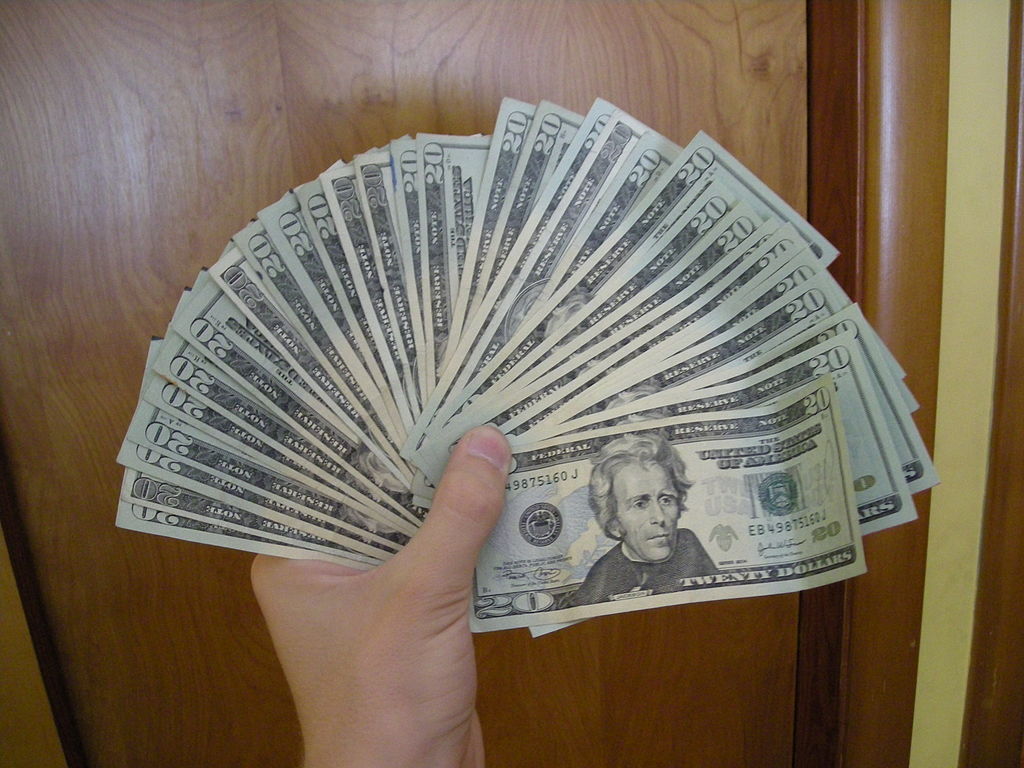
There was a time when as much as one third of all the money in America was counterfeit.

President Abraham Lincoln authorized the creation of the Secret Service on April 14, 1865 (the day he was assassinated), and the agency officially was sworn in on July 5, 1865. Its original sole purpose was to suppress widespread currency counterfeiting.

Following the Civil War, financial systems were fragmented with thousands of different bank-issued notes in circulation, making forgery easy. Historical estimates from the U.S. Treasury indicate that between one-third and one-half of all paper currency in circulation at the time was counterfeit.
Counterfeiting remains an active crime, though modern digital printing methods and sophisticated security features (like 3D security ribbons and color-shifting ink) have shifted how it occurs.

Counterfeiters are still at it. The U.S. Secret Service and Federal Reserve seize tens of millions in counterfeit bills annually. Total global circulation of fake U.S. currency is estimated between $70 million and $100 million.

One of the ways the US Federal Reserve detects counterfeits is to check the iron content of the ink.

Posted on — Leave a comment

From the Worst Bumps
to the Smoothest Ride

From Belfast Cobblestones to the Modern Road: The Surprising Veterinary Origins of the Inflatable Tire

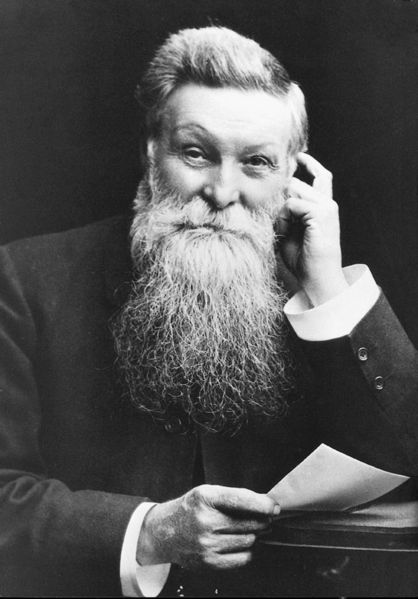
When we picture the foundation of the modern automotive industry, we usually think of industrial assembly lines, steel foundries, and visionary mechanical engineers. Yet one of the most critical breakthroughs in transport history came from an entirely different source: a Scottish veterinarian trying to make his young son’s tricycle ride a little less bumpy.

In 1887, Dr. John Boyd Dunlop was practicing veterinary medicine in Belfast, Ireland. Navigating the city’s rough, uneven cobblestone streets on horse-drawn carriages and solid-rubber-wheeled bicycles made for a harsh, jarring ride. The problem was especially severe for his nine-year-old son, Johnny, who suffered from frequent headaches while riding his tricycle.

At the time, tires were made of solid, unyielding rubber. Drawing on his medical background—where flexible sheet rubber, rubber aprons, and surgical tubing were common clinical tools—Dunlop set out to invent a dampening system that could absorb shocks from the road.

His solution was as simple as it was revolutionary. Dunlop constructed a flexible tube out of thin, sheet rubber, wrapped it around a wooden disk, and protected it with a outer casing of heavy canvas cloth. He then inflated the tube using a football pump and glued the entire assembly directly onto the wooden wheels of his son’s tricycle. The air-filled cushion—or “pneumatic” tire—proved to be an immediate success, offering an effortlessly smooth ride and remarkably lower rolling resistance.

Dunlop patented his pneumatic tire design in 1888 and soon founded the Dunlop Pneumatic Tyre Company. While initial skeptics dismissed the air-filled tires as fragile “pudding wheels,” the technology quickly proved its superiority on the bicycle racing track, where riders using Dunlop’s tires routinely dominated competitors riding on solid rubber.

As the automobile emerged at the turn of the 20th century, Dunlop’s invention was rapidly adapted for motor cars, transforming global transportation forever. Today, every passenger vehicle on the road relies on the fundamental concept pioneered in a veterinarian’s workshop to keep his son comfortable: trapping a cushion of compressed air inside a ring of flexible rubber.

Posted on — Leave a comment

Worst Laws in the United States

The following is excerpted from a book published in 1858:

THE FAMOUS CONNECTICUT BLUE LAWS. – These laws, enacted by the people of the “Dominion of New Haven,” became known as the blue laws because they were printed on blue paper. They were as follows: –

The governor and magistrates convened in general assembly are the supreme power, under God, of the independent dominion. From the determination of the assembly no appeal shall be made.

No one shall be a freeman or have a vote unless he is converted and a member of one of the churches allowed in the dominion.

Each freeman shall swear by the blessed God to bear true allegiance to this dominion and that Jesus is the only king.

No dissenter from the essential worship of this dominion shall be allowed to give a vote for electing of magistrates or any officer.

No food or lodging shall be offered to a heretic.

No one shall cross a river on the Sabbath but authorized clergymen.

No one shall travel, cook victuals, make beds, sweep houses, cut hair, or shave on the Sabbath Day.

No one shall kiss his or her children on the Sabbath or feasting days.

The Sabbath Day shall begin at sunset Saturday.

Whoever wears clothes trimmed with gold, silver, or bone lace above one shilling per yard shall be presented by the grand jurors and the selectmen shall tax the estate L300.

Whoever brings cards or dice into the dominion shall pay a fine of L5.

No one shall eat mince pies, dance, play cards, or play any instrument of music except the drum, trumpet, or jews harp.

No gospel minister shall join people in marriage. The magistrate may join them, as he may do it with less scandal to Christ’s church.

When parents refuse their children convenient marriages, the magistrate shall determine the point.

A man who strikes his wife shall be fined L10.

A woman who strikes her husband shall be punished as the law directs.

No man shall court a maid in person or by letter without obtaining the consent of her parents; L5 penalty for the first offense; L10 for the second, and for the third imprisonment during the pleasure of the court.

Posted on — Leave a comment

Worst Cabbie Complaints

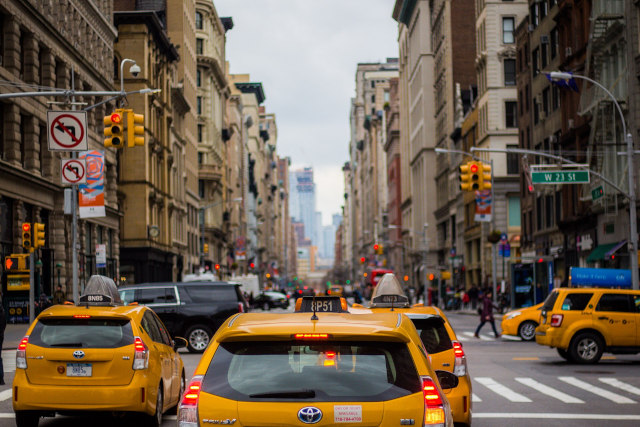
In New York City is a special court that hears about 400 complaints per day against taxi drivers.

Since the cabbies in the Big Apple carry approximately 400,000 people per day, that means about one in every thousand passengers feels the need to bring a complaint against a driver.

Overheard in court: A cab driver who had recently immigrated from Pakistan was in court because he punched a passenger. Asked why, the driver said, “In my country women aren’t allowed to speak disrespectfully to a man.”

Many cabbies do not like this court because they have to waste hours waiting for their case to come up. In one case, a professor from Columbia University took a cab driver to court because he had made a face when he discovered the tip was a small one.

Posted on — Leave a comment

Worst Product Name

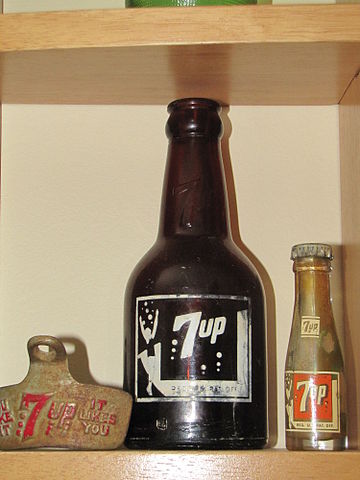
7-Up was originally called Bib-Label Lithiated Lemon-Lime Soda when it was invented in 1929. The first advertising slogan for 7-Up was, “It takes the ouch out of grouch.”

Interesting Facts About 7UP

A deep dive into the history, myths, science, and pop culture of the iconic lemon-lime beverage.

It originally contained a mood-stabilizing drug

When invented in 1929 by Charles Leiper Grigg, the soft drink contained lithium citrate, a mood-stabilizing drug used to treat bipolar disorder and depression. The original name was “Bib-Label Lithiated Lemon-Lime Soda,” and it was marketed as a hangover cure and mood booster. Lithium remained an ingredient until 1948.

The origin of the name “7UP” remains a mystery

Grigg never publicly explained why he named it 7UP. Popular theories include:

  • It contained 7 ingredients and the bubbles went UP.
  • Lithium’s atomic mass is approximately 7.
  • The original bottle was 7 ounces.
  • It was a reference to a popular dice game (“7 Up”).

It was launched right before the Great Depression

The soda hit the market on October 26, 1929—just two days before the Wall Street Crash of 1929 (“Black Monday”). Despite the economic collapse, its patent-medicine marketing and catchy flavor helped it thrive during tough economic times.

The mascot “Spot” was created by an iconic video game animator

In 1987, 7UP introduced its mascot “Cool Spot”—a red dot taken directly from the hyphen in the 7UP logo, wearing sunglasses. Spot was created by video game developer David Perry, who went on to create famous games like Earthworm Jim. Spot even starred in his own popular Super Nintendo and Sega Genesis video games in the early 1990s.

It coined the term “Uncola”

In 1968, 7UP launched one of the most famous advertising campaigns in history, positioning itself as the “Uncola.” Featuring actor and dancer Geoffrey Holder, the campaign positioned 7UP as the refreshing, non-caffeinated alternative to dominant cola brands like Coca-Cola and Pepsi.

Two different companies own 7UP globally

Unlike most global brands managed by a single parent company, 7UP is owned by Keurig Dr Pepper in the United States, while PepsiCo holds the rights to manufacture and distribute 7UP in almost all international markets.

It was a pioneer in sugar-free sodas

In 1963, 7UP introduced “Like,” one of the earliest diet sodas on the market. It was later rebranded as Diet 7UP in 1970, making it a pioneer in the mainstream sugar-free beverage market long before Diet Coke existed.

“7UP Gold” was one of the biggest soft drink flops in history

In 1988, the company released 7UP Gold, a cinnamon-spiced, amber-colored, caffeinated soda designed to compete with traditional colas. Consumers were confused by a caffeinated, dark 7UP, and the product was discontinued after less than a year.

The classic green bottle was chosen for a functional reason

The distinct green glass bottle wasn’t just a design choice—it was functional. Dark green glass shielded the lemon and lime oils in the recipe from sunlight and ultraviolet rays, which could oxidize the natural oils and spoil the soda’s flavor profile.