Posted on — Leave a comment

Worst Haircuts of All Time


10 Interesting Facts About Haircuts

  1. Barbers used to perform surgeries and dentistry. During the Middle Ages, “barber-surgeons” handled bloodletting, tooth extractions, and minor surgical procedures alongside hair trimming.
  2. The barber pole colors symbolize blood and bandages. The classic red-and-white pole originated in the medieval era: red represents blood, white represents clean bandages, and the pole itself represents the staff patients held to make their veins swell for bloodletting.
  3. Alexander the Great mandated short hair for military strategy. He ordered his soldiers to shave their heads and beards so enemies couldn’t grab their hair during hand-to-hand combat.
  4. Frequent trims do not make hair grow faster. Hair growth occurs entirely at the follicle beneath the scalp. Trimming removes split ends to keep hair healthy and prevent breakage, giving the illusion of faster growth, but it doesn’t affect the growth rate.
  5. The bob haircut caused major social uproar in the 1920s. When short “flapper” bobs became popular, some department stores fired women who cut their hair, and doctors claimed short hair caused medical issues to discourage the trend.
  6. Ancient haircuts relied on sharp flint and obsidian. Long before metal shears existed, prehistoric humans cut their hair using sharpened volcanic glass (obsidian), flint blades, and fire.
  7. The world’s most expensive haircut cost over $20,000. Celebrity hairstylist Stuart Phillips charged £8,000 (around $16,000 to $24,000 depending on exchange rates) for a haircut for billionaire Beverly Lateo, which included first-class flights and luxury limousine service.
  8. Astronauts use vacuum-attached clippers in space. To keep microgravity from scattering thousands of tiny hair clippings into air filters and navigation equipment, astronauts use electric clippers attached directly to a suction hose.
  9. Your hair grows faster during warmer weather. Higher temperatures and increased circulation during summer months slightly boost metabolic activity, causing hair to grow marginally faster than in winter.
  10. The mullet has ancient origins. Long before its 1980s peak, the “business in the front, party in the back” style was worn by ancient Roman warriors and Assyrian soldiers to keep hair out of their eyes while protecting the back of their necks from sun exposure and weapon strikes.

Bonus: Your hair grows 83 feet (25 meters) per day. Explanation, each hair grows about 1/100-inch and you have 100,000 hairs.

Posted on — Leave a comment

Worst Beach

10 Interesting Facts About Dead Horse Bay

  1. Ghastly Origin of the Name:
    In the 1850s, the surrounding area housed numerous rendering plants. Dead horses from the streets of New York City were brought here to be boiled down into glue, fertilizer, and animal oil, giving the bay its macabre name.
  2. A Treasure Trove of Vintage Trash:
    In the 1950s, a cap holding back a massive 1930s landfill burst open. Ever since, decades-old trash, predominantly from the 1920s to the 1950s, has been washing up onto the shore continuously.
  3. The “Glass Bottle Beach”:
    Dead Horse Bay is famous among urban explorers and collectors for its carpet of vintage glass bottles. Thousands of perfume bottles, medicine vials, soda bottles, and liquor flasks from early 20th-century New York line the beach.
  4. Accidental Time Capsule:
    Because the landfill buried items in an oxygen-deprived environment before it ruptured, many delicate artifacts—such as leather shoes, nylon stockings, bone buttons, and plastic toys—remained remarkably preserved for over half a century.
  5. Connected to Robert Moses:
    Famous NYC urban planner Robert Moses used garbage, sand, and incinerator ash in the 1930s to fill in the marshland, aiming to connect Barren Island to Brooklyn to expand Marine Park.
  6. Barren Island’s Ghost Town:
    Before becoming a giant landfill, Barren Island (which borders Dead Horse Bay) was home to a tight-knit community of factory workers, immigrants, and off-grid residents. The city evicted the remaining community members in the 1930s to clear space for Floyd Bennett Field.
  7. Radioactive Discovery and Closure:
    In 2020, the National Park Service indefinitely closed the primary beach area at Dead Horse Bay after elevated levels of gamma radiation—traced back to buried vintage industrial waste like radium dials—were detected on the surface.
  8. A Clanging Symphony of Sound:
    Visitors to the beach often noted a distinct sound: as tides roll in and out, thousands of glass bottles bang against one another and against rocks, creating a unique, wind-chime-like clanging sound.
  9. Part of a National Recreation Area:
    Despite its industrial and toxic past, Dead Horse Bay sits on land managed by the National Park Service as part of the Gateway National Recreation Area in Brooklyn, New York.
  10. A Haven for Horseshoe Crabs:
    In addition to historical detritus, the bay serves as an important spawning ground for horseshoe crabs—ancient marine arthropods that come ashore every spring during full and new moons to lay their eggs.
Posted on — Leave a comment

Worst X Factor Auditions

10 Interesting Facts About The X Factor

  1. It Triggered a Massive Legal Battle with Pop Idol
    Simon Cowell created The X Factor as a replacement for Pop Idol after a fallout with franchise creator Simon Fuller. Fuller sued Cowell for copyright infringement, claiming The X Factor stole the format. The dispute was settled out of court, granting Fuller a percentage of The X Factor profits and an executive producer credit.
  2. Noel Gallagher Turned Down £2 Million to Be a Judge
    When Simon Cowell left the UK judging panel in 2011 to launch the US version, he personally begged Oasis guitarist Noel Gallagher to replace him for £2 million. Gallagher declined, famously explaining that he didn’t want to do it because “Saturday night is for getting drunk”.
  3. Contestants Pass Up to 5 Secret Auditions First
    The iconic moment of a nervous singer walking into an audition room or onto a stage in front of celebrity judges is actually the final stage of a long process. Most contestants pass 3 to 5 rounds of auditions in front of low-level producers and talent scouts first.
  4. Producers Actively Scout Talent and “Invite” Contestants
    Not every contestant queuing outside stadium auditions applied on their own. Producers actively browse YouTube, gig circuits, and social media to recruit talented performers—offering them fast-tracked auditions directly into the higher production rounds.
  5. One Direction and Fifth Harmony Were “Losers” on the Show
    Two of the biggest pop acts spawned by the franchise never actually won their respective seasons. One Direction placed third in the 2010 UK series, and Fifth Harmony placed third in the 2012 US series—yet both went on to surpass the sales of their season winners by millions of copies.
  6. Original Format: Judges Were Supposed to Manage the Acts
    When the show was originally conceived, the panel consisted of music managers (Simon Cowell, Louis Walsh, and Sharon Osbourne). The original plan was for whichever judge won to become the actual real-world manager of the winning artist. This rule was abandoned once non-manager celebrities like Dannii Minogue joined the panel.
  7. Continuity Wardrobe Rules for Audition Days
    Because audition episodes are shot across multiple days and edited together for narrative pacing, contestants who make it past early producer rounds are instructed to bring and wear the exact same clothes, makeup, and hair accessories to every filming session.
  8. “Rage Against the Machine” Hijacked the Christmas #1 Spot
    In the UK, winning The X Factor guaranteed a lucrative shot at the coveted “Christmas Number One” single on the music charts. However, in 2009, a mass fan campaign rallied behind Rage Against the Machine’s 1992 metal anthem “Killing in the Name” to protest the show’s dominance. The campaign succeeded, beating 2009 winner Joe McElderry to the top spot.
  9. The Show’s Title Refers to the Unquantifiable “It Factor”
    Simon Cowell named the show The X Factor to describe the invisible, magnetic charisma that sets a true global superstar apart from just a “good singer”.
  10. The Fast-Track Record: Album Released in 3 Months
    2013 UK winner Sam Bailey holds the record for the quickest album turnaround in the show’s history. After winning in mid-December, her debut studio album, The Power of Love, was rushed through production and released just three months later in March 2014—it went straight to #1.
Posted on — Leave a comment

10 Worst Yoga Jokes

Yoga is the practice of paying money to find out which parts of your body you’ve been ignoring since 2009.

My yoga instructor says I need to be more flexible. I told her I already rescheduled twice this month.

Yoga: because punching people is frowned upon.

Yoga teaches patience. Like waiting for the person in front of you to stop wobbling.

Yoga taught me that balance is just falling very slowly with confidence.

Every yoga class has that one person who looks like a Renaissance painting while I look like furniture being assembled incorrectly.

Why did the yogi get a new dog? He wanted a downward-facing friend.

The hardest part of yoga is not laughing at the person next to you who’s struggling just as much.

Yoga is the only workout where you’re both deeply calm and deeply confused at the same time.

The hardest pose is pretending you’re not checking to see if everyone else is struggling too.

I love how yoga encourages self-acceptance, right after showing me what I will never physically achieve.

I tried hot yoga and learned that heat removes all illusions of dignity.

I tried yoga to reduce stress, but now I’m stressed about whether I’m doing yoga wrong.

My balance improves dramatically when no one is watching.

The real flexibility yoga teaches is learning to laugh at yourself while falling over.

Posted on — Leave a comment

10 Worst Exercise Jokes

I tried yoga, but it was a stretch.

My workout plan is simple: stretch, overdo it, pull something, google symptoms, recover.

Why don’t all couples go to the gym? Because some relationships don’t work out.

Running outside is great because you get fresh air and the feeling that everyone driving by is judging you.

Personal trainers hate this one simple trick: not hiring a personal trainer.

I did a plank once. Long enough to reflect on my life choices.

Exercise is the only activity where you pay money to be uncomfortable while strangers silently compete with you.

The hardest part of working out is pretending it was “fun” when someone asks how it went.

Every workout has that one move where you think, “This is how people get injured in commercials.”

I love long walks… especially when they’re taken by people who annoy me.

Exercise? I thought you said “extra fries.”

I burned 2000 calories today. I fell down the stairs chasing my cat, but it counts.

People say “No pain, no gain.” I say “No pain… good! Let’s keep it that way.”

Posted on — Leave a comment

10 Worst Atlas Shrugged Jokes

Ayn Rand wrote Atlas Shrugged to inspire us, but all I got was 1,000 pages of people talking about themselves.

In Atlas Shrugged, people are either geniuses or villains.
I’m still trying to figure out which category my grocery cashier falls into.

Some people read Atlas Shrugged for philosophy.
I read it to practice my “pretending to understand complex sentences” skills.

Atlas Shrugged proves one thing: even fictional trains can be more reliable than my Wi-Fi.

Dagny Taggert’s dating profile says: “Looking for someone who won’t derail my plans.”

I tried quoting Atlas Shrugged at a party.
Everyone nodded politely, then slowly backed away.

John Galt doesn’t do small talk. He does 60-page monologues.

If Atlas Shrugged taught me anything, it’s that punctuation is optional when you’re a genius.

In Atlas Shrugged, everyone is exceptional.
Meanwhile, I once spilled coffee on my laptop and the world kept spinning.

People asked, “Who is John Galt?”
I ask, “Who has the time to finish this book?”

John Galt doesn’t shrug—he gives TED Talks that last a week.

After reading Atlas Shrugged, I now know: the world will collapse without the talented.
But apparently, also without commas.

By the time you finish Atlas Shrugged, you either understand philosophy… or you understand why people read Wikipedia summaries.

If you think modern emails are long-winded, try 1,200 pages of industrial monologues.

Dagny Taggart walks into a bar. The bartender says, “We don’t serve railroad executives.” Dagny replies, “That’s fine, I’ll build my own bar.”

Hank Rearden tried yoga. The instructor said, “Relax.” Hank replied, “Relaxation is for looters.”

Reading Atlas Shrugged is like running a marathon: you finish, but you’re not sure why.

Francisco dAnconia’s pickup line: “Baby, I’ll collapse the economy just for you.”

James Taggart tried to play Monopoly. He demanded government subsidies for Boardwalk.

Posted on — Leave a comment

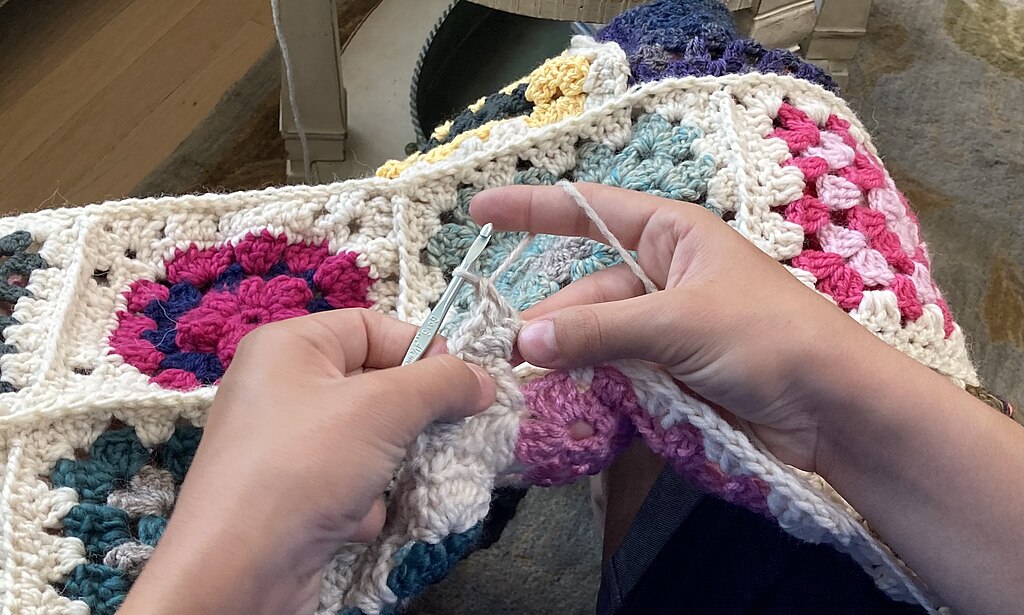
10 Worst Crochet Jokes

I bought “just one skein” of yarn. The cashier said, “Oh, you’re new here.”

I told myself I’d crochet “just one row before bed.” I finished a blanket, three coasters, and a mild emotional crisis.

Crochet math: one skein = not enough, two skeins = still not enough, ten skeins = too much but I’ll buy more.

I brought my crochet project to a party. Someone asked if it was “grandma stuff.” Later they complained about being cold. Guess who didn’t get a blanket?

I tried teaching my cat to crochet. She didn’t learn, but she did steal the yarn and start a modern art installation under the couch.

Crochet patterns say “easy.” That’s a lie. They mean “easy for someone else.”

I crocheted a hat for my cat. He hasn’t forgiven me.

I crocheted in public and someone said, “Oh, you knit?” That was the moment I learned humans can survive being corrected with only one eye twitch.

My friend asked how long a blanket takes to crochet. I said, “Somewhere between one week and six years.”

Crochet hooks are like wands. Except they summon tangles instead of magic.

I crocheted a sweater. It fits… someone, somewhere, in another dimension.

I joined a crochet group. We spent 80% of the time crocheting and 20% judging yarn that didn’t deserve its price tag.

Crochet projects are like relationships. They start with passion and end with “what was I thinking?”

Telling a crocheter “you could just buy that for cheaper” is like telling a chef “you could just go to a restaurant.” Technically true, emotionally devastating.

I crocheted a toy for my dog. He unraveled it in five minutes.

Non-Crocheter: “Wow, that looks so relaxing. Do you just, like, not think while you do that?” Me: (Internal Monologue: Was that a C2C or a Moss stitch? Did I miss a chain space? Which side is the right side? Why is it pulling?) “Oh, yes. Very relaxing.”

I have 30 crochet hooks. I currently only know the location of two of them.

Crocheters are like “I can’t afford groceries” while sitting on a throne of $400 worth of yarn they bought “just in case.”

Crocheters will video-call each other just to hold up yarn and ask “is this blue or green?” Our friends don’t understand this is a legitimate crisis.

Me, at 2 AM: I know I should go to sleep, but I’m only three rows away from being able to start a new color, and I absolutely have to see how the border works.

The most exercise a crocheter gets is running to five different stores looking for one specific shade of yarn that definitely exists and we definitely saw it somewhere.

The four stages of a crochet project: excitement, confidence, denial that you miscounted stitches, and rage-frogging at midnight.

The UFO (unfinished object) pile isn’t clutter, it’s a collection of “alternative timeline projects” where we had better time management. Which timeline? Not this one.

Crochet hooks are tiny weapons against boredom.

I go to the store for three things: milk, eggs, and a specific size G hook. I come home with 14 skeins of mohair, a pattern book, and no groceries.

“I’m just going to crochet until this podcast ends” is a lie. We’re crocheting through three more podcasts and possibly into next Tuesday.

I was crocheting and someone asked if it was “stress-relieving.” Sure — right after I untangle this knot.

Yarn label: “Machine Wash, Tumble Dry Low.” Crocheter: “Don’t you dare put this baby in the washing machine. I will hand-wash it in lukewarm water and lay it flat on a mesh screen for two days.”

I crocheted a scarf for my husband. He said it was “a bit long.” He’s now the proud owner of a 13-foot emotional support noodle.

I once counted stitches out loud in a café. A stranger tried to join in. We are no longer friends.

My crochet bag has yarn, hooks, scissors, stitch markers, and enough crumbs to feed a family of squirrels.

I crocheted in the waiting room and an old man said, “My wife used to do that.” Then he added, “She swore at it a lot.” I felt seen.

I gave someone a handmade crochet gift and they said, “Oh… neat.” I now crochet exclusively for people who visibly gasp.

People say crocheting is slow. They haven’t seen me unravel two hours of work in five seconds.

I crocheted a coaster. Then I crocheted matching coasters. Then I crocheted 14 more because I don’t know how to stop.

Someone asked if crocheting is expensive. I laughed so hard I dropped my $48 skein of imported alpaca.

I crocheted a blanket for the winter. By the time I finished, it was summer. The cycle continues.

I crocheted while watching a movie and didn’t notice the plot twist because I was too busy being betrayed by my stitch count.

Every crocheter has at least one project that’s been “almost done” for three years.

The most unrealistic part of horror movies is when someone hears a noise and investigates immediately. A real crocheter would think “just one more row” six times first.

Non-crocheters think we’re being productive. Really we’re just hoarding yarn while binge-watching TV and occasionally panicking about whether that was a single or double crochet three rows ago.
Every crocheter has confidently started a project without reading the pattern, then spent two hours frogging it. We never learn.

At the craft fair, I saw a guy crocheting with one hand while eating a sandwich with the other. He dropped the sandwich into the yarn bowl and accidentally made a ham-and-cheese potholder.

Someone asked if I could crochet them something “real quick.” I asked if they wanted it real quick or real good. They backed away slowly.

I crocheted a bag to hold all my yarn. The yarn unionized and demanded a bigger one.

Crocheters will spend $200 on yarn they don’t need but complain that a $6 pattern is too expensive. Math isn’t our strong suit—we’re still trying to figure out gauge.

“I’ll just make a small blanket” is the crocheter’s version of “I’ll just have one potato chip.”
Posted on — Leave a comment

10 Worst Jokes About Figure Skating

Figure skating costumes cost more than my car. They’re covered in crystals, completely bedazzled, and have exactly zero practical pockets. You can’t even carry your phone.

The scoring system in figure skating involves technical components, artistic impression, and apparently mystical forces that only judges understand. I’ve watched explanations for hours and I’m still convinced they’re just making up numbers based on vibes.

Pair skaters have to trust their partners to throw them in the air and catch them. I don’t trust my partner to catch a set of keys.

Figure skaters fall on ice going 20 miles per hour and just get up like nothing happened. I slipped on a wet floor once and lay there for 10 minutes reconsidering my life choices. These people are built different.

Ice dancers perform intricate choreography while maintaining eye contact and smiling. I can’t maintain eye contact during normal conversations without it getting weird.

Figure skaters train for four years for a four-minute program. That’s roughly 35,000 hours of practice for 240 seconds of performance.

Figure skating requires strength, flexibility, artistry, and the ability to smile while internally screaming. It’s basically a physical manifestation of “this is fine” meme while everything is on fire and also you’re spinning.

I went to a public skating session thinking I’d practice some figure skating moves. The session was full of speed skaters going Mach 5 and hockey players treating the rink like a combat zone. I hugged the wall and prayed. No figure skating occurred.

Figure skaters wear tights that somehow stay perfectly smooth even during jumps and spins. I wear tights to the office and they’re bunched around my ankles by 10 AM.

Every figure skating costume has a “modesty panel” sewn in. This is because the skaters are doing splits and spins at high speeds in front of thousands of people. The engineering required to keep everything family-friendly is probably more complex than the actual skating.

I tried watching figure skating with my dad and he kept asking why they don’t just play hockey instead. “All that ice and no one’s checking anyone into the boards? What’s the point?” I couldn’t explain it in a way that satisfied him.

Figure skaters retire at like 25 and I’m just getting started at that age. They’ve already had entire careers, won medals, and destroyed their joints by the time I figured out what I wanted to do with my life.

The kiss and cry area where skaters wait for their scores is the most emotionally volatile 60 square feet in sports. You go from hopeful to devastated in seconds, all while sitting on a bench, holding stuffed animals thrown by strangers. It’s a psychological experiment disguised as a waiting room.

Figure skaters travel with an entire suitcase just for skate equipment. Skates, guards, different blades, tools for adjustments. I travel with flip flops and hope for the best. We are not the same.

The toe pick on figure skates is used for jumps and spins but is mostly known for causing catastrophic falls when you forget it exists. It’s like having a built-in trip hazard attached to your feet. Whose idea was this?

Figure skating competitions start at like 7 AM and go until midnight. Someone performing at 11 PM has been at the rink since dawn, waiting, warming up, staying loose, managing anxiety. It’s not a sport, it’s an endurance test of patience and caffeine management.

Every figure skating documentary has the same plot: child shows promise, family sacrifices everything, skater trains obsessively, injury happens, triumphant comeback or devastating defeat. It’s a formula, but it works every time. I cry regardless.

The difference between a double and triple jump is one rotation, which happens in a fraction of a second. Yet that fraction determines whether you’re a club skater or an Olympian. The margin for error is so thin it’s basically a theoretical concept.

Figure skating boots cost $800, blades cost another $600, and they last maybe 6 months with serious training. That’s $2,800 a year just for the shoes. I complain when running shoes cost $120. I have no right to complain about anything ever again.

Synchronized skating exists and it’s 16-20 people doing intricate formations on ice while maintaining exact spacing and timing. I can’t even walk in a straight line with one other person without bumping into them. This seems impossible. It probably is impossible. They’re faking it somehow.

Coaches say “try again” so often, skaters think it’s their middle name.

Skaters don’t sweat — they sparkle attractively under fluorescent rink lights.

The Zamboni driver is basically the superhero of practice: one lap and the ice is reborn.

Every skater’s nightmare: finishing a routine perfectly… then realizing the music was for someone else.

Skaters bow at the end not just for applause, but to check if their laces survived.

Parents of skaters don’t clap at performances; they calculate how much money each jump cost in lessons.

Skaters don’t dream of vacations — they dream of ice time that isn’t at 5 a.m.

Skating friends don’t hug; they crash into each other and call it choreography.

Coaches don’t yell “focus!” — they yell “stop inventing new ways to fall.”

Posted on — Leave a comment

10 Worst Jokes About Los Angeles

The hiking culture in LA is intense. People wake up at 5 AM to climb a mountain before work, take 47 photos at the top, post them with #blessed, then don’t exercise again for two weeks. But they wear athleisure every single day to maintain the illusion of being active.

I moved to LA and told people I was a writer. They asked what restaurant I work at. I said I actually make a living writing. They asked what my trust fund situation was. I said I don’t have one. They slowly backed away like I had a contagious disease.
Los Angeles is the only city where someone will honk at you, flip you off, and then ask you to follow their TikTok.

I tried to take public transit in L.A. once.
My friends acted like I said, “I’m sailing to work on the back of a dragon.”

I met a guy who said he was “in the industry.” Turns out he sells popcorn at the movies.

I went to a networking event in LA and everyone introduced themselves with their elevator pitch. “I’m a creative entrepreneur exploring the intersection of wellness and blockchain.” Nobody has a job. Everyone has a vision. I said I was a dentist and people literally walked away mid-conversation.

In Los Angeles, a “walkable neighborhood” just means “there’s at least one sidewalk that isn’t closed for filming.”

In Los Angeles, traffic reports aren’t news—they’re just weather forecasts for cars.

LA has two seasons: “sunny” and “slightly less sunny.”

I asked someone if it ever rains in LA. They said, “Only in movies.”

People in LA don’t ask “How are you?” They ask, “What’s your screenplay about?”

I ordered a burger in LA. They asked, “Do you want it vegan, gluten-free, or spiritually aligned?”

My friend asked if I’d go hiking in L.A. I said sure — then discovered hiking is just walking uphill while apologizing to joggers who pass you.

L.A. has seasons:
Fire, Mudslide, Awards, and Slightly Cooler.

In Los Angeles, even the pigeons have agents.
One tried to give me his headshot at a bus stop.

GPS in L.A. doesn’t give directions; it whispers supportive affirmations like, “You’re doing great, sweetie.”

I asked a barista in L.A. for a simple black coffee.
She said, “Emotionally, spiritually, or photographically?”

In Los Angeles, you’re never more than six feet from someone writing a screenplay — and four feet from someone pretending they’re not writing a screenplay.

In L.A., a “neighborhood watch” is just people recording everything on their phones.

Every time there’s a tiny earthquake in L.A., residents jump on Instagram like they survived a medieval siege.

Los Angeles is the only city where you can sit in a traffic jam for 40 minutes and still be considered “close by.”

When someone in L.A. says, “I’m five minutes away,” they mean it emotionally, not physically.

In Los Angeles, “cold weather” means someone had to wear sleeves.

I went to a party in the Hollywood Hills and the host gave everyone a tour of their home, including showing us which bathroom celebrities had used when they visited. “This is where a guy from a Geico commercial once washed his hands.”

I asked someone in L.A. where they were from and they said, “Oh, I’m an actor.”

Yoga classes in L.A. have levels: Beginner, Advanced, and “Influencer.”

I tried ordering a soda in Los Angeles, and the server said, “We only have kombucha, mushroom tonics, and positive energy drinks.”

The concept of being “on time” doesn’t exist in LA. If someone says they’ll be there at 7, they mean 7:45, but also they might not come at all. “I’m five minutes away” is a complete work of fiction. They haven’t left their house. They might not even be in the same city.

Every store in L.A. has valet parking — even the ones with two parking spots.

Every apartment building in LA has a rooftop pool that looks amazing in photos but is always closed for “maintenance” or filled with three inches of water and leaves.

Only in Los Angeles can you buy an $18 smoothie and still feel like you got a good deal.

Everyone in LA claims they “don’t really watch TV” but can quote every episode of every prestige drama from the past decade. “Oh, I don’t own a TV” they say, while simultaneously referencing obscure plot points from Succession.

LA people will tell you they’re “in the industry” and get offended if you ask which industry. There’s only one industry. If you work in literally anything else, you’re a civilian. I’m a software engineer and someone asked me when I was going to “get a real career.”

Hollywood is the place where dreams come true — and also where dreams hold auditions and get rejected.

In most cities, the weather forecast changes.
In Los Angeles, the forecast just says, “Still sunny.”

I asked a local about earthquakes and he said, “They’re not scary unless they spill your latte.”

In L.A., even the palm trees look like they’re posing for an influencer collab.

The ocean in L.A. is beautiful — you just have to get past the tourists, the fog, the traffic, and the existential dread.

Los Angeles is the only place where your neighbor’s dog has more Instagram followers than you.

LA has a store that only sells crystals and the sales person told me which crystal would align my chakras and improve my career prospects. I asked if they had one that would help me pay rent. She didn’t laugh. She showed me citrine. It was $140. I bought it. I’m part of the problem.

I’ve been in LA for five years and I still can’t figure out what anyone actually does for work. People have job titles like “Creative Strategist” or “Brand Alchemist” or “Wellness Consultant.” I asked someone to explain what they do and they talked for 10 minutes and I still have no idea. They might be unemployed. They might be a millionaire. In LA, it’s impossible to tell the difference.

See also: Worst Name for a City.