Posted on — Leave a comment

Most Annoying Disease

Have you ever had the disease, acute nasopharyngitis? That is the common cold. It may be less serious than many other diseases, but it certainly makes the most people temporarily miserable.

It Isn’t Just One Virus—It’s Over 200

The “common cold” isn’t a single illness; it is an umbrella term for infections caused by more than 200 different viruses. Rhinoviruses are responsible for about 30% to 50% of cases, but coronaviruses, adenoviruses, and enteroviruses can all produce identical symptoms.

Your Own Immune System Causes the Symptoms, Not the Virus

The runny nose, sore throat, and sneezing aren’t direct damage caused by the virus itself. They are the result of your immune system releasing inflammatory chemicals (like histamines and cytokines) to fight off the invader.

Being Cold Doesn’t Directly Give You a Cold

Mom was slightly off: going outside with wet hair or without a jacket won’t magically spawn a virus. However, cold, dry air does weaken the immune defenses inside your nasal passages and allows cold viruses to replicate more efficiently in chilled nasal tissues.

You Can Spread It Before You Even Feel Sick

You can shed the virus and infect others roughly 24 hours before your first symptom appears. You remain contagious for up to a week, usually peaking during the first 2–3 days of feeling sick.

Cold Viruses Can Survive for Hours on Surfaces

Rhinoviruses can live on hard surfaces like door handles, light switches, and phone screens for up to 24 hours. If you touch a contaminated surface and then touch your eyes, nose, or mouth, you can contract the virus without anyone coughing directly on you.

You spent Years of Your Life Sick

The average adult catches 2 to 3 colds per year, while children can catch 6 to 8. Given that an average cold lasts about 7 to 10 days, the average human spends between 1 and 2 full years of their life dealing with cold symptoms.

Chicken Soup Actually Has Scientific Backing

It’s not just comfort food: laboratory studies show that chicken soup acts as a mild anti-inflammatory by inhibiting the movement of neutrophils (white blood cells that trigger inflammation). The warm vapor also speeds up mucus clearance in the nasal passages.

A Single Sneeze Can Travel 100 MPH

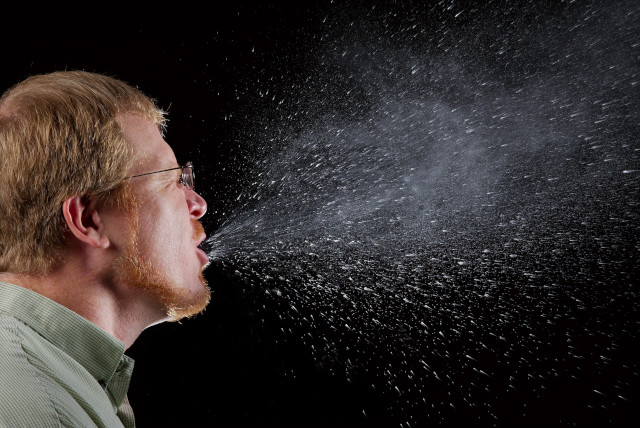
A forceful sneeze can propel up to 40,000 microscopic fluid droplets into the air at speeds up to 100 miles per hour, spreading viral particles across a distance of over 20 feet.

Space Travel Suppresses Cold Viruses… Until You Return

Astronauts rarely get colds while aboard the International Space Station because the environment is isolated from outside germs. However, the stress of re-entry and spaceflight can temporarily suppress the immune system, leaving astronauts particularly susceptible to colds upon landing back on Earth.

Echinacea and Vitamin C Won’t Stop a Cold in Its Tracks

Despite being multi-million-dollar industry staples, extensive scientific reviews show that taking Vitamin C or Echinacea after symptoms start does not significantly shorten or cure a cold. Regular Vitamin C intake before getting sick only slightly reduces symptom duration in high-stress athletes.


Posted on — Leave a comment

Worst Breathing

Puppies have lungs. Goldfish have gills. Many species of shrimp breathe with their legs. Snapping turtles have two ways of getting their oxygen. They have lungs and they can absorb oxygen from water with their rectums.

Here are 10 weird facts about snapping turtles:

They Can Lure Fish Using a Built-in “Worm”

Alligator snapping turtles have a tiny, pink, worm-like appendage on the tip of their tongue. They sit motionlessly on the bottom of a river with their mouths wide open, wriggling their tongue to mimic a worm. When an unsuspecting fish swims in to grab a meal, the turtle snaps its jaws shut in milliseconds.

They Are Too Big for Their Own Shells

Unlike most turtles that can pull their heads, legs, and tails completely inside their shells for protection, snapping turtles have a much smaller underside shell (plastron). Because they can’t hide in their shell, evolution made them aggressive and defensive on land instead.

Their Shells Are Living Ecosystems

Because snapping turtles spend so much time sitting still in muddy, dark water, algae easily grows on their backs. In older alligator snapping turtles, their shells can become mini-ecosystems covered in algae, moss, small invertebrates, and leech colonies, providing built-in camouflage that makes them look like submerged logs.

More About Breathing Through Their Rear Ends

When lakes freeze over in winter, snapping turtles hibernate under the ice in muddy riverbeds. Since they can’t surface to breathe air, they survive using a process called extrapulmonary respiration—specifically, absorbing oxygen from the water through vascularized tissue in their cloaca (their rear opening).

They Can Survive for Months Without Oxygen

During winter brumation (reptile hibernation) under ice-covered water, common snapping turtles can go up to 100 days without taking a single breath of air or consuming oxygen, relying on specialized metabolic adaptations to survive extreme cold and oxygen deprivation.

Their Bite Strength is Often Overrated, But Still Dangerous

Despite urban legends claiming snapping turtles can easily sever human broomsticks or legs, a common snapping turtle’s jaw force is around 200–600 Newtons—similar to a human’s strong bite. However, an alligator snapping turtle can exceed 1,000 Newtons of force, which is easily powerful enough to break bones or sever fingers.

Nest Temperature Decides the Babies’ Sex

Like many reptiles, snapping turtles exhibit Temperature-Dependent Sex Determination (TSD). If the eggs in the nest are incubated at lower or higher extreme temperatures, they develop into females. Intermediate temperatures around 20°C to 26°C (68°F–79°F) produce predominantly males.

They Are Gentle Giants in Water, But Terrors on Land

Snapping turtles are notorious for being aggressive, but this behavior only happens on land where they feel exposed and vulnerable. When submerged in water, snapping turtles are surprisingly shy and docile, usually choosing to swim away or hide in the mud rather than attack humans.

They Are Prehistoric “Living Fossils”

Ancestors of modern snapping turtles have been around for over 90 million years, meaning they roamed the earth alongside T. rex and Triceratops. Their physical design has remained largely unchanged for tens of millions of years because it is so effective.

They Can Live for Over a Century

Snapping turtles are extremely long-lived. While their average lifespan in the wild is around 30 to 50 years, alligator snapping turtles can live well over 100 years, with some unverified estimates suggesting they can reach up to 150 years of age.

Posted on — 1 Comment

Five Years In The Bike Shop

Copyright 2013 – 2026, John Flaherty

There was once a little bicycle shop, ordinary in every way, except for the people associated with it. Brian the owner, the employees, and many of the customers were the most interesting and eccentric people I have ever met. That’s what this book is about. I have changed the location and the names to protect those involved. Everything else is true, exactly as it happened. The bike shop lasted five years before it came to a strange end. Welcome to the story of the shop and it’s people. Continue reading Five Years In The Bike Shop

Posted on — Leave a comment

Worst Singing


Kathy and Janet’s application for the 2008 Arctic Winter Games.

Some people may consider this Inuit throat singing the world’s worst singing, but to others, it’s beautiful.

Interesting Facts About the Inuit People

They Have Over 50 Words for Snow and Ice

The Inuit languages (such as Inuktitut) have an extraordinary vocabulary for frozen water. Rather than having dozens of completely unrelated root words, their polysynthetic language structure allows them to create precise descriptive terms for specific conditions—such as qaniit (falling snow), aput (snow on the ground), pukak (crystallized snow that looks like sugar), and siqulloq (crusted snow).

They Used Armor Made from Walrus Ivory

Long before European contact, Inuit warriors crafted protective plate armor called qatigait. Made from overlapping plates of walrus ivory or bone bound together with raw leather thongs, this lightweight armor was designed to deflect arrows, spears, and harpoons during conflicts.

They Invented “Polaroid” Sunglasses Thousands of Years Ago

To combat intense snow blindness caused by sunlight reflecting off snow and ice, the Inuit engineered traditional snow goggles (iggaak). Carved from driftwood, bone, or walrus ivory, these goggles featured narrow horizontal slits that drastically reduced incoming glare while sharpening visual focus.

Their Traditional Diet is Almost Entirely Meat, Yet They Avoid Scurvy

Living in the Arctic tundra where plants are scarce for most of the year, the traditional Inuit diet consisted almost entirely of meat and fish—including seal, whale, caribou, and arctic char. Despite the lack of citrus fruits or fresh produce, they historically avoided scurvy by eating raw, nutrient-rich foods like muktuk (whale skin and blubber), organ meats, and seal liver, which are naturally high in Vitamin C.

Igloos Are Far Warmer Inside Than You Think

While an igloo is built purely out of hard-packed snow blocks, snow functions as a remarkable natural insulator due to trapped air pockets. Body heat alone can raise the internal temperature of a well-built igloo to 40°F to 60°F (4°C to 16°C) even when the outside temperature plummets to -40°F (-40°C). Adding a small seal-oil lamp (qulliq) can bring the interior up to near-room temperature.

The Term “Eskimo” is Considered Derogatory

The term “Eskimo” was historically used by non-Indigenous people to describe Arctic populations, but it is now widely recognized as culturally insensitive or offensive, particularly in Canada and Greenland. The term is believed to derive from an Algonquin word meaning “eaters of raw meat.” The people self-identify as Inuit, which simply means “the people” in Inuktitut (with Inuk being the singular noun).

More About Throat Singing

Inuit throat singing (Katajjaq) is a unique form of vocal performance traditionally practiced by two women standing face-to-face. Rather than a formal concert, it began as a friendly competition or game to entertain children while men were away hunting. The performers rhythmically inhale and exhale to imitate natural sounds (like wind, birds, or river water), attempting to outlast each other until one bursts into laughter.

Inuit Mythology Features a Terrifying Child-Stealing Monster

Inuit oral tradition includes rich folklore to teach children survival lessons. One famous figure is the Qalupalik, a human-like sea monster with green skin, long fingernails, and a low hum. According to legend, the Qalupalik wears an amauti (a traditional child-carrying parka) to snatch children who wander too close to the ice edge without adult supervision.

They Have Genetic Adaptations to Extreme Cold and High-Fat Diets

Studies show that Inuit populations possess unique genetic adaptations honed over thousands of years. Research highlights mutations in the CPT1A and FADS genes, which allow their bodies to process high levels of omega-3 fatty acids without experiencing high rates of cardiovascular disease, while also helping their bodies produce heat from fat reserves more efficiently.

They Developed Parkas, Kayaks, and Anoraks

Many modern winter items trace their origins directly to Inuit ingenuity. The word kayak comes from the Inuktitut word qajaq (a seal-skin covered hunting boat designed to be watertight). Similarly, parka and anorak originate from Arctic Indigenous languages, referring to hooded, animal-pelt garments tailored with natural oils to resist sub-zero temperatures and sea spray.

Posted on — Leave a comment

Worst Assumption Ever

Before testing the first atomic bomb, some of the scientists working on the Manhattan Project did their best to calculate what might happen. They estimated there was a three percent chance the bomb would set the entire world’s atmosphere on fire, instantly killing us all. They went ahead and tested the bomb.

Facts About the Manhattan Project

It Was Named After an Office in New York

The project was originally designated the “Development of Substitute Materials.” To maintain secrecy, it was renamed the Manhattan Engineer District (and later the Manhattan Project) because its initial headquarters were located at 270 Broadway in Manhattan, New York.

It Was Initiated by a Letter Signed by Albert Einstein

In August 1939, concerned that Nazi Germany might develop nuclear weapons, physicists Leo Szilard and Eugene Wigner drafted a letter to President Franklin D. Roosevelt warning him of the danger. They persuaded Albert Einstein to sign it, which directly led to the U.S. government establishing what would become the Manhattan Project.

It Was Larger and More Expensive Than Most Realize

At its peak, the project employed over 130,000 people and cost roughly $2 billion at the time (equivalent to over $30 billion today). It was one of the largest industrial and secret scientific endeavors in history.

It Spanned Dozens of Sites Across North America

While Los Alamos, New Mexico, hosted the secret laboratory responsible for bomb design, key research and production facilities spanned the continent:

Oak Ridge, Tennessee: Uranium enrichment plants.

Hanford, Washington: Plutonium production reactors.

Chalk River, Ontario: Canadian heavy water research support.

A Secret City Consumed 10% of the Nation’s Electricity

Oak Ridge, Tennessee—built entirely from scratch in secret—became the fifth largest city in the state during the war. Its massive uranium enrichment facilities consumed approximately 10% of all electrical power produced in the United States at the time.

The Silver from Fort Knox

Due to wartime copper shortages, the project borrowed over 14,000 tons of pure silver from the U.S. Treasury to make electrical wiring for electromagnets used in uranium separation. All of the silver was melted down, drawn into wire, used, and eventually returned to the Treasury after the war with virtually none lost.

Soviet Spies Infiltrated the Highest Levels

Despite extreme compartmentalization and security protocols, several scientists and technicians passed critical technical details to the Soviet Union. Key spies included Klaus Fuchs, Theodore Hall, and David Greenglass, which significantly accelerated the USSR’s own atomic bomb development after WWII.

“Calutron Girls” Operated High-Tech Equipment Without Knowing What It Did

Thousands of young women, mostly high school graduates, were hired at Oak Ridge to operate Calutrons (devices used to enrich uranium). They were trained purely to monitor dials and adjust switches, remaining completely unaware of the facility’s purpose until the bombs were dropped in 1945.

The First Bomb Was Named “Gadget”

The world’s first nuclear detonation—the Trinity Test on July 16, 1945, near Alamogordo, New Mexico—used a plutonium implosion device affectionately nicknamed “Gadget.” Scientists were so uncertain of the outcome that Fermi famously took bets on whether it would ignite the Earth’s atmosphere (though calculations proved this impossible).

The Scientists Wore Sunglasses for the First Atomic Blast

During the Trinity Test, observers were instructed to lie face down with their feet toward the blast and cover their eyes. Many scientists, including Richard Feynman, chose to watch through dark welding goggles or behind heavily tinted glass; Feynman famously sat inside a truck windshield, arguing the glass would block the UV radiation.

Speaking of scientists run amok, you might find this interesting: Yelling At Chickens.