Posted on — Leave a comment

Worst Workload Heaped on a Wife

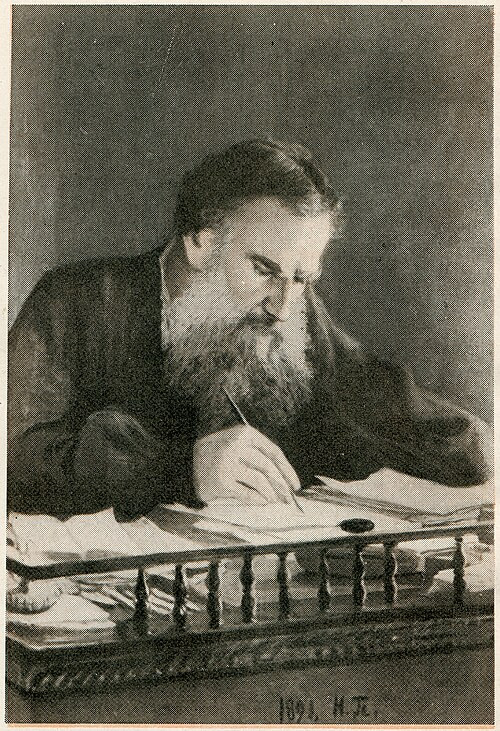
Leo Tolstoy wrote a large book called War and Peace before computers and copying machines. His wife had to copy his 3,000-page manuscript by hand seven times.

Before the advent of commercial typewriters or photocopiers, Sophia Tolstaya (Tolstoy’s wife) served as his primary scribe, editor, and transcriptionist.

Tolstoy had famously notorious, nearly illegible handwriting filled with shorthand, deletions, and additions written vertically in margins. Sophia was often the only person who could decipher it.

Tolstoy was an obsessive perfectionist who continuously edited and reworked drafts. Every time Sophia produced a clean copy by hand, Tolstoy would heavily revise, cross out, and rewrite entire sections on those new sheets—requiring her to start the process over again. She recorded in her diaries that she copied the complete draft of War and Peace by hand seven times over the course of seven years (roughly 21,000 pages of copying).

Was she rewarded for all that work?

Yes, but it’s complicated.

Leo Tolstoy was extraordinarily wealthy and financially successful, though his relationship with money was famously complicated.

His financial arc spans inherited wealth, financial disaster, massive commercial publishing success, and a total spiritual rejection of money.

Born Count Lev Nikolayevich Tolstoy, he inherited a 5,500-acre estate named Yasnaya Polyana along with hundreds of serfs. In his youth, however, he was a heavy gambler and blew through vast sums, even losing his family’s grand manor house to settle a debt.

His writing restored and vastly increased his wealth. Works like War and Peace and Anna Karenina were massive critical and financial blockbusters. He commanded huge sums from magazine publishers and used his earnings to buy back vast tracks of land, quadrupling the size of his holdings.

Later in life, Tolstoy experienced a deep spiritual crisis and adopted radical Christian anarchist and pacifist beliefs. He came to view private property and money as inherently immoral. He attempted to renounce his titles, give away his land to peasants, and place all his written works into the public domain.

His attempt to reject his wealth created decades of fierce conflict with his wife, Sophia. To prevent the family from falling into poverty, she convinced him to sign over the legal ownership of his estate and the copyright of his early works (including War and Peace) to her and their children before he renounced his remaining copyrights.

When he was nominated for the Nobel Prize in Literature in 1906, he privately urged the committee not to award it to him because he dreaded the burden of having to refuse or manage the $100,000 prize money.


Posted on — Leave a comment

Worst Failing in Business

One out of every four women fail in business. Four of every five men fail in business.

Here are 10 weird, counterintuitive, and unexpected facts about the history and mechanics of business:

Nintendo was founded as a playing card company in 1889. Long before video games, Nintendo produced hand-crafted Hanafuda cards in Kyoto. Over the next century, the company experimented with several unusual business ventures—including a taxi company, a short-stay hotel chain, a instant rice company, and vacuum cleaners—before finding massive success in electronic toys and video games.

The “100-Year-Old Company” capital of the world is Japan. Japan is home to over 33,000 shinise—businesses that have been operating continuously for more than 100 years. This includes Kongo Gumi, a construction firm founded in 578 AD that built Buddhist temples for over 1,400 years before becoming a subsidiary in 2006.

FedEx was saved from bankruptcy by a lucky night in Las Vegas. In 1973, Federal Express was down to its last $5,000 and facing complete collapse because it couldn’t afford jet fuel. Founder Frederick Smith took the remaining cash to Las Vegas, played blackjack, and turned it into $27,000. That covered fuel for another week, giving him just enough time to raise $11 million in equity funding.

Wrigley started as a soap business. William Wrigley Jr. originally moved to Chicago in 1891 to sell soap. To incentivize merchants, he offered free baking powder with every soap order. When the baking powder proved more popular than the soap, he switched to selling baking powder and offered free chewing gum with every can. Once again, the freebie outperformed the product, leading him to launch Wrigley’s Spearmint.

Lamborghini exists purely out of spite. Ferruccio Lamborghini was a wealthy tractor manufacturer who owned a Ferrari. Frustrated by constant clutch troubles, he brought feedback directly to Enzo Ferrari. Ferrari dismissed him, saying, “The problem is not with the car, but with the driver,” and told him to stick to tractors. Insulted, Lamborghini vowed to build a better sports car and launched his own automaking company in 1963.

The inventor of the friction match refused to patent it. English chemist John Walker invented the friction match in 1826 by accident while scraping a mixing stick coated with chemicals across his hearth. Believing the invention was too beneficial to humanity to monopolize, he refused to patent it. As a result, others patented similar designs (like “Lucifers”), missing out on millions in royalties while democratizing fire-starting worldwide.

McDonald’s is primarily a real estate enterprise, not a restaurant operator. While famous for burgers, McDonald’s corporate income relies heavily on real estate holdings. McDonald’s Corporation buys the land and buildings for its locations, then leases them back to franchisees—often charging a markup on rent alongside sales royalties. Former CFO Harry J. Sonneborn famously noted, “We are technically not in the food business. We are in the real estate business.”

Puma and Adidas were founded by feuding brothers. Adolf and Rudolf Dassler ran a successful shoe company together in Germany in the 1920s and 1930s. A bitter personal and political rift during World War II split the brothers permanently. In 1948, Adolf founded Adidas (from “Adi” “Dassler”), and Rudolf founded Puma. The rivalry divided their home town of Herzogenaurach for decades, down to which local businesses citizens visited depending on their footwear.

The most expensive mistake in publishing history was a typo in a phone book. In 1988, Yellow Pages printed an advertisement for a luxury travel agency named Exotic Travels, but accidentally mistyped the name as “Erotic Travels.” The error ruined the agency’s professional reputation and overwhelmed their phones with inappropriate inquiries. Yellow Pages ended up paying a court settlement of over $18 million.

Bubble wrap was originally invented to be textured 3D wallpaper. In 1957, engineers Alfred Fielding and Marc Chavannes sealed two shower curtains together, trapping air bubbles inside, in an attempt to create a trendy textured wall covering. When that failed, they tried marketing it as greenhouse insulation. It wasn’t until 1960 that Sealed Air Corporation realized its true potential as protective packaging, famously pitching it to IBM to ship their new computers.

Posted on — Leave a comment

Worst Sex To Be

Men are twice as likely to die from accidents as women.

Across biology, health, education, and social dynamics, female physiology and social structures provide distinct advantages supported by scientific, statistical, and biological research:

1. Superior Life Expectancy and Longevity

Across nearly every culture and historical era, women outlive men by an average of 4 to 5 years. This longevity advantage exists even in extreme conditions such as severe famines and epidemics.

2. Stronger Immune Systems

Estrogen enhances immune responses, enabling women’s bodies to fight off viral and bacterial infections more aggressively. Additionally, having two X chromosomes provides a biological safeguard, as immune-related genes are concentrated on the X chromosome.

3. Protection Against Sex-Linked Genetic Disorders

Because women have two X chromosomes ($XX$), a mutated gene on one X chromosome can usually be offset by a healthy gene on the second. Men ($XY$) lack this redundancy, making them significantly more vulnerable to X-linked genetic disorders like hemophilia, color blindness, and Duchenne muscular dystrophy.

4. Greater Resistance to Muscle Fatigue in Ultra-Endurance

While men tend to excel in short-burst power and speed, women’s muscle fibers (which have a higher proportion of Type I slow-twitch fibers) demonstrate greater resistance to fatigue during prolonged exertion. In extreme ultra-marathons and open-water swims, the performance gap between men and women narrows substantially, with female athletes often out-pacing men over extreme distances.

5. Efficient Fat Metabolism and Energy Conservation

Women metabolize fat more efficiently than carbohydrates during sustained aerobic activity, preserving muscle glycogen. Historically and biologically, a higher average percentage of essential body fat provides a superior energy reserve during periods of starvation or resource scarcity.

6. Lower Risk of Cardiovascular Disease Early in Life

Estrogen helps keep blood vessels flexible and regulates healthy cholesterol levels (HDL vs. LDL), providing natural cardiovascular protection. As a result, women typically develop coronary heart disease about 10 years later in life than men do.

7. Higher Rates of Higher Education Attainment

In modern education statistics, women consistently outpace men in post-secondary educational attainment. Women earn the majority of bachelor’s, master’s, and doctoral degrees in many developed nations and maintain higher overall high school graduation rates.

8. Superior Fine Color Perception and Verbal Memory

Genetic variations on the X chromosome give women a higher capacity for distinguishing subtle variations within the color spectrum (particularly in the red-orange range). Studies also consistently show that women maintain a lifelong advantage in verbal memory—the ability to retain and recall word lists and verbal information.

9. Stronger Social Support Networks and Coping Strategies

Societal norms allow women greater emotional expression and openness, which translates into broader, more resilient social support networks. This “tend-and-befriend” stress response—mediated partly by oxytocin—helps mitigate chronic stress and contributes to better long-term mental health resilience.

10. Lower Rates of Accidental Death and Violent Crime

Men are biologically and socially prone to higher risk-taking behaviors, resulting in significantly higher rates of accidental deaths, violent crime involvement, and incarceration. Women statistically engage in less lethal risk-taking, contributing directly to higher survival rates across all age brackets.

11. Greater Joint Flexibility and Range of Motion

Hormones like relaxin and estrogen, combined with structural differences in skeletal geometry (such as a wider pelvic structure), grant women greater overall joint flexibility and range of motion, which reduces certain types of rigid impact injuries.

12. Protection Against “Loss of Y” Chromosome Degradation

As men age, their cells can suffer from a condition known as “mosaic loss of Y chromosome” (LOY) in white blood cells, which is linked to an increased risk of cardiac fibrosis, heart failure, and various cancers. Lacking a Y chromosome entirely, women are completely immune to this age-related genetic degeneration.

Posted on — Leave a comment

Worst Teetotaler

After marrying a promising young physician in 1867, Carrie Nation (also known as Carry Nation) was horrified to see her husband destroy his career and his life after only two years. He drank himself to death. Mrs. Nation was so angry and disgusted with alcohol that she smashed up over 30 drinking establishments. This fearsome looking nearly six-foot-tall, 175 pound woman would enter a bar with such frenzy that all the male patrons ran in fright. She busted all the bottles and much of the furniture with rocks, bricks and a hatchet.

Posted on — Leave a comment

Worst Vote

In 1968 Liechtenstein held a vote to determine whether women should be allowed to vote. Women were allowed to participate only in this vote, because until then women were not allowed to vote. The result of the vote was that women were not allowed to vote.


Worst Vote Ever in was in Liechtenstein

Here are Some Interesting Facts about Liechtenstein

It is the double-landlocked country with no airport: Liechtenstein is surrounded entirely by landlocked countries (Switzerland and Austria), making it one of only two doubly landlocked nations in the world (alongside Uzbekistan). It also has no airport—the nearest major airport is in Zurich, Switzerland.

You can rent the entire country: For around $70,000 a night, groups can symbolically rent the entire nation through a private events company. The package includes custom street signs, temporary local currency, a ceremonial key to the country, and wine tasting at the Prince’s estate.

It produces millions of false teeth: Despite its tiny size, Liechtenstein is a global powerhouse in dental manufacturing. The company Ivoclar Vivadent, based in Schaan, produces tens of millions of prosthetic teeth every year, supplying a significant portion of the global market.

The Prince is a practicing monarch with real political power: Unlike most European monarchs who play purely ceremonial roles, the Prince of Liechtenstein (currently Prince Hans-Adam II) holds substantial executive powers, including the veto power over legislation and the ability to appoint judges.

It accidentally invaded its neighbor (and brought back a friend): During the Austro-Prussian War in 1866, Liechtenstein sent an army of 80 men to guard an Alpine pass. They saw no action, suffered zero casualties, and allegedly returned with 81 men because they befriended an Italian soldier along the way.

There are more registered businesses than residents: Thanks to low corporate tax rates, business-friendly laws, and high economic stability, Liechtenstein hosts more registered corporate entities and holdings than its population of roughly 40,000 people.

It has no national military: Liechtenstein officially disbanded its army in 1868 to save money. Today, national security is handled by the national police force, and Switzerland maintains a informal protective relationship with the country.

The billionaire Prince owns the entire country’s bank: Prince Hans-Adam II is one of the world’s wealthiest monarchs, with a fortune largely derived from owning LGT Group, a private banking and asset management group.

National Day features a party in the Castle gardens: Every August 15th on Liechtenstein’s National Day, the Princely Family invites all citizens and visitors to the grounds of Vaduz Castle for drinks, receptions, and a public fireworks display.

It is one of the wealthiest countries per capita: Driven by high-tech manufacturing (such as power tools and precision instruments), finance, and specialized industry, Liechtenstein consistently boasts one of the highest GDPs per capita in the world and virtually zero unemployment.

Posted on — Leave a comment

Worst Singing


Kathy and Janet’s application for the 2008 Arctic Winter Games.

Some people may consider this Inuit throat singing the world’s worst singing, but to others, it’s beautiful.

Interesting Facts About the Inuit People

They Have Over 50 Words for Snow and Ice

The Inuit languages (such as Inuktitut) have an extraordinary vocabulary for frozen water. Rather than having dozens of completely unrelated root words, their polysynthetic language structure allows them to create precise descriptive terms for specific conditions—such as qaniit (falling snow), aput (snow on the ground), pukak (crystallized snow that looks like sugar), and siqulloq (crusted snow).

They Used Armor Made from Walrus Ivory

Long before European contact, Inuit warriors crafted protective plate armor called qatigait. Made from overlapping plates of walrus ivory or bone bound together with raw leather thongs, this lightweight armor was designed to deflect arrows, spears, and harpoons during conflicts.

They Invented “Polaroid” Sunglasses Thousands of Years Ago

To combat intense snow blindness caused by sunlight reflecting off snow and ice, the Inuit engineered traditional snow goggles (iggaak). Carved from driftwood, bone, or walrus ivory, these goggles featured narrow horizontal slits that drastically reduced incoming glare while sharpening visual focus.

Their Traditional Diet is Almost Entirely Meat, Yet They Avoid Scurvy

Living in the Arctic tundra where plants are scarce for most of the year, the traditional Inuit diet consisted almost entirely of meat and fish—including seal, whale, caribou, and arctic char. Despite the lack of citrus fruits or fresh produce, they historically avoided scurvy by eating raw, nutrient-rich foods like muktuk (whale skin and blubber), organ meats, and seal liver, which are naturally high in Vitamin C.

Igloos Are Far Warmer Inside Than You Think

While an igloo is built purely out of hard-packed snow blocks, snow functions as a remarkable natural insulator due to trapped air pockets. Body heat alone can raise the internal temperature of a well-built igloo to 40°F to 60°F (4°C to 16°C) even when the outside temperature plummets to -40°F (-40°C). Adding a small seal-oil lamp (qulliq) can bring the interior up to near-room temperature.

The Term “Eskimo” is Considered Derogatory

The term “Eskimo” was historically used by non-Indigenous people to describe Arctic populations, but it is now widely recognized as culturally insensitive or offensive, particularly in Canada and Greenland. The term is believed to derive from an Algonquin word meaning “eaters of raw meat.” The people self-identify as Inuit, which simply means “the people” in Inuktitut (with Inuk being the singular noun).

More About Throat Singing

Inuit throat singing (Katajjaq) is a unique form of vocal performance traditionally practiced by two women standing face-to-face. Rather than a formal concert, it began as a friendly competition or game to entertain children while men were away hunting. The performers rhythmically inhale and exhale to imitate natural sounds (like wind, birds, or river water), attempting to outlast each other until one bursts into laughter.

Inuit Mythology Features a Terrifying Child-Stealing Monster

Inuit oral tradition includes rich folklore to teach children survival lessons. One famous figure is the Qalupalik, a human-like sea monster with green skin, long fingernails, and a low hum. According to legend, the Qalupalik wears an amauti (a traditional child-carrying parka) to snatch children who wander too close to the ice edge without adult supervision.

They Have Genetic Adaptations to Extreme Cold and High-Fat Diets

Studies show that Inuit populations possess unique genetic adaptations honed over thousands of years. Research highlights mutations in the CPT1A and FADS genes, which allow their bodies to process high levels of omega-3 fatty acids without experiencing high rates of cardiovascular disease, while also helping their bodies produce heat from fat reserves more efficiently.

They Developed Parkas, Kayaks, and Anoraks

Many modern winter items trace their origins directly to Inuit ingenuity. The word kayak comes from the Inuktitut word qajaq (a seal-skin covered hunting boat designed to be watertight). Similarly, parka and anorak originate from Arctic Indigenous languages, referring to hooded, animal-pelt garments tailored with natural oils to resist sub-zero temperatures and sea spray.