Posted on — Leave a comment

Worst Male Vanity

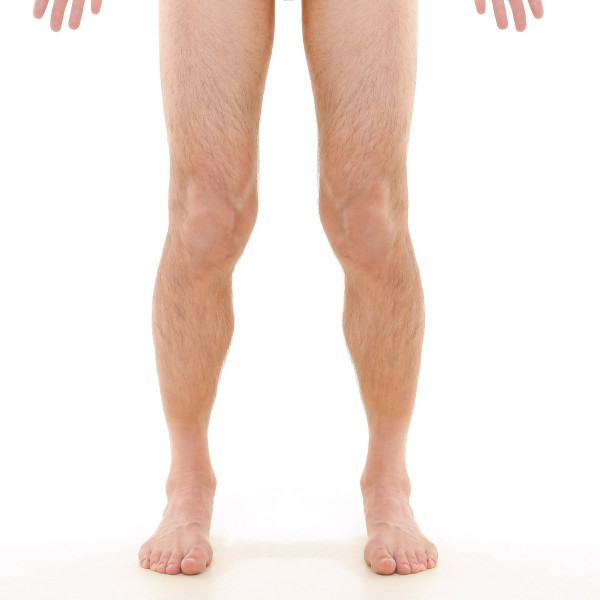
European men used to be vain about their legs – to the point where they knew which leg was the best looking. These men would place their “best foot forward.”

More On Male Vanity

1. The Louis XIV Heel Revolution

High-heeled shoes were originally invented for male aristocrats in Persia for horseback riding, but King Louis XIV of France popularized them as the ultimate symbol of royal male vanity. He restricted red-heeled shoes strictly to his inner circle of noble men to display elevated status.

2. 18th-Century “Macaronis”

In 1770s England, young wealthy men known as “Macaronis” took male grooming and fashion vanity to extreme heights. They wore towering, oversized powdered wigs, tight colorful silk clothing, and carried delicate perfume bottles, sparking saturated satirical cartoons of the era.

3. The “Brotox” Surge

Cosmetic procedures among men have surged dramatically over the past decade, leading to the coining of terms like “Brotox” (male botulinum toxin injections). According to plastic surgery associations, male Botox treatments have grown by over 400% since 2000.

4. Beard Oil in Ancient Mesopotamia

Male vanity regarding facial hair is thousands of years old. Ancient Assyrian and Babylonian men spent hours daily curling, braiding, and oiling their beards with gold dust, scented oils, and intricate ringlets to signal wealth and high military rank.

5. George “Beau” Brummell’s 5-Hour Routine

Beau Brummell, the 19th-century British dandy who reshaped modern male suits, spent upwards of five hours every single day dressing and grooming. His vanity routine included polishing his leather boots with champagne to achieve a perfect shine.

6. The Symmetrical Face Bias

Evolutionary psychologists note that male vanity often centers heavily on jawlines and facial symmetry. Studies show men with highly symmetrical facial features and pronounced jawlines subconsciously receive higher social perception scores regarding leadership and physical competence.

7. The Roman “Calvities” Panic

Julius Caesar was notoriously insecure about his receding hairline (calvities). To conceal his baldness, he famously used the ancient equivalent of a “comb-over” and pushed hard for the Roman Senate to grant him the privilege of wearing a laurel wreath at all times.

8. Makeup as War Paint in Ancient Egypt

Egyptian men of all social classes wore heavy black eye makeup (kohl) and green copper pigments. While partly functional against harsh desert sun and eye infections, it was equally driven by vanity, as cosmetic aesthetics were linked directly to divine beauty and status.

9. The Rise of “Bigorexia”

Male body image vanity has a documented clinical counterpart known as Muscle Dysmorphia (or “Bigorexia”). Individuals affected by this condition view themselves as small or insufficiently muscular regardless of how massive or lean their physique actually is.

10. Codpiece Fashion Inflation

In 16th-century Europe, male vanity focused on the groin area via the “codpiece.” Originally a functional flap on trousers, men began padding, embroidering, and inflating codpieces to absurd proportions to project virility, social dominance, and power.

Posted on — Leave a comment

Worst Way to Speak

Try to say the alphabet without moving your lips or your tongue. Every letter will sound exactly the same.

More Unexpected Facts About Speech

2. Foreign Accent Syndrome

A rare neurological condition (often caused by a stroke or head trauma) can cause a person’s speech pattern, pitch, and rhythm to suddenly shift, making them sound like they are speaking their native language with a foreign accent.

3. The McGurk Effect

Your eyes actively trick your ears when listening to someone speak. If you watch a video of a person mouthing “ga-ga” while the audio plays “ba-ba,” your brain fuses the two inputs and causes you to hear “da-da.”

4. Speech Jamming with Echoes

You can completely paralyze someone’s ability to speak simply by playing their own voice back to them with a delay of about 200 milliseconds. This phenomenon, called Delayed Auditory Feedback, overwhelms the brain’s cognitive loop, causing most people to stutter or stop speaking entirely.

5. Trained Whistled Languages

In rugged, mountainous regions like La Gomera in the Canary Islands, people developed Silbo Gomero—a fully functional whistled version of Spanish. It converts vocal phonemes into high-pitched whistles that can travel over three miles across deep valleys.

6. The “Yesterday” Temporal Shift

In English, we use spatial metaphors for time (e.g., looking “forward” to the future and leaving the past “behind”). However, speakers of Aymara, an indigenous language of the Andes, perceive the past as being in front of them (because it is known/seen) and the future behind them.

7. Unconscious Vocal Accommodation

When two people talk, they naturally and unconsciously mirror each other’s speech cadence, accent, volume, and pause lengths. Known as “communication accommodation,” this subconscious habit is a built-in human mechanism to build rapport.

8. The Speed of the Human Tongue

The tongue is one of the fastest and most precise muscles in the human body, capable of executing up to 90 distinct movements per minute during rapid speech to modulate airflow against teeth and palate.

9. Involuntary Vowel Lengthening

When people lie, their vocal cords often tighten due to stress, subtly raising the pitch of their voice. To compensate, liars frequently extend their vowel sounds (“uuuh”) to buy time without creating suspicious silent pauses.

10. The “Gag” Reflex Inhibitor

When you speak, your soft palate rises to seal off the nasal cavity so air flows properly through your mouth. This movement temporarily suppresses your gag reflex, which is why swallowing or talking prevents gagging during dental exams.

Posted on — Leave a comment

Worst Fact About Toilet Paper

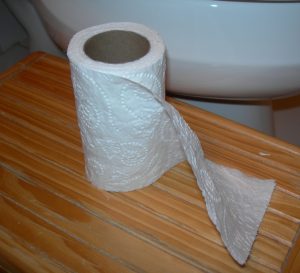
Americans use enough toilet paper in one day to wrap around the world nine times. If it were on one giant roll, we would be unrolling it at the rate of 7,600 miles per hour (12,200 kph) – roughly mach. 10, ten times the speed of sound.

Ten More Facts About Toilet Paper

1. Early Commercial Toilet Paper Was Marketed as Splinter-Free

In 1935, Northern Tissue proudly advertised its product as “splinter-free.” Manufacturing techniques prior to the mid-1930s often left stray wood fibers in the paper rolls, making splinters a genuine risk for users.

2. The Original Patent Settles the “Over vs. Under” Debate

Seth Wheeler, who patented the perforated toilet paper roll in 1891, included official illustrations in his patent filing showing the paper hanging “over” the top of the roll rather than “under.”

3. Roman Citizens Used a Shared Sponge on a Stick

Before paper was invented, ancient Romans in public latrines cleaned themselves using a tersorium—a communal sea sponge attached to a wooden stick, which was soaked in a bucket of salt water or vinegar between uses.

4. Modern Toilet Paper Was Originally Sold Infused with Aloe

In 1857, Joseph Gayetty introduced the first commercially available packaged toilet paper in the U.S. “Gayetty’s Medicated Paper” consisted of flat hemp sheets lubricated with aloe and featured his name printed on every individual sheet.

5. Johnny Carson Once Caused a Real-Life Shortage

During a 1973 episode of The Tonight Show, host Johnny Carson made a joke during his monologue about an impending toilet paper shortage. Viewers panicked and rushed to stores, causing an actual nationwide shortage that lasted almost a month.

6. A Single Tree Yields Roughly 100 to 200 Rolls

An average mature tree yields roughly 100 to 200 rolls of toilet paper depending on the wood species and manufacturing process. Globally, over 27,000 trees are cut down or recycled daily to meet consumption demands.

7. The Sears Catalog Was the First Choice for Rural America

In the late 19th and early 20th centuries, many rural Americans relied on the mail-order Sears, Roebuck & Co. catalog in outhouses. Usage declined significantly when Sears began printing catalog pages on glossy, non-absorbent paper.

8. Colored Toilet Paper Was a Major 1970s Fashion Trend

During the 1960s and 1970s, toilet paper was manufactured in pastel shades of pink, green, yellow, and blue to match bathroom decor. Manufacturers phased it out due to health concerns, plumbing issues, and dye allergies.

9. Astronauts Don’t Use Toilet Paper in Space

Because zero-gravity environments render standard plumbing useless, space station toilets use air-vacuum suction systems to collect solid waste, which is then compressed, stored, and incinerated during atmospheric re-entry.

10. Corncobs Were the Pre-Industrial Standard in America

Prior to the widespread availability of cheap paper, dried corncobs were the most popular toilet paper alternative in early agricultural America due to their soft, absorbent texture and abundance after harvest.

Posted on — Leave a comment

Most Embarrassing Way to Treat a Cow

Do not stick your finger in the nose of a cow, unless you are willing to violate one of the rules of the Professional Rodeo Cowboys Association.

Under the Professional Rodeo Cowboys Association (PRCA) rulebook, animal welfare and competition rules strictly regulate how competitors handle livestock. Specifically:

Animal Abuse Regulations: PRCA Rule 9.0 strictly forbids inhumane treatment, abusive handling, or poking sensitive areas of cattle, horses, or bulls. Sticking fingers into an animal’s eyes, ears, or nostrils – whether in the arena or in the chutes – violates animal welfare standards and carries steep fines or disqualification.

Steer Wrestling (Bulldogging): In steer wrestling, where a cowboy leaps from a horse onto a steer’s back to bring it down, the wrestler must use the steer’s horns and neck/jaw for leverage. Using nostrils or the mouth to twist or control the animal’s head is considered an illegal hold.

While the PRCA official rulebook uses broader legal and technical language regarding animal handling and legal wrestling holds rather than the colloquial sentence “Do not stick your finger in the nose of a cow,” doing so does indeed violate PRCA rules.

Posted on — Leave a comment

Worst Way to Market a Sparrow

In Harper Woods, Michigan, it is against the law to paint a sparrow and claim it’s a parakeet.

Facts About Sparrows

  1. Global Presence: Sparrows are found on almost every continent in the world, except for Antarctica. They are one of the most widespread and adaptable bird species on Earth.
  2. Fast Fliers: Despite their small size, house sparrows usually fly at a speed of around 24 miles per hour (38 km/h). When necessary, they can reach speeds up to 31 miles per hour (50 km/h)!
  3. Dust and Water Baths: Sparrows love to keep clean by taking water baths, but they are also famous for taking “dust baths.” They dig small holes in dry soil and throw dirt over their feathers to clean off parasites.
  4. Highly Social Birds: Sparrows are very gregarious and live in colonies. They nest, forage, and protect themselves together, often communicating using a wide variety of chirps and calls.
  5. Close Relationship with Humans: House sparrows (Passer domesticus) have evolved alongside humans for thousands of years. They rarely inhabit dense forests or deserts, preferring urban, suburban, and agricultural areas near human settlements.
  6. Adaptable Diet: While their natural diet consists mostly of seeds, grains, and insects, sparrows are opportunistic eaters. In urban environments, they easily adapt to eating food scraps left behind by humans.
  7. High Heart Rate: Sparrows have a incredibly fast metabolism. When a sparrow is at rest, its heart beats around 460 to 800 times per minute, which can spike even higher during flight or stress. By comparison human hearts usually beat at around 50 to 90 beats per minute.
  8. Faithful Partners: Many sparrow species are monogamous and tend to pair for life. Both male and female parents actively share responsibilities like building the nest, incubating eggs, and feeding the chicks.
  9. Non-Migratory (Mostly): Most sparrow species do not migrate long distances for winter. Instead, they stay in the same general region year-round, braving the cold by fluffing up their feathers to trap warm air.
  10. Symbolic Meaning: Throughout history, sparrows have held cultural significance. In ancient Greece, they were associated with Aphrodite, the goddess of love, symbolizing devotion and connection. In other cultures, they represent protection, joy, and simplicity.
Posted on — Leave a comment

Worst Carpet Tacking Situation

I found the following in a book published in 1858:

“An English gentleman, traveling some years ago in Ireland, took a hammer and tacks with him, because he found dog’s-eared carpets at all the inns where he rested. At one of these inns he tacked down the carpet which, as usual, was loose near the door, and soon afterwards rang for his dinner. While the carpet was loose the door could not be opened without a hard push: so when the waiter came up, he just unlatched the door, and then going back a couple of yards, he rushed against it, as his habit was, with a sudden spring to force it open. But the wrinkles of the carpet were no longer there to stop it, and not meeting with the expected resistance, the unfortunate waiter fell full sprawl into the room. It had never entered his head that so much trouble might be saved by means of a hammer and half-a-dozen tacks, until his fall taught him that make-shift is a very unprofitable kind of shift.”

Posted on — Leave a comment

Worst Name for a Child

On September 12, 1984, Sandra Williams gave birth to her daughter in Texas. Originally, Sandra and her husband gave the child an unusually long name: Rhoshandiatellyneshiaunneveshenk Koyaanisquatsiuth Williams.

However, three weeks later, Sandra felt the name wasn’t unique enough and filed a formal amendment to extend it, taking roughly six years to craft the full string of letters by combining words, family names, car models, and movie titles.

The Full Name

The amendment expanded her first name to 1,019 letters, added a 36-letter middle name, and ended with her surname.

Her official first name is:

Rhoshandiatellyneshiaunneveshenkescianneshaimondrischlyndasaccarnaerenquellenendrasamecashaunettethalemeicoleshiwhalhinive’onchellecaundenesheaalausondrilynnejeanetrimyranaekuesaundrilynnezekeriakenvaunetradevonneyaestonyeawenaavedenneyshaevamassneylekeyancndrolyneciauonstadesiashviliyashawnequadvanceboundasneydneauvhawnondasneequawasdainyevranowashawnequawisdandnaseawawnefawne… (along with hundreds of additional letter combinations)

Her 36-letter middle name is Koyaanisquatsiuth, and her last name is Williams.

Key Details & Impact

  • The Record & Birth Certificate: The resulting birth certificate was two feet (61cm) long to accommodate the entire name, setting a Guinness World Record for the longest personal name.
  • Everyday Life: For obvious practical reasons, her family and friends simply call her “Jamie”. As a child, her mother had to record her full name onto an audiotape and play it repeatedly so Jamie could memorize how to pronounce it.
  • Oprah Appearance: In 1997, Sandra and 12-year-old Jamie appeared on The Oprah Winfrey Show, where Jamie successfully recited her full name on air to a stunned studio audience.
  • State Law Change: Following this incident, the state of Texas updated its vital statistics laws to require that a child’s name must fit within the standard “name” box on the state birth certificate form, effectively closing the loophole.

Following her brief media exposure in the mid-1990s as a child, Jamie stepped entirely out of the public eye.

Posted on — Leave a comment

Worst Chemical Names

Some scientists have a sense of humor. You can see it when they name new molecules and compounds: Some of the chemical names they have come up with include:

Buckminster Fullerene

Megaphone

Vomitoxin

Rednose

Deadcat

Bastardane

Sonic Hedgehog

Cummingtonite

Moronic Acid

DAMN (Diaminomaleonitrile)

Curious Chloride

PU

Constipatic acid

Dead

Fucitol

Broken Windowpane

Piranha Solution

Nonanal

Periodic Acid

Diabolic Acid

Antipain

Dogcollarane

Crapinon

Arsole.

You can find more, and read the stories behind some of these names at www.chm.bris.ac.uk/sillymolecules/sillymols.htm.

Posted on — Leave a comment

Worst Way to Write a Book

In 1939 an author named Ernest Vincent Wright wrote a 50,000 word novel called Gadsby. The only thing unusual about the novel is that there is not a single letter e in the whole thing.

Why Did He Write It?

To Prove Critics Wrong: Wright was inspired after discovering that “e” is the most frequently used letter in English (occurring roughly five times more often than any other letter). When he brought up the idea of writing a book without it, colleagues told him it was impossible to accomplish without writing complete nonsense or breaking basic rules of grammar. He took on the challenge specifically to prove it could be done.

As a Technical “Lipogram” Challenge: Wright wanted to test the flexibility of the English language. A work written while deliberately omitting a specific letter or group of letters is known as a lipogram.

How He Pulled It Off

Physical Constraint: To avoid typing the letter by accident, Wright physically tied down the “E” key on his typewriter so it couldn’t strike the ribbon.

Grammatical Hurdles: Omitting “e” meant he could not use common pronouns (he, she, they, them, it), articles (the), or standard past-tense verbs ending in -ed.

Creative Substitutions: He had to heavily alter vocabulary and phrasing—for instance, changing famous quotes like “A thing of beauty is a joy forever” to “A charming thing is a joy always.”

Was it a Popular Book?

When it was first published, Gadsby was an absolute commercial and critical flop, though it eventually became a famous cult curiosity and rare book collector’s item.
Initial Reception & Sales

Rejected by Traditional Publishers: Wright spent over two years trying to find a mainstream publisher, but none would take it. He ultimately had to pay a vanity press (Wetzel Publishing Co.) in Los Angeles to print it in 1939.

Virtually Ignored: The book received almost no attention or serious literary reviews upon release. The public had little interest in reading a story whose primary selling point was an awkward constraint.

Tragic Timing: Wright died in October 1939 at the age of 66—just months after the book was printed—and never saw his work gain any recognition.

The Warehouse Fire

Shortly after the book was printed, a fire broke out at the publisher’s warehouse, destroying most of the unsold stock. Because the original print run was already very small and few copies were sold prior to the fire, surviving first-edition physical copies became extremely scarce.
Modern Cult Status

While it was a commercial failure in 1939, Gadsby gained a legendary reputation in niche literary circles decades later:

Literary Curiosity: It became famous among word-game enthusiasts, lexicographers, and fans of “constrained writing” (lipograms).

Collector’s Item: Because so few copies survived the warehouse fire, original first editions of Gadsby are highly valuable, with rare copies selling anywhere from $4,000 to $9,000+ depending on condition and whether they retain the original dust jacket.

Public Domain Classic: Since the copyright was not renewed, the text entered the public domain and is now widely available to read online for free.

The Author

In addition to writing several books, Ernest Vincent Wright was a dance instructor, musician, typewriter salesman, and newspaper editor.

The First Two Paragraphs

Here are the first two paragraphs of Chapter 1 of Gadsby by Ernest Vincent Wright:

“If Youth, throughout all history, had had a champion to stand up for it; to show a doubting world that a child can think; and, possibly, do it practically; you wouldn’t constantly run across folks today who claim that ‘a child don’t know anything.’ A child’s brain starts functioning at birth; and has, amongst its many faculties, an ability to assimilative thought.

Up to about its primary school days a child thinks, naturally, only of play. But many a form of play contains disciplinary factors. ‘You can’t do this,’ or ‘that puts you out,’ shows a child that it must think, practically, or fail. Now, if, throughout childhood, a brain has no opposition, it is plain that it will attain a position of ‘status quo,’ as with our ordinary animals. Man knows not why a cow, dog or lion was not born with a brain on a par with ours; why such animals cannot add, subtract, or obtain from books and schooling, that paramount position which Man holds today.”