Posted on — Leave a comment

Worst Computer Bug

Always double-check your work.

The programmer in charge of a computer with the job of issuing traffic citations goofed in September, 1989. The computer sent notices to 41,000 residents of Paris, France informing them that they were charged with murder, prostitution and illegal sale of drugs.

Here’s more about that mistake

What Happened

The Paris judicial system had recently automated its automated notice and collection system. Instead of generating routine notices for minor parking violations and traffic infractions, a bug in the code cross-indexed or misaligned the offense code database.

Rather than pulling the text strings for minor driving infractions (like illegal parking, speeding, or running a red light), the system pulled charges from the severe criminal code database.

The Aftermath

Over 41,000 residents opened official, sternly worded legal summonses from the Ministry of Justice informing them that they were under investigation or charged with major crimes—including:

Murder and manslaughter

Organized prostitution

Extortion and blackmail

Illicit drug trafficking

As you can imagine, the mistake caused widespread panic, outrage, and chaos at local police stations and court houses as thousands of bewildered drivers showed up trying to clear their names of hitman-level charges when they had simply overstayed a parking meter.

French officials quickly issued public apologies, clarified that it was a technical glich, and assured residents that no felony charges were actually being pursued. It remains a legendary classic example in computer science and IT history of what can go wrong with early automated database management.

Posted on — Leave a comment

Worst Rainstorm

One day in August 1892, in Panderborn, Germany, it started to rain. This rainstorm was unusual because somehow there were thousands of snails caught up in the clouds and they all came crashing down with their shells breaking to bits as they hit the ground. This weird event was formally recorded and analyzed by meteorologists at the time.

While it sounds like something straight out of a folklore tale, there are multiple documented historical accounts of “snail showers”.

A couple other notable historical occurrences include:

Redruth, Cornwall, England (1886): A violent thunderstorm darkened the sky over the town and showered thousands of live snails over the countryside.

Chester, Pennsylvania, USA (1870): A storm dropped so many snails over the city that local accounts described it as a dense “storm within a storm”.

How Does It Actually Happen?

It isn’t a biblical miracle, but rather a rare meteorological phenomenon known as “animal rain”.

Waterspouts and Tornadoes: When a strong storm or tornado passes over a shallow body of water, land, or marshy area, the powerful updraft inside the vortex acts like a giant vacuum cleaner.

Suction & Elevation: Small, lightweight creatures like snails, frogs, or small fish are sucked off the ground or out of the water and carried high into the atmosphere.

The Drop: As the storm system loses energy or moves over a new location, the wind speed drops, and the heavy updraft can no longer support the weight. The objects are dropped all at once, resulting in a localized “rain” of creatures. Because snails are relatively uniform in weight, the updrafts often sort and deposit them all in the same concentrated spot, making it look like a rain cloud specifically targeted gastropods.

Posted on — Leave a comment

Worst Excuse for a Horse

If it had not been for the Civil War, the United States Cavalry might have been riding camels. Shortly before the war, Secretary of War Jefferson Davis imported 81 camels for testing in Texas. There were some problems. Ordinary horses were terrified of the camels, and so were many of the soldiers. On the other hand, in some ways the camels were excellent. They could go for several days without water, they could carry a half-ton, and walk 40 miles a day. The military was generally impressed and were ready to start switching to camels in large numbers, but then the war developed and there was no time to deal with camel importation.

Interesting Camel Facts

They Have Three Eyelids and Two Rows of Lashes

Camels have a clear inner eyelid (a nictitating membrane) that wipes away sand while allowing them to see in a sandstorm. Their double-layered, long eyelashes form a natural shield against windblown dust.

They Store Fat, Not Water, in Their Humps

A common myth is that hump storage holds water. Humps actually store energy-dense fat. Concentrating fat in one place prevents it from insulating their entire body, allowing heat to escape more efficiently. When the fat metabolizes, it yields both energy and over a gram of water per gram of fat.

They Can Guzzle 30 Gallons of Water in 13 Minutes

When dehydrated, a camel can drink up to 30 gallons (113 liters) of water in under 15 minutes. Their oval-shaped red blood cells can expand up to 240% of their normal volume without bursting to accommodate rapid hydration.

Their Nostrils Act Like a Dehumidifier

Camels can trap moist air from their breath and absorb the moisture back into their nasal membranes before exhaling dry air, minimizing water loss simply by breathing. They can also lock their nostrils completely shut during sandstorms.

They Have Built-in Kneepads

Camels are born with thick, leathery patches of skin on their knees and chest called carpal pads. These pads protect their body from burning on scorching desert sand when kneeling.

They Are Native to North America

The evolutionary ancestors of modern camels originated in North America around 40 to 50 million years ago. They crossed the Bering land bridge into Asia and South America (evolving into llamas and alpacas) before dying out in North America around 10,000 to 12,000 years ago.

Their Blood Cells Are Unique Among Mammals

Unlike other mammals, which have round red blood cells, camels have oval-shaped cells. This unique shape allows their blood to flow smoothly even when it becomes thick due to severe dehydration.

They Waste Virtually No Water

A camel’s kidneys extract maximum water from urine, leaving behind a thick, syrupy liquid with a salt concentration higher than seawater. Their feces are so dry that nomadic tribes use them directly as campfire fuel without needing to dry them first.

They Have Rigid Mouth Interiors for Eating Thorns

The inside of a camel’s mouth is lined with tough, cone-shaped structures called papillae. This keratinized lining lets them chew straight through sharp desert thorns, cacti, and wooden twigs without pain.

They Can Regulate Their Own Body Temperature

Instead of sweating constantly, a camel allows its body temperature to fluctuate by as much as 11°F (6°C) throughout the day—rising during the hot afternoon and cooling at night—saving massive amounts of sweat and water.

Posted on — Leave a comment

Worst Way to Start a War

You can be mad at your neighbor, or your neighbor’s pig in this case, but overall it is best to really think about possible repercussions, even remote, before taking any drastic action.

It is possible that a single pig caused the US War of 1812. This pig was always getting into the neighbor’s yard and eating up prized shrubs and flowers. Finally the neighbor got mad and killed the pig with a pitchfork. The pig’s killer was a congressional candidate who lost the election by one vote. This was the vote cast against him by the late pig’s owner presumably because he was upset about the loss of his pig. When the matter of deciding about the war was voted upon, the issue passed by one vote. This was the vote of the candidate who had won the election by one vote.

Posted on — Leave a comment

Worst Reaction to a Catalog

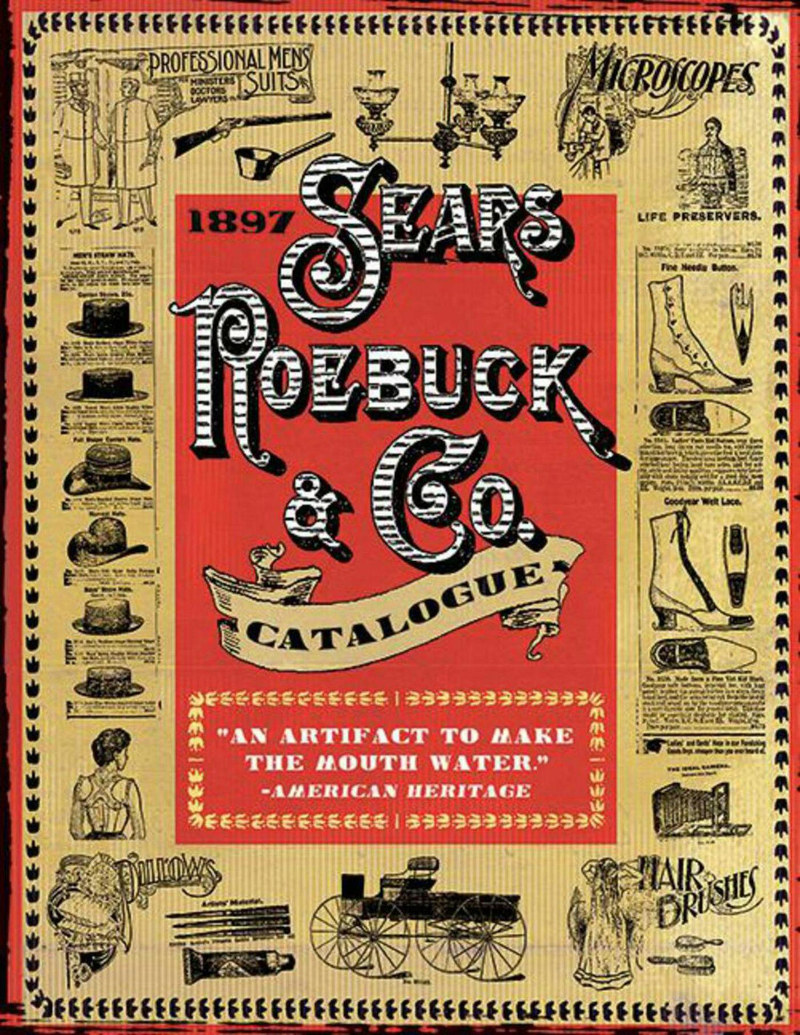
The Sears catalog and other mail-order outfits negatively affected the easy prosperity for the rural general stores. In some places the local merchants would trade with the children of the community. They’d offer one movie ticket for every Sears or Montgomery Ward catalog the kids could bring. Then these merchants would have big bonfires to burn all the catalogs.

Does this situation remind you of something? Does it seem similar to how Amazon, Temu and some other huge online companies are causing the demise of retail stores?

Unexpected Sears and Roebuck Facts

Started with an Unclaimed Shipment of Watches

In 1886, Richard Sears was a station agent for the Minneapolis and St. Louis Railroad when a local jeweler refused delivery on a shipment of gold watches. Sears bought the lot himself, sold them at a profit to other railroad agents, and founded a mail-order watch company that eventually grew into Sears, Roebuck and Co.

Alvah Roebuck Left Very Early On

Although Alvah C. Roebuck’s name remained on the company for over a century, he sold his stake in 1895 for $20,000 due to financial strain and stress. Had he held onto his share, it would have been worth hundreds of millions of dollars within a few decades. He later returned to work for the company as a publicity manager and store spokesperson during the Great Depression.

You Could Buy an Entire House by Mail

Between 1908 and 1940, Sears sold over 70,000 “Modern Homes” kit houses through its catalog. Delivered via boxcars, these kits included up to 30,000 pieces—including pre-cut lumber, nails, paint, drywall, and fitted plumbing—allowing buyers to assemble full homes themselves or hire local builders.

Engineered the Modern Shopping Mall Anchor Store

Under executive Robert E. Wood in the 1920s and 1930s, Sears recognized that the automobile was changing retail. Unlike traditional department stores built in congested city centers, Sears intentionally constructed stand-alone retail locations with dedicated parking lots on the outskirts of cities—laying the operational blueprint for the modern suburban shopping mall.

Created Household Giant Brands from Scratch

Sears built several major brands internally rather than just selling third-party goods:

Kenmore: Launched on a sewing machine in 1913 before expanding to major appliances.

Craftsman: Introduced in 1927 after buying the trademark for $500.

Allstate: Founded in 1931 as an auto insurance subsidiary sold right out of the catalog.

Launched the Discover Card

In 1985, Sears expanded into financial services and created the Discover Card. It revolutionized the credit card industry by charging no annual fee and introducing the concept of “Cashback” rewards for consumer spending.

Owned Encyclopædia Britannica

Between 1920 and 1943, Sears owned the rights to Encyclopædia Britannica. The company acquired it to help stabilize the publisher during a post-WWI financial slump and distributed the multi-volume reference sets directly through the Sears catalog.

Built the World’s Tallest Building

In 1973, Sears completed its corporate headquarters in Chicago: the Sears Tower (now the Willis Tower). Standing at 1,450 feet tall, it held the title of the world’s tallest building for 25 years until 1998.

The Catalog Functioned as an Educational Tool for Rural America

In the late 19th and early 20th centuries, the Sears catalog (often over 500 pages) was nicknamed “The Wish Book” or “The Consumer’s Bible.” Beyond selling goods, it helped standardize pricing across rural communities where local merchants charged high rates, taught rural families how to use new home technologies, and even served as reading material in rural schools.

Assisted the U.S. Postal Service Expansion

The rapid growth of Sears’ mail-order model was a key driver behind the U.S. government introducing Rural Free Delivery (RFD) in 1896 and Parcel Post in 1913. Before these services, rural Americans had to travel to distant towns to pick up mail and packages.

Lots of Signatures

You could have your kitchen remodeled through Sears. The contract required signatures in 64 places.

Posted on — Leave a comment

Worst Gold Discovery

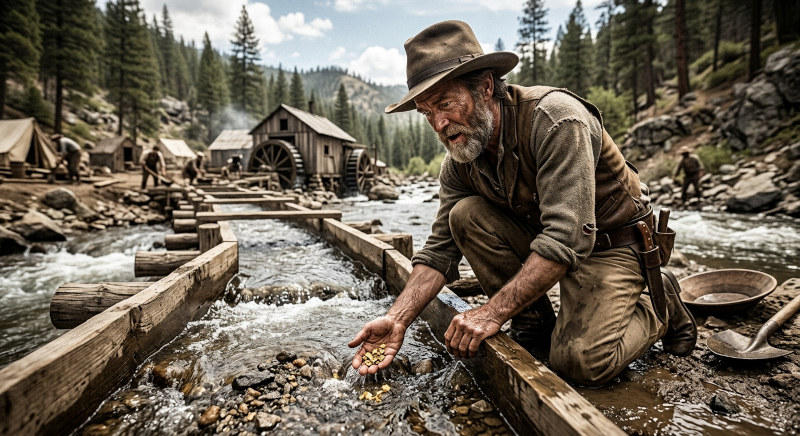
The man who started the California gold rush, James Marshall, after a first small strike, was able to find no other gold for himself, and died a penniless alcoholic.

California State Parks says Marshall continued working as a blacksmith and in small gold mines, and that he died at age 75 in 1885. The state had actually awarded him a pension in recognition of his role, but it ended in 1878 amid criticism of his drinking.

Here are some particularly fascinating details about Marshall and the discovery:

1. He wasn’t actually looking for gold

Marshall was a carpenter and mill builder working for John Sutter. He was building Sutter’s sawmill on the South Fork of the American River when he noticed something shiny in the mill’s tailrace on January 24, 1848.

In other words, one of the biggest gold rushes in history began because a carpenter was checking whether his drainage ditch was working properly.

2. His first reaction wasn’t “We’re rich!”

Marshall immediately suspected the metal was gold, but he was concerned about something much more mundane: finishing the sawmill. He and the workers temporarily stopped work and collected some of the gold, but the implications of the discovery weren’t immediately obvious.

3. The first mining tool was… a knife

This is one of my favorite details.

The flakes were difficult to pick up with the fingers, so the workers discovered they could use a knife to scrape up the gold. According to the California Geological Survey, the knife was therefore among the earliest mining implements used at Coloma. Several ounces were collected this way.

4. Marshall and Sutter tried to keep the discovery secret.

They realized that a gold discovery could cause enormous trouble for Sutter’s plans. They attempted to keep it quiet.

It didn’t work.

News leaked through the workers and then spread to other settlements. One of Sutter’s associates reportedly couldn’t resist showing the gold to people in other places.

And within a year, thousands of people were pouring into California.

5. Marshall got almost none of the fortune he created.

This is the cruelest part of the story.

Marshall eventually owned or participated in mining ventures, but he never found the fortune that prospectors dreamed about. A mine near Kelsey failed and left him nearly bankrupt. He also tried running a vineyard, but that venture failed as well.

So the man who effectively announced, “There’s gold in California!” couldn’t turn that information into a fortune for himself.

6. He actually received a government pension.

The “died penniless” version leaves out an interesting twist.

In 1872, the California legislature awarded Marshall a $200-per-month pension for two years because of his role in the discovery. It was subsequently reduced and extended, but finally ended in 1878.

At a time when $200 a month was substantial money, this could have provided considerable security. Marshall apparently wasn’t very good at turning security into prosperity.

7. Alcohol really was a problem.

There is historical evidence supporting the alcoholic part of the story. California State Parks specifically says his pension was cut amid criticism of his “weakness for liquor.” A later congressional account describes him as eccentric, contentious, unkempt and almost poverty-stricken.

But “penniless alcoholic” makes it sound as though he spent his entire later life as a hopeless drunk. That’s an oversimplification. He continued working as a blacksmith, carpenter and miner, among other things.

8. He was eventually driven out of Coloma.

Marshall became involved in a conflict involving the Nisenan people (a Native American tribe) and gold miners from Oregon. According to the historical account preserved by the Coloma community, Marshall tried to defend his Nisenan friends after violence erupted, and eventually had to flee for his life.

That’s a remarkably dark footnote to the story: the man whose discovery brought thousands of miners into the region eventually had to flee the region because of the violence accompanying the Gold Rush.

9. California’s population exploded almost immediately.

When Marshall found the gold, California’s non-Native population was only about 14,000.

By the end of 1849, it was approaching 100,000.

By 1852, it had reached roughly 250,000.

So Marshall’s discovery didn’t merely create a mining boom. It helped transform California from a remote frontier region into a rapidly growing American state.

10. The discovery wasn’t actually the first gold found in California.

This is an important historical wrinkle.

Marshall was not the first person ever to discover gold in California. Gold had been found in California before 1848, including discoveries in the Los Angeles area. What made Marshall’s discovery historically extraordinary was that it was the discovery that set off the great international rush to California.

11. Even the exact date was once disputed.

Today you’ll see January 24, 1848 everywhere, and that’s the date officially commemorated.

But Marshall himself gave somewhat inconsistent accounts of the precise date in later years. In some accounts he said January 19; in another he said the 18th, 19th or 20th. The date January 24 became firmly established later.

So even the famous “January 24” has a little historical fog around it.

12. Marshall’s prediction about his own fame came true.

Marshall reportedly said:

“Someday they’ll make a fuss over me.”

They did.

California erected a monument over his grave in 1890, and it became the state’s first historic monument. His grave overlooks the very valley where he made the discovery.

There’s a wonderfully ironic ending here: Marshall spent much of his later life frustrated that he hadn’t been adequately rewarded for the discovery, but eventually the State of California literally built a monument over his grave.

And perhaps the strangest part of the whole story is this:

Marshall discovered something that ultimately produced an estimated fortune for thousands of other people, transformed California, accelerated American settlement of the West, and helped change the demographic and economic history of the United States. Yet the discoverer himself never became rich from it.


Posted on — Leave a comment

Worst Partner Sell-Out

Alvah Curtis Roebuck born in 1864 was originally a watchmaker that Richard Warren Sears born in 1863 hired. They were opposites, Sears a promoter, Roebuck a conservative, careful man. They got along well and became partners. After a while Roebuck sold out for $25,000 because he didn’t agree with the frantic expansion of the company. He invented a typewriter and invested the proceeds of the typewriter income in Florida real estate. He lost everything in the crash of 1929. He showed up at the Sears employment office looking for any work at all. He was hired as a “celebrity” to cut ribbons at grand openings, etc.

At the age of 44 Mr. Sears retired with over $17 million.

Mr. Sears lived to an age of 51. He died after for suffering for several years with kidney disease.

Mr. Roebuck lasted 84 years. Who got the last laugh?