Posted on — Leave a comment

Worst Superstitions

There are some old superstitions that were quite seriously heeded in their time. Among them: Never eat a dinner with 13 people seated at the table. Never cut off both ends of a loaf of bread – because the Devil will jump from the bread and ‘fly all over the house.’


Other old superstitions: Do not wear red and green at the same time.


People with red hair bring about unlucky circumstances.


Always pick up a comb from a table with its teeth facing away from your body.


Never watch a child sleep or you will be risking the death of that child.


If you are a male, and you wish to be irresistible to females, tie the udder of a hyena around your left arm. So says a custom from ancient Greece.

Posted on — Leave a comment

Most Obnoxious Invention

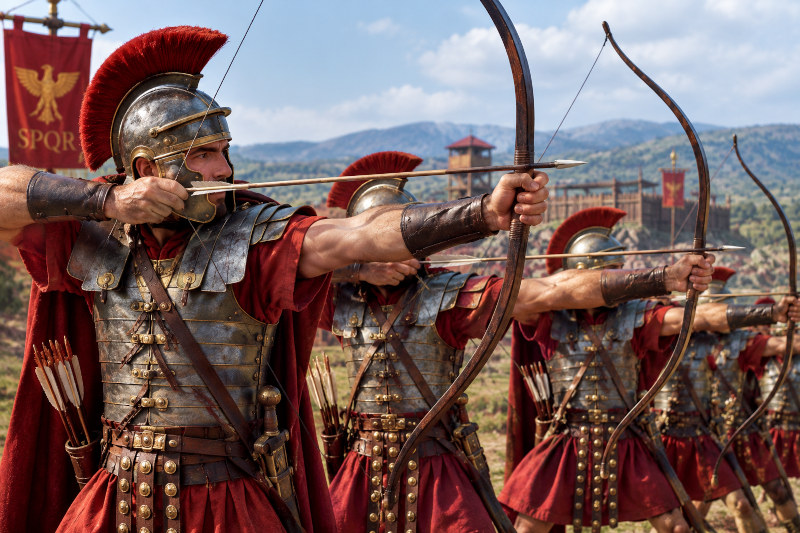
One of Leonardo da Vinci’s less known but very effective inventions was a weapon – stink bombs mounted on arrows.

In his notebooks, Leonardo da Vinci conceptualized early forms of chemical and psychological warfare, including foul-smelling smoke weapons designed to disorient and incapacitate enemies.

The Design: Leonardo sketched and described small containers packed with sulfur, pitch, and other pungent, suffocating compounds affixed to the heads of arrows or thrown as projectiles. When launched and shattered upon impact, they released an overpowering, foul stench and choking smoke.

The Purpose: The goal was not necessarily to kill, but to cause panic, force enemy soldiers to abandon their positions, or cause asphyxiation in enclosed spaces (like fortifications or ship decks) without having to breach heavy armor directly.

While it is uncertain how widely these stink-bomb arrows were ever deployed in actual battles, the schematics remain some of the earliest documented precursors to modern crowd-control malodorants and non-lethal chemical weapons.

Posted on — Leave a comment

Worst Embarrassment for Soldiers

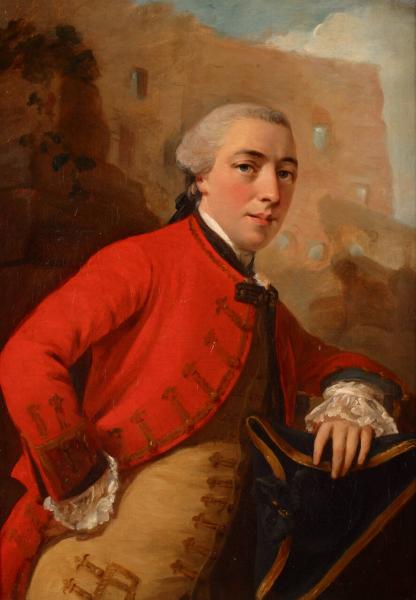
General John Burgoyne who participated on the British side of the American Revolutionary War, had great respect and obedience from his soldiers. His method of punishment was different. If a soldier misbehaved, he had the man wear his coat inside out.

Deeper Dive:

General John Burgoyne—nicknamed “Gentleman Johnny” by his men—was uniquely progressive for an 18th-century British commander. During an era when the British Army routinely relied on harsh corporal punishment, flogging, and strict subordination to enforce discipline, Burgoyne took the rare approach of treating his soldiers as thinking human beings rather than mere automatons.
Burgoyne’s Reformist Code

In 1759, when Burgoyne raised and commanded the 16th Light Dragoons, he issued a famed code of instructions to his officers:

Humiliation Over Brutality: Burgoyne strongly discouraged physical flogging, arguing that it degraded a soldier’s dignity and destroyed his self-respect.

The “Inside-Out Coat” Punishment: Instead of the whip, Burgoyne used public shame as a corrective measure. If a soldier misbehaved or showed poor conduct, he was ordered to wear his uniform coat turned inside out to visibly mark him as an example of bad behavior and dishonor to his comrades.

Encouraging Initiative: Burgoyne encouraged his soldiers to exercise independent judgment on the field—a revolutionary concept at the time.

Because he treated his soldiers with fairness, respect, and restraint, Burgoyne earned the immense devotion and obedience of his troops throughout his campaigns.


General John Burgoyne
General John Burgoyne(1722 – 1792)

Posted on — Leave a comment

Worst Woodstove

The First “Franklin stove” – a stove designed by Ben Franklin, survives to this day in many households. It is also known as the “Pennsylvania Fireplace,” The stove is a fireplace with cast iron doors as shown above.

His second stove invention, manufactured between 1771 and 1786, was called the “smoke-consuming” stove. This version has disappeared from modern times. It was an airtight, which is more efficient than most of the stoves used at that time. But, his invention was so complex and awkward to light that it never gained much favor in American homes.

It looked somewhat like an egg on a pedestal. The air came in through vents in the top of the egg, passed downward through the wood fire, and was sucked out the bottom, which was connected to the chimney through pipes running under the floor. This design caused almost total combustion of the wood, which most stoves cannot do, and the pipes under the floor warmed the floor, which was pleasant and efficient. The problem was that the system had to be warmed gradually in order to get the necessary draft or suction sufficient to avoid smoking up the whole house.

Ben claimed that the servants were too stupid to manage it. He was reluctant to say that maybe his design was just too cumbersome.


Ben Franklin's Smoke-Consuming Stove
Ben Franklin’s Smoke-Consuming Stove

Posted on — Leave a comment

Loudest Science Experiments

For centuries, people observed that heavy rains often followed major military battles, a phenomenon noted as early as Plutarch in ancient Rome and seen again during the Napoleonic Wars and the American Civil War.

In 1871, a civil engineer and Civil War veteran named Edward Powers published War and the Weather, popularizing the Concussion Theory. He argued that the violent shockwaves and noise of artillery fire “shook” moisture out of clouds or forced opposing air currents to collide.

This led to real-world, government-funded experiments:

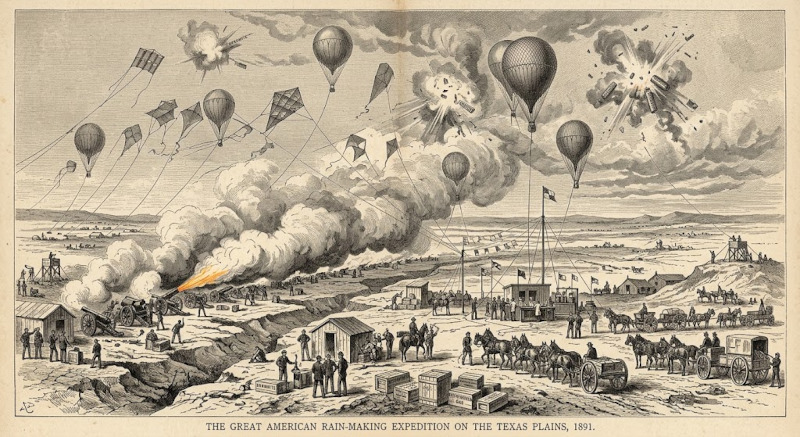
The 1891 “Boom” Expeditions: In 1890, the U.S. Congress appropriated funds for the Department of Agriculture to test the theory. Patent attorney Robert St. George Dyrenforth took a team to drought-stricken Texas.

Explosive Arsenal: Dyrenforth’s team attacked the sky using mortars, cannons, tons of dynamite, electrified kites, and oxy-hydrogen balloons detonated aloft.

The Result: The tests were deafening and completely ineffective. While occasional sprinkles fell days later—usually during Texas’s normal rainy season—the scientific consensus deemed it a total failure. Press coverage mocked Dyrenforth, dubbing him General “Dry-Henceforth.”

Why Does Rain Actually Follow Battles?

The modern understanding relies on two main factors:

Particulate Nucleation (The Smoke Effect): Heavy artillery and burning black powder release vast amounts of smoke, soot, and ash particles (condensation nuclei) into the atmosphere. Water vapor condenses around these particles, forming droplets that turn into clouds and rain. Modern cloud-seeding (using silver iodide) relies on a refined version of this principle.

Selection Bias & Military Strategy: Historically, commanders rarely initiated major tactical engagements during active downpours due to mud, poor visibility, and damp gunpowder. Battles were fought during dry spells ahead of moving weather fronts; rain naturally arrived shortly afterward regardless of artillery.

Posted on — Leave a comment

Worst Bell

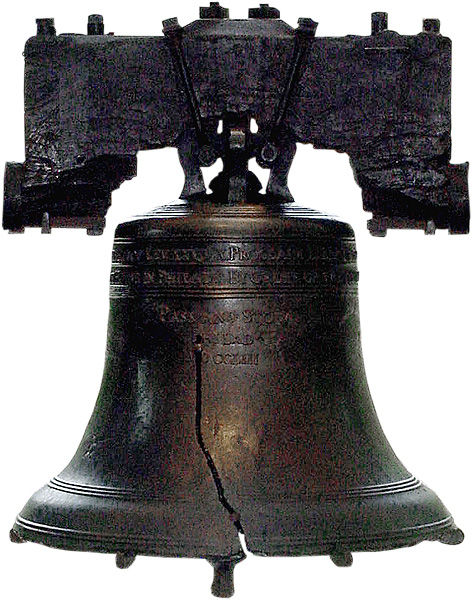
Because the Americans felt unqualified to cast a bell so large, the Liberty Bell was made in England and shipped to America. It arrived in 1752. It cracked the very first time it was rung. This was the only bell made by the Whitechapel Foundry of London that ever cracked in the 400 years they had been making them.

The colonists melted it down and tried to recast it themselves, but it did not sound good when finished. They tried again, and then Continue reading Worst Bell

Posted on — Leave a comment

Worst American Football Tackle

During the 1954 Cotton Bowl on January 1, 1954, Rice University halfback Dickey Maegle (spelled Moegle at the time) took a handoff at his own 5-yard line and sprinted down the right sideline. With no defenders left between him and the end zone, he was on his way to an easy 95-yard touchdown run.

Tommy Lewis, a full-back sitting on the bench for the opposing Alabama Crimson Tide, became so overwhelmed by the moment that he jumped up without his helmet, charged onto the field, and brought Maegle down with a shoulder tackle around Alabama’s 42-yard line before immediately retreating to the bench.

Key details from the legendary play:

The Ruling: The referees invoked the rarely used “Palpably Unfair Act” rule and awarded Maegle the full 95-yard touchdown despite him being tackled short of the end zone.

The Explanation: After returning to the sidelines, a distraught Lewis famously wept and explained, “I guess I’m just too full of ‘Bama.”

The Aftermath: The incident became an instant media sensation. Both players even appeared together on The Ed Sullivan Show a few days later, where Lewis apologized directly to Maegle.

Rice went on to win the game 28–6, but the “12th Man Tackle” remains one of the most famous and unusual plays in college football history.

Posted on — Leave a comment

Worst Lost Airplane Mistake

A B-25 bomber crashed into the 79th floor of the Empire State Building in 1945.

On a foggy Saturday morning in July 1945, a U.S. Army Air Forces B-25 Mitchell bomber lost visibility and crashed directly into the north side of the building between the 78th and 80th floors. Despite structural damage and fires that killed 14 people, the building’s steel frame remained intact, and parts of the building reopened for business two days later.

It holds a Guinness World Record for an elevator survival story. During the 1945 plane crash, elevator operator Betty Lou Oliver survived a catastrophic 75-story drop inside an elevator car after the plane’s engine severed the cables. Cables coiled at the bottom of the shaft and air trapped beneath the car cushioned the fall, making it the highest survived elevator fall in history.

The top of the Empire State Building flexes back and forth a few feet (a meter) in heavy winds.

It was built in just 13 months and completed ahead of schedule. Construction moved at a breakneck pace, progressing at an average rate of four and a half stories per week. Between March 1930 and April 1931, roughly 3,400 workers completed the 102-story structure in just 410 days—finishing under budget and well ahead of schedule.

The original spire was designed as a docking station for dirigibles. The top 200 feet of the building were originally constructed to serve as a mooring mast for commercial airships (Zeppelins). The idea was for airships to tie up to the spire, allowing passengers to disembark via an open-air gangplank on the 102nd floor, but high winds and safety hazards forced the idea to be abandoned after only a couple of brief tests.

It was involved in a fierce “Race to the Sky.” During the late 1920s, developers in Manhattan competed aggressively for the title of the world’s tallest building. The Empire State Building’s designers modified their plans mid-construction—specifically adding the mooring mast—to surpass both 40 Wall Street and the Chrysler Building, securing the crown of world’s tallest building for 41 years until 1972.

It generates more revenue from its observatories than from office rents. While hundreds of businesses lease office space across its lower floors, the 86th and 102nd-floor observation decks consistently bring in more money than commercial real estate leases, generating over $100 million annually from millions of global tourists.

It serves as its own zip code. Due to its massive scale, thousands of daily workers, and high volume of mail, the United States Postal Service assigned the Empire State Building its own unique zip code: 10118.

Its famous tower lights require a dedicated team and change color daily. The building introduced light displays in 1932 to announce Franklin D. Roosevelt’s presidential victory. Today, a state-of-the-art computer-controlled LED system displays over 16 million colors to recognize holidays, sports teams, global organizations, and cultural events.

It is an iconic lightning rod, struck around 25 times per year. Standing tall over Midtown Manhattan, the building’s top spire acts as a massive lightning rod for the city. It features a heavy grounding system that channels millions of volts safely into the earth, preventing structural damage and keeping visitors inside completely safe during storms.

Athletes race up its 1,576 steps in an annual footrace. Every year since 1978, the building hosts the Empire State Building Run-Up. Runners from around the world sprint up the 86 flights of stairs from the ground lobby to the main observatory, with top competitors finishing the vertical climb in under ten minutes.

Posted on — Leave a comment

Worst Things to Eat

In 1985, a valve in a dairy leaked a little bit of raw milk into a large tank of pasteurized milk. Two hundred thousand people got food poisoning.

Fifty percent of all turkeys and 37 percent of all chickens that you can buy in grocery stores are contaminated with Campylobacter (food poisoning) according to the US Food and Drug Administration.

Last year 81 million Americans got sick from food poisoning and 9,000 of them died. The average American will get food poisoning 100 times in a lifetime. The symptoms are headache, sick feeling, diarrhea. Most people think this is the flu. To prevent food poisoning, clean all kitchen items with heat, never leave food at room temperature for more than a few minutes, and never handle prepared food after handling raw meat or poultry.

Posted on — Leave a comment

Worst Way to Treat a Scientist

According to his own retelling, when Thomas Edison was twelve years old, he had a job selling newspapers on a commuter train. He had set up a printing press on the train to make his own newspapers, and thereby increase his profits. He also set up a chemistry lab, to indulge his already well-developed scientific curiosity. One day, as the train went around a particularly tight turn, some of Edison’s phosphorus fell on the floor and started a small fire. As the train came into the station, and the conductor discovered the problem, Tom tried to run away. The conductor pulled him back up into the train by his ears. “I felt something snap inside my head,” Edison said. From that time until his death, he was hard of hearing.

Now, Here’s the Research:

This claim blends real elements of Thomas Edison’s early life with a famous myth that modern historians and medical experts widely dispute.
What Is Accurate

Newsboy on the Train: At age 12 (around 1859), Edison did work selling newspapers, candy, and snacks on the Grand Trunk Railroad between Port Huron and Detroit.

Printing Press and Chemistry Lab: He persuaded the railroad to let him use an empty baggage/box car, where he set up a small chemical laboratory and a printing press to produce his own newspaper, The Weekly Herald.

The Train Fire: While on the train, a jar of phosphorus fell, broke, and set the baggage car floor on fire. The conductor put out the fire, became enraged, and threw Edison, his laboratory, and his printing press off at the next stop.

The Quote: Edison recounted the “ears” story in later interviews, stating:

“A trainman reached over and grabbed me by the ears and lifted me… I felt something snap inside my head and the deafness started from that time…”

What Is Unclear / Factually False

Did the conductor pull him up by his ears because of the fire?
In Edison’s own retellings, he conflated two different anecdotes. In one version, the conductor boxed him on the ears as punishment for the baggage-car fire. In another version, a trainman grabbed him by the ears to pull him onto a moving train when he was running to catch it—not because he was running away from a fire.

Did this incident cause his hearing loss?
No. Medical historians and Edison biographers—such as Paul Israel, director of the Thomas A. Edison Papers at Rutgers University—agree that trauma from being pulled or boxed by the ears was unlikely to cause progressive, lifelong bilateral hearing loss.

Edison suffered a severe bout of scarlet fever in childhood, along with recurring, untreated mastoiditis and middle ear infections. Medical experts conclude that these infections—not a conductor pulling his ears—were the true medical cause of his severe hearing impairment. In fact, Edison admitted to close friends late in life that his theatrical train-conductor stories were tall tales he enjoyed telling reporters.

More About Thomas Edison

He tried to build a device to talk to the dead. Late in his life, Edison became fascinated by the occult and spiritualism. He admitted in interviews that he was working on a sensitive electronic device designed to detect and communicate with spirit entities if they existed, though no prototype was ever found.

He was almost completely deaf. Edison lost most of his hearing in childhood, likely due to a combination of scarlet fever and a bad bout of mastoiditis. Rather than seeing it as a handicap, he claimed it helped him concentrate on his work by tuning out the distracting sounds of the world.

His famous “lightbulb” wasn’t actually the first. Edison didn’t invent the incandescent light bulb from scratch; dozens of inventors had already created working versions. Edison’s actual breakthrough was developing a long-lasting, commercially viable bamboo carbon filament and an entire electrical distribution system to power it.

He proposed to his second wife using Morse code. After teaching his 20-year-old sweetheart, Mina Miller, how to tap out Morse code, the 39-year-old Edison tapped “Will you marry me?” into her hand while they were riding in a carriage. She tapped back, “Yes.”

He held a record 1,093 U.S. patents. Edison was an extraordinarily relentless inventor and businessman, securing over a thousand patents in his lifetime for everything from the phonograph and motion picture camera to concrete construction methods and battery technology.

His first patent was a commercial failure because politicians hated it. In 1869, Edison patented an electronic vote recorder for legislative bodies to speed up roll-call voting. Congress rejected it, explicitly telling him they preferred slow voting because it allowed time for filibustering and political maneuvering. Afterward, Edison vowed never to invent something unless there was a clear market demand for it.

He tattooed himself using an electric pen. Edison invented the pneumatic stencil pen in 1876 to duplicate documents. While testing it, he experimented by tattooing a series of small, uniform dots on his own forearm. Decades later, Samuel O’Reilly modified Edison’s stencil pen design to create the world’s first modern electric tattoo machine.

His final breath is preserved in a glass test tube. As Edison lay dying in 1931, his close friend and fellow industrialist Henry Ford allegedly asked Edison’s son Charles to trap a vial of air from Edison’s bedroom at the moment of his death. That sealed glass test tube is still on display today at the Henry Ford Museum in Dearborn, Michigan.

He conducted sleep-deprivation experiments using steel balls. Edison believed sleep was a waste of time and relied on micro-naps. To trigger rapid flashes of creativity, he would sit in a chair holding heavy steel balls over a metal pan. As he drifted off to sleep, his muscles would relax, dropping the balls into the pan with a loud clatter to wake him right at the edge of unconsciousness so he could write down his ideas.

He built a creepy talking doll that kids hated. In 1890, Edison created the “Edison’s Phonograph Doll,” which featured a tiny wax cylinder phonograph embedded in its chest that played a recording of a nursery rhyme. The mechanism was fragile, the sound was harsh and scratchy, and children found the dolls terrifying. It was pulled from the market after just six weeks.