Posted on — Leave a comment

Worst Laws in the United States

The following is excerpted from a book published in 1858:

THE FAMOUS CONNECTICUT BLUE LAWS. – These laws, enacted by the people of the “Dominion of New Haven,” became known as the blue laws because they were printed on blue paper. They were as follows: –

The governor and magistrates convened in general assembly are the supreme power, under God, of the independent dominion. From the determination of the assembly no appeal shall be made.

No one shall be a freeman or have a vote unless he is converted and a member of one of the churches allowed in the dominion.

Each freeman shall swear by the blessed God to bear true allegiance to this dominion and that Jesus is the only king.

No dissenter from the essential worship of this dominion shall be allowed to give a vote for electing of magistrates or any officer.

No food or lodging shall be offered to a heretic.

No one shall cross a river on the Sabbath but authorized clergymen.

No one shall travel, cook victuals, make beds, sweep houses, cut hair, or shave on the Sabbath Day.

No one shall kiss his or her children on the Sabbath or feasting days.

The Sabbath Day shall begin at sunset Saturday.

Whoever wears clothes trimmed with gold, silver, or bone lace above one shilling per yard shall be presented by the grand jurors and the selectmen shall tax the estate L300.

Whoever brings cards or dice into the dominion shall pay a fine of L5.

No one shall eat mince pies, dance, play cards, or play any instrument of music except the drum, trumpet, or jews harp.

No gospel minister shall join people in marriage. The magistrate may join them, as he may do it with less scandal to Christ’s church.

When parents refuse their children convenient marriages, the magistrate shall determine the point.

A man who strikes his wife shall be fined L10.

A woman who strikes her husband shall be punished as the law directs.

No man shall court a maid in person or by letter without obtaining the consent of her parents; L5 penalty for the first offense; L10 for the second, and for the third imprisonment during the pleasure of the court.

Posted on — Leave a comment

Worst Management of Illegitimate Daughters

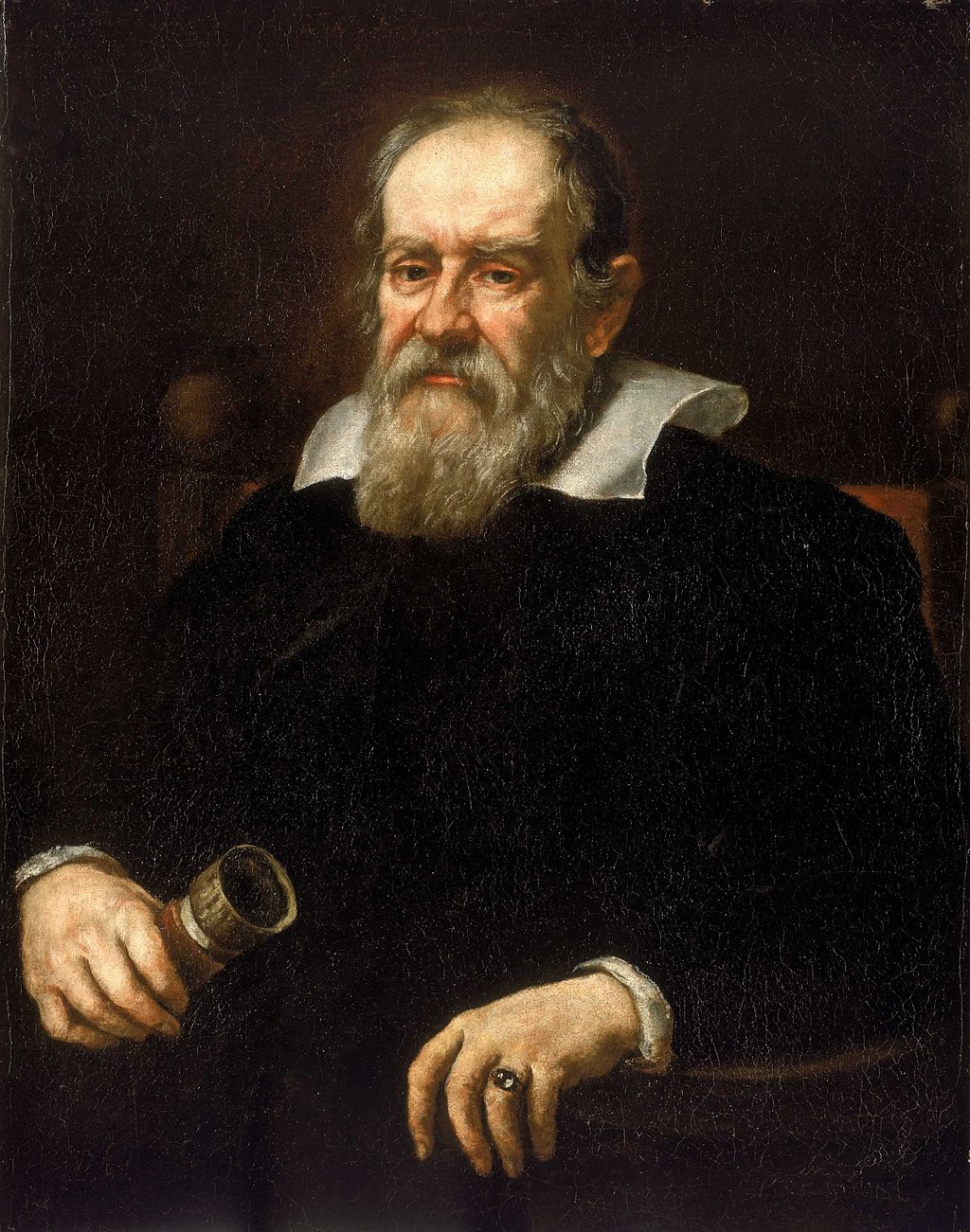
Galileo Galilei, the famous astronomer, had three children (Virginia, Livia, and Vincenzo) with his domestic partner Marina Gamba. Because they never married, the children were considered “illegitimate” under Roman Catholic law.

Due to their illegitimate status, marrying off his daughters with respectable dowries was exceedingly difficult in 17th-century Italian society. Consequently, Galileo arranged for both daughters to enter the San Matteo convent in Arcetri near Florence, where they became nuns (Sister Maria Celeste and Sister Arcangela).

More about Galileo

Galileo Was Also an Accomplished Musician

His father, Vincenzo Galilei, was a famous music theorist, composer, and lutenist who taught Galileo to play. Galileo’s younger brother, Michelagnolo Galilei, became a renowned professional lutenist and composer. (Interestingly, Galileo’s own son, Vincenzo, also played the lute!)

He Wanted to Become a Catholic Priest

As a young man, Galileo seriously considered joining the priesthood, but his father encouraged him to enroll in medical school at the University of Pisa instead. Galileo lost interest in medicine and shifted his focus to mathematics and natural philosophy.

1. He Didn’t Invent the Telescope, but He Transformed It

Dutch eyeglass makers invented the telescope in 1608. When Galileo heard of the device, he built his own without ever seeing the Dutch design, improving its magnification from 3x to 30x and turning it toward the night sky.

2. He Named Jupiter’s Moons as a Career Move

In 1610, Galileo discovered Jupiter’s four largest moons. Seeking financial patronage, he named them the “Medicean Stars” in honor of his former student, Cosimo II de’ Medici, who then hired him as official mathematician to the Medici family.

3. He Accidentally Observed Neptune 230 Years Early

While tracking Jupiter’s moons in late 1612 and early 1613, Galileo recorded a faint, dark dot next to the planet. Modern calculations show this was Neptune, though Galileo mistook it for a dim star.

4. The Famous Leaning Tower of Pisa Drop Probably Never Happened

The popular story of Galileo dropping cannonballs off the Leaning Tower of Pisa to test gravity is widely considered a legend written by his secretary decades later. Galileo actually proved his theory by rolling balls down inclined ramps.

5. He Was a University Dropout

Galileo’s father sent him to study medicine at the University of Pisa, but he became obsessed with mathematics instead. He dropped out in 1585 without a degree, yet his brilliance was so apparent that the university hired him four years later as Chair of Mathematics.

6. He Was a Master Inventor Beyond Astronomy

Beyond telescopes, Galileo invented a thermoscope (a precursor to the thermometer), a hydrostatic balance for measuring density, and a military proportional compass for calculating artillery trajectories.

7. He Tried to Measure the Speed of Light

Galileo suspected light was not instantaneous. He designed an experiment using covered lanterns on distant hilltops at night to measure light’s speed, though the speed of light was far too fast for human reaction times to detect.

8. His Middle Finger Is on Display in a Museum

Nearly a century after his death, admirers moving his body to a grand tomb removed several bones. Today, three of his fingers, a tooth, and a vertebra are preserved, with his middle finger on display at the Museo Galileo in Florence.

Posted on — Leave a comment

Worst Product Name

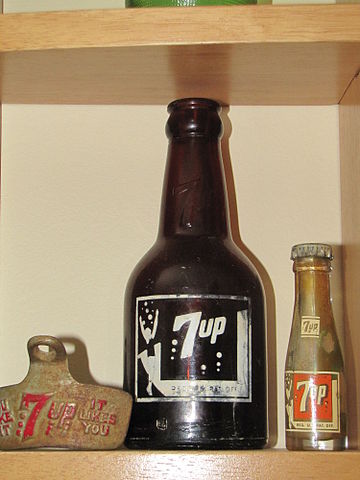
7-Up was originally called Bib-Label Lithiated Lemon-Lime Soda when it was invented in 1929. The first advertising slogan for 7-Up was, “It takes the ouch out of grouch.”

Interesting Facts About 7UP

A deep dive into the history, myths, science, and pop culture of the iconic lemon-lime beverage.

It originally contained a mood-stabilizing drug

When invented in 1929 by Charles Leiper Grigg, the soft drink contained lithium citrate, a mood-stabilizing drug used to treat bipolar disorder and depression. The original name was “Bib-Label Lithiated Lemon-Lime Soda,” and it was marketed as a hangover cure and mood booster. Lithium remained an ingredient until 1948.

The origin of the name “7UP” remains a mystery

Grigg never publicly explained why he named it 7UP. Popular theories include:

  • It contained 7 ingredients and the bubbles went UP.
  • Lithium’s atomic mass is approximately 7.
  • The original bottle was 7 ounces.
  • It was a reference to a popular dice game (“7 Up”).

It was launched right before the Great Depression

The soda hit the market on October 26, 1929—just two days before the Wall Street Crash of 1929 (“Black Monday”). Despite the economic collapse, its patent-medicine marketing and catchy flavor helped it thrive during tough economic times.

The mascot “Spot” was created by an iconic video game animator

In 1987, 7UP introduced its mascot “Cool Spot”—a red dot taken directly from the hyphen in the 7UP logo, wearing sunglasses. Spot was created by video game developer David Perry, who went on to create famous games like Earthworm Jim. Spot even starred in his own popular Super Nintendo and Sega Genesis video games in the early 1990s.

It coined the term “Uncola”

In 1968, 7UP launched one of the most famous advertising campaigns in history, positioning itself as the “Uncola.” Featuring actor and dancer Geoffrey Holder, the campaign positioned 7UP as the refreshing, non-caffeinated alternative to dominant cola brands like Coca-Cola and Pepsi.

Two different companies own 7UP globally

Unlike most global brands managed by a single parent company, 7UP is owned by Keurig Dr Pepper in the United States, while PepsiCo holds the rights to manufacture and distribute 7UP in almost all international markets.

It was a pioneer in sugar-free sodas

In 1963, 7UP introduced “Like,” one of the earliest diet sodas on the market. It was later rebranded as Diet 7UP in 1970, making it a pioneer in the mainstream sugar-free beverage market long before Diet Coke existed.

“7UP Gold” was one of the biggest soft drink flops in history

In 1988, the company released 7UP Gold, a cinnamon-spiced, amber-colored, caffeinated soda designed to compete with traditional colas. Consumers were confused by a caffeinated, dark 7UP, and the product was discontinued after less than a year.

The classic green bottle was chosen for a functional reason

The distinct green glass bottle wasn’t just a design choice—it was functional. Dark green glass shielded the lemon and lime oils in the recipe from sunlight and ultraviolet rays, which could oxidize the natural oils and spoil the soda’s flavor profile.