Posted on — Leave a comment

Worst Load of Rotten Fruit

Because Jared lived on the Big Island of Hawaii, he had few options for earning a living.

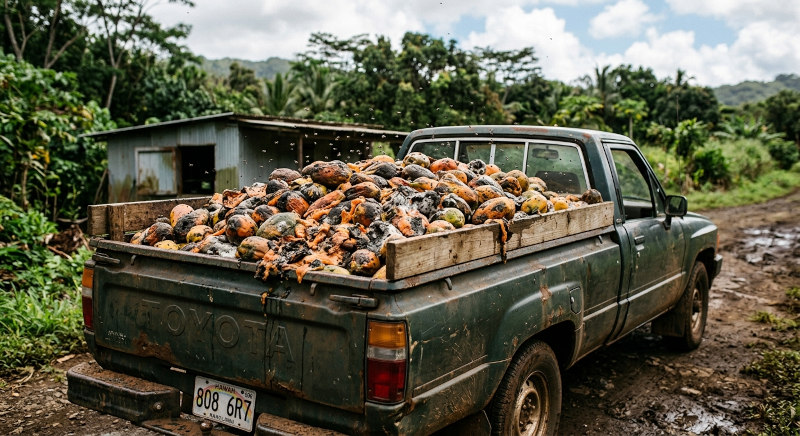
He found an orchard that would sell him a pickup truck full of too-ripe papayas for $25. He figured most of these were still quite edible, and so he could sell them to tourists near the hotels.

He bought a load, made a sign and parked his truck. The first day, he made $100 or so, and he was delighted with his new business idea.

The second day, all the papayas were becoming too ripe and he only made $50.

The third day, it was obvious he couldn’t sell any more papayas, even though his truck was still almost entirely full.

He tried to bury them in his yard, but after an hour of digging, he had only a small hole. He took them to the dump, but they were not accepting truckloads of produce. They rotted in the back of his truck.

Because of the stench, the truck was no longer drivable. I don’t know how the story ended, but I’m sure Jared’s truck was never completely clean and stink-free again.

Posted on — Leave a comment

Worst Sex To Be

Men are twice as likely to die from accidents as women.

Across biology, health, education, and social dynamics, female physiology and social structures provide distinct advantages supported by scientific, statistical, and biological research:

1. Superior Life Expectancy and Longevity

Across nearly every culture and historical era, women outlive men by an average of 4 to 5 years. This longevity advantage exists even in extreme conditions such as severe famines and epidemics.

2. Stronger Immune Systems

Estrogen enhances immune responses, enabling women’s bodies to fight off viral and bacterial infections more aggressively. Additionally, having two X chromosomes provides a biological safeguard, as immune-related genes are concentrated on the X chromosome.

3. Protection Against Sex-Linked Genetic Disorders

Because women have two X chromosomes ($XX$), a mutated gene on one X chromosome can usually be offset by a healthy gene on the second. Men ($XY$) lack this redundancy, making them significantly more vulnerable to X-linked genetic disorders like hemophilia, color blindness, and Duchenne muscular dystrophy.

4. Greater Resistance to Muscle Fatigue in Ultra-Endurance

While men tend to excel in short-burst power and speed, women’s muscle fibers (which have a higher proportion of Type I slow-twitch fibers) demonstrate greater resistance to fatigue during prolonged exertion. In extreme ultra-marathons and open-water swims, the performance gap between men and women narrows substantially, with female athletes often out-pacing men over extreme distances.

5. Efficient Fat Metabolism and Energy Conservation

Women metabolize fat more efficiently than carbohydrates during sustained aerobic activity, preserving muscle glycogen. Historically and biologically, a higher average percentage of essential body fat provides a superior energy reserve during periods of starvation or resource scarcity.

6. Lower Risk of Cardiovascular Disease Early in Life

Estrogen helps keep blood vessels flexible and regulates healthy cholesterol levels (HDL vs. LDL), providing natural cardiovascular protection. As a result, women typically develop coronary heart disease about 10 years later in life than men do.

7. Higher Rates of Higher Education Attainment

In modern education statistics, women consistently outpace men in post-secondary educational attainment. Women earn the majority of bachelor’s, master’s, and doctoral degrees in many developed nations and maintain higher overall high school graduation rates.

8. Superior Fine Color Perception and Verbal Memory

Genetic variations on the X chromosome give women a higher capacity for distinguishing subtle variations within the color spectrum (particularly in the red-orange range). Studies also consistently show that women maintain a lifelong advantage in verbal memory—the ability to retain and recall word lists and verbal information.

9. Stronger Social Support Networks and Coping Strategies

Societal norms allow women greater emotional expression and openness, which translates into broader, more resilient social support networks. This “tend-and-befriend” stress response—mediated partly by oxytocin—helps mitigate chronic stress and contributes to better long-term mental health resilience.

10. Lower Rates of Accidental Death and Violent Crime

Men are biologically and socially prone to higher risk-taking behaviors, resulting in significantly higher rates of accidental deaths, violent crime involvement, and incarceration. Women statistically engage in less lethal risk-taking, contributing directly to higher survival rates across all age brackets.

11. Greater Joint Flexibility and Range of Motion

Hormones like relaxin and estrogen, combined with structural differences in skeletal geometry (such as a wider pelvic structure), grant women greater overall joint flexibility and range of motion, which reduces certain types of rigid impact injuries.

12. Protection Against “Loss of Y” Chromosome Degradation

As men age, their cells can suffer from a condition known as “mosaic loss of Y chromosome” (LOY) in white blood cells, which is linked to an increased risk of cardiac fibrosis, heart failure, and various cancers. Lacking a Y chromosome entirely, women are completely immune to this age-related genetic degeneration.

Posted on — Leave a comment

Worst Things to Eat

In 1985, a valve in a dairy leaked a little bit of raw milk into a large tank of pasteurized milk. Two hundred thousand people got food poisoning.

Fifty percent of all turkeys and 37 percent of all chickens that you can buy in grocery stores are contaminated with Campylobacter (food poisoning) according to the US Food and Drug Administration.

Last year 81 million Americans got sick from food poisoning and 9,000 of them died. The average American will get food poisoning 100 times in a lifetime. The symptoms are headache, sick feeling, diarrhea. Most people think this is the flu. To prevent food poisoning, clean all kitchen items with heat, never leave food at room temperature for more than a few minutes, and never handle prepared food after handling raw meat or poultry.

Posted on — Leave a comment

Worst Babies

The worst babies are human babies. The babies of all other animals are born with capabilities that we have to learn. For instance, a baby horse can stand and run within a few minutes. A baby turtle has everything it needs the moment it is born. Scientists have determined that even chimpanzee babies are more intelligent than human babies. Yet, a baby person cannot even lift it’s head when born.

More About Babies

They are born with roughly 300 bones.
Adults have 206 bones, but newborns start with around 300. Many of these are smaller, cartilage-based pieces that fuse together over time as the baby grows.

They don’t have hard kneecaps.
Newborns are born without solid, bony kneecaps (patellae). Instead, they have soft cartilage structures that don’t fully ossify into hard bone until between ages 2 and 6.

They can cry without producing actual tears.
While newborns certainly scream and wail, their tear ducts aren’t fully developed at birth. They generally produce only enough moisture to lubricate their eyes, so true emotional tears usually don’t appear until around 1 to 3 months of age.

Their grasp reflex is strong enough to support their weight.
The palmar grasp reflex—where a baby tightly curls their fingers around anything touching their palm—is an evolutionary trait. A newborn’s grip strength can be so firm that it can briefly support their entire body weight.

They can swallow and breathe at the same time.
For about the first 3 to 6 months, a baby’s larynx sits higher in the throat than an adult’s. This positioning allows them to suckle and breathe simultaneously without choking, making feeding much more efficient.

They are born with automatic swimming and stepping reflexes.
Place a newborn face-down in water, and they will naturally hold their breath and make swimming motions (the bradycardic response). Hold them upright with feet touching a flat surface, and they will perform a stepping motion. Both reflexes disappear within a few months.

They briefly double their brain size in year one.
At birth, a baby’s brain is about 25% of its adult size. By their first birthday, it grows dramatically, reaching nearly 70% to 75% of full adult volume.

Their vision is mostly black-and-white and blurry.
Newborns can only focus on objects about 8 to 12 inches away—roughly the distance to a caregiver’s face while feeding. Their color vision is limited, and they see primarily in high-contrast shades of black, white, and gray for the first few weeks.

They lose their newborn hair.
Many babies are born with a full head of hair, only to lose most or all of it within the first few months due to falling hormone levels after birth. The hair that grows back can be a completely different texture or color.

They have more taste buds than adults.
Babies have taste buds not just on their tongues, but also on the roof and sides of their mouths. They are especially sensitive to sweet tastes, which helps draw them to breast milk or formula.

Posted on — Leave a comment

Worst Rainstorm

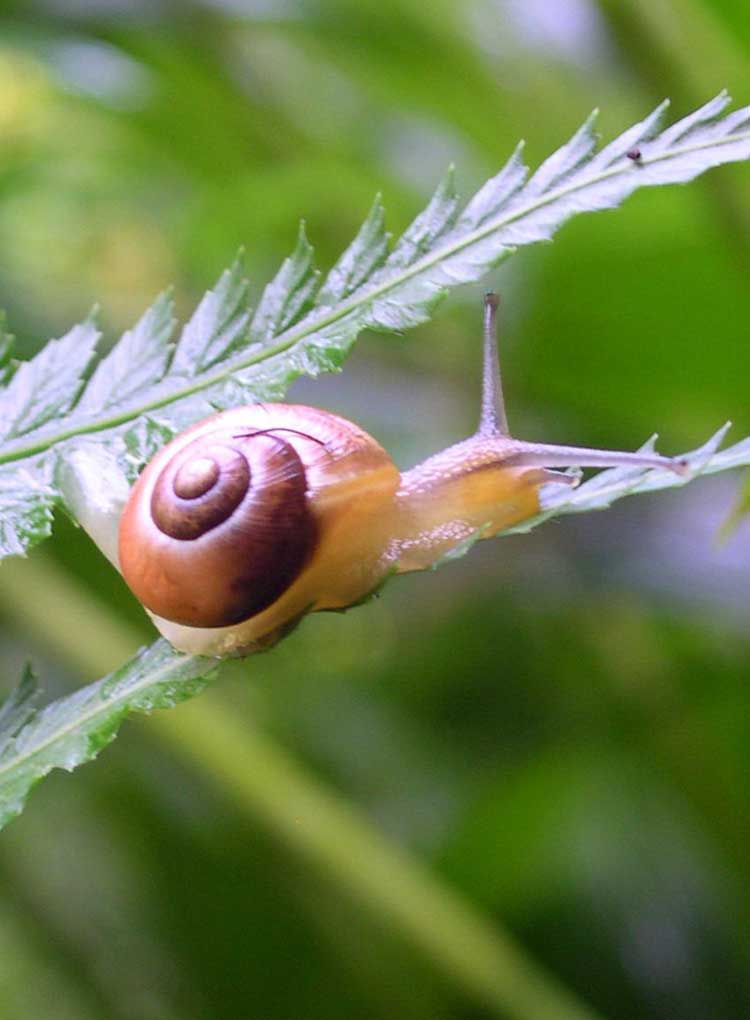
One day in August 1892, in Panderborn, Germany, it started to rain. This rainstorm was unusual because somehow there were thousands of snails caught up in the clouds and they all came crashing down with their shells breaking to bits as they hit the ground. This weird event was formally recorded and analyzed by meteorologists at the time.

While it sounds like something straight out of a folklore tale, there are multiple documented historical accounts of “snail showers”.

A couple other notable historical occurrences include:

Redruth, Cornwall, England (1886): A violent thunderstorm darkened the sky over the town and showered thousands of live snails over the countryside.

Chester, Pennsylvania, USA (1870): A storm dropped so many snails over the city that local accounts described it as a dense “storm within a storm”.

How Does It Actually Happen?

It isn’t a biblical miracle, but rather a rare meteorological phenomenon known as “animal rain”.

Waterspouts and Tornadoes: When a strong storm or tornado passes over a shallow body of water, land, or marshy area, the powerful updraft inside the vortex acts like a giant vacuum cleaner.

Suction & Elevation: Small, lightweight creatures like snails, frogs, or small fish are sucked off the ground or out of the water and carried high into the atmosphere.

The Drop: As the storm system loses energy or moves over a new location, the wind speed drops, and the heavy updraft can no longer support the weight. The objects are dropped all at once, resulting in a localized “rain” of creatures. Because snails are relatively uniform in weight, the updrafts often sort and deposit them all in the same concentrated spot, making it look like a rain cloud specifically targeted gastropods.

Posted on — Leave a comment

Worst Warning to Ignore

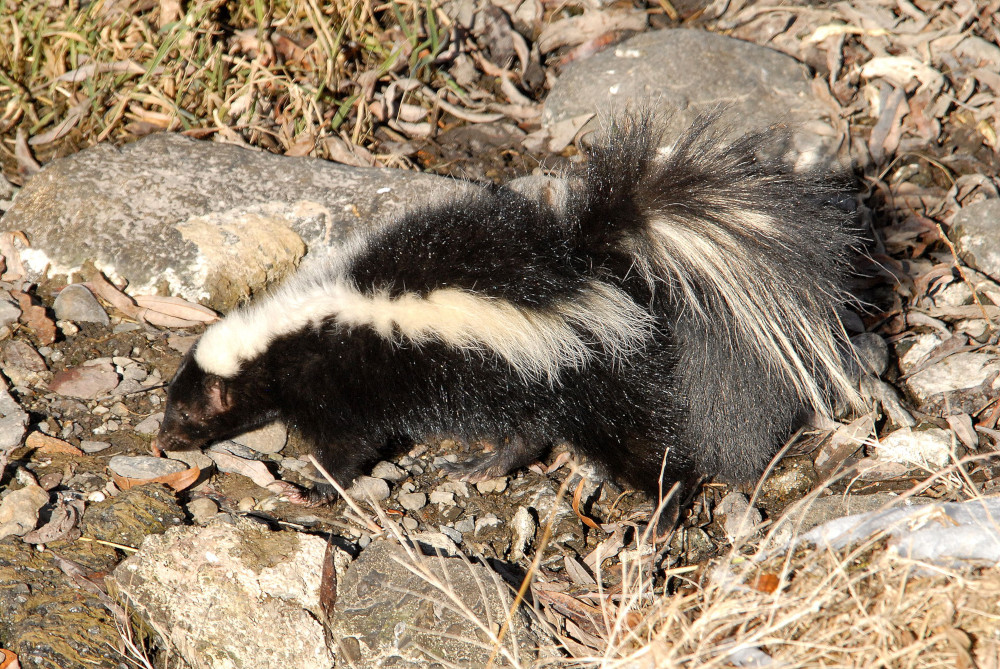
If there is time, a skunk will warn you before spraying. The warning has two phases. First the skunk pats his front feet on the ground several times. Then he shakes his head from side to side. He may even raise his tail and hiss. If you aren’t gone by then, too bad!

Skunk Facts

Their Spray Can Reach Up to 10 Feet Away

Skunks release their foul-smelling liquid from two glands under their tail with impressive precision. They can accurately target an intruder’s face from 10 feet away, and the scent can be detected by humans up to a mile downwind.

They Use Their Spray as a Last Resort

Skunks only carry about 5 to 6 tablespoons of spray (thiols) at a time, and it takes up to a week to replenish a depleted supply. Because leaving themselves defenseless is risky, they will give fair warnings first.

They Are Immune to Snake Venom

Skunks are natural predators of snakes, including poisonous species like rattlesnakes and copperheads. They possess a natural immunity to snake venom, allowing them to hunt and eat venomous snakes without harm.

Great Horned Owls Are Their Primary Predator

Most mammals quickly learn to give skunks a wide berth, but Great Horned Owls are an exception. Like most birds, owls have an exceptionally weak sense of smell, making skunks one of their favorite primary food sources.

Tomato Juice Doesn’t Neutralize the Odor

The popular urban legend that tomato juice removes skunk scent is false; it merely masks the smell temporarily by overwhelming your nose (olfactory fatigue). To chemically neutralize the sulfur-based thiols, a mixture of hydrogen peroxide, baking soda, and dish soap is required to oxidize the chemical compound.

They Have Terrible Eyesight

A skunk’s vision is extremely poor—they can barely see objects more than 10 feet ahead of them. This poor eyesight, combined with their instinct to stand their ground rather than flee, is the primary reason so many skunks are struck by cars on highways.

They Are Natural Pest Controllers

Skunks are opportunistic omnivores whose diet consists heavily of insects. They spend their nights digging up grubs, beetles, wasps, scorpions, and garden pests, making them highly beneficial for local ecosystems and agriculture.

Spotted Skunks Do Handstands to Threaten Predators

While striped skunks simply arch their backs and stomp, the smaller Western and Eastern spotted skunks perform an elaborate acrobatic handstand on their front paws to look larger and aim their scent glands directly at a predator before spraying.

They Belong to Their Own Unique Family

For a long time, skunks were classified in the weasel family (Mustelidae). However, genetic research in the late 1990s revealed they are distinct enough to warrant their own separate family, Mephitidae, which translates from Latin to “foul stench.”

They Don’t Formally Hibernate

During severe winter cold, skunks enter a state of torpor—lowering their body temperature and sleeping for long stretches—rather than true hibernation. To stay warm, females often huddle together in shared underground dens, while males typically remain solitary.

Posted on — Leave a comment

Worst Excuse for a Horse

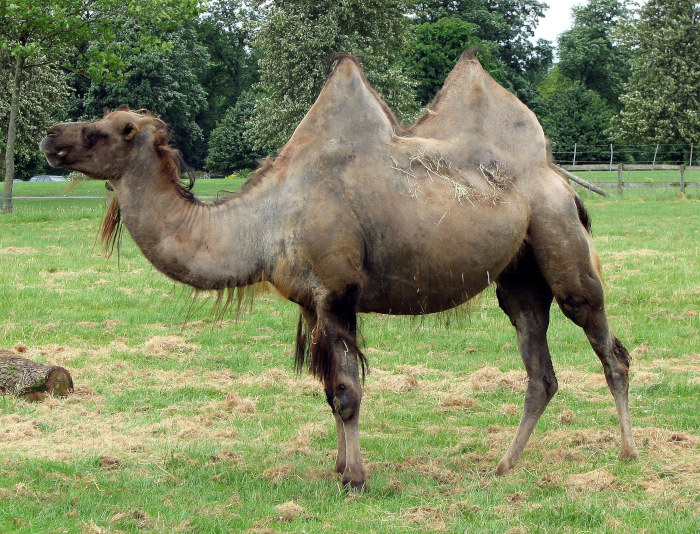
If it had not been for the Civil War, the United States Cavalry might have been riding camels. Shortly before the war, Secretary of War Jefferson Davis imported 81 camels for testing in Texas. There were some problems. Ordinary horses were terrified of the camels, and so were many of the soldiers. On the other hand, in some ways the camels were excellent. They could go for several days without water, they could carry a half-ton, and walk 40 miles a day. The military was generally impressed and were ready to start switching to camels in large numbers, but then the war developed and there was no time to deal with camel importation.

Interesting Camel Facts

They Have Three Eyelids and Two Rows of Lashes

Camels have a clear inner eyelid (a nictitating membrane) that wipes away sand while allowing them to see in a sandstorm. Their double-layered, long eyelashes form a natural shield against windblown dust.

They Store Fat, Not Water, in Their Humps

A common myth is that hump storage holds water. Humps actually store energy-dense fat. Concentrating fat in one place prevents it from insulating their entire body, allowing heat to escape more efficiently. When the fat metabolizes, it yields both energy and over a gram of water per gram of fat.

They Can Guzzle 30 Gallons of Water in 13 Minutes

When dehydrated, a camel can drink up to 30 gallons (113 liters) of water in under 15 minutes. Their oval-shaped red blood cells can expand up to 240% of their normal volume without bursting to accommodate rapid hydration.

Their Nostrils Act Like a Dehumidifier

Camels can trap moist air from their breath and absorb the moisture back into their nasal membranes before exhaling dry air, minimizing water loss simply by breathing. They can also lock their nostrils completely shut during sandstorms.

They Have Built-in Kneepads

Camels are born with thick, leathery patches of skin on their knees and chest called carpal pads. These pads protect their body from burning on scorching desert sand when kneeling.

They Are Native to North America

The evolutionary ancestors of modern camels originated in North America around 40 to 50 million years ago. They crossed the Bering land bridge into Asia and South America (evolving into llamas and alpacas) before dying out in North America around 10,000 to 12,000 years ago.

Their Blood Cells Are Unique Among Mammals

Unlike other mammals, which have round red blood cells, camels have oval-shaped cells. This unique shape allows their blood to flow smoothly even when it becomes thick due to severe dehydration.

They Waste Virtually No Water

A camel’s kidneys extract maximum water from urine, leaving behind a thick, syrupy liquid with a salt concentration higher than seawater. Their feces are so dry that nomadic tribes use them directly as campfire fuel without needing to dry them first.

They Have Rigid Mouth Interiors for Eating Thorns

The inside of a camel’s mouth is lined with tough, cone-shaped structures called papillae. This keratinized lining lets them chew straight through sharp desert thorns, cacti, and wooden twigs without pain.

They Can Regulate Their Own Body Temperature

Instead of sweating constantly, a camel allows its body temperature to fluctuate by as much as 11°F (6°C) throughout the day—rising during the hot afternoon and cooling at night—saving massive amounts of sweat and water.

Posted on — Leave a comment

Worst Bad Breath

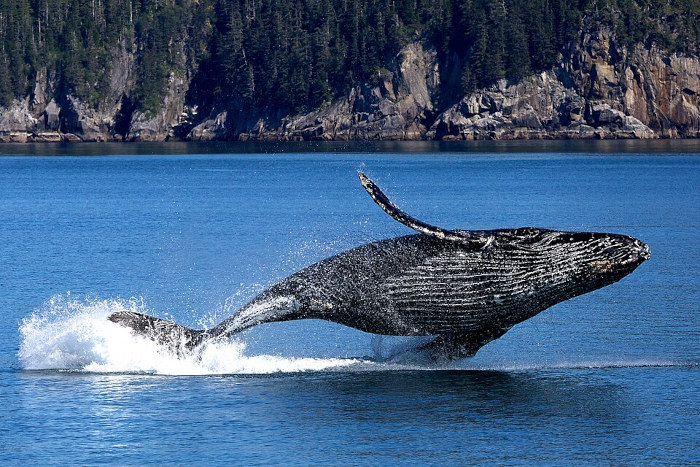
Whales have the worst bad breath imaginable. According to Herman Melville, who researched whales thoroughly for his novel, Moby Dick, “The breath of the whale is frequently attended with such an insupportable smell as to bring on a disorder of the brain.”

Blue whales are the largest animals ever known to have lived on Earth. They can reach lengths of up to 100 feet and weigh up to 200 tons—larger than even the biggest dinosaurs that ever walked the planet. A blue whale’s heart alone can be as large as a small car.

Whales breathe consciously. Unlike humans, who breathe automatically, whales have to actively decide when to surface and take a breath. Because of this, they can never fully fall asleep; they sleep by resting one hemisphere of their brain at a time (unihemispheric sleep) so they remain alert enough to come up for air.

Baleen whales feed using giant, hair-like filters. Instead of teeth, species like humpbacks and blue whales have plates made of keratin—the same protein found in human fingernails and hair—that trap tiny prey like krill while pushing out water.

Sperm whales are the loudest animals on the planet. Their clicking sounds, used for echolocation and communication, can reach up to 230 decibels underwater. For comparison, a jet engine at takeoff is around 140 decibels, and sounds this intense can be heard hundreds of miles away.

Whale culture and dialects exist. Orcas and humpback whales learn distinct vocal patterns, hunting methods, and social behaviors from their pods. Different regional populations of the same species often speak different “dialects” that other pods do not use or immediately understand.

The bowhead whale can live for over 200 years. Native to the icy waters of the Arctic, bowhead whales are among the longest-living mammals on Earth. Researchers discovered their impressive lifespans after finding centuries-old stone harpoon tips embedded in living whales.

They play a crucial role in combating climate change. Through a phenomenon known as the “whale pump,” whales fertilize the ocean with nutrient-rich waste, fueling the growth of phytoplankton. Phytoplankton absorb vast amounts of carbon dioxide and produce a major portion of the Earth’s oxygen.

Whales descended from land-dwelling mammals. Millions of years ago, the ancestors of modern cetaceans were four-legged, terrestrial mammals related to the hippopotamus. Over tens of millions of years, their hind limbs vanished, their front legs turned into flippers, and their nostrils migrated to the top of their heads to form blowholes.

Humpback whale songs evolve like pop music. Male humpbacks in a region all sing the same intricate song, which gradually changes over time. When a new, popular variation is introduced by migrating whales, it often spreads across entire ocean basins, replacing the old song completely.

Some whales can dive deeper than two miles. The Cuvier’s beaked whale holds the record for the deepest and longest mammal dive, descending nearly 10,000 feet (3,000 meters) beneath the ocean surface and staying submerged for over two hours on a single breath.