One out of every 100 cells in your body is for defense against disease. So if you weigh 150 pounds (68 kg), 1-1/2 pounds (680 grams) of you are for self-defense.
10 Interesting Facts About the Human Immune System
-
It has a long-term memory.
When the adaptive immune system encounters a pathogen, it creates specialized memory B and T cells. These cells can survive in the body for decades, recognizing the same pathogen if it returns and neutralizing it before you even feel sick—the core principle behind how vaccines work. -
Fevers are an intentional feature, not a system failure.
Your brain intentionally raises your core body temperature during an infection. Higher temperatures speed up chemical reactions, accelerating immune cell activity while simultaneously making the body a hostile, high-heat environment for reproducing viruses and bacteria. -
It can trigger its own self-destruct mechanism.
When immune cells called neutrophils encounter heavy pathogen loads, they perform NETosis. The cell explodes and expels its own DNA like a net, trapping and killing surrounding bacteria in a suicide maneuver that protects adjacent tissues. -
Your eyes are an “immune-privileged” zone.
The immune system is largely restricted from entering the eyes. Because inflammatory responses like swelling could permanently damage delicate optical structures and cause blindness, the eyes use specialized physical barriers and immunosuppressive fluids to manage pathogens locally. -
Autoimmune diseases disproportionately affect women.
Approximately 80% of all individuals with autoimmune diseases are female. Researchers attribute this primarily to the X chromosome—which carries a high concentration of immune-related genes—and the influence of estrogen on immune response regulation. -
Sleep deprivation rapidly shuts down natural killer cells.
A single night of getting only four hours of sleep can reduce the activity of your Natural Killer (NK) cells—the front-line defenders against virally infected and cancerous cells—by up to 70%. -
It relies entirely on a secondary plumbing network.
The immune system circulates white blood cells and drains cellular waste using the lymphatic system, a network of vessels containing clear fluid called lymph. Unlike blood, which is pumped by the heart, lymph has no central pump and relies on physical muscle movements and breathing to circulate. -
Over-reaction can be far more dangerous than the infection itself.
In severe cases of viral or bacterial infections, the immune system can experience a cytokine storm. This occurs when an uncontrolled positive feedback loop causes immune cells to release massive amounts of signaling proteins, leading to widespread tissue damage, organ failure, and systemic inflammation. -
It kills thousands of potential cancer cells every day.
Through a process called immune surveillance, T cells and NK cells constantly patrol the bloodstream and tissues, identifying and destroying mutated or abnormally dividing cells before they can establish tumors. -
Stress hormones actively dissolve immune tissue.
Sustained high levels of cortisol (the body’s primary stress hormone) suppress immune function by causing the thymus gland—where T cells mature—to temporarily shrink, reducing the production of new immune cells during periods of chronic strain.
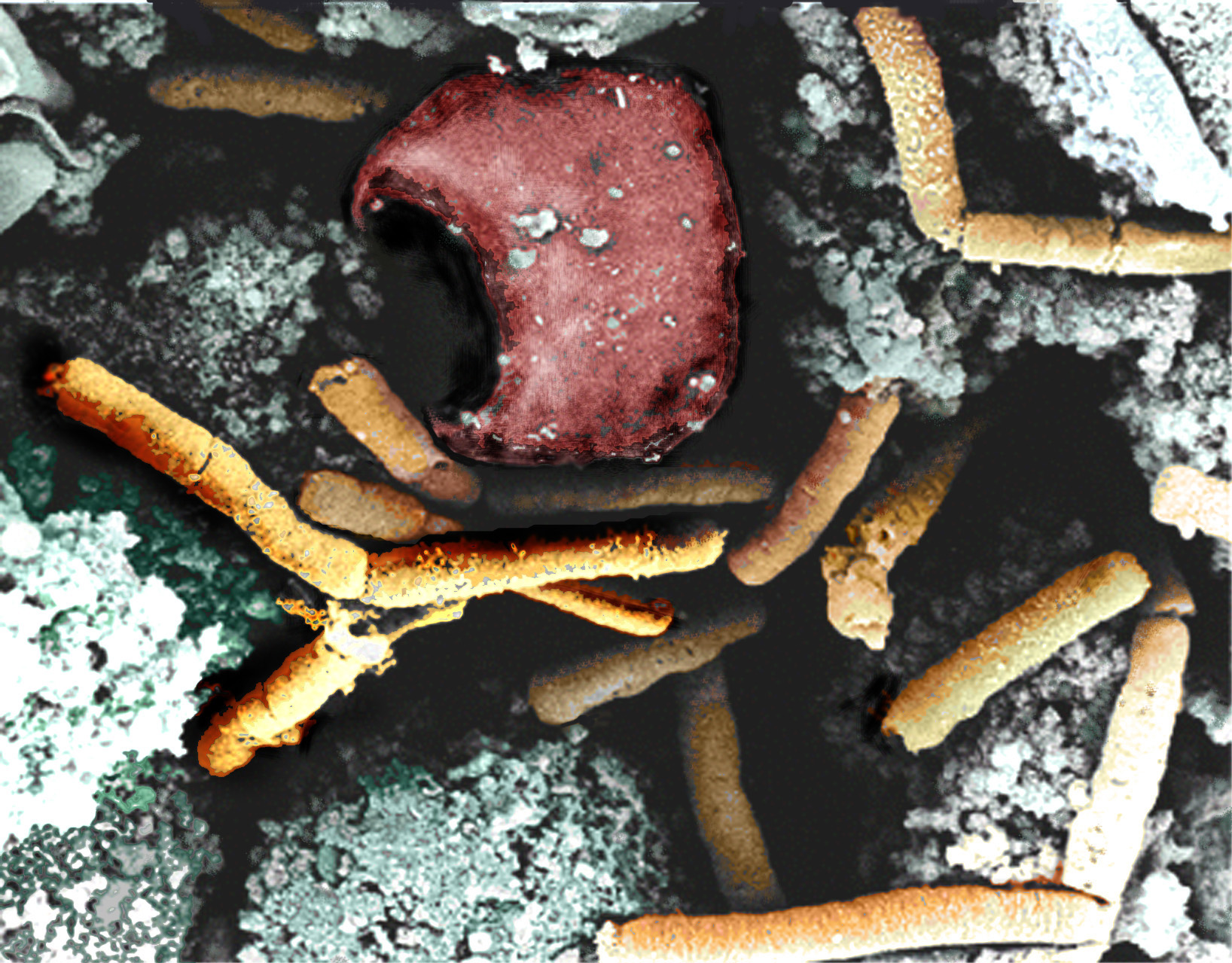
Pictured above: Anthrax Virus