Posted on — Leave a comment

Worst Keyboard Configuration

The standard keyboard that we have all grown up with is called QWERTY, named after the first keys from the left in the row above the home row. It turns out to be the worst keyboard configuration. The QWERTY layout seems illogical until you understand that it was invented for early typewriters. Those typewriters would jam if the typist moved too quickly, so the keyboard was actually designed to slow them down. Unfortunately as more and more typewriters were built using QWERTY, it became the standard, even though newer typewriters could handle faster typing speeds.

Learn the pros and cons of the Dvorak Keyboard Layout, how much faster you can enter text, how easy it is to set up in Windows and OS X, some celebrities who use it, and how to start with training and practice.

Dvorak keyboard Map

Continue reading Worst Keyboard Configuration

Posted on — Leave a comment

Worst Woodstove

The First “Franklin stove” – a stove designed by Ben Franklin, survives to this day in many households. It is also known as the “Pennsylvania Fireplace,” The stove is a fireplace with cast iron doors as shown above.

His second stove invention, manufactured between 1771 and 1786, was called the “smoke-consuming” stove. This version has disappeared from modern times. It was an airtight, which is more efficient than most of the stoves used at that time. But, his invention was so complex and awkward to light that it never gained much favor in American homes.

It looked somewhat like an egg on a pedestal. The air came in through vents in the top of the egg, passed downward through the wood fire, and was sucked out the bottom, which was connected to the chimney through pipes running under the floor. This design caused almost total combustion of the wood, which most stoves cannot do, and the pipes under the floor warmed the floor, which was pleasant and efficient. The problem was that the system had to be warmed gradually in order to get the necessary draft or suction sufficient to avoid smoking up the whole house.

Ben claimed that the servants were too stupid to manage it. He was reluctant to say that maybe his design was just too cumbersome.


Ben Franklin's Smoke-Consuming Stove
Ben Franklin’s Smoke-Consuming Stove

Posted on — Leave a comment

Worst Way to Treat a Scientist

According to his own retelling, when Thomas Edison was twelve years old, he had a job selling newspapers on a commuter train. He had set up a printing press on the train to make his own newspapers, and thereby increase his profits. He also set up a chemistry lab, to indulge his already well-developed scientific curiosity. One day, as the train went around a particularly tight turn, some of Edison’s phosphorus fell on the floor and started a small fire. As the train came into the station, and the conductor discovered the problem, Tom tried to run away. The conductor pulled him back up into the train by his ears. “I felt something snap inside my head,” Edison said. From that time until his death, he was hard of hearing.

Now, Here’s the Research:

This claim blends real elements of Thomas Edison’s early life with a famous myth that modern historians and medical experts widely dispute.
What Is Accurate

Newsboy on the Train: At age 12 (around 1859), Edison did work selling newspapers, candy, and snacks on the Grand Trunk Railroad between Port Huron and Detroit.

Printing Press and Chemistry Lab: He persuaded the railroad to let him use an empty baggage/box car, where he set up a small chemical laboratory and a printing press to produce his own newspaper, The Weekly Herald.

The Train Fire: While on the train, a jar of phosphorus fell, broke, and set the baggage car floor on fire. The conductor put out the fire, became enraged, and threw Edison, his laboratory, and his printing press off at the next stop.

The Quote: Edison recounted the “ears” story in later interviews, stating:

“A trainman reached over and grabbed me by the ears and lifted me… I felt something snap inside my head and the deafness started from that time…”

What Is Unclear / Factually False

Did the conductor pull him up by his ears because of the fire?
In Edison’s own retellings, he conflated two different anecdotes. In one version, the conductor boxed him on the ears as punishment for the baggage-car fire. In another version, a trainman grabbed him by the ears to pull him onto a moving train when he was running to catch it—not because he was running away from a fire.

Did this incident cause his hearing loss?
No. Medical historians and Edison biographers—such as Paul Israel, director of the Thomas A. Edison Papers at Rutgers University—agree that trauma from being pulled or boxed by the ears was unlikely to cause progressive, lifelong bilateral hearing loss.

Edison suffered a severe bout of scarlet fever in childhood, along with recurring, untreated mastoiditis and middle ear infections. Medical experts conclude that these infections—not a conductor pulling his ears—were the true medical cause of his severe hearing impairment. In fact, Edison admitted to close friends late in life that his theatrical train-conductor stories were tall tales he enjoyed telling reporters.

More About Thomas Edison

He tried to build a device to talk to the dead. Late in his life, Edison became fascinated by the occult and spiritualism. He admitted in interviews that he was working on a sensitive electronic device designed to detect and communicate with spirit entities if they existed, though no prototype was ever found.

He was almost completely deaf. Edison lost most of his hearing in childhood, likely due to a combination of scarlet fever and a bad bout of mastoiditis. Rather than seeing it as a handicap, he claimed it helped him concentrate on his work by tuning out the distracting sounds of the world.

His famous “lightbulb” wasn’t actually the first. Edison didn’t invent the incandescent light bulb from scratch; dozens of inventors had already created working versions. Edison’s actual breakthrough was developing a long-lasting, commercially viable bamboo carbon filament and an entire electrical distribution system to power it.

He proposed to his second wife using Morse code. After teaching his 20-year-old sweetheart, Mina Miller, how to tap out Morse code, the 39-year-old Edison tapped “Will you marry me?” into her hand while they were riding in a carriage. She tapped back, “Yes.”

He held a record 1,093 U.S. patents. Edison was an extraordinarily relentless inventor and businessman, securing over a thousand patents in his lifetime for everything from the phonograph and motion picture camera to concrete construction methods and battery technology.

His first patent was a commercial failure because politicians hated it. In 1869, Edison patented an electronic vote recorder for legislative bodies to speed up roll-call voting. Congress rejected it, explicitly telling him they preferred slow voting because it allowed time for filibustering and political maneuvering. Afterward, Edison vowed never to invent something unless there was a clear market demand for it.

He tattooed himself using an electric pen. Edison invented the pneumatic stencil pen in 1876 to duplicate documents. While testing it, he experimented by tattooing a series of small, uniform dots on his own forearm. Decades later, Samuel O’Reilly modified Edison’s stencil pen design to create the world’s first modern electric tattoo machine.

His final breath is preserved in a glass test tube. As Edison lay dying in 1931, his close friend and fellow industrialist Henry Ford allegedly asked Edison’s son Charles to trap a vial of air from Edison’s bedroom at the moment of his death. That sealed glass test tube is still on display today at the Henry Ford Museum in Dearborn, Michigan.

He conducted sleep-deprivation experiments using steel balls. Edison believed sleep was a waste of time and relied on micro-naps. To trigger rapid flashes of creativity, he would sit in a chair holding heavy steel balls over a metal pan. As he drifted off to sleep, his muscles would relax, dropping the balls into the pan with a loud clatter to wake him right at the edge of unconsciousness so he could write down his ideas.

He built a creepy talking doll that kids hated. In 1890, Edison created the “Edison’s Phonograph Doll,” which featured a tiny wax cylinder phonograph embedded in its chest that played a recording of a nursery rhyme. The mechanism was fragile, the sound was harsh and scratchy, and children found the dolls terrifying. It was pulled from the market after just six weeks.

Posted on — Leave a comment

Worst Computer Bug

Always double-check your work.

The programmer in charge of a computer with the job of issuing traffic citations goofed in September, 1989. The computer sent notices to 41,000 residents of Paris, France informing them that they were charged with murder, prostitution and illegal sale of drugs.

Here’s more about that mistake

What Happened

The Paris judicial system had recently automated its automated notice and collection system. Instead of generating routine notices for minor parking violations and traffic infractions, a bug in the code cross-indexed or misaligned the offense code database.

Rather than pulling the text strings for minor driving infractions (like illegal parking, speeding, or running a red light), the system pulled charges from the severe criminal code database.

The Aftermath

Over 41,000 residents opened official, sternly worded legal summonses from the Ministry of Justice informing them that they were under investigation or charged with major crimes—including:

Murder and manslaughter

Organized prostitution

Extortion and blackmail

Illicit drug trafficking

As you can imagine, the mistake caused widespread panic, outrage, and chaos at local police stations and court houses as thousands of bewildered drivers showed up trying to clear their names of hitman-level charges when they had simply overstayed a parking meter.

French officials quickly issued public apologies, clarified that it was a technical glich, and assured residents that no felony charges were actually being pursued. It remains a legendary classic example in computer science and IT history of what can go wrong with early automated database management.

Posted on — Leave a comment

Worst Submarine

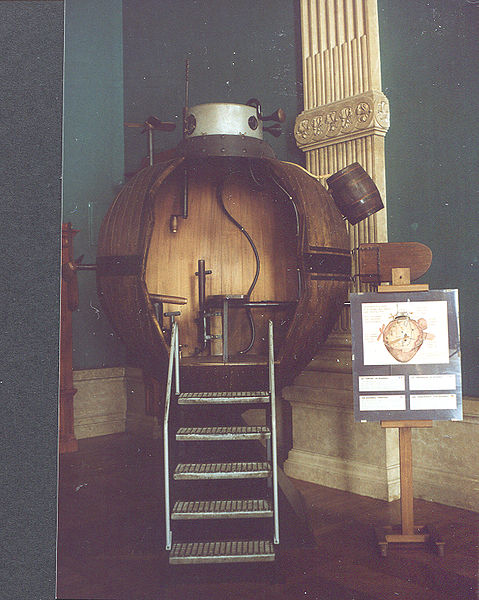
The world’s worst submarine was the first submarine. That makes sense. It had very limited capabilities. In it’s one and only attempted attack it was comically ineffective.

In the mid 1770’s David Bushnell, an inventive guy, created the world’s first attack submarine. Using whiskey barrel technology, he made a watertight clam shell shaped vehicle with barely enough room for one man. The thing, nicknamed the Turtle, was placed in New York Harbor one night Continue reading Worst Submarine

Posted on — Leave a comment

Ben Franklin’s Failed Architecture

When plans were required for a new house of government, Ben Franklin was given a crack at the architect’s job, but his design was rejected. It was just too offbeat. He had planned to hook all the seats in the meeting room to the fireplace chimney. The bottoms of the seats would have many small holes. The draft from the chimney would create a slight suction at these holes in the seats, carrying away what he called “personal odors.”

But, one has to try things, right? Look how well his other ideas worked out!

Lightning Rod
Designed in the 1750s after his famous kite experiment, this pointed iron rod attached to the tops of buildings grounded electrical charges from storm clouds, preventing disastrous structure fires.

Franklin Stove
Invented in 1741, this metal-lined fireplace featured a hollow baffle and a rear flue system designed to radiate more heat into the room while using significantly less wood than traditional open fireplaces.

Bifocal Eyeglasses
Tired of constantly swapping between distance and reading glasses, Franklin cut lenses from both types of preview spectacles in half and combined them into a single frame in 1784.

Flexible Urinary Catheter
In 1752, Franklin created a modified, flexible catheter made of hinged segments of silver tubing to help ease the medical discomfort experienced by his brother John, who suffered from kidney stones.

Glass Armonica
Inspired by wine glass music, Franklin invented a mechanical instrument in 1761 consisting of nested, color-coded glass bowls mounted on a rotating spindle operated by a foot pedal.

Odometer
While serving as Postmaster General, Franklin built a hub-attached gear mechanism for carriage wheels in the 1760s to accurately measure distances along postal routes and calculate efficient delivery rates.

Long Arm (Reach Extender)
To reach books on high shelves without a ladder, Franklin created a wood pole with two wooden fingers at the end operated by a cord, serving as an early mechanical grabber.

Three-Wheel Clock
Designed in 1757, this simplified mechanical clock used only three gears and two hands to keep accurate time, making it far cheaper and easier to manufacture than standard timepieces of the era.

Swim Fins
As an avid young swimmer in Boston around 1717, an 11-year-old Franklin crafted hand-held wooden fins shaped like painter’s palettes to increase propulsion in the water.

The Library Chair and Stepstool-Ladder
A master of practical furniture design, Franklin created a conversion library chair whose seat flipped over to turn into a short ladder, as well as a rocking chair fitted with a foot-powered fan to keep insects away.

Posted on — Leave a comment

Worst Assumption Ever

Before testing the first atomic bomb, some of the scientists working on the Manhattan Project did their best to calculate what might happen. They estimated there was a three percent chance the bomb would set the entire world’s atmosphere on fire, instantly killing us all. They went ahead and tested the bomb.

Facts About the Manhattan Project

It Was Named After an Office in New York

The project was originally designated the “Development of Substitute Materials.” To maintain secrecy, it was renamed the Manhattan Engineer District (and later the Manhattan Project) because its initial headquarters were located at 270 Broadway in Manhattan, New York.

It Was Initiated by a Letter Signed by Albert Einstein

In August 1939, concerned that Nazi Germany might develop nuclear weapons, physicists Leo Szilard and Eugene Wigner drafted a letter to President Franklin D. Roosevelt warning him of the danger. They persuaded Albert Einstein to sign it, which directly led to the U.S. government establishing what would become the Manhattan Project.

It Was Larger and More Expensive Than Most Realize

At its peak, the project employed over 130,000 people and cost roughly $2 billion at the time (equivalent to over $30 billion today). It was one of the largest industrial and secret scientific endeavors in history.

It Spanned Dozens of Sites Across North America

While Los Alamos, New Mexico, hosted the secret laboratory responsible for bomb design, key research and production facilities spanned the continent:

Oak Ridge, Tennessee: Uranium enrichment plants.

Hanford, Washington: Plutonium production reactors.

Chalk River, Ontario: Canadian heavy water research support.

A Secret City Consumed 10% of the Nation’s Electricity

Oak Ridge, Tennessee—built entirely from scratch in secret—became the fifth largest city in the state during the war. Its massive uranium enrichment facilities consumed approximately 10% of all electrical power produced in the United States at the time.

The Silver from Fort Knox

Due to wartime copper shortages, the project borrowed over 14,000 tons of pure silver from the U.S. Treasury to make electrical wiring for electromagnets used in uranium separation. All of the silver was melted down, drawn into wire, used, and eventually returned to the Treasury after the war with virtually none lost.

Soviet Spies Infiltrated the Highest Levels

Despite extreme compartmentalization and security protocols, several scientists and technicians passed critical technical details to the Soviet Union. Key spies included Klaus Fuchs, Theodore Hall, and David Greenglass, which significantly accelerated the USSR’s own atomic bomb development after WWII.

“Calutron Girls” Operated High-Tech Equipment Without Knowing What It Did

Thousands of young women, mostly high school graduates, were hired at Oak Ridge to operate Calutrons (devices used to enrich uranium). They were trained purely to monitor dials and adjust switches, remaining completely unaware of the facility’s purpose until the bombs were dropped in 1945.

The First Bomb Was Named “Gadget”

The world’s first nuclear detonation—the Trinity Test on July 16, 1945, near Alamogordo, New Mexico—used a plutonium implosion device affectionately nicknamed “Gadget.” Scientists were so uncertain of the outcome that Fermi famously took bets on whether it would ignite the Earth’s atmosphere (though calculations proved this impossible).

The Scientists Wore Sunglasses for the First Atomic Blast

During the Trinity Test, observers were instructed to lie face down with their feet toward the blast and cover their eyes. Many scientists, including Richard Feynman, chose to watch through dark welding goggles or behind heavily tinted glass; Feynman famously sat inside a truck windshield, arguing the glass would block the UV radiation.

Speaking of scientists run amok, you might find this interesting: Yelling At Chickens.