Posted on — Leave a comment

Worst Name for a Soft Drink

7-Up was originally called Bib-Label Lithiated Lemon-Lime Soda when it was invented in 1929. The drink probably didn’t sell well until it was renamed. The first rename was “7-Up Lithiated Lemon Soda.” The 7 is for the original size – 7 ounces – and the Up was for “bottoms up.”

The first advertising slogan for 7-Up was, “It takes the ouch out of grouch.”

That slogan didn’t help sales much, but the experiment was valid. Lesson: Keep trying new things and don’t be surprised if you have a sudden breakthrough.

The original formula of 7-Up contained lithium citrate, a mood-stabilizing drug. It was removed in 1948.

Unlike many other soft drinks that have undergone significant flavor alterations over the years, the taste of 7-Up has remained relatively consistent.

Fido Dido: 7-Up briefly used a mascot named Fido Dido in the late 1980s and early 1990s, a quirky character known for his laid-back attitude.

Clear Cola Craze: During the 1990s “clear cola” craze, 7-Up introduced a clear version of their soda called “7-Up Ice Cola,” but it was discontinued shortly after.

Natural Flavors: 7-Up boasts of using natural flavors, which gives it a distinctive taste compared to other lemon-lime sodas.

No Caffeine Jolt: While some soft drinks provide a caffeine boost, 7-Up offers a more mellow experience due to its lack of caffeine.

Global Presence: 7-Up is sold in more than 100 countries worldwide, making it one of the most widely distributed soft drinks.

Limited Edition Flavors: Over the years, 7-Up has released limited edition flavors, including cherry, pomegranate, and holiday-themed varieties.

Formula Changes: Like many sodas, 7-Up has undergone formula changes over the years to adapt to changing consumer preferences and regulations.

Health Concerns: Like other sugary beverages, regular consumption of 7-Up has been linked to health concerns such as obesity, diabetes and tooth decay.

Citrus Base: The lemon-lime flavor of 7-Up comes from a blend of citrus oils extracted from lemon and lime peels.

Popular Mixer for Mocktails: 7-Up is often used in non-alcoholic cocktails or “mocktails” to add fizz and sweetness without the alcohol.

Variants Around the World: In different countries, 7-Up may have unique flavors or variations tailored to local tastes.

Association with Christmas: In some regions, 7-Up has become associated with the Christmas season, often mixed with cranberry juice or used in holiday punch recipes.

Nostalgic Appeal: For many consumers, 7-Up holds nostalgic value, evoking memories of childhood parties, family gatherings, and refreshing moments shared with loved ones.

Posted on — Leave a comment

Richard Nixon’s Worst Mistake

Right out of law school, Richard Nixon, later to become a an American President, got his first job as a lawyer, representing a client in court trying to recover a bad debt. He lost the case. He was then sued by the client for inept handling of her case.

More About Richard Nixon

He was an accomplished poker player who funded his first political campaign with his winnings. While serving in the U.S. Navy during World War II in the South Pacific, Nixon learned poker and quickly mastered it. By the end of the war, he had won roughly $5,000 to $10,000—a substantial sum at the time—which he used to finance his successful 1946 run for the U.S. House of Representatives.

He was an avid bowler and installed a single-lane bowling alley under the White House. Nixon loved bowling to unwind, often playing late at night. In 1969, he had a one-lane alley built in the subterranean area under the North Portico driveway, where he reportedly once bowled a high score of 232.

He was an expert classical pianist. Nixon started playing music at a young age, mastering the piano as well as the violin, accordion, clarinet, and saxophone. Notably, he composed his own piano concerto, “Richard Nixon’s Piano Concerto No. 1,” which he performed live on The Jack Paar Program in 1963.

He turned down football scholarship offers to stay close to home. A huge football fan throughout his life, Nixon played benchwarmer tackle for Whittier College. He had received scholarship offers from larger universities, including Harvard, but stayed in California to care for his family and work at his parents’ grocery store following the deaths of two of his brothers.

He was offered the role of Commissioner of Major League Baseball. Nixon was an obsessive baseball fan with a near-photographic memory for player statistics. In 1965, during his years out of public office, he was approached to become the Commissioner of Major League Baseball, though he ultimately declined to focus on his political comeback.

He successfully introduced Title IX into law. While best known domestically for establishing the Environmental Protection Agency (EPA) and OSHA, Nixon signed the Education Amendments of 1972 into law. Section 9—commonly known as Title IX—fundamentally transformed American women’s sports by prohibiting sex-based discrimination in educational programs receiving federal funding.

He was the first U.S. President to visit all 50 states. Nixon took immense pride in his campaign travel. By October 1960, during his presidential campaign against John F. Kennedy, he fulfilled a promise to personally campaign in every single state, a feat no president before him had accomplished.

He introduced the “Madman Theory” in foreign diplomacy. During the Vietnam War, Nixon and his National Security Advisor, Henry Kissinger, employed a deliberate strategy designed to make Soviet and North Vietnamese leaders believe Nixon was erratic, unpredictable, and willing to use nuclear weapons. The goal was to pressure adversaries into negotiating for peace out of fear of irrational escalation.

His speechwriter prepared a full statement in case the Apollo 11 moon landing failed. Before Neil Armstrong and Buzz Aldrin stepped onto the Moon in 1969, Nixon had his speechwriter, William Safire, draft a contingency address titled “In Event of Moon Disaster.” The speech, which was ultimately never needed, honored the astronauts and acknowledged that “fate has ordained that the men who went to the moon to explore in peace will stay on the moon to rest in peace.”

He remains the only person to be elected twice to both the Vice Presidency and the Presidency. Nixon served two terms as Dwight D. Eisenhower’s Vice President (1953–1961) and was elected President in two landslide elections in 1968 and 1972. Despite his resignation in 1974 following the Watergate scandal, this four-term election milestone remains unique in American political history.

Posted on — Leave a comment

Ben Franklin’s Failed Architecture

When plans were required for a new house of government, Ben Franklin was given a crack at the architect’s job, but his design was rejected. It was just too offbeat. He had planned to hook all the seats in the meeting room to the fireplace chimney. The bottoms of the seats would have many small holes. The draft from the chimney would create a slight suction at these holes in the seats, carrying away what he called “personal odors.”

But, one has to try things, right? Look how well his other ideas worked out!

Lightning Rod
Designed in the 1750s after his famous kite experiment, this pointed iron rod attached to the tops of buildings grounded electrical charges from storm clouds, preventing disastrous structure fires.

Franklin Stove
Invented in 1741, this metal-lined fireplace featured a hollow baffle and a rear flue system designed to radiate more heat into the room while using significantly less wood than traditional open fireplaces.

Bifocal Eyeglasses
Tired of constantly swapping between distance and reading glasses, Franklin cut lenses from both types of preview spectacles in half and combined them into a single frame in 1784.

Flexible Urinary Catheter
In 1752, Franklin created a modified, flexible catheter made of hinged segments of silver tubing to help ease the medical discomfort experienced by his brother John, who suffered from kidney stones.

Glass Armonica
Inspired by wine glass music, Franklin invented a mechanical instrument in 1761 consisting of nested, color-coded glass bowls mounted on a rotating spindle operated by a foot pedal.

Odometer
While serving as Postmaster General, Franklin built a hub-attached gear mechanism for carriage wheels in the 1760s to accurately measure distances along postal routes and calculate efficient delivery rates.

Long Arm (Reach Extender)
To reach books on high shelves without a ladder, Franklin created a wood pole with two wooden fingers at the end operated by a cord, serving as an early mechanical grabber.

Three-Wheel Clock
Designed in 1757, this simplified mechanical clock used only three gears and two hands to keep accurate time, making it far cheaper and easier to manufacture than standard timepieces of the era.

Swim Fins
As an avid young swimmer in Boston around 1717, an 11-year-old Franklin crafted hand-held wooden fins shaped like painter’s palettes to increase propulsion in the water.

The Library Chair and Stepstool-Ladder
A master of practical furniture design, Franklin created a conversion library chair whose seat flipped over to turn into a short ladder, as well as a rocking chair fitted with a foot-powered fan to keep insects away.

Posted on — Leave a comment

Worst Name for a City

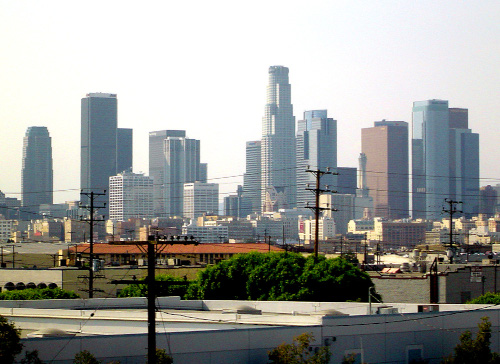
We all know LA. is an abbreviation for a big city in California, but most people don’t know the full name. It is, “El Pueblo de Nuestra Senora la Reina de los Angeles de Porciuncula.”

More Unexpected Facts About Los Angeles

It is legally illegal to drive more than 2,000 sheep down Hollywood Boulevard at once. You can, however, herd up to 2,000 sheep without breaking the city ordinance.

The famous Hollywood Sign originally said “HOLLYWOODLAND.” Built in 1923 as an outdoor billboard for a real estate development, the final four letters were removed during a restoration in 1949.

Los Angeles is home to an active, working oil field hidden in plain sight. High schools, shopping centers, and office buildings often double as camouflaged oil rigs—including a 14-story, brightly painted tower right on the campus of Beverly Hills High School.

It holds the world record for the shortest railway line. The Angels Flight funicular railway in Downtown L.A. covers a track of just 298 feet (about 91 meters) up Bunker Hill.

L.A. has a secret network of underground tunnels. Built during Prohibition to move illegal alcohol between speakeasies beneath the city streets, the roughly 11 miles of tunnels have also been used to transport prisoners and VIPs away from crowds.

Santa Monica Pier’s famous Ferris wheel is 100% solar-powered. It was the world’s first solar-powered Ferris wheel, operating on a series of panels that capture the Southern California sun.

There are more cars than people in Los Angeles County. Vehicles occupy roughly 14% of the city’s total land area, dedicated strictly to streets, freeways, parking structures, and driveways.

The Tar Pits in the middle of the city are still actively bubbling. La Brea Tar Pits is one of the world’s most famous paleontological urban sites, where natural asphalt continuously seeps up from the ground, trapping prehistoric fossils—and occasionally confusing modern tourists.

L.A. was once a major producer of celery and avocados. Long before it became the entertainment capital of the world, much of the Los Angeles Basin was dominated by citrus groves, bean fields, and massive agricultural farms.

See also Worst Jokes About Los Angeles.

Posted on — 1 Comment

Five Years In The Bike Shop

Copyright 2013 – 2026, John Flaherty

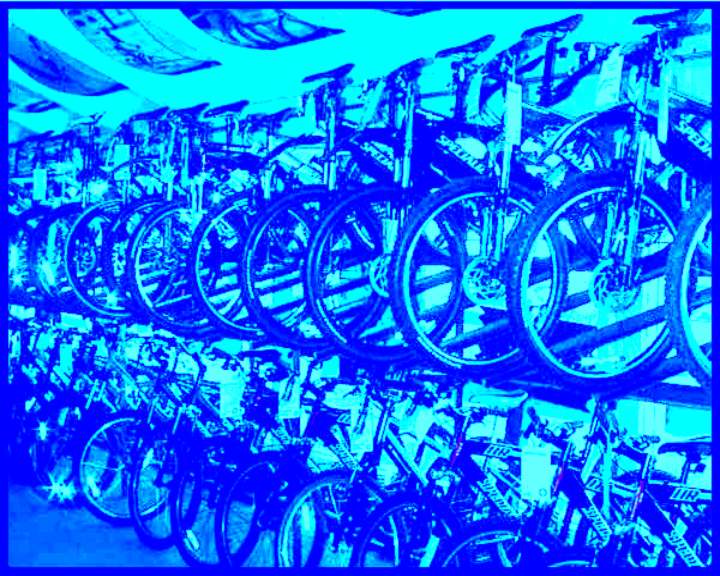
There was once a little bicycle shop, ordinary in every way, except for the people associated with it. Brian the owner, the employees, and many of the customers were the most interesting and eccentric people I have ever met. That’s what this book is about. I have changed the location and the names to protect those involved. Everything else is true, exactly as it happened. The bike shop lasted five years before it came to a strange end. Welcome to the story of the shop and it’s people. Continue reading Five Years In The Bike Shop

Posted on — Leave a comment

Worst Assumption Ever

Before testing the first atomic bomb, some of the scientists working on the Manhattan Project did their best to calculate what might happen. They estimated there was a three percent chance the bomb would set the entire world’s atmosphere on fire, instantly killing us all. They went ahead and tested the bomb.

Facts About the Manhattan Project

It Was Named After an Office in New York

The project was originally designated the “Development of Substitute Materials.” To maintain secrecy, it was renamed the Manhattan Engineer District (and later the Manhattan Project) because its initial headquarters were located at 270 Broadway in Manhattan, New York.

It Was Initiated by a Letter Signed by Albert Einstein

In August 1939, concerned that Nazi Germany might develop nuclear weapons, physicists Leo Szilard and Eugene Wigner drafted a letter to President Franklin D. Roosevelt warning him of the danger. They persuaded Albert Einstein to sign it, which directly led to the U.S. government establishing what would become the Manhattan Project.

It Was Larger and More Expensive Than Most Realize

At its peak, the project employed over 130,000 people and cost roughly $2 billion at the time (equivalent to over $30 billion today). It was one of the largest industrial and secret scientific endeavors in history.

It Spanned Dozens of Sites Across North America

While Los Alamos, New Mexico, hosted the secret laboratory responsible for bomb design, key research and production facilities spanned the continent:

Oak Ridge, Tennessee: Uranium enrichment plants.

Hanford, Washington: Plutonium production reactors.

Chalk River, Ontario: Canadian heavy water research support.

A Secret City Consumed 10% of the Nation’s Electricity

Oak Ridge, Tennessee—built entirely from scratch in secret—became the fifth largest city in the state during the war. Its massive uranium enrichment facilities consumed approximately 10% of all electrical power produced in the United States at the time.

The Silver from Fort Knox

Due to wartime copper shortages, the project borrowed over 14,000 tons of pure silver from the U.S. Treasury to make electrical wiring for electromagnets used in uranium separation. All of the silver was melted down, drawn into wire, used, and eventually returned to the Treasury after the war with virtually none lost.

Soviet Spies Infiltrated the Highest Levels

Despite extreme compartmentalization and security protocols, several scientists and technicians passed critical technical details to the Soviet Union. Key spies included Klaus Fuchs, Theodore Hall, and David Greenglass, which significantly accelerated the USSR’s own atomic bomb development after WWII.

“Calutron Girls” Operated High-Tech Equipment Without Knowing What It Did

Thousands of young women, mostly high school graduates, were hired at Oak Ridge to operate Calutrons (devices used to enrich uranium). They were trained purely to monitor dials and adjust switches, remaining completely unaware of the facility’s purpose until the bombs were dropped in 1945.

The First Bomb Was Named “Gadget”

The world’s first nuclear detonation—the Trinity Test on July 16, 1945, near Alamogordo, New Mexico—used a plutonium implosion device affectionately nicknamed “Gadget.” Scientists were so uncertain of the outcome that Fermi famously took bets on whether it would ignite the Earth’s atmosphere (though calculations proved this impossible).

The Scientists Wore Sunglasses for the First Atomic Blast

During the Trinity Test, observers were instructed to lie face down with their feet toward the blast and cover their eyes. Many scientists, including Richard Feynman, chose to watch through dark welding goggles or behind heavily tinted glass; Feynman famously sat inside a truck windshield, arguing the glass would block the UV radiation.

Speaking of scientists run amok, you might find this interesting: Yelling At Chickens.