Posted on — Leave a comment

Worst Name for a Soft Drink

7-Up was originally called Bib-Label Lithiated Lemon-Lime Soda when it was invented in 1929. The drink probably didn’t sell well until it was renamed. The first rename was “7-Up Lithiated Lemon Soda.” The 7 is for the original size – 7 ounces – and the Up was for “bottoms up.”

The first advertising slogan for 7-Up was, “It takes the ouch out of grouch.”

That slogan didn’t help sales much, but the experiment was valid. Lesson: Keep trying new things and don’t be surprised if you have a sudden breakthrough.

The original formula of 7-Up contained lithium citrate, a mood-stabilizing drug. It was removed in 1948.

Unlike many other soft drinks that have undergone significant flavor alterations over the years, the taste of 7-Up has remained relatively consistent.

Fido Dido: 7-Up briefly used a mascot named Fido Dido in the late 1980s and early 1990s, a quirky character known for his laid-back attitude.

Clear Cola Craze: During the 1990s “clear cola” craze, 7-Up introduced a clear version of their soda called “7-Up Ice Cola,” but it was discontinued shortly after.

Natural Flavors: 7-Up boasts of using natural flavors, which gives it a distinctive taste compared to other lemon-lime sodas.

No Caffeine Jolt: While some soft drinks provide a caffeine boost, 7-Up offers a more mellow experience due to its lack of caffeine.

Global Presence: 7-Up is sold in more than 100 countries worldwide, making it one of the most widely distributed soft drinks.

Limited Edition Flavors: Over the years, 7-Up has released limited edition flavors, including cherry, pomegranate, and holiday-themed varieties.

Formula Changes: Like many sodas, 7-Up has undergone formula changes over the years to adapt to changing consumer preferences and regulations.

Health Concerns: Like other sugary beverages, regular consumption of 7-Up has been linked to health concerns such as obesity, diabetes and tooth decay.

Citrus Base: The lemon-lime flavor of 7-Up comes from a blend of citrus oils extracted from lemon and lime peels.

Popular Mixer for Mocktails: 7-Up is often used in non-alcoholic cocktails or “mocktails” to add fizz and sweetness without the alcohol.

Variants Around the World: In different countries, 7-Up may have unique flavors or variations tailored to local tastes.

Association with Christmas: In some regions, 7-Up has become associated with the Christmas season, often mixed with cranberry juice or used in holiday punch recipes.

Nostalgic Appeal: For many consumers, 7-Up holds nostalgic value, evoking memories of childhood parties, family gatherings, and refreshing moments shared with loved ones.

Posted on — Leave a comment

Worst Rejection

Sometimes when we are rejected, we become dejected. When that happens, see if you can continue with one foot in front of the other, as Albert Einstein did.

In 1905 Albert Einstein wrote his famous Special Theory of Relativity. It was published in a scientific journal that same year, but took many years to gain general acceptance. In fact, it was not proven by actual experiment until 25 years later. This paper, entitled “Does the Inertia of a Body Depend Upon Its Energy Content?” is where E=mc² first appeared.

Two years after that paper was published, Einstein wanted a job as assistant professor of mathematics. This job required the applicant to submit a thesis paper, so Einstein submitted his Special Theory of Relativity. The university rejected it.

Einstein was a late talker and didn’t start speaking until he was almost 4 years old. Some say he couldn’t speak in full sentences until he was 9 years old.

He was a talented musician and could play the violin and piano. He often played music to help him think.

He had a poor memory for names and often forgot people he had met.

Einstein was a vegetarian and even wrote an essay called “The Ethics of Diet.”

He had a love for sailing and owned a sailboat named Tümmler which is German for porpoise.

Einstein was a smoker, but quit later in life after suffering from heart problems.

Einstein was offered a position in the Swiss Patent Office while he was trying to find a job as a teacher.

Einstein had a daughter named Lieserl who was born out of wedlock and was given up for adoption.

He was a pacifist and spoke out against war and violence.

Einstein was an avid letter-writer and wrote over 14,000 letters in his lifetime.

He was a fan of detective novels and even created his own detective, called Dr. René Belloq.

Einstein’s brain was preserved after his death for scientific study.

He had a close friendship with Charlie Chaplin and they often played music together.

Einstein was offered the position of Prime Minister of Israel, but declined.

He was a supporter of civil rights and spoke out against racism.

Einstein was an early member of the NAACP.

He was a fan of the philosopher Spinoza and even wrote a book about him.

Posted on — Leave a comment

Worst Vote

In 1968 Liechtenstein held a vote to determine whether women should be allowed to vote. Women were allowed to participate only in this vote, because until then women were not allowed to vote. The result of the vote was that women were not allowed to vote.


Worst Vote Ever in was in Liechtenstein

Here are Some Interesting Facts about Liechtenstein

It is the double-landlocked country with no airport: Liechtenstein is surrounded entirely by landlocked countries (Switzerland and Austria), making it one of only two doubly landlocked nations in the world (alongside Uzbekistan). It also has no airport—the nearest major airport is in Zurich, Switzerland.

You can rent the entire country: For around $70,000 a night, groups can symbolically rent the entire nation through a private events company. The package includes custom street signs, temporary local currency, a ceremonial key to the country, and wine tasting at the Prince’s estate.

It produces millions of false teeth: Despite its tiny size, Liechtenstein is a global powerhouse in dental manufacturing. The company Ivoclar Vivadent, based in Schaan, produces tens of millions of prosthetic teeth every year, supplying a significant portion of the global market.

The Prince is a practicing monarch with real political power: Unlike most European monarchs who play purely ceremonial roles, the Prince of Liechtenstein (currently Prince Hans-Adam II) holds substantial executive powers, including the veto power over legislation and the ability to appoint judges.

It accidentally invaded its neighbor (and brought back a friend): During the Austro-Prussian War in 1866, Liechtenstein sent an army of 80 men to guard an Alpine pass. They saw no action, suffered zero casualties, and allegedly returned with 81 men because they befriended an Italian soldier along the way.

There are more registered businesses than residents: Thanks to low corporate tax rates, business-friendly laws, and high economic stability, Liechtenstein hosts more registered corporate entities and holdings than its population of roughly 40,000 people.

It has no national military: Liechtenstein officially disbanded its army in 1868 to save money. Today, national security is handled by the national police force, and Switzerland maintains a informal protective relationship with the country.

The billionaire Prince owns the entire country’s bank: Prince Hans-Adam II is one of the world’s wealthiest monarchs, with a fortune largely derived from owning LGT Group, a private banking and asset management group.

National Day features a party in the Castle gardens: Every August 15th on Liechtenstein’s National Day, the Princely Family invites all citizens and visitors to the grounds of Vaduz Castle for drinks, receptions, and a public fireworks display.

It is one of the wealthiest countries per capita: Driven by high-tech manufacturing (such as power tools and precision instruments), finance, and specialized industry, Liechtenstein consistently boasts one of the highest GDPs per capita in the world and virtually zero unemployment.

Posted on — Leave a comment

Richard Nixon’s Worst Mistake

Right out of law school, Richard Nixon, later to become a an American President, got his first job as a lawyer, representing a client in court trying to recover a bad debt. He lost the case. He was then sued by the client for inept handling of her case.

More About Richard Nixon

He was an accomplished poker player who funded his first political campaign with his winnings. While serving in the U.S. Navy during World War II in the South Pacific, Nixon learned poker and quickly mastered it. By the end of the war, he had won roughly $5,000 to $10,000—a substantial sum at the time—which he used to finance his successful 1946 run for the U.S. House of Representatives.

He was an avid bowler and installed a single-lane bowling alley under the White House. Nixon loved bowling to unwind, often playing late at night. In 1969, he had a one-lane alley built in the subterranean area under the North Portico driveway, where he reportedly once bowled a high score of 232.

He was an expert classical pianist. Nixon started playing music at a young age, mastering the piano as well as the violin, accordion, clarinet, and saxophone. Notably, he composed his own piano concerto, “Richard Nixon’s Piano Concerto No. 1,” which he performed live on The Jack Paar Program in 1963.

He turned down football scholarship offers to stay close to home. A huge football fan throughout his life, Nixon played benchwarmer tackle for Whittier College. He had received scholarship offers from larger universities, including Harvard, but stayed in California to care for his family and work at his parents’ grocery store following the deaths of two of his brothers.

He was offered the role of Commissioner of Major League Baseball. Nixon was an obsessive baseball fan with a near-photographic memory for player statistics. In 1965, during his years out of public office, he was approached to become the Commissioner of Major League Baseball, though he ultimately declined to focus on his political comeback.

He successfully introduced Title IX into law. While best known domestically for establishing the Environmental Protection Agency (EPA) and OSHA, Nixon signed the Education Amendments of 1972 into law. Section 9—commonly known as Title IX—fundamentally transformed American women’s sports by prohibiting sex-based discrimination in educational programs receiving federal funding.

He was the first U.S. President to visit all 50 states. Nixon took immense pride in his campaign travel. By October 1960, during his presidential campaign against John F. Kennedy, he fulfilled a promise to personally campaign in every single state, a feat no president before him had accomplished.

He introduced the “Madman Theory” in foreign diplomacy. During the Vietnam War, Nixon and his National Security Advisor, Henry Kissinger, employed a deliberate strategy designed to make Soviet and North Vietnamese leaders believe Nixon was erratic, unpredictable, and willing to use nuclear weapons. The goal was to pressure adversaries into negotiating for peace out of fear of irrational escalation.

His speechwriter prepared a full statement in case the Apollo 11 moon landing failed. Before Neil Armstrong and Buzz Aldrin stepped onto the Moon in 1969, Nixon had his speechwriter, William Safire, draft a contingency address titled “In Event of Moon Disaster.” The speech, which was ultimately never needed, honored the astronauts and acknowledged that “fate has ordained that the men who went to the moon to explore in peace will stay on the moon to rest in peace.”

He remains the only person to be elected twice to both the Vice Presidency and the Presidency. Nixon served two terms as Dwight D. Eisenhower’s Vice President (1953–1961) and was elected President in two landslide elections in 1968 and 1972. Despite his resignation in 1974 following the Watergate scandal, this four-term election milestone remains unique in American political history.

Posted on — Leave a comment

Worst Diet

King Henry VIII of England, long known for his many wives and culinary gluttony, died at age 56, probably from scurvy, a condition of dietary deficiency. It was fashionable in his time for wealthy people to eat mostly meat, and very few vegetables, because ‘vegetables were for peasants.’

Here are 10 Weird Facts About King Henry VIII

He had a dedicated court official called the “Groom of the Stool.”

This high-ranking noble was responsible for assisting the King with his bodily functions, monitoring his digestive health, and wiping him. Because of their intimate proximity to the monarch, the Groom of the Stool was one of the King’s most powerful and trusted advisors.

He composed popular music and played multiple instruments.

Far from just a tyrant, Henry VIII was an accomplished musician and composer. He played the lute, organ, and harp, held a massive personal collection of instruments, and wrote several pieces of music—including the famous courtly song “Pastime with Good Company”.

His waistline expanded by over 20 inches.

In his youth, Henry was an athletic, broad-shouldered jousting champion with a 32-inch waist. However, after severe injuries curtailed his activity while his massive calorie intake remained unchanged, his waist grew to roughly 54 inches late in life, and his armor had to be continually enlarged.

He required a mechanical winch to hoist him into saddle and bed.

In his final years, suffering from painful, festering leg ulcers, gout, and extreme obesity, the King could no longer walk upstairs or mount a horse on his own. His attendants used block-and-tackle pulley systems and specialized wooden chairs to lift and transport him around his palaces.

He taxed men for growing beards.

In 1535, Henry VIII introduced a tax on facial hair, with the rate varying depending on the beard grower’s social status. Ironically, Henry grew out his own full, iconic beard around the same time and wore it until his death.

He owned one of history’s largest weapons collections, including a “Walking Staff.”

Henry was obsessed with weaponry and armor. He used to roam the streets of London incognito at night carrying a giant spike-headed mace known as “Henry VIII’s Walking Stick,” which featured three hidden gun barrels inside the spiked ball.

He spent the equivalent of millions of dollars on a single party.

At the “Field of the Cloth of Gold” meeting with King Francis I of France in 1520, Henry built a temporary, two-story palace made of wood and canvas decorated to look like stone. The event featured fountains that flowed continuously with red wine and cost an estimated $19 million in modern currency.

He banned commoners from reading the Bible.

Although Henry broke away from the Catholic Church to establish the Church of England and authorized the creation of the English Great Bible, he later passed the 1543 Act for the Advancement of True Religion. This law prohibited women, laborers, apprentices, and lower-class citizens from reading the Bible, restricting access solely to noble men.

He was a severe hypochondriac.

Henry lived in constant terror of sickness, particularly the “Sweating Sickness” and the plague. Whenever an outbreak occurred in London, he would immediately flee to the country, change locations constantly, and lock himself away with only his physicians.

His body allegedly ruptured inside his coffin.

According to contemporary accounts, Henry was so bloated at the time of his death in 1547 that his heavy wooden and lead coffin strained under internal pressure while resting overnight at Syon Monastery during the funeral procession. The coffin reportedly leaked or burst, fulfilling a prophecy made by a Franciscan friar years earlier that “dogs would lick his blood.”

Posted on — Leave a comment

Ben Franklin’s Failed Architecture

When plans were required for a new house of government, Ben Franklin was given a crack at the architect’s job, but his design was rejected. It was just too offbeat. He had planned to hook all the seats in the meeting room to the fireplace chimney. The bottoms of the seats would have many small holes. The draft from the chimney would create a slight suction at these holes in the seats, carrying away what he called “personal odors.”

But, one has to try things, right? Look how well his other ideas worked out!

Lightning Rod
Designed in the 1750s after his famous kite experiment, this pointed iron rod attached to the tops of buildings grounded electrical charges from storm clouds, preventing disastrous structure fires.

Franklin Stove
Invented in 1741, this metal-lined fireplace featured a hollow baffle and a rear flue system designed to radiate more heat into the room while using significantly less wood than traditional open fireplaces.

Bifocal Eyeglasses
Tired of constantly swapping between distance and reading glasses, Franklin cut lenses from both types of preview spectacles in half and combined them into a single frame in 1784.

Flexible Urinary Catheter
In 1752, Franklin created a modified, flexible catheter made of hinged segments of silver tubing to help ease the medical discomfort experienced by his brother John, who suffered from kidney stones.

Glass Armonica
Inspired by wine glass music, Franklin invented a mechanical instrument in 1761 consisting of nested, color-coded glass bowls mounted on a rotating spindle operated by a foot pedal.

Odometer
While serving as Postmaster General, Franklin built a hub-attached gear mechanism for carriage wheels in the 1760s to accurately measure distances along postal routes and calculate efficient delivery rates.

Long Arm (Reach Extender)
To reach books on high shelves without a ladder, Franklin created a wood pole with two wooden fingers at the end operated by a cord, serving as an early mechanical grabber.

Three-Wheel Clock
Designed in 1757, this simplified mechanical clock used only three gears and two hands to keep accurate time, making it far cheaper and easier to manufacture than standard timepieces of the era.

Swim Fins
As an avid young swimmer in Boston around 1717, an 11-year-old Franklin crafted hand-held wooden fins shaped like painter’s palettes to increase propulsion in the water.

The Library Chair and Stepstool-Ladder
A master of practical furniture design, Franklin created a conversion library chair whose seat flipped over to turn into a short ladder, as well as a rocking chair fitted with a foot-powered fan to keep insects away.

Posted on — Leave a comment

Worst Name for a City

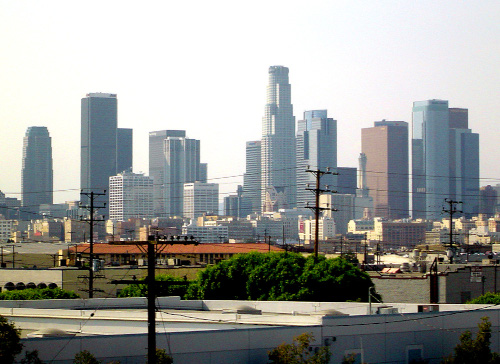
We all know LA. is an abbreviation for a big city in California, but most people don’t know the full name. It is, “El Pueblo de Nuestra Senora la Reina de los Angeles de Porciuncula.”

More Unexpected Facts About Los Angeles

It is legally illegal to drive more than 2,000 sheep down Hollywood Boulevard at once. You can, however, herd up to 2,000 sheep without breaking the city ordinance.

The famous Hollywood Sign originally said “HOLLYWOODLAND.” Built in 1923 as an outdoor billboard for a real estate development, the final four letters were removed during a restoration in 1949.

Los Angeles is home to an active, working oil field hidden in plain sight. High schools, shopping centers, and office buildings often double as camouflaged oil rigs—including a 14-story, brightly painted tower right on the campus of Beverly Hills High School.

It holds the world record for the shortest railway line. The Angels Flight funicular railway in Downtown L.A. covers a track of just 298 feet (about 91 meters) up Bunker Hill.

L.A. has a secret network of underground tunnels. Built during Prohibition to move illegal alcohol between speakeasies beneath the city streets, the roughly 11 miles of tunnels have also been used to transport prisoners and VIPs away from crowds.

Santa Monica Pier’s famous Ferris wheel is 100% solar-powered. It was the world’s first solar-powered Ferris wheel, operating on a series of panels that capture the Southern California sun.

There are more cars than people in Los Angeles County. Vehicles occupy roughly 14% of the city’s total land area, dedicated strictly to streets, freeways, parking structures, and driveways.

The Tar Pits in the middle of the city are still actively bubbling. La Brea Tar Pits is one of the world’s most famous paleontological urban sites, where natural asphalt continuously seeps up from the ground, trapping prehistoric fossils—and occasionally confusing modern tourists.

L.A. was once a major producer of celery and avocados. Long before it became the entertainment capital of the world, much of the Los Angeles Basin was dominated by citrus groves, bean fields, and massive agricultural farms.

See also Worst Jokes About Los Angeles.

Posted on — Leave a comment

Worst Misunderstanding

When Adolf Hitler saw a pile of bricks near the church of St. Matthew in Munich, Germany, he said, “That pile of stones will have to be removed.” Someone misunderstood him, thinking he was referring to the whole church. The church was demolished.

10 Weird Facts About Hitler

He Was Heavy into Prescription Drugs and Meth

Hitler’s personal physician, Dr. Theodor Morell, kept the German dictator on an escalating daily regimen of up to 80 different medications. These included daily injections of high-grade methamphetamine (Pervitin), opiates, cocaine eye drops (prescribed for sinus troubles), and even extracts from young bulls’ testicles to boost his libido.

He Whistled Disney Songs for Stress Relief

Despite being an infamous tyrant, Hitler was a fan of early American cinema and animation. His associates noted that when he was in a good mood—or attempting to de-stress after major events like the fall of Paris—he would compulsively whistle tunes like “Who’s Afraid of the Big Bad Wolf” and “When You Wish Upon a Star”.

His Iconic Mustache Was Trimmed for Gas Masks

Before and during early World War I, Hitler wore a thick, full “Kaiser-style” handlebar mustache. He was ordered to trim it down to the distinct “toothbrush” style specifically so it would form a proper seal under a military gas mask after surviving a mustard gas attack.

He Was Technically Stateless for Seven Years

Hitler was born in Austria-Hungary and loathed the multi-ethnic empire. He formally renounced his Austrian citizenship in 1925 but was unable to gain German citizenship right away, leaving him officially stateless (without a country or passport) until 1932, when a Nazi political ally secured him a low-level government job in Brunswick that automatically conferred German nationality.

He Borrowed the “Sieg Heil” Cheer from College Cheerleaders

According to Ernst “Putzi” Hanfstaengl, a close associate of Hitler in the 1920s who went to Harvard, Hitler was deeply fascinated by American college football culture. He adapted the rhythmic, unison chanting and sharp arm gestures used by U.S. cheerleaders to create the rallies and the famous “Sieg Heil!” salute.

He Was a Severe Hypochondriac with Chronic Flatulence

Hitler suffered from severe stomach cramps and chronic digestive issues, resulting in extreme flatulence. His doctors treated the condition with a bizarre array of remedies, including anti-gas pills composed of strychnine and atropine (which nearly poisoned him over time) and chamomile enemas.

He Never Visited a Single Concentration Camp

Despite engineering the Holocaust and ordering the deaths of millions, Hitler maintained a strict distance from the actual mechanics of the genocide. He never visited a single extermination camp, avoided hospitals treating wounded soldiers, and refused to view physical evidence of the destruction he ordered.

He Was a Night Owl Who Slept Through D-Day

Hitler had severe insomnia and rarely went to sleep before 3:00 or 4:00 a.m. Because of his strict orders that he never be disturbed while sleeping, his staff was too terrified to wake him on the morning of June 6, 1944 (D-Day). He slept in until nearly noon, delaying critical orders to release reserve Panzer divisions to counter the Allied landings at Normandy.

He Loved Sweets and Hated the Dentist

Despite his strict vegetarian diet, Hitler was addicted to sugar. He reportedly ate up to two pounds of chocolate a day, added multiple spoonfuls of sugar to fine wine, and loved heavy pastries. Unsurprisingly, this led to terrible dental health, severe abscesses, and an intense fear of the dentist; he once insisted on spreading a simple root canal out over eight days because he couldn’t stand the pain.

His Last Name Was Almost “Schicklgruber”

Hitler’s father, Alois, was born out of wedlock to Maria Anna Schicklgruber and used her last name for the first 39 years of his life. Alois later legally changed his last name to “Hitler” (a variant of his stepfather’s name, Hiedler) 13 years before Adolf was born. Had his father not made the change, the Nazi dictator would have been named Adolf Schicklgruber.