Posted on — Leave a comment

Worst Miley Cyrus Story

Miley Cyrus Revisiting the Wrecking Ball

AI-Generated Funny Story

Miley Cyrus woke up with one thought on her mind: “I need to make a grand entrance today.”

She stumbled into the backyard, wearing almost nothing, because why not? It was her house, and the whole “waking up in a bed of chaos” vibe was kind of her thing. Then her eyes landed on her old wrecking ball.

She grinned. “Well, it has been a while.”

Without hesitation, Miley grabbed the nearest rope, tied it around the wrecking ball, and set it swinging like she was about to create a viral moment. Except this time, it wasn’t a music video. Nope. Today, it was all about her casual backyard adventure.

She climbed the ladder, and as she swung onto the ball, Miley felt the freedom of the wind in her hair and the giddiness of what was definitely going to be another chaotic morning.

Suddenly, her neighbor popped his head over the fence. “Miley, what are you doing this time?”

Miley, mid-swing, flashed him a grin. “Just having a moment of reflection… but also, full commitment to the bit!”

The neighbor stared, his jaw practically on the floor. “You’re, uh… almost naked on that thing, Miley.”

Miley raised her eyebrows. “Nearly naked? I prefer the term ‘freedom fighter.’”

She swung higher, laughing like a kid on Christmas morning, when—BOOM!—she accidentally hit a tree branch and got stuck.

“Huh. This wasn’t in the plan,” she said, dangling upside down, still grinning. “Well, at least it’s only me who can pull off this kind of misadventure.”

Her neighbor slowly backed away. “You know what? I’m calling Dolly—she’s got to have some advice for you.”

Miley just laughed, “Yeah, call Dolly. She’ll probably want to try it next.”

See also 10 Worst Miley Cyrus Jokes.

Posted on — Leave a comment

Worst Billie Eilish Story

Enjoy this weird bit of AI-generated fiction.

Billie Eilish walks into a pet store, oversized hoodie dragging slightly on the floor. She’s here on a mission—to find the perfect weird pet. “Something unsettling but also kinda cute,” she tells the bewildered employee.

“How about a hamster?” he offers.

Billie narrows her icy blue eyes. “Too predictable.”

“A parrot?”

Billie smirks. “Too chatty. I don’t need competition.”

The employee hesitates before pointing to the corner of the store, where a single, unimpressed tarantula sits in a glass case. Billie gasps. “Yes.” She presses her face to the glass. “You and me, we understand each other.” The tarantula does not react, because it is a tarantula.

Minutes later, Billie walks out, victorious, with a new eight-legged friend in a small box. She names it “Little Nightmare” and immediately introduces it to her brother, Finneas, who, upon opening the box, lets out a scream so high-pitched it could be sampled into their next album.

“Perfect,” Billie says, nodding approvingly.

See also 10 Worst Billie Eilish Jokes.

Posted on — Leave a comment

Worst Tennis Player

Monsour Bahrami is who I want to be when I grow up, except for in the sport of pickleball.


Monsour Bahrami was 67 years old when this was filmed. As a child growing up in Iran, he was intrigued with tennis at an early age. However, he was not allowed to have a real tennis racket until he was 13 years old. Until then, he made do with frying pans and other household items.

Due to extremist views that regarded tennis as a capitalist pursuit in Iran, Monsour had to move to France where he went broke trying to be a serious tennis competitor.

At one point while trying desperately to make ends meet, he bet his entire winnings from a recent tournament in a casino and lost everything.

For a while, Mr. Bahrami was homeless in the streets of Paris until his reputation as a tennis trick shot expert and entertainer started to catch on.

He is also a champion backgammon player.


Your author has been working on some pickleball tricks. So far, I have put together a few serves:


For more about pickleball check out OddPickleball.com

.

Posted on — Leave a comment

Celebrities with the Worst Eccentricities

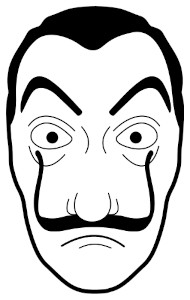
Salvador Dali – The surrealist artist was known for his strange behaviors, such as wearing an antique diving suit and carrying a walking stick with a built-in phallus.

Nikola Tesla – The brilliant inventor was known for his aversion to germs and obsession with the number 3.

Howard Hughes – The billionaire industrialist and aviator was known for his extreme germophobia, reclusiveness, and obsession with aviation.

Lady Gaga – The pop icon is known for her avant-garde fashion sense and eccentric performances, such as wearing a meat dress to an awards show.

Marlon Brando – The legendary actor was known for his peculiar habits, such as having his lines fed to him through an earpiece and insisting on being filmed only in close-ups.

Rasputin – The Russian mystic was known for his wild behavior, such as engaging in orgies and claiming to have healing powers.

Hunter S. Thompson – The journalist and author was known for his drug use, love of firearms, and eccentric personality.

Timothy Leary – The psychologist and counterculture icon was known for his advocacy of psychedelic drugs and unconventional lifestyle.

John McAfee – The software entrepreneur was known for his eccentric behavior, such as claiming to have developed a method to communicate with whales.

Steve Jobs – The Apple co-founder was known for his minimalist fashion sense and perfectionist tendencies.

Richard Branson – The billionaire entrepreneur is known for his adventurous spirit, such as attempting to circumnavigate the world in a hot air balloon.

Oscar Wilde – The writer was known for his flamboyant fashion sense and wit, as well as his homosexuality in a time when it was illegal.

Sarah Winchester – The widow of the Winchester rifle heir was known for her belief in spirits and building a mansion with constantly changing architecture to appease them.

H.R. Giger – The artist and designer was known for his disturbing and erotic artwork, including designing the iconic alien in the movie “Alien”.

Stanley Kubrick – The filmmaker was known for his obsessive attention to detail and control over his films.

Johnny Depp – The actor is known for his eclectic fashion sense and collection of oddities, such as a preserved human finger.

Angelina Jolie – The actress is known for her unusual tattoos, including a Buddhist prayer and the coordinates of her children’s birthplaces.

Shia LaBeouf – The actor is known for his strange behavior, such as wearing a paper bag over his head at a red carpet event.

Madonna – The pop star is known for her controversial music videos and stage performances, such as simulating masturbation during a live concert.

Britney Spears – The pop star is known for her public breakdowns and erratic behavior, such as shaving her head in 2007.

Ozzy Osbourne – The rock star is known for his wild behavior and drug use, as well as biting the head off a bat during a live performance.

Posted on — Leave a comment

Worst Way to Ride a Bicycle

Wrong Way Wooten,
World’s Most Eccentric Bicycle Tourist

Copyright 2014-2026, Jeff Napier

You may occasionally hear someone refer to doing something oddly, or backward, as “Wrong Way Wooten.”
This has become an expression almost entirely detached from its roots. Something like, “Who is John Galt?” That came from the classic novel, Atlas Shrugged, by Ayn Rand. But what about “Wrong Way Wooten?” What’s that all about?

In approximately 1955, Tom Wooten was born in Bryn Mawr, Pennsylavnia.

This place with the weird spelling (pronounced “brin mar”) is approximately eleven miles outside of Philadelphia. Bryn Mawr means “Big Hill” in Welsh. This is a little town of approximately 4,000 people with a neat little downtown where most of the buildings, and most homes, are made of red or orange brick. Bryn Mawr is known as one of the wealthiest areas in the United States, and that figures into our story later on. Ten percent of the population is black, ten percent Asian, and the rest mixed or white.


Bryn Mawr in Pennsylavania


Downtown Bryn Mawr

Tom grew into a tall, slim, very dark skinned, strong, good-looking man. For a short while in the 1980s, he was slightly world-famous. He did not attain the level of celebrity such as Paul McCartney, Dolly Parton, or Burt Reynolds, but he did become a legend, and I think you’ll agree that what he did was significant.

So what did he do? He rode a bicycle backward. That’s all. But he leveraged that skill to deliver a message, and he did it well.

It started when Tom was thirteen years old. In a discussion with a friend, the idea of riding a bike while sitting on the handlebar came up. The friend said it couldn’t be done. Tom proved otherwise.

Through his high school and college years, he perfected this skill, and was occasionally seen riding his bike backward through the town.

There is no information about where he went to college. In fact like much of the information about Tom Wooten, well, there just isn’t much information. One thing we know for sure is that it wasn’t Bryn Mawr college, since that’s an all-woman’s college.

Initially, he rode an ordinary ten-speed bike of the era. with the only modifications being padded tape on the handlebar, to make sitting on it more comfortable, and mirrors on long brackets so he could see where he was going.

When he saw the way people reacted to seeing him ride that way, he decided it would be his career someday.

It wasn’t long before people started calling him “Wrong Way Wooten.” Later, he legally changed his first name to “Wrong Way.”

In his late 20s, evidently after driving a tow truck for a while, and receiving a degree in psychology, he planned his first cross-country tour. Originally, he was going to ride with five other people, but they all backed out before he started. He relates, “I learned never to count on anybody for anything.”

he built a custom bike for his purpose. It was based on a Schwinn Varsity, which was a heavy all-steel ten-speed road bike of the late 1970s, with a one-piece crank.



Schwinn Varsity

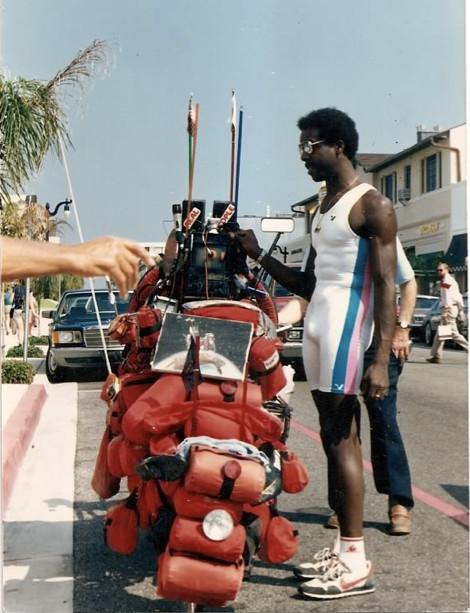
In addition to padding the handlebar and adding mirrors, he removed the seat, and put a portable television in its place. He then somehow attached another ten-speed bike to the rear of his bike in order to carry more gear. There is no information as to exactly how the second bike was attached. There are conflicting reports as to how much the entire contraption weighed. The report that I believe says it was 160 lbs (72 kg). Other reports put it at “over 300 pounds” and some say it was 450 lbs.



Wrong Way Wooten and his custom bike

Wrong Way converted the bike to 21 speeds, quite rare in the 1980s, but left the shifters in their original position – on the handlebar stem. This meant that he had to reach between his legs to change gears.



Stem shifters on a Schwinn Varsity

His bike had toe-clips, which were, of course, installed backward on the pedals.



A pedal with toeclip

Before his first trip to traverse the entire United States, he studied maps. Being independently wealthy (according to what little is written – and we don’t know how he attained that wealth, but Bryn Mawr is known for its wealthy residents), he then hired a small airplane to fly low, examining his proposed route for overly steep hills, road construction and other such potential problems.

Wrong Way then set out on his journey with a specific self-appointed mission. He represented several major charities including The American Cancer Society, The American Lung Society, The Heart Fund, the Jaycees, United Way, and March of Dimes, taking donations in person and also encouraging people to donate directly to their favorite charities.

According to the legend, he criss-crossed the country several times totaling 28,000 miles (45,000 kilometers) over the next seventeen years. As he tirelessly explained to thousands of people across the country, “The main reason I do what I do is to get people to realize that they have a responsibility to other people.” When he could, he would ride more than 100 miles in a day, but on many days he couldn’t get that far. This was due to interruptions as fascinated people wanted to talk with him. He was fine with that.

To some, it looked like what he was doing, riding around the country on a bike, would be limitless fun, but he cited some problems, such as flat tires, bad weather and racists who sometimes tried to run him off the road. “I can’t hate them, then I would be just like them.”

Someone once asked what he does when he gets a flat tire. With a straight face he answered, “I set the bike on fire.”

He did not recommend that other people should tour backwards. “One mistake, and you’re history.”

As with all good legends, the stories sometimes exceed the truth. One person remembers that Wrong Way was an expert on the subject of girls. He was supposedly a remarkable cook and a karate expert. That may be true. At least one person says Wrong Way was able to read minds, responding to unvoiced questions. All say he was a brilliant conversationist, able to speak on any level from ghetto talk to erudite conversations with professors.

He has been spoken of as a loner, and in a way, I suppose he was. This was a one-man crusade, and it must have been hard for him to have permanent, deep friendships, since he was always on the move. There is an unverified story that he had a son, who he pretty much entirely neglected. It is reported that this boy had a hard time in school, being an angry, disruptive student.

With the public, he was evidently quite gregarious. On his bike he also carried a sound system, and on more than one occasion he could be seen riding backward, accompanied by blaring music – anything from opera to rock, and sometimes happily singing along.

He planned on riding for twenty-five years. Unfortunately, in 2004, at age 47, he died of a massive heart attack.

His credo was, “Bind yourself to nothing and seek harmony with all things. Only then can you be truly free.” People who remember him say he was a wonderful and very personable ambassador for kindness to others.

For more bicycle information, everything from memoirs to unexpected how-to info, check out the 500 Ways Bicycling section.


Posted on — Leave a comment

Worst Thing About Being Normal

Dr. David Weeks, a psychologist, has studied eccentric people extensively. He has discovered that eccentric people are typically more intelligent and have a better sense of humor than the average population. They are healthier, visiting the doctor only 1/24 as often as typical folks, and live from five to ten years longer than average! When asked about their happiness, eccentrics report that they are quite happy.

10 Notable Instances of Eccentric People and Their Actions

  1. Lord Timothy Dexter (1747–1806)

    The Eccentricity: A poorly educated 18th-century merchant who gained immense wealth through wildly counterintuitive business moves. He famously exported warming pans (used to warm cold beds) to the tropical West Indies, where locals bought them to use as molasses ladles.

    The Action: Curiosity about his own social standing led him to fake his own death. Around 3,000 people attended his lavish mock funeral—during which Dexter revealed himself to the crowd and publicly berated his wife for not crying enough during the service.

  2. Nikola Tesla (1856–1943)

    The Eccentricity: The brilliant electrical pioneer operated under severe obsessive-compulsive traits, particularly an intense fixation on the number three and a profound aversion to spherical objects.

    The Action: Before entering any building, Tesla walked around its perimeter three times. During meals, he required exactly 18 napkins to polish his dining utensils, and he famously refused to speak to or interact with any woman wearing pearl jewelry.

  3. Tycho Brahe (1546–1601)

    The Eccentricity: The famed Danish astronomer maintained a flamboyant lifestyle at his island observatory, keeping a wide array of unusual companions.

    The Action: Brahe kept a fully domesticated adult moose that roamed his castle freely and sat at the dinner table like a household dog. The moose died after drinking a vast quantity of beer at a dinner party and falling down the castle stairs.

  4. Benjamin Franklin (1706–1790)

    The Eccentricity: The American polymath held unusual views on personal hygiene and respiratory health, believing that traditional water baths were less effective than exposure to fresh air.

    The Action: Every morning, Franklin took what he called an “air bath.” He would sit entirely nude in his first-floor room for an hour with the windows wide open, regardless of the season, while reading, writing, and drafting letters. He lived to the age of 83 which was rare in his era.

  5. President Lyndon B. Johnson (1908–1973)

    The Eccentricity: The 36th U.S. President owned an Amphicar – a rare civilian vehicle designed to operate on both land and water.

    The Action: Johnson routinely terrified guests visiting his Texas ranch by driving them downhill toward his lake in the car, shouting at the top of his lungs that the brakes had failed, right before plunging into the water and cruising along smoothly.

  6. Salvador Dalí (1904–1989)

    The Eccentricity: The surrealist painter turned his entire public life into an artistic performance, using absurdity to generate inspiration and control his surroundings.

    The Action: Dalí bought a pet ocelot named Babou, which he brought on a leash to high-end restaurants in New York and Paris. When a diner expressed fear over the wild predator, Dalí calmly assured her it was just a domestic cat he had painted with spots.

  7. Michelangelo (1475–1564)

    The Eccentricity: The Renaissance master was intensely secretive and displayed an extreme disregard for personal comfort and hygiene while absorbed in his work.

    The Action: Michelangelo rarely changed his clothing or took off his leather boots while sculpting or painting, often sleeping in them for weeks at a time. Contemporary biographers noted that when he finally removed his boots, skin would frequently peel off with them.

  8. Henry Cavendish (1731–1810)

    The Eccentricity: The English scientist who discovered hydrogen suffered from extreme social anxiety, particularly around women, to the extent that he avoided all face-to-face contact.

    The Action: Cavendish built a separate private entrance and staircase in his house so he would never accidentally bump into his female house servants. He communicated with his household staff exclusively through written notes left on the dining table.

  9. Dr. Seuss (Theodor Geisel) (1904–1991)

    The Eccentricity: When facing creative blocks, the beloved author used unusual tactile and visual stimulation to reset his mental focus.

    The Action: Geisel maintained a hidden closet containing over 300 elaborate hats—ranging from firefighter helmets to obscure military caps. Whenever he suffered writer’s block, he would sit in his office wearing a wacky hat until inspiration struck, occasionally forcing his dinner guests to wear them as well.

  10. Honoré de Balzac (1799–1850)

    The Eccentricity: The French novelist relied on massive sensory stimulation to fuel his marathon writing sessions, which often lasted 15 hours a day.

    The Action: Balzac consumed an estimated 40 to 50 cups of thick black coffee daily. When fluid coffee was no longer fast-acting enough, he began eating dry, crushed coffee grounds directly on an empty stomach to maintain continuous energy.

Posted on — Leave a comment

Worst Name for a Woman

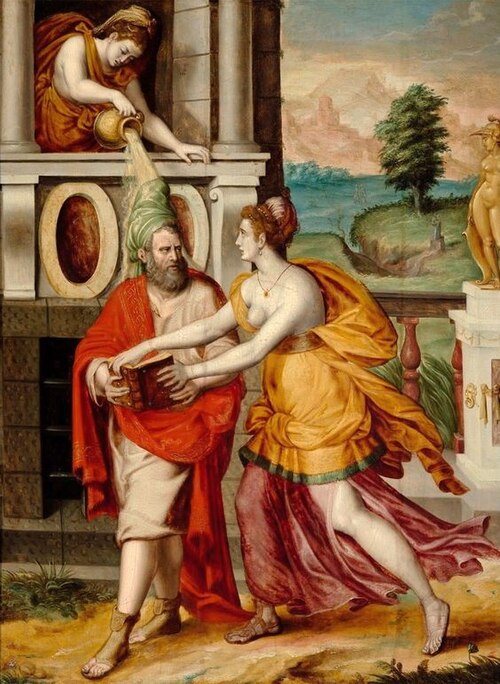
Socrates was married to a woman named Xanthippe (pronounced zan-THIP-ee).

Her name comes from the Ancient Greek words xanthos (“yellow” or “blonde”) and hippos (“horse”), translating roughly to “yellow horse.”

In ancient literary tradition, most notably in writings by Xenophon and later Roman observers, Xanthippe was portrayed as notoriously sharp-tongued, quick-tempered, and argumentative. Her name eventually became a famous literary archetype (an eponym) in Western culture for a nagging, shrewish spouse.

However, modern historians generally view this reputation as exaggerated or unfair. Managing a household, raising three sons, and running a domestic life alongside a famous philosopher who famously took no payment for his work and spent all day debating in the market likely required immense patience!

Posted on — Leave a comment

Worst Teacher

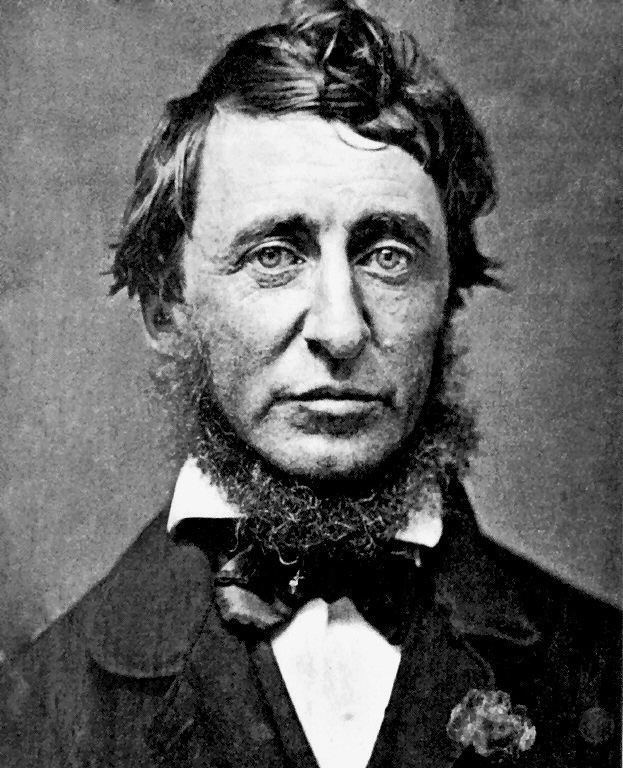
At one time Henry David Thoreau, who according to a Wikipedia article, was an American essayist, poet, philosopher, abolitionist, naturalist, tax resister, development critic, surveyor, yogi, and historian, was also at one point a school teacher. When he was accused by his principal of leniency, he immediately grabbed six random kids and spanked them.

In September 1837, a 20-year-old Henry David Thoreau took a job as a schoolmaster at the Center School in his hometown of Concord, Massachusetts. He had strong personal objections to corporal punishment and refused to whip or strike the children, opting instead to maintain order through dialogue and mutual respect.

After about two weeks, a member of the local school committee (Deacon Nehemiah Ball) visited the classroom, accused Thoreau of being too lenient, and insisted that he use corporal punishment to keep the students in line.

To make a point about the absurdity of mandatory whipping, Thoreau selected six students at random after school and struck them with a ruler (a practice known as feruling). One of the students he feruled happened to be a maid-servant who worked in his family’s own household.

Troubled by his actions and refusing to work under a system that demanded physical punishment, Thoreau tendered his resignation that very evening.

Posted on — Leave a comment

Worst Comment on Fashion

“Fashion is a form of ugliness so intolerable that we have to alter it every six months.”
-Oscar Wilde

Oscar Wilde (1854–1900) was an Irish poet, playwright, and novelist, widely recognized as one of the most brilliant wits and literary figures of the late Victorian era. Known for his flamboyance, aesthetic philosophy (“art for art’s sake”), and razor-sharp satire, Wilde achieved massive acclaim with his plays—most notably The Importance of Being Earnest—and his iconic novel, The Picture of Dorian Gray. His career came to a tragic end following his conviction for “gross indecency” under Victorian anti-homosexuality laws, leading to two years of hard labor and his premature death in exile in Paris.

10 Interesting & Weird Facts About Oscar Wilde

  1. He was an aesthetic fashion icon and toured America wearing velvet knee breeches.
    In 1882, Wilde embarked on a year-long lecture tour across North America to teach aesthetics. He famously dressed in velvet jackets, knee breeches, silk stockings, and flowing cravats, becoming an instant media sensation.
  2. When entering U.S. customs, he allegedly declared only his genius.
    While likely an apocryphal story or a late-in-life exaggeration, legend holds that when asked by a customs officer in New York if he had anything to declare, Wilde replied: “I have nothing to declare except my genius.”
  3. He out-drank rugged silver miners in Leadville, Colorado.
    During his American tour, Wilde visited a mining town in Colorado. Expecting him to be a frail aesthete, the local miners were stunned when Wilde happily went down into the mines, drank straight whiskey with them, and out-drank almost every miner at the table.
  4. He edited a Victorian women’s magazine.
    From 1887 to 1889, Wilde served as the editor of The Lady’s World, which he promptly renamed The Woman’s World. He broadened its scope from light fashion and gossip to include articles on female education, politics, and employment.
  5. He was a brilliant student who excelled at classical studies.
    Behind his playful dandy persona was a formidable scholar. Wilde attended Trinity College Dublin and later Oxford University, winning the prestigious Newdigate Prize for poetry and earning top first-class honors in Literae Humaniores (Classics).
  6. His trial was sparked by a misspelled insult on a calling card.
    The Marquess of Queensberry (the father of Wilde’s lover, Lord Alfred Douglas) left a calling card at Wilde’s club addressed to “Oscar Wilde, posing somdomite” [sic]. Wilde sued him for criminal libel, a disastrous legal move that ultimately backfired and led to Wilde’s own arrest and conviction.
  7. He wrote his play Salomé in French.
    Wilde was fluent in French and chose to write his controversial 1891 tragedy Salomé directly in the language. It was initially banned from the London stage because British law prohibited the depiction of biblical figures in theater.
  8. He befriended and championed Walt Whitman.
    During his visit to the U.S., Wilde made a point to visit the aging poet Walt Whitman at his home in Camden, New Jersey. The two spent hours chatting and drinking elderberry wine, and Wilde later wrote fondly of Whitman’s influence.
  9. His final years were spent under a fake name in Paris.
    After surviving two years of harsh prison conditions—which severely ruined his health and finances—Wilde left England for France in 1897. He lived out his remaining years penniless, adopting the alias Sebastian Melmoth (inspired by the saint and a gothic novel written by his great-uncle).
  10. His famous last words targeted a piece of home decor.
    As he lay dying in a modest Parisian hotel room in November 1900, Wilde reportedly retained his famous wit to the very end, quipping: “My wallpaper and I are fighting a duel to the death. One or the other of us has to go.”
Posted on — Leave a comment

Worst Imposter

Ferdinand Waldo Demara, Jr., a high-school dropout, posed as a monk, a professor of psychology, a cancer researcher, a penal officer, a teacher, and a surgeon, all without the proper education or certification. As a surgeon he successfully performed amputations and even thoracic surgery.

Ferdinand was portrayed by Tony Curtis in the 1961 movie, “The Great Imposter.”

More about Ferdinand Demara, Jr.

Ferdinand Waldo Demara Jr., famously known as “The Great Impostor,” was one of history’s most prolific and successful con men. Armed with an extraordinary memory and supreme confidence, he took on dozens of high-level professions without credentials.

  1. He Performed Successful Surgeries at Sea with Zero Medical Training
    During the Korean War, Demara posed as Dr. Joseph Cyr, a trauma surgeon aboard the Royal Canadian Navy destroyer HMCS Cayuga. When wounded soldiers were brought aboard, Demara ducked into his cabin, speed-read a medical textbook on the required procedures, and performed multiple surgeries—including extracting a bullet lodged near a patient’s heart and amputating a foot. Every single one of his patients survived.
  2. His Heroic Fame Was His Own Undoing
    Demara’s flawless surgical work on the Cayuga was so impressive that it attracted news coverage. The real Dr. Joseph Cyr’s mother read a newspaper account of her son’s “heroic” actions aboard a navy vessel in Korea and knew something was wrong, as her actual son was practicing medicine in New Brunswick, exposing the fraud.
  3. He Served as the Dean of Philosophy at a College
    Posing as “Dr. Robert Linton French,” a religiously oriented psychologist, Demara landed a position at Gannon College in Erie, Pennsylvania. He wasn’t just a lecturer; he was made Dean of the School of Philosophy and taught courses in general, industrial, and abnormal psychology—even authoring a booklet titled How to Bring Up Your Child.
  4. He Possessed a Photographic Memory
    Demara lacked formal higher education, having run away from home as a teenager, but he possessed an extraordinarily high IQ and a photographic memory. This allowed him to absorb textbooks rapidly, memorize technical jargon, and pass himself off as an authority on nearly any subject overnight.
  5. He Faked His Own Suicide to Escape the Military
    After going AWOL from the U.S. Army during World War II, Demara joined the U.S. Navy under a stolen name. When he failed to get the naval assignment he wanted, he staged his own suicide by leaving his clothes and a suicide note on a beach before slipping away under another new identity.
  6. He Ran a Maximum-Security Prison Section
    Demara assumed the identity of Dr. Ben W. Jones and secured a position as an assistant warden at a maximum-security prison in Texas. He successfully instituted prison reform policies and gained the trust of inmates and guards alike before a prisoner recognized his face from a news article and turned him in.
  7. He Co-Founded a Catholic College
    Demara spent significant time trying to become a monk, joining various religious orders throughout his life. Under the alias Brother John Payne, he helped found LaMennais College (now Walsh University) in Alfred, Maine, where he served as a chancellor.
  8. He Was Played by Tony Curtis in a Hollywood Film
    His exploits inspired a best-selling 1959 biography, The Great Impostor by Robert Crichton, which was adapted into a 1961 feature film starring Tony Curtis. Demara was also cast in a small role as a hospital surgeon in the 1960 horror film The Hypnotic Eye, where ironically, observers noted he was terrible at scripted acting.
  9. He Claimed His Primary Motive Was “Pure Rascality”
    Unlike most con artists, Demara rarely stole money or sought great personal wealth. He was primarily motivated by prestige, the challenge of slipping into high-status roles, and the opportunity to do good. When asked about his motivation, he famously cited “Rascality, pure rascality”.
  10. He Ended His Life as a Legitimate Hospital Chaplain
    In his later years, after his fame made it impossible to adopt new fake personas, Demara went back to serving others legitimately under his real name. He became an ordained minister and worked as a hospital chaplain in Anaheim, California, until his death in 1982.


Perhaps more famous was Frank Abagnale Jr., the real person portrayed in the move “Catch Me If You Can,” Starring Leonardo DiCaprio