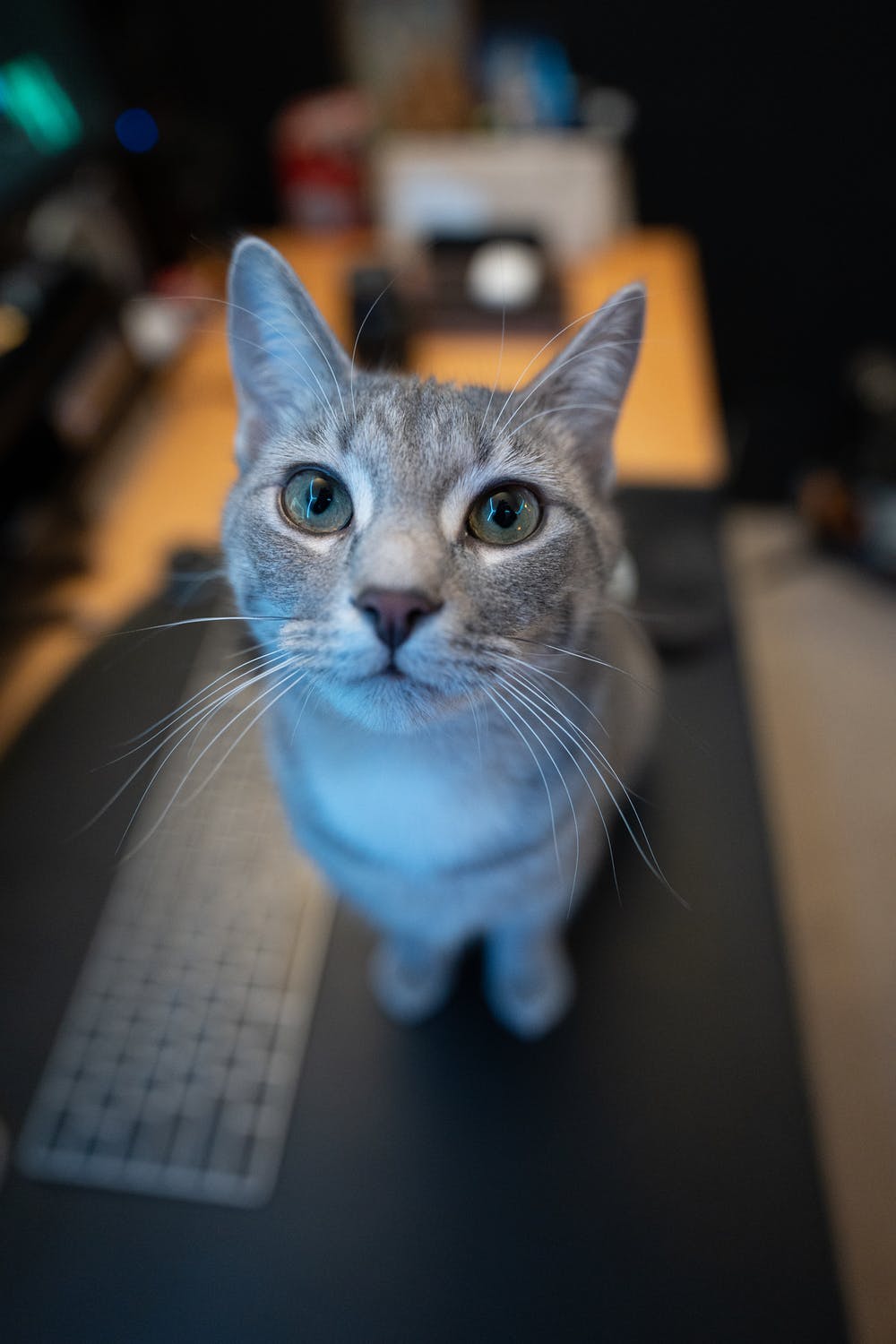
The average life of an indoor cat is 17 years. The average life of a cat that lives outdoors is 2 years.
More Cat Facts
-
Cats sleep for most of their lives:
On average, cats spend around 70% of their lives sleeping, which equates to roughly 13 to 16 hours a day. -
Meowing is mostly reserved for humans:
Adult cats rarely meow at other cats. They primarily use meowing as a way to communicate, request food, or seek attention from human beings. -
Their whiskers are highly sensitive sensors:
A cat’s whiskers are not just hair; they are deeply rooted and packed with nerve endings. They help cats navigate in the dark and determine if they can fit through tight spaces. -
A unique nose print:
Just like human fingerprints are completely unique, every cat’s nose print has a unique pattern of ridges and bumps. -
Incredible jumping ability:
An average healthy adult cat can jump up to six times its own body length in a single bound. Humans, by comparison, can rarely achieve even half their body length. -
They have a “third eyelid”:
Cats possess a third eyelid called the nictitating membrane. It acts as a protective shield and helps keep their eyes moist. -
Cats are lactose intolerant:
Despite the popular trope of cats drinking milk from a saucer, most adult cats lose the enzyme needed to digest lactose after weaning, meaning cow’s milk can upset their stomachs. -
Purring has healing properties:
Cats purr at a frequency between 20 and 140 Hz. Studies suggest that sound vibrations within this range can help lower stress, promote bone density, and heal soft tissue. -
They walk like camels and giraffes:
Cats are “direct register” walkers, meaning they step with both right feet first, followed by both left feet. Camels and giraffes are the only other animals that walk this way.Why Cats Walk This Way
Quiet movement: By placing their back paws where their front paws just stepped, cats make very little noise. This helps them sneak up on prey.
Safety: The front paw tests the ground first. When the back paw steps in the same spot, the cat already knows the ground is safe and stable.
Fewer tracks: It leaves fewer footprints in mud or snow, making it harder for other animals to track them.