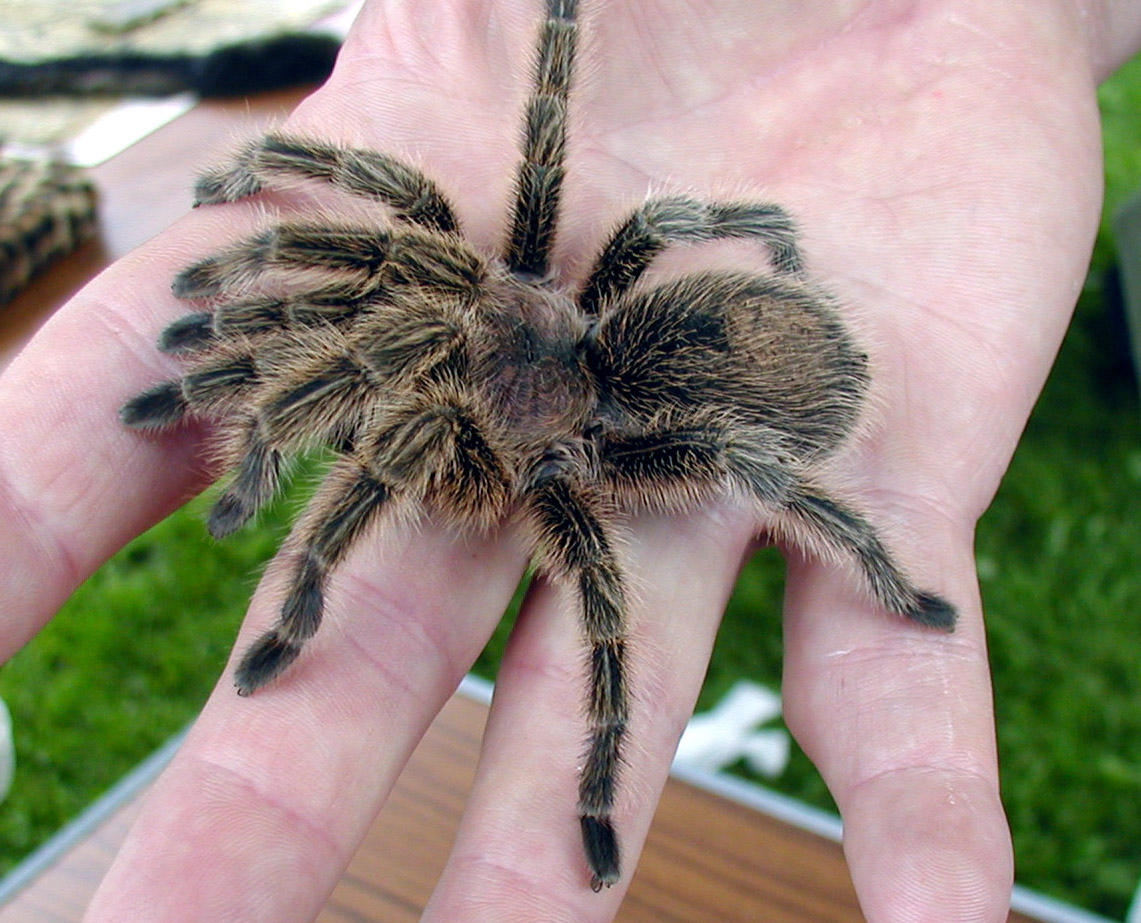
Spiders inject their victims with a chemical that dissolves them. Then the spiders drink their lunch with their mouths which are soda straw-like. A tarantula can totally liquefy a mouse.
More Unexpected Information About Spiders
Some Spiders Cartwheel Away from Danger
The golden wheel spider (Carparachne aureoflava) of the Namib Desert escapes predatory pompilid wasps by flipping on its side, curling its legs, and cartwheel-rolling down sand dunes at speeds of up to 44 turns per second.
They Eat Their Own Webs to Recycle Silk
Spider silk is made of complex protein chains that require significant energy to produce. To conserve resources, many orb-weaver spiders tear down their webs every night and eat the silk, digesting the amino acids to spin brand-new webs the next day.
Vegetarian Spiders Actually Exist
Out of over 50,000 known spider species, Bagheera kiplingi—a species of jumping spider found in Central America—is almost entirely vegetarian. Up to 90% of its diet consists of specialized nutrient-rich buds (Beltian bodies) harvested from acacia trees.
They Hydraulic-Pump Their Legs Instead of Using Muscles
Spiders don’t use opposing muscle pairs to extend their legs like mammals do. Instead, they rely on a hydraulic system, pumping hemolymph (blood) into their limbs to force them outward. When a spider dies, its hydraulic system loses pressure, causing its legs to curl inward.
Sub-Aquatic Spiders Live Underwater in Air Bubbles
The diving bell spider (Argyroneta aquatica) spends almost its entire life under freshwater lakes and ponds. It spins a bell-shaped silk web underwater and traps air bubbles from the surface, creating an aquatic “diving bell” that functions like an artificial gill to absorb oxygen from the surrounding water.
Some Spiders Mimic Ants to Avoid Being Eaten
Myrmecarachne jumping spiders use myrmecomorphy (ant mimicry) to deter predators like birds and wasps, which usually avoid aggressive, bad-tasting ants. These spiders hold their front two legs in the air to resemble ant antennae and walk in frantic, ant-like zig-zags.
The Huntsman Spider Can Creep Through Cardboard-Thin Gaps
Despite having a leg span reaching up to 12 inches (30 cm), giant huntsman spiders have uniquely flattened bodies and specialized hip joints. This allows their legs to extend sideways rather than vertically, enabling them to squeeze into crevices no thicker than a coin.
Their Blood is Blue
Unlike human blood, which uses iron-based hemoglobin to transport oxygen and turns red, spider blood uses a copper-based protein called hemocyanin. When exposed to oxygen, spider blood turns a pale translucent blue.
Peacock Spiders Perform Elaborate Dance Routines
Male peacock spiders (Maratus) engage in intricate courtship displays that rival tropical birds. They raise their iridescent, colorful abdominal flaps, wave their legs in complex patterns, and vibrate their bodies in rhythmic beats to court females—who will promptly eat them if the dance isn’t impressive enough.
Spider Silk Is Stronger Than Steel and Tougher Than Kevlar
Weight for weight, dragline spider silk is roughly five times stronger than high-grade steel and significantly tougher than Kevlar. It can stretch to over 30% of its length without snapping, allowing it to absorb high-impact energy without breaking.